How to Use Kosher Salt Instead of Canning Salt Safely
You can safely use kosher salt instead of canning salt by increasing the amount by about 25% because kosher salt has larger crystals. Always weigh your salt rather than measuring by volume to keep your brine consistent. Make sure your kosher salt is additive-free to avoid cloudiness or off-flavors.
Dissolve it fully in water before using to ensure even salinity. If you want to master pickling with kosher salt, there are key tips and adjustments you’ll want to know.
How to Substitute Kosher Salt for Canning Salt
When you substitute kosher salt for canning salt, increase the amount by about 25% because kosher salt’s grains are larger and take up more space.
For accurate salt substitution in food preservation, it’s best to measure kosher salt by weight rather than volume. This guarantees consistent salinity in your brines or canned goods.
Choose kosher salt without anti-caking agents to avoid affecting the clarity and safety of your preserved foods.
Since grain size varies, use a kitchen scale to adjust the amount precisely.
Keep in mind that coarse kosher salt may take longer to dissolve fully, so allow extra time when mixing into your preservation solutions.
Following these steps helps you substitute kosher salt effectively and safely in canning recipes.
How Crystal Size Affects Salt Measurement and Dissolving
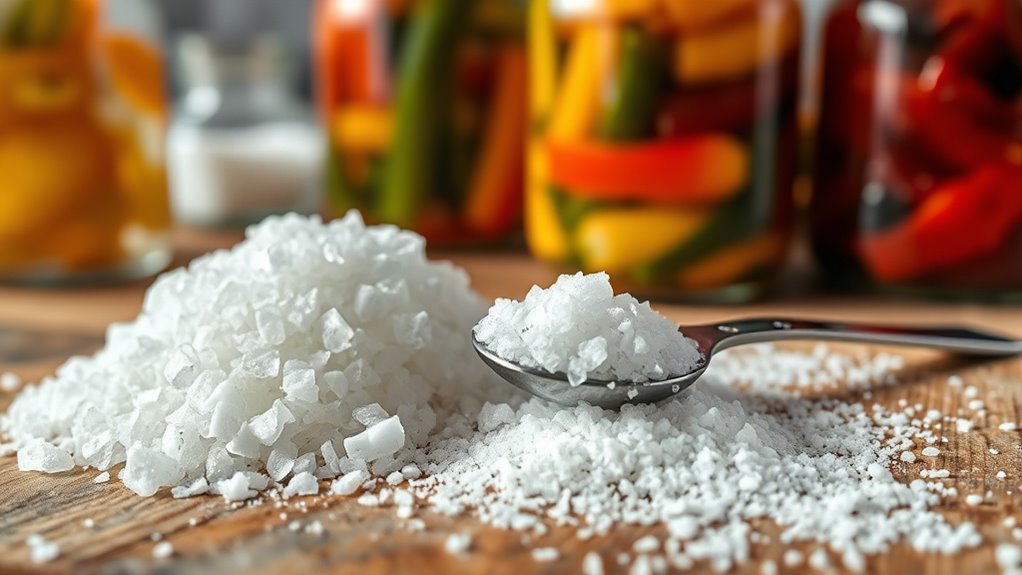
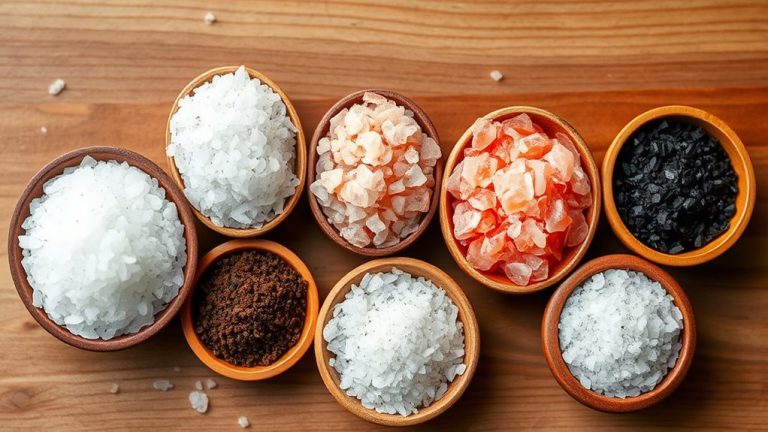
Because crystal size impacts both measurement and dissolution, you need to modify how you handle different salts in canning. Larger crystals like kosher salt take up more volume but weigh less per scoop, so measuring salt by volume can lead to inaccurate amounts.
Coarser salts dissolve slower, requiring more stirring to fully incorporate in your brine. Finer salts dissolve quickly and are easier to measure by volume.
| Salt Type | Crystal Size | Measuring Salt (Volume) | Dissolving Speed |
|---|---|---|---|
| Table Salt | Fine | Accurate | Fast |
| Pickling Salt | Fine | Accurate | Fast |
| Kosher Salt | Coarse | Less Accurate | Slow |
Adjust your volume measurements accordingly and stir well to ensure proper dissolving with coarser salts.
Measuring Kosher Salt by Weight for Accurate Pickling
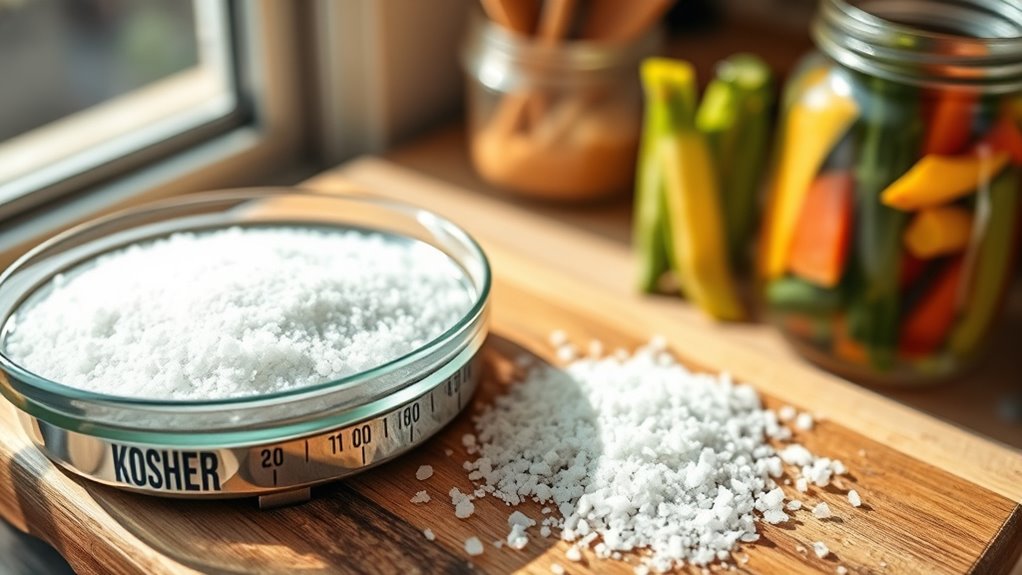
Although kosher salt’s larger crystals make volume measurements unreliable, you can achieve accurate pickling results by measuring it by weight. Using a kitchen scale ensures precision and consistency in your recipes.
For precise pickling, measure kosher salt by weight to ensure consistent and accurate results every time.
Since kosher salt crystals are bigger, you’ll need about 25% more by weight compared to canning salt.
For example, one tablespoon of kosher salt weighs roughly ⅝ oz, while pickling salt is about ¾ oz. By converting your recipe’s volume measurements to weight, you maintain the right salinity, which is essential for safe and effective pickling.
Measuring kosher salt by weight eliminates guesswork and guarantees accuracy every time you preserve.
This approach makes your pickling process safer and your results more reliable.
Checking Kosher Salt for Additives and Anti-Caking Agents
Before using kosher salt for canning or pickling, you should always check the packaging to see if it contains any additives or anti-caking agents. These substances, like magnesium carbonate or calcium silicate, can cause cloudiness and discoloration in your brine, affecting both appearance and safety.
Not all kosher salt brands are additive-free, so look for labels stating “pure” or “unsalted” to avoid unwanted ingredients. If the packaging isn’t clear, don’t hesitate to contact the manufacturer for detailed information.
Choosing a reputable brand known for producing kosher salt without additives ensures better results in your canning projects. Taking this step helps maintain the clarity and quality of your preserved foods, making your pickling efforts successful and safe.
What Additives in Kosher Salt Mean for Your Pickles
You’ll want to watch out for additives like anti-caking agents in kosher salt, as they can make your pickle brine cloudy and affect its clarity.
These additives might also alter the flavor or cause discoloration over time, which can impact your pickles’ shelf-life.
Always check your salt’s label to ensure it won’t compromise the quality or appearance of your pickles.
Common Additives In Kosher
When choosing kosher salt for your pickling, you need to be aware of common additives like anti-caking agents, which can cause cloudiness and affect the clarity of your brine.
Many kosher salts include additives such as magnesium carbonate or sodium aluminosilicate to prevent clumping, but these can interfere with the salt dissolving properly, especially in quick or cold soak pickling.
While iodized kosher salts are rare, the presence of iodine can also darken or cloud your brine, so you should avoid them for canning.
To ensure the best results, always check the ingredient list on your kosher salt packaging and opt for varieties without anti-caking agents or iodine. This way, you’ll maintain the purity and safety of your preserved foods.
Effects On Brine Clarity
Additives in kosher salt, like anti-caking agents, play a significant role in how your brine looks once mixed. These agents, such as magnesium carbonate or calcium silicate, can cause cloudiness, reducing brine clarity and leaving a haze or sediment in your pickle jars.
While this doesn’t affect the safety or taste of your pickles, it can impact their visual appeal. If you want a clear, attractive brine, choose pure kosher salt without additives—this will give you brine clarity similar to traditional pickling salt.
Keep in mind, the tiny particles from anti-caking agents may settle at the bottom, creating sediment that some find unappealing.
Impact On Pickle Shelf-Life
Although kosher salt can be a convenient alternative to canning salt, its additives may subtly affect the shelf life of your pickles. Many kosher salts contain anti-caking agents that can reduce brine clarity, causing cloudiness or slight discoloration over time.
While these additives generally don’t compromise the safety or overall pickling shelf life, they might lead to off-flavors or minor texture changes. To maintain the best quality, you’ll want to choose kosher salt without additives. This keeps your brine clear and helps preserve the natural taste and appearance of your pickles throughout storage.
How to Dissolve Kosher Salt Thoroughly for Pickling
To make sure your kosher salt dissolves completely, start by grinding it into smaller particles before mixing.
Then, heat your brine solution slightly to help the salt melt faster and more evenly.
This way, you’ll avoid any grainy texture in your pickles and get the perfect brine every time.
Grinding Kosher Salt
When you grind kosher salt into a finer powder, you help it dissolve more quickly and evenly in your pickling brine. Kosher salt’s large, coarse grains can be stubborn, so grinding breaks them down to a finer consistency that mimics pickling salt.
Use a mortar and pestle or spice grinder to crush the salt just before you start pickling. This prevents moisture absorption and clumping, ensuring smooth dissolving.
Grinding kosher salt reduces crystal size, allowing it to integrate thoroughly into your brine without leaving gritty residues.
Heating Brine Solution
Since kosher salt has larger crystals that dissolve slowly, heating your brine solution is essential to fully incorporate the salt. Use hot water and add kosher salt gradually while stirring continuously to help the crystals dissolve faster. Stirring breaks down the salt and ensures even distribution throughout the brine.
After dissolving, let the brine sit briefly to confirm no salt remains undissolved before pickling.
| Step | Purpose |
|---|---|
| Use hot water | Speeds up salt dissolution |
| Stir continuously | Breaks down salt crystals |
| Let it sit | Check for undissolved salt |
This method guarantees a well-mixed brine, ensuring your pickles have the perfect salinity.
Adjusting Kosher Salt Amounts for Safety and Flavor
Although kosher salt’s larger crystals make direct substitution tricky, you can guarantee both safety and flavor by increasing its amount by about 25% compared to canning salt.
To adjust amount accurately, weigh kosher salt instead of measuring by volume since crystal size varies.
For every tablespoon of canning salt in your recipe, use 3/4 ounce of kosher salt on a kitchen scale. This ensures the salinity remains consistent, maintaining safety in your preservation process.
Also, check that your kosher salt is free from anti-caking agents or additives, as these can affect both safety and the clarity of your preserved foods.
Tips for Using Kosher Salt in Fermented and Brined Recipes
Because kosher salt crystals vary in size and density, you’ll need to measure them carefully when preparing fermented or brined recipes to guarantee consistent salinity. Use a kitchen scale for precise salt measurement, and increase the weight by about 25% compared to canning salt.
Always choose uniodized kosher salt without anti-caking agents to avoid cloudiness in fermentation and brining. Fully dissolve the salt in water before adding it to your recipes to ensure even salt distribution.
| Tip | Reason |
|---|---|
| Use a kitchen scale | Volume varies by brand and crystal size |
| Dissolve salt | Prevent uneven salinity |
| Check ingredients | Avoid iodine and anti-caking agents |
Following these tips ensures your fermented and brined foods have the perfect balance of kosher salt for safe, flavorful results.
Storing Pickled Foods Made With Kosher Salt
When storing pickled foods made with kosher salt, keep them in a cool, dark place to prevent discoloration and maintain quality.
Make sure to seal jars tightly using airtight containers or sterilized glass jars to protect your pickled foods from light and air exposure, which can cause spoilage.
Since kosher salt sometimes contains additives, regularly check your pickled foods for signs of cloudiness, off-odor, or mold.
Label each jar with the pickling date so you can monitor freshness and consume within one year for the best flavor and safety.
Properly storing pickled foods made with kosher salt ensures they stay fresh, safe, and delicious longer, giving you confidence in your homemade preserves.
Frequently Asked Questions
Can I Use Kosher Salt in Place of Canning Salt?
Yes, you can use kosher salt instead of canning salt, but make sure you weigh it accurately and avoid ones with anti-caking agents.
Adjust the amount carefully to maintain proper salinity for safe preservation.
How Much Kosher Salt Equals Canning Salt?
Think of it like adjusting the volume on your favorite song—use about 25% more kosher salt by weight than canning salt to hit the right note.
Measuring by weight, not volume, keeps your recipe perfectly balanced.
Is There Any Difference Between Kosher Salt and Pickling Salt?
Yes, you’ll notice kosher salt has larger crystals and may contain anti-caking agents, while pickling salt is finer, additive-free, and dissolves faster.
Both are usually non-iodized, but always check labels before use.
What Is the Difference Between Canning Salt and Normal Salt?
Canning salt is pure, fine-grained, and additive-free, dissolving quickly for clear brine.
Normal salt often contains iodine and anti-caking agents, which can cause cloudiness, off-flavors, and inconsistent results in your preserved foods.
Conclusion
So, if you’re ready to toss canning salt out like last season’s fashion and invite kosher salt to the pickling party, just remember: it’s not a free-for-all. Measure by weight, watch out for sneaky additives, and dissolve it like you mean it.
Otherwise, your pickles might end up more confused than a cat at a cucumber convention. Play it safe, keep it tasty, and your brines will thank you — no salt drama needed!
Using kosher salt instead of canning salt safely means paying attention to these details. By doing so, you ensure your pickling process stays on point and your results stay delicious every time.