How to Use Salt to Kill Maggots Effectively
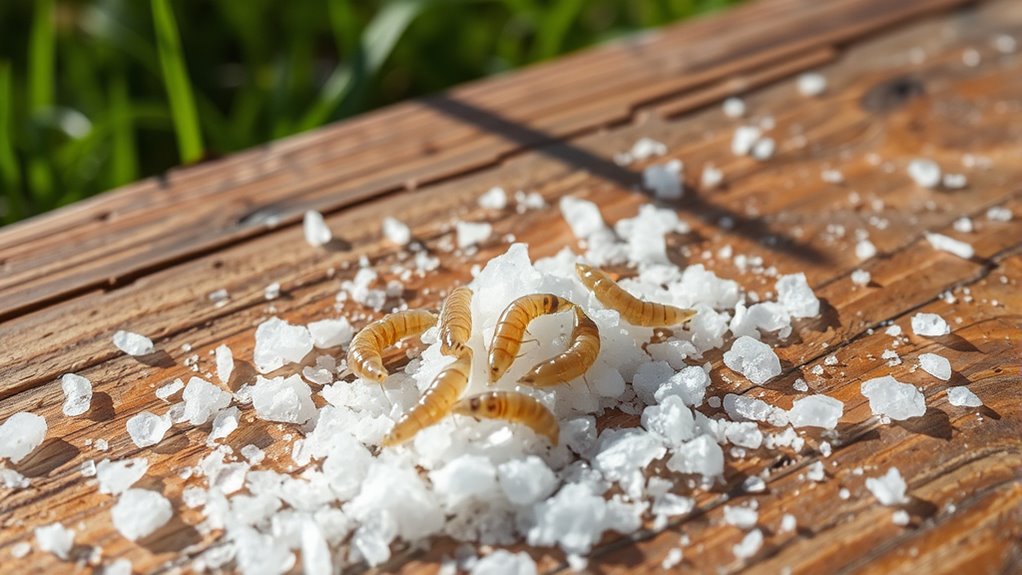
You can kill maggots effectively by sprinkling a generous amount of salt directly onto them, creating a dehydrating environment that draws water from their bodies and causes death. Using about a 15-20% salt concentration or mixing salt with hot water or vinegar speeds up the process.
Apply salt to visible maggots on trash, compost, or pet areas, but remember it won’t affect eggs or deep larvae. To protect your space thoroughly, keep exploring smart, safe methods.
What Are Maggots And Why Does Salt Kill Them?
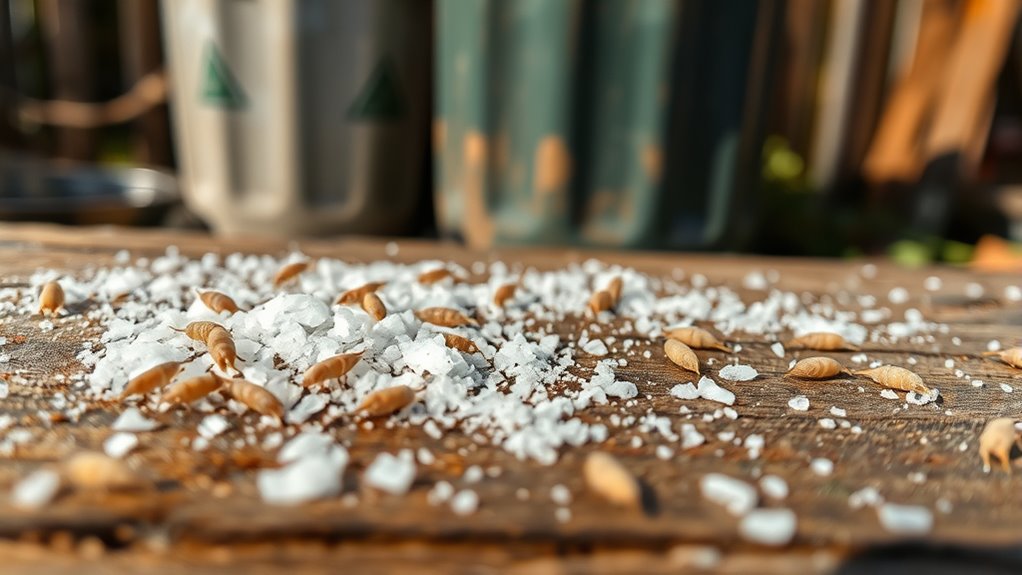
What exactly are maggots, and why does salt prove so effective against them? Maggots are the larval stage of flies, small white worm-like creatures feeding on decomposing organic material.
When you spot maggots, salt becomes a powerful tool for pest control because it dehydrates them. Salt draws water out of their bodies rapidly through osmosis, disrupting their essential metabolic functions.
Salt dehydrates maggots by drawing water out, disrupting their metabolism and effectively controlling infestations.
Since maggots lack teeth but use toothless jaws to consume decayed matter, salt’s dehydrating effect quickly incapacitates them.
Keep in mind, salt targets only visible maggots and doesn’t affect their eggs, so applying it directly to infestations is key. Using salt to dehydrate maggots is a simple, effective method to control and eliminate these pests.
How Does Salt Dehydrate And Kill Maggots?
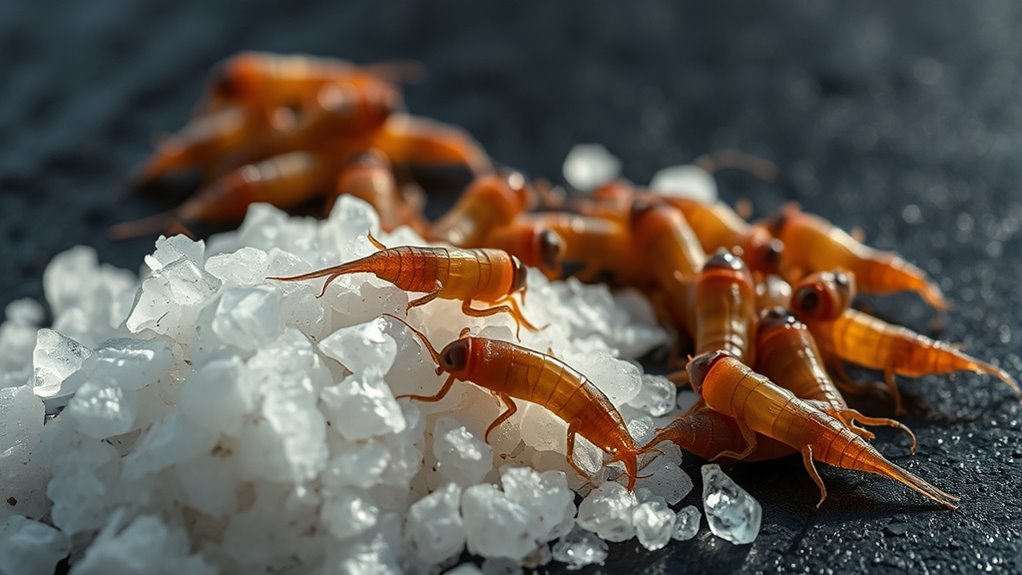
Although maggots thrive in moist environments, salt quickly disrupts their survival by drawing water out of their bodies through osmosis.
When you apply salt directly to maggots, it creates a hypertonic environment around them. This difference in concentration causes osmotic pressure to pull water rapidly from their cells, leading to severe dehydration.
Because maggots have soft tissues, they’re especially vulnerable to this water loss. As dehydration sets in, their bodily functions fail, and they die within hours.
Salt’s ability to create this desiccating effect makes it an effective tool for killing maggots on contact.
However, remember that salt affects only the maggots themselves, not their eggs, so thorough cleaning is essential to prevent new infestations.
Which Salt Concentrations Work Best Against Maggots?
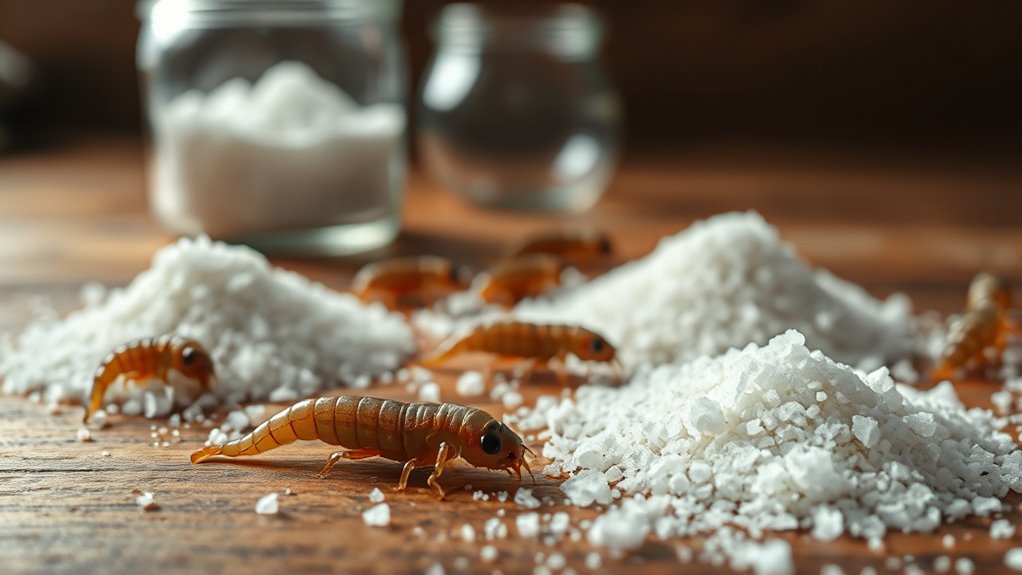
You’ll want to use a salt concentration between 15-20% to kill maggots quickly and effectively.
Lower concentrations take longer to work, so applying a stronger solution accelerates dehydration and death.
Applying salt directly onto the maggots ensures the fastest results.
Optimal Salt Concentration
When dealing with maggots, using the right salt concentration can make all the difference in effectiveness. A salt concentration of at least 10%—about 1 cup of salt dissolved in 1 liter of water—works well to dehydrate and kill maggots.
If you’re facing a severe infestation, increasing the concentration to 15-20% speeds up dehydration and ensures a quicker, more effective kill.
Both applying saltwater solutions and sprinkling dry salt directly can work, but using a stronger solution helps in moist environments where maggots thrive.
Application Speed Effects
Choosing the right salt concentration directly impacts how fast you can eliminate maggots. Higher salt concentrations, like saturated salt solutions, increase application speed by rapidly dehydrating maggots, often causing maggot death within hours.
If you use coarse or rock salt in large amounts, the slower dissolution maintains osmotic pressure longer, accelerating desiccation effectively. Applying a fine layer of salt works best in warm, humid environmental conditions, speeding up dehydration and maggot death in 1 to 2 hours.
Cooler temperatures, however, slow this process, so you’ll need higher salt concentrations or longer exposure to achieve the same results.
How To Apply Salt Directly To Maggots For Fast Results
Although it might seem straightforward, applying salt directly to maggots requires careful coverage to guarantee their rapid dehydration and death. You should sprinkle a generous layer of salt over all visible maggots, ensuring full contact for effective dehydration.
Depending on the size of the infestation, choose fine table salt or coarse rock salt, but apply enough to cover every maggot. For faster results, apply salt during warmer parts of the day, as heat speeds up dehydration.
After the initial treatment, check if any maggots remain alive; if so, reapply salt to ensure complete elimination. Remember to keep the treated area dry and avoid disturbing the salt layer until all maggots are dead.
This method ensures you’ll quickly and effectively kill maggots using salt.
Where Should You Use Salt To Prevent Maggot Infestations?
Where can salt make the biggest difference in preventing maggot infestations? You should focus on applying salt in common infested areas to disrupt maggots’ life cycle and improve pest management. Sprinkle salt around trash bins, compost piles, and pet food stations to create an environment maggots avoid.
Also, salt cracks and crevices where maggots hide to prevent new infestations. Maintaining dryness with salt in persistent moisture spots helps keep maggots at bay.
| Infested Area | Salt Application | Pest Management Benefit |
|---|---|---|
| Trash bins | Sprinkle around edges | Discourages maggot breeding |
| Compost piles | Apply directly on waste | Dehydrates and kills maggots |
| Pet food stations | Salt perimeter | Prevents egg laying by flies |
Using salt strategically keeps maggots from establishing in your pest-prone zones.
How Does Environment Affect Salt’s Power Against Maggots?
Salt works best against maggots when the surrounding environment supports its action. You’ll notice salt works faster in warm, moist environments because these conditions help salt dissolve and spread, dehydrating maggots quickly.
However, in dry environments, salt’s effect slows down, needing repeated applications to be effective. Temperature also plays a pivotal role; cooler temperatures slow maggot metabolism, reducing salt’s efficiency. Organic moisture like spilled food enhances salt’s penetration, making it even more powerful.
Keep these points in mind:
- Warm temperature speeds up salt’s dehydration of maggots
- Moist environments help salt dissolve and reach maggots better
- Organic moisture enhances salt’s effectiveness
- Cooler temperature slows down maggot metabolism and salt action
- Dry environments reduce salt’s power, requiring more treatments
Can You Combine Salt With Hot Water Or Vinegar For Better Control?
You can boost salt’s effectiveness by mixing it with hot water, which helps it dissolve quickly and dehydrate maggots faster.
Adding vinegar creates an acidic environment that weakens maggots, making them more vulnerable to salt’s drying effects.
Combining salt with hot water and vinegar gives you a stronger, faster way to control maggot infestations.
Salt And Hot Water
Combining hot water with salt speeds up the dehydration process, killing maggots more effectively by increasing osmotic pressure and drawing moisture out quickly. When you mix salt with hot water, the salt dissolves evenly, ensuring better contact with maggots and speeding up their death through dehydration.
To use this method effectively, keep in mind:
- Use hot water between 120°F and 140°F to maximize salt’s impact without damaging surfaces.
- Stir salt thoroughly in hot water for even distribution.
- Apply the solution directly to infested areas for rapid maggot control.
- The heat helps break down maggot habitats, boosting salt’s efficiency.
- Repeat treatment if maggots reappear for lasting results.
This salt and hot water combo offers a natural, chemical-free way to tackle maggots efficiently.
Salt With Vinegar
How can vinegar boost the effectiveness of salt against maggots? When you combine salt with vinegar, you create an acidic environment that markedly enhances maggot dehydration. Vinegar lowers the pH, disrupting maggots’ metabolic functions and making them more vulnerable. This natural pest control method is chemical-free and highly effective.
For best results, dissolve salt in vinegar and let the mixture sit for a few minutes before applying it directly onto the maggots. This ensures thorough coverage and maximizes maggot dehydration.
You can also try combining salt with hot water, which speeds up osmosis, but salt with vinegar offers the added benefit of acidity.
Using these mixtures thoughtfully helps you control maggots quickly and safely without harsh chemicals.
Is Salt Safe To Use Around Pets And Children?
Although salt can effectively kill maggots, you need to use it carefully around pets and children to prevent accidental ingestion or contact. Salt is generally safe when applied in small, controlled amounts, but overexposure can harm pets and pose risks to children’s health.
To guarantee safety, follow these tips:
- Keep salt out of reach of pets and children to avoid ingestion.
- Clean up any spilled salt immediately after use indoors.
- Use salt only in well-ventilated spaces to minimize exposure.
- Store salt securely in sealed containers when not in use.
- Monitor pets closely to prevent licking or eating salt-treated areas.
What Are Salt’s Limitations For Killing Maggots? When Should You Call A Professional?
While salt can kill maggots by dehydrating them, it doesn’t affect their eggs or larvae hidden deep within organic material. This limitation means salt alone won’t eliminate an entire infestation, especially if maggots are nestled in hard-to-reach areas.
Additionally, salt’s effectiveness drops markedly in large infestations, and excessive outdoor use can harm plants and soil, limiting its long-term application. Because salt doesn’t prevent future maggot problems, you’ll need thorough sanitation alongside treatment.
If you notice maggots persisting despite your efforts, it’s time to call a professional. Pest control experts can identify hidden breeding sites and apply targeted solutions, ensuring complete eradication.
Don’t rely solely on salt when facing a severe or recurring infestation; professional help is often necessary.
What Are Some Natural Alternatives To Salt For Getting Rid Of Maggots?
If salt isn’t cutting it, you can try pouring boiling water directly on maggots to kill them instantly.
Spraying a vinegar solution creates an acidic environment that maggots can’t survive in.
You can also sprinkle diatomaceous earth to dehydrate and eliminate them naturally.
Boiling Water Method
When you need a natural alternative to salt for killing maggots, pouring boiling water directly onto them works quickly and effectively. Boiling water kills maggots instantly by causing thermal shock, denaturing their proteins, and reaching deep clusters.
To rid of maggots safely and prevent future maggots, keep these tips in mind:
- Pour boiling water carefully to avoid burns or surface damage
- Target cracks and dense maggot clusters for thorough removal
- Use boiling water as a chemical-free, natural maggot control method
- Repeat treatment if necessary to ensure all maggots are killed
- Combine boiling water with other natural methods to boost effectiveness
This method offers a fast, eco-friendly way to kill maggots and prevent them from returning.
Vinegar Spray Solution
Boiling water works well to kill maggots on contact, but sometimes you need a solution that reaches into cracks and porous surfaces where maggots hide.
A natural alternative is a vinegar spray solution. Mix equal parts white distilled vinegar and water, then spray directly onto maggots and infested areas.
Vinegar creates an acidic environment that maggots can’t survive in, effectively eliminating them even in hard-to-reach spots. This spray also disrupts the breeding environment, helping deter flies from laying eggs.
Regularly applying the vinegar spray complements other maggot control methods, reducing future infestations naturally.
Unlike salt, vinegar penetrates deeper, making it a versatile and eco-friendly option when you want a natural way to get rid of maggots without harsh chemicals.
Diatomaceous Earth Application
Although salt is a common choice for getting rid of maggots, diatomaceous earth (DE) offers a natural and effective alternative you can use both indoors and outdoors. This natural pest control method works by causing dehydration in maggots, damaging their exoskeletons on contact.
Here’s how to apply diatomaceous earth for maggot control:
- Sprinkle food-grade DE directly on maggots or infested areas
- Apply around trash bins, compost piles, and entry points
- Reapply after cleaning or rainfall to maintain effectiveness
Use DE safely around humans and pets when following instructions. Create a physical barrier to deter maggot development.
Frequently Asked Questions
How Do You Kill Maggots With Salt?
You kill maggots with salt by sprinkling it directly on them or pouring a strong saltwater solution over the infested area. The salt dehydrates and kills maggots quickly, especially in warm, moist conditions.
This method is simple and effective, making it a popular choice for dealing with maggot infestations. For best results, apply the salt thoroughly to cover all the maggots.
Will Dawn Dish Soap and Water Kill Maggots?
Did you know maggots can hatch within 24 hours? Yes, Dawn dish soap and water will kill them by suffocating and dehydrating their bodies.
Just spray the mixture directly for quick, safe, and effective control.
What Smell Do Maggots Hate?
You’ll find maggots hate strong smells like vinegar, garlic, peppermint, eucalyptus, citrus peels, tea tree oil, and cinnamon oil. These pungent odors repel them, so use these scents to keep maggots away effectively.
How Long Can Maggots Survive in Water?
Like a fleeting shadow in a storm, maggots can survive in water from hours up to two days, especially if it’s cold. You’ll find their endurance fades quickly without oxygen or with hot water’s swift assault.
Conclusion
Just like salt once preserved ancient treasures, you can use it to banish maggots swiftly from your space. By understanding how salt dehydrates and kills these pests, you hold a simple yet powerful tool in your hands.
Remember, while salt works wonders, it’s not a catch-all solution—know when to call in the pros. With a little care and salt’s natural strength, you’ll keep your home fresh and maggot-free, just like a timeless artifact. Using salt to kill maggots effectively is an easy and natural way to protect your living space.