Can Silicone Muffin Pans Go Directly on the Oven Rack?
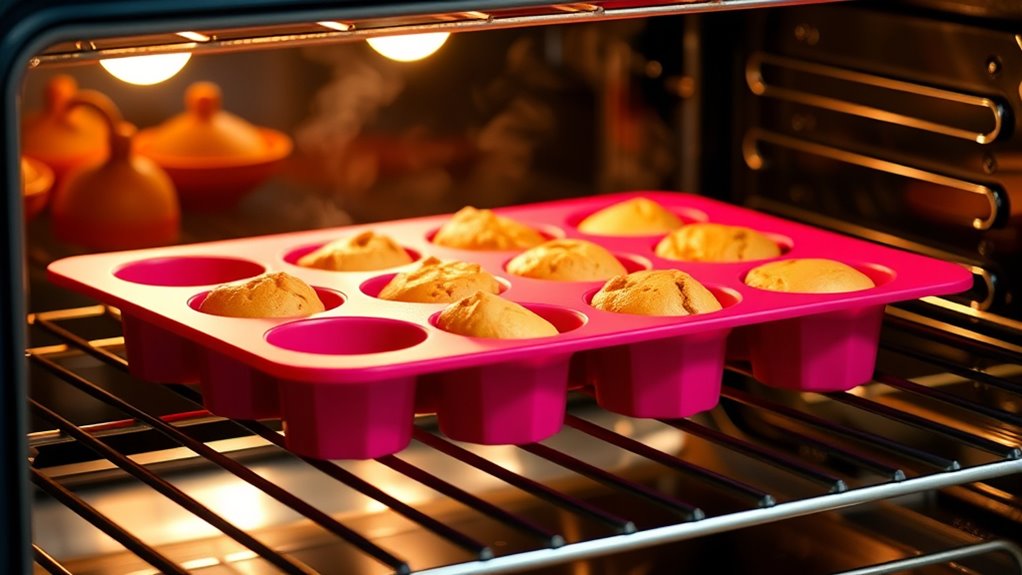
You can place silicone muffin pans directly on the oven rack since they’re oven-safe up to around 428°F. However, it’s best to support them on a baking sheet for optimal results.
Using a baking sheet helps prevent warping and keeps your batter from spilling. Additionally, it promotes even heat distribution throughout the muffins.
The baking sheet also makes handling the pans safer and more stable. If you want to bake your muffins perfectly and avoid any mishaps, there are a few smart tips worth considering.
Can You Use Silicone Muffin Pans on Oven Racks?
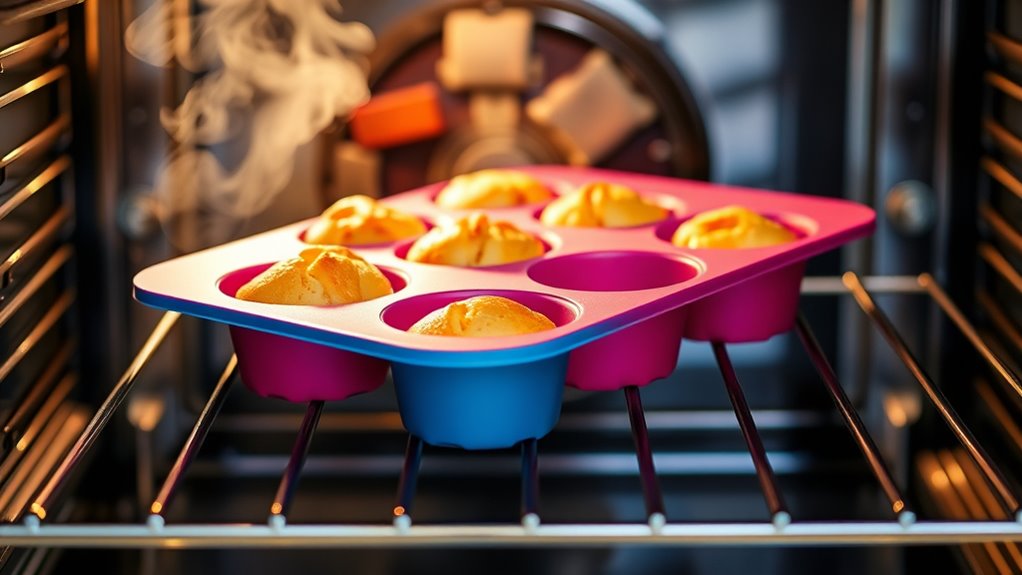
While you can place silicone muffin pans directly on oven racks, it’s best to put them on a sturdy baking sheet first to prevent wobbling or bending. Silicone bakeware is flexible and generally oven-safe up to about 428°F, making direct placement feasible within this temperature range.
However, placing your silicone muffin pans on a flat baking sheet ensures better stability and easier handling during baking. This approach also promotes even heat distribution, preventing potential warping that can happen with direct placement on the oven rack.
Always check your silicone muffin pans’ oven guidelines to confirm they’re suitable for direct contact with the oven rack. Following these tips helps you bake safely while maximizing the lifespan and performance of your silicone bakeware.
Best Oven Types and Temperatures for Silicone Muffin Pans
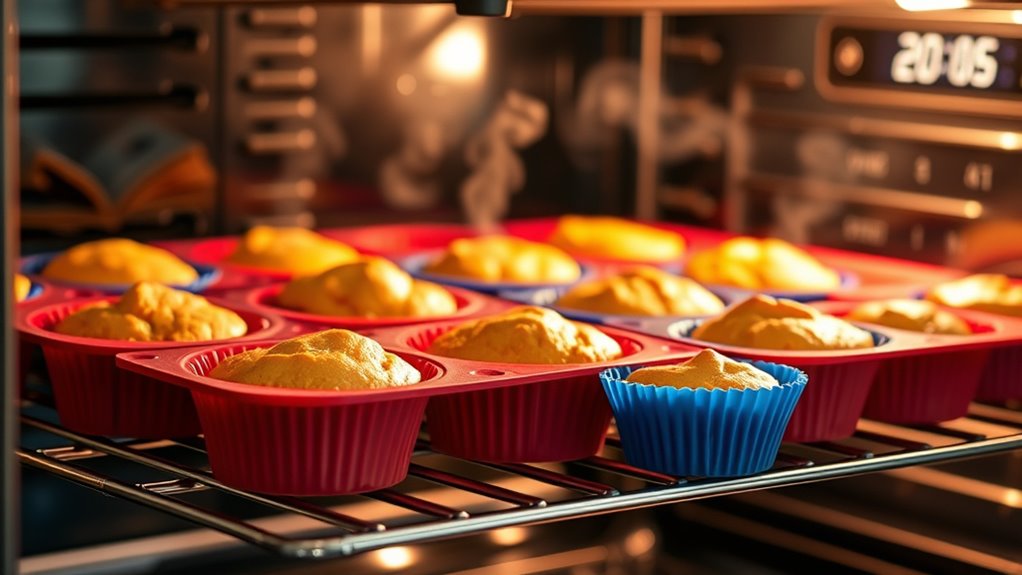
Because silicone muffin pans handle heat differently from metal pans, choosing the right oven type and temperature is essential to guarantee even baking and avoid damage. Silicone bakeware is oven-safe up to a maximum temperature of around 428°F (220°C), but you should always check your pan’s temperature limit before placing silicone in the oven.
You can place silicone muffin pans directly on the oven rack in electric, gas, or convection ovens since silicone is suitable for use in these environments. Silicone’s flexibility ensures good heat distribution, but for added stability, consider supporting the pan on a baking sheet.
Avoid exposing silicone to open flames or direct contact with heating elements to prevent warping. Following these guidelines ensures your silicone pans perform well and last longer.
Why Use a Baking Sheet Under Silicone Muffin Pans
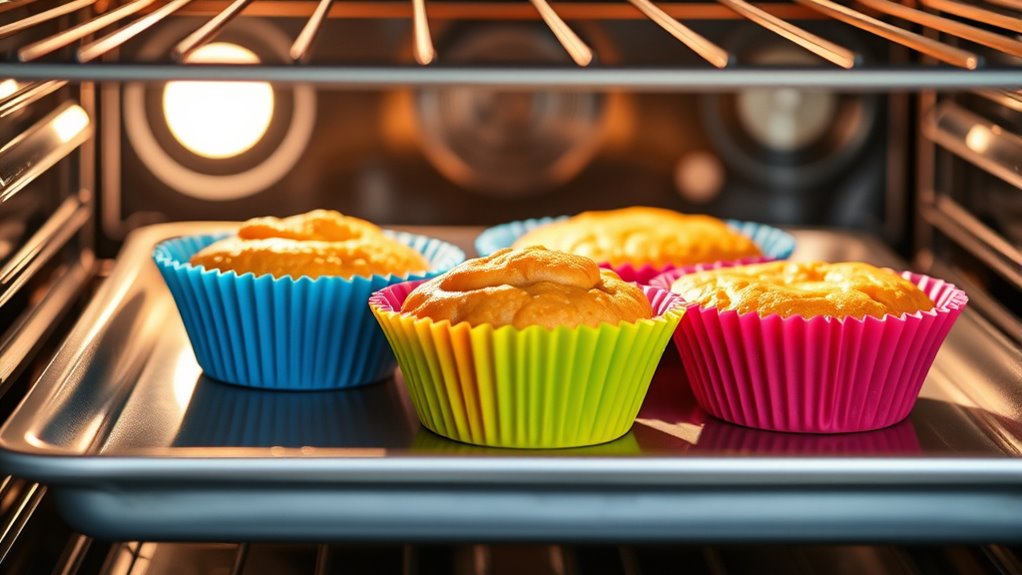
If you want to keep your silicone muffin pans stable and prevent spills, placing them on a baking sheet is a smart move. Silicone pans are flexible and can warp or bend when placed directly on the oven rack, risking spills and uneven baking. A baking sheet provides firm support and improves stability during handling and baking.
It also promotes even heat distribution, which helps prevent warping or melting of the silicone material. Here’s why using a baking sheet matters:
- Offers stable support for flexible silicone muffin pans
- Prevents warping caused by direct contact with oven rack
- Contains spills and batter overflows for easier cleanup
- Ensures even heat distribution for consistent baking
- Enhances safety when transferring pans in and out of the oven
Using a baking sheet under your silicone pans is a simple way to bake safely and efficiently.
How to Handle and Support Silicone Muffin Pans Safely
When you handle silicone muffin pans, supporting them properly is key to preventing spills and maintaining their shape. To guarantee stability, always place silicone muffin pans on a sturdy, rimmed baking sheet before putting them on the oven rack. This method provides essential support during baking and makes handling silicone pans safer, especially when hot and filled.
Avoid placing silicone bakeware directly on the oven rack without support, as this risks deformation and spills. Here’s a quick guide for supporting silicone muffin pans:
| Task | Recommended Action | Reason |
|---|---|---|
| Placing silicone pans | Use a rimmed baking sheet | For stability and support |
| Handling silicone bakeware | Lift with baking sheet | Prevents spills and warping |
| Supporting silicone pans | Always on sturdy base | Maintains shape and safety |
Preventing Warping and Spills With Silicone Muffin Pans
Supporting your silicone muffin pan properly sets the foundation for preventing warping and spills during baking. While silicone muffin pans can go directly on the oven rack, using a sturdy baking sheet provides essential support and stability. This helps prevent warping and deformation caused by uneven heat distribution.
Plus, a rimmed baking sheet contains any spills, keeping your oven clean. To optimize your silicone bakeware’s performance, always consider manufacturer guidelines and ascertain even heat contact.
- Place silicone muffin pans on a flat, sturdy baking sheet
- Use a rimmed baking sheet to contain spills
- Avoid direct contact with uneven oven rack bars
- Check manufacturer’s instructions for support recommendations
- Ensure even heat distribution to prevent deformation and warping
Supporting your pan properly enhances stability and prolongs your silicone bakeware’s lifespan.
Frequently Asked Questions
Can Silicone Baking Pans Go Directly on an Oven Rack?
Yes, you can place silicone baking pans directly on the oven rack if they’re heat-resistant. However, to avoid spills or warping, it’s safer to set them on a flat baking sheet.
Always check manufacturer guidelines to ensure proper use and safety.
What Are the Disadvantages of Silicone Cookware?
Don’t you hate when your bakeware warps or loses shape? Silicone can degrade, stain, and retain odors over time.
It’s also prone to tearing and can release harmful chemicals if overheated, so be cautious with temperature limits.
Can Silicone Baking Sheets Go Directly in the Oven?
Yes, you can put silicone baking sheets directly in the oven since they handle high heat well. Just make sure to check the temperature limits and consider placing them on a metal tray for added stability and easier handling.
Can Silicone Go in a 400 Degree Oven?
You can safely use silicone in a 400-degree oven if it’s rated for that temperature. Just double-check the manufacturer’s guidelines to avoid damage, and always support flexible silicone pans to keep them stable during baking.
Conclusion
You can definitely place your silicone muffin pans right on the oven rack, but it’s wiser to set them on a baking sheet for extra support—think of it like giving your pans a trusty steed, much like a knight of old. This helps prevent spills and warping, especially at higher temperatures.
So, while silicone’s flexible nature is modern magic, a little old-fashioned caution keeps your baking smooth and your muffins perfect every time. Remember, placing silicone muffin pans on a baking sheet enhances stability, making your baking experience safer and more efficient.