How Do You Boil Water in an Aluminum Pan
To boil water in an aluminum pan, start by rinsing it with warm water and mild soap to remove any residue. Using an aluminum pan is a great choice because it heats quickly and distributes heat evenly.
Fill the pan with clean water, leaving enough space to prevent spills when boiling.
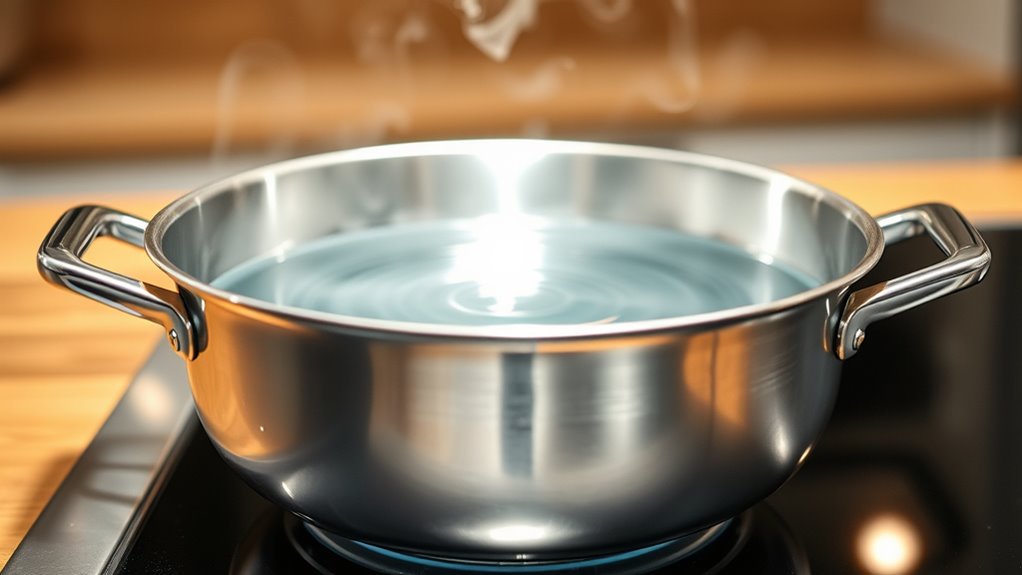
Next, heat the pan on high until the water reaches a rolling boil. Boiling water in an aluminum pan is straightforward and efficient due to the pan’s excellent heat conductivity.
For best results, let the water boil for at least 30 minutes; this helps form a protective oxide layer that preserves the pan’s surface.
After boiling, discard the water, then rinse and dry the pan thoroughly. Proper maintenance is important to keep your aluminum cookware in good condition.
There’s more to know about maintaining and using aluminum pans effectively.
Before You Boil: Safety and Taste Tips for Aluminum Pans
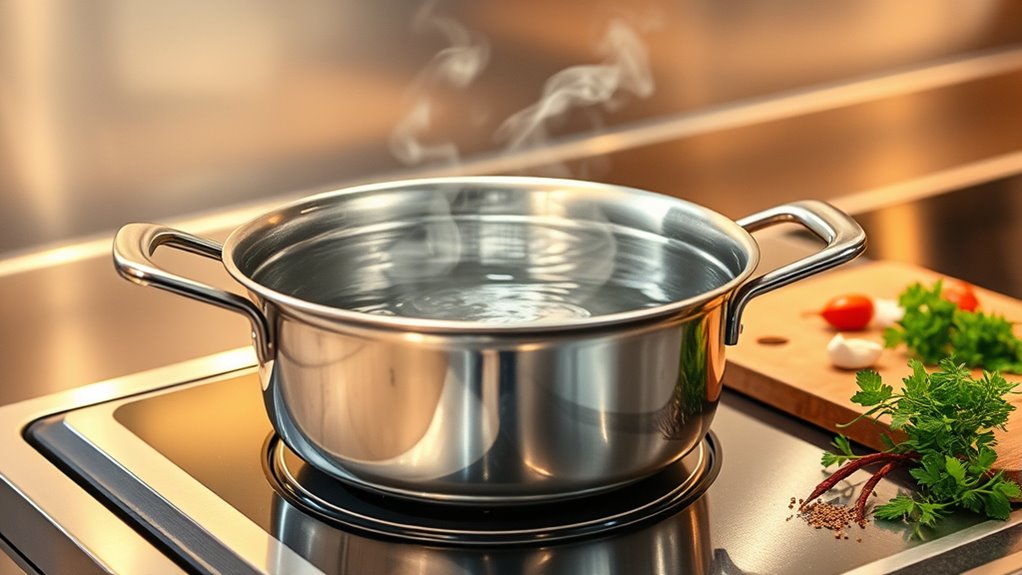
Before you start boiling water in your aluminum pan, it’s important to prepare it properly to guarantee safety and preserve taste. When you boil water in aluminum, it forms a protective oxide layer that prevents metal from leaching into your food or drink.
To make certain safety, boil plain water in the pan for at least 30 minutes before you use it for cooking or brewing. This initial boiling reduces any metallic taste and minimizes the risk of aluminum flavor transferring.
Avoid boiling acidic ingredients like vinegar or tomatoes, as they can react with the aluminum, causing discoloration and off-flavors. Keep your pan clean and regularly treat it by boiling water to maintain its safety and taste neutrality over time.
Preparing Your Aluminum Pan for Boiling Water
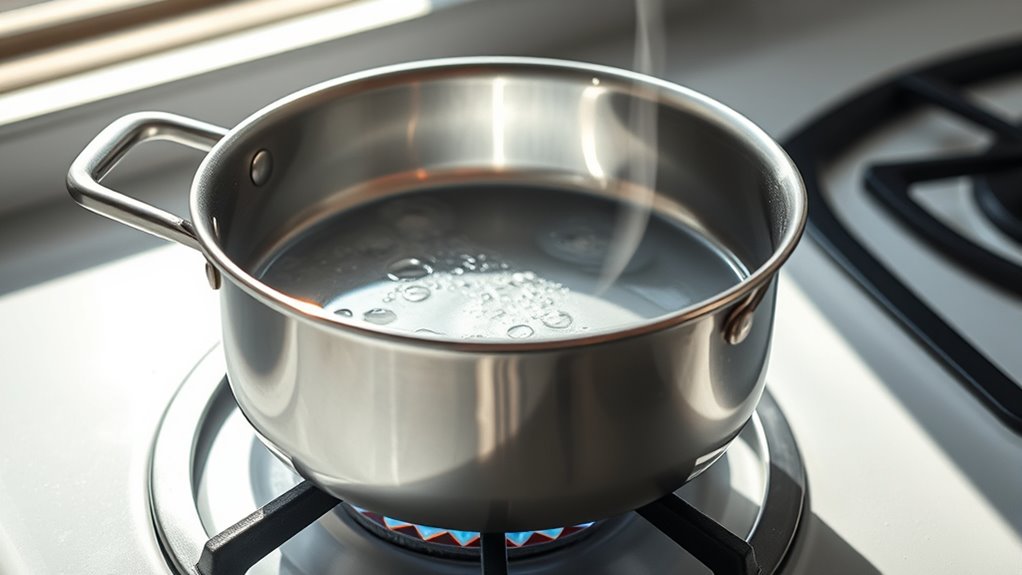
Although aluminum pans are great for boiling water, you’ll want to start by rinsing yours thoroughly with warm water and mild dish soap to remove any manufacturing residues. Next, fill your aluminum pots with clean water, ensuring you leave enough space to prevent spills.
Bring the water to a rolling boil for at least 30 minutes to create a protective oxide layer. After boiling, discard the water and rinse the pan with hot water to remove loosened residues. Finally, dry it completely with a soft cloth to maintain surface quality. Let it sit dry before your next use.
| Step | Purpose |
|---|---|
| Rinse with warm water | Remove manufacturing residues |
| Fill with clean water | Prevent spills during boiling |
| Boil for 30 minutes | Promote oxide layer formation |
| Rinse & dry | Remove residues and prevent rust |
How to Boil Water Safely in Aluminum Pans
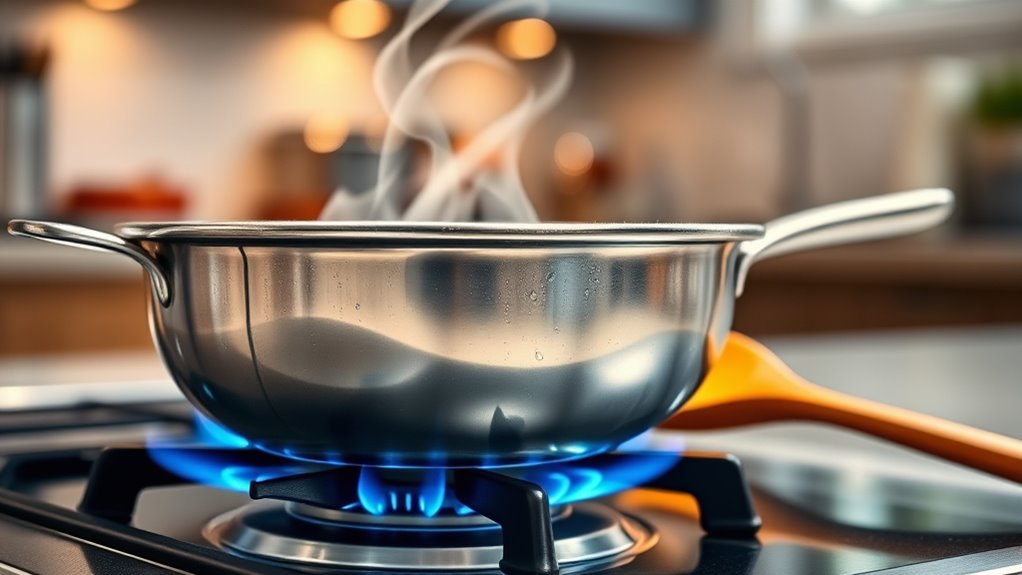
When you boil water in aluminum pans, you’ll want to rinse the pan thoroughly to remove any residues, then fill it with clean water while leaving enough space to prevent spills. Place the pan on the stove and set the heat well to high, guaranteeing the water reaches a rolling boil. Maintaining consistent heat helps avoid uneven boiling or scorching, keeping your aluminum pan safe to use.
Let the water boil for a few minutes; this not only eliminates any contaminants but also allows the pan’s surface to oxidize properly. After boiling, carefully pour out the water and dry the pan completely to prevent oxidation or staining. Following these steps ensures you boil water safely and efficiently in your aluminum pan.
Why Cleaning Aluminum Pans Before and After Boiling Matters
Since aluminum pans can retain oils, dirt, and other residues, cleaning them before boiling guarantees your water stays pure and tastes fresh. Proper cleaning prevents mineral buildup and oxidation, protecting the aluminum surface and extending your pan’s lifespan.
After boiling, cleaning removes deposits and keeps the pan safe for future use. Use gentle agents like baking soda or vinegar and rinse thoroughly to avoid soap residue.
| Cleaning Time | Purpose |
|---|---|
| Before Boiling | Remove oils, dirt, contaminants |
| After Boiling | Eliminate mineral deposits, residues |
| Cleaning Agents | Baking soda, vinegar |
| Maintenance Goal | Preserve aluminum integrity |
Regular cleaning is key to aluminum pan maintenance and ensures safe, effective boiling.
How to Avoid Metallic Taste When Boiling Water in Aluminum
You can prevent a metallic taste by seasoning your aluminum pan with a pre-boiling water technique that promotes oxidation. This helps create a protective layer on the surface, reducing any unwanted flavors.
Also, make sure to clean your pan gently and regularly to maintain this barrier and keep your water tasting pure.
Pre-Boiling Water Technique
If you want to avoid a metallic taste when boiling water in aluminum pans, start by boiling water in the pan for at least 30 minutes before using it regularly. This pre-boiling step promotes oxidation, creating a protective aluminum oxide layer on the surface. This layer markedly reduces the risk of metallic taste and prevents aluminum from leaching into the water.
After boiling, rinse the pan with hot water to remove any loose oxide debris and avoid residue buildup. When cleaning, steer clear of abrasive scrubbers to preserve the oxide layer and maintain the seasoning effect. Repeating this pre-boiling process periodically helps sustain the protective barrier, ensuring your water tastes clean and safe every time you use your aluminum pan.
Aluminum Oxidation Benefits
Boiling water beforehand not only prepares your aluminum pan but also kickstarts the formation of a protective oxide layer. This aluminum oxidation creates a barrier that stops metal ions from leaching into your water, preventing that unpleasant metallic taste. When you season your pan properly, you stabilize its surface, making your future boiling sessions taste-neutral and safe.
To benefit from aluminum oxidation, you should:
- Boil water in your new pan for at least 30 minutes
- Repeat the process regularly to speed up oxide layer growth
- Avoid cooking acidic foods until this protective layer forms
- Use the pan mainly for boiling water or neutral liquids initially
Cleaning And Maintenance Tips
Although aluminum pans are durable, maintaining their protective oxide layer requires careful cleaning. To avoid a metallic taste when boiling water, you should regularly boil water in the pan for at least 30 minutes to build up this oxide layer.
For cleaning, steer clear of abrasive cleaners that can damage the oxide coating. Instead, use gentle methods like a mixture of baking soda and vinegar to keep the surface intact. After boiling or cooking, rinse the pan thoroughly to remove any residue.
Avoid boiling or cooking acidic foods in your aluminum pan, as acids can corrode the oxide layer and cause metallic flavors. Consistent cleaning and maintenance will help preserve the pan’s safety and ensure your water tastes fresh every time.
Common Problems Boiling Water in Aluminum and How to Fix Them
You might notice discoloration, cloudiness, or even a metallic taste when boiling water in your aluminum pan. These issues often stem from mineral deposits, impurities, or improper cleaning methods.
Let’s explore how you can troubleshoot and fix these common problems to keep your pan in great shape.
Aluminum Boiling Issues
When you use aluminum pans to boil water, you might notice discoloration or pitting caused by minerals or acidic substances in the water. These aluminum boiling issues can affect your pan’s appearance and longevity if not addressed. To maintain your cookware’s quality, focus on proper maintenance and mindful use.
Here are some tips to help:
- Boil only clean, filtered water to reduce mineral buildup.
- Avoid adding acidic ingredients during boiling to prevent chemical reactions.
- Use heavy, thick-bottomed aluminum pans for even heat distribution and fewer hotspots.
- Rinse and clean the pan gently after boiling; avoid abrasive scrubbers to protect the surface.
Troubleshooting Water Boil
If water boils over or splatters in your aluminum pan, adjusting the heat and switching to a larger pan can keep the boiling under control. Uneven heating or scorching often results from using a thin-bottomed pan, so choose one with a heavy base for better heat distribution.
For persistent discoloration or residue after boiling, try troubleshooting by boiling a solution of vinegar and water or applying a baking soda paste before rinsing well. Regular cleaning with mild soap and non-abrasive tools prevents buildup that could affect your water boil.
Aluminum vs. Other Pans for Boiling Water
Although many materials can be used for boiling water, aluminum pans stand out because they heat quickly and evenly, saving you time and energy. When choosing cookware for boiling water, aluminum offers several advantages over other materials:
- Lightweight and easy to handle compared to stainless steel
- Develops a protective oxide layer that minimizes metal leaching
- More affordable than copper or high-end stainless steel pans
- Maintains a neutral taste when properly used and cleaned
While some worry about aluminum affecting taste or safety, proper preparation eliminates these concerns.
Tips for Maintaining Your Aluminum Pan’s Surface and Shine
To keep your aluminum pan looking its best and performing well, you need to maintain its surface regularly. Start by boiling water in it often to build a protective oxide layer, which helps prevent corrosion and metallic taste.
When cleaning, use a soft sponge with baking soda to gently remove stains without damaging the aluminum. For restoring the pan’s natural shine, wipe it down with a vinegar and water mixture. Avoid abrasive cleaners or steel wool since they scratch and dull the surface. After washing, dry your pan thoroughly to stop oxidation and keep its bright appearance. Following these simple cleaning and care tips ensures your aluminum pan stays shiny and functional for a long time.
When to Replace Your Aluminum Pan
Knowing when to replace your aluminum pan is key to maintaining both safety and cooking performance. Over time, wear and tear can compromise your pan’s effectiveness and safety. Watch for these signs to know when it’s time for a new one:
- Deep scratches or uneven surfaces that affect cooking
- Persistent corrosion or rust that won’t come off
- Warping or denting that impacts heat distribution
- Difficulty cleaning or visible loss of structural integrity
Ignoring these issues can lead to uneven heating or contamination. By replacing your aluminum pan when these signs appear, you ensure your cookware remains safe, efficient, and reliable for boiling water and other cooking tasks.
Don’t risk your food quality or safety—keep an eye on your pan’s condition.
Frequently Asked Questions
Is It Safe to Boil Water in an Aluminum Pan?
Yes, it’s safe to boil water in an aluminum pan. Just make sure the pan’s well-seasoned or oxidized first to prevent any metallic taste.
Proper care keeps it non-toxic and reliable for everyday use.
Does Aluminum Release Toxins When Heated?
You won’t release significant toxins heating aluminum; studies show properly oxidized aluminum cookware lets less than 0.1% aluminum migrate into food.
How to Warm up Food in an Aluminum Pan?
You warm up food in an aluminum pan by placing it on medium heat, stirring occasionally to guarantee even cooking. Cover the pan with a lid to retain heat and moisture.
Continue heating until the food reaches your desired temperature. Be sure to monitor the food to prevent burning or sticking.
Do Aluminum Pots Take Longer to Boil Water?
You won’t wait long—aluminum pots actually boil water faster thanks to their great heat conductivity.
Coincidentally, their quick heat spread means you’ll save time compared to other metals, making your cooking more efficient overall.
Conclusion
Boiling water in your aluminum pan isn’t just a simple task—it’s like taming a wild, shimmering dragon in your kitchen! With the right prep and care, you’ll avoid that metallic taste and keep your pan gleaming like a treasure chest.
Remember, a little attention goes a long way to keep your water pure and your pan shining brighter than the sun. So, treat your aluminum pan right, and it’ll serve you like a loyal, sparkling companion for years!
By following these tips on how to boil water in an aluminum pan, you ensure both safety and flavor, making your kitchen experience enjoyable and efficient.