How You Can Safely Feed Raw Ground Beef to Your Dog
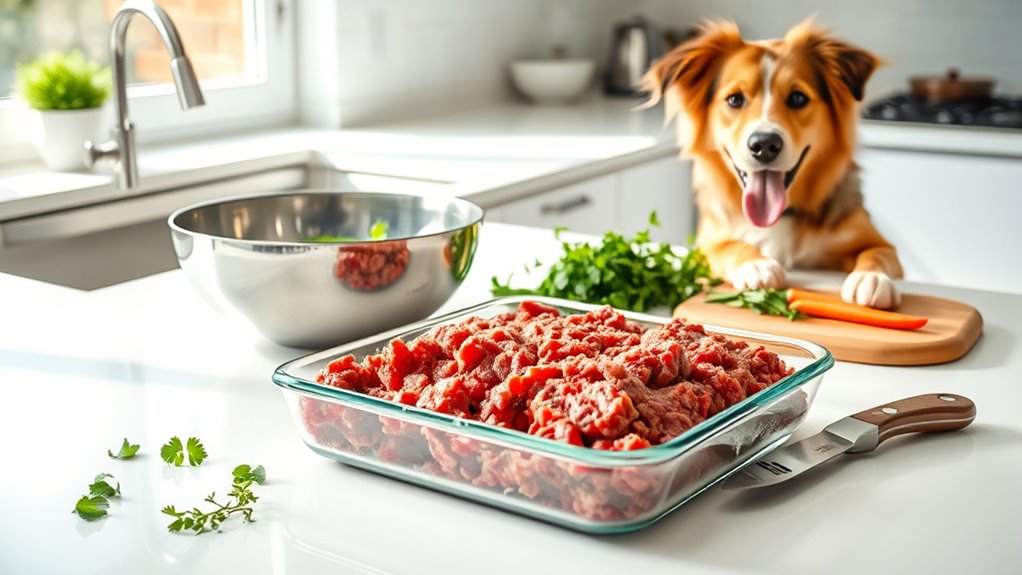
You can safely feed raw ground beef to your dog by choosing fresh, human-grade beef from a trusted source. Handling it with clean hands and sanitized surfaces is essential to avoid contamination. Freezing the meat for at least 24 hours helps reduce parasites and ensures safety.
Thaw the meat in the fridge to maintain proper temperature control. Start with small portions, removing any bones and excess fat. Gradually increase the amount while closely monitoring your dog’s health and reactions.
Incorporate balanced nutrients to support your dog’s overall well-being. Always consult your vet for guidance tailored to your pup’s specific needs. Following these steps can help you confidently provide raw ground beef as a safe part of your dog’s diet.
Is Raw Ground Beef Safe for Dogs?
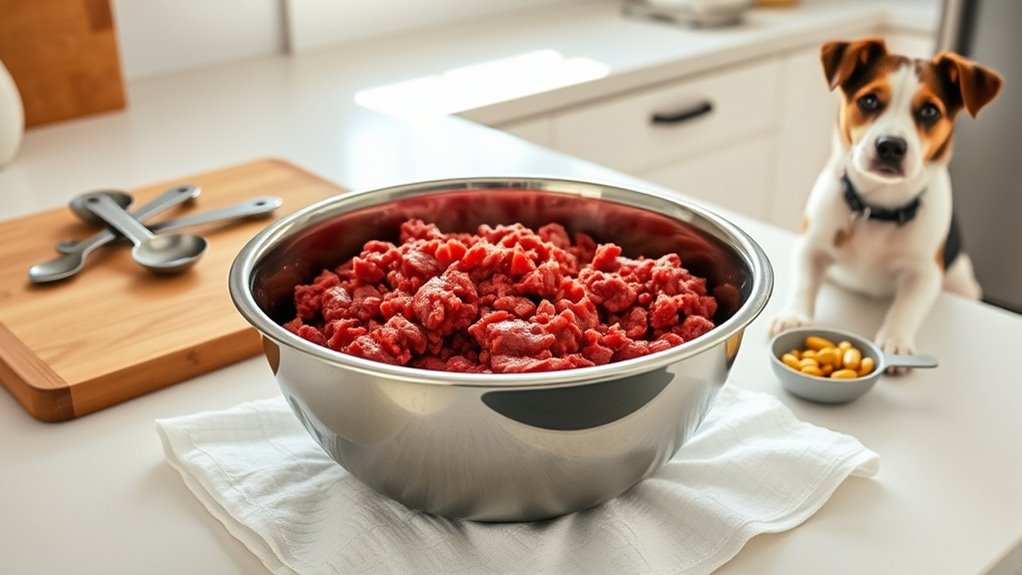
While raw ground beef can provide valuable nutrients, you need to handle it carefully to keep your dog safe. Raw ground beef may contain bacteria like Salmonella and E. coli, which can cause serious health risks to both dogs and humans. When feeding dogs raw meat, contamination is a key concern, so always choose fresh, human-grade beef and avoid processed or seasoned products.
To reduce risks, wash your hands thoroughly, disinfect surfaces, and store raw beef separately from other foods. Freezing the meat for at least 24 hours can help lower parasite threats but won’t eliminate all bacteria.
How to Select High-Quality Raw Ground Beef Safely
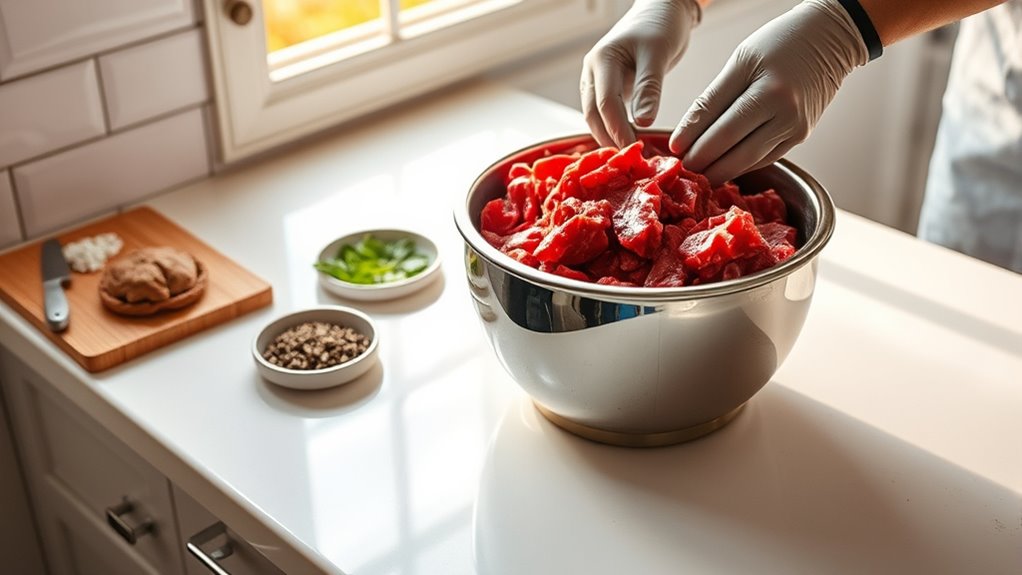
When selecting raw ground beef for your dog, you’ll want to choose human-grade meat from trusted suppliers who follow strict hygiene standards. Always check the packaging for freshness indicators like expiration dates and signs of spoilage.
Opt for lean beef with at least 90% lean content to guarantee quality and minimize excess fat.
Choosing Trusted Meat Sources
Choosing high-quality raw ground beef starts with trusting your meat sources. You want to assure you’re getting quality meat from reputable suppliers who prioritize safety. Opt for USDA-inspected, human-grade beef to guarantee it meets strict standards.
Look for labels like grass-fed, organic, or pasture-raised, which indicate a healthier, nutrient-rich product. Avoid beef with preservatives or artificial additives, as these aren’t ideal for your dog’s diet.
To select trusted meat sources, remember:
- Choose USDA-inspected and human-grade beef from reputable suppliers
- Prefer grass-fed, organic, or pasture-raised labels for quality meat
- Avoid pre-packaged beef with preservatives or artificial ingredients
- Buy from sources committed to preservative-free, natural products
This approach helps you feed your dog safely and nutritiously.
Inspecting Freshness And Quality
To guarantee your dog gets the best raw ground beef, inspect the meat carefully for freshness and quality. Choose USDA-inspected, lean ground beef with a bright red color and firm texture; avoid any slimy or discolored meat. Check the packaging during your inspection—it should be properly sealed without tears or leaks.
Always verify the expiration date to ensure the ground beef hasn’t passed its prime. Smell the meat; it should be clean and odorless, indicating good meat freshness. Opt for high-quality, human-grade beef from trusted sources or local butchers who specify grass-fed or pasture-raised options.
Avoid products stored improperly or near expiration. When unsure about freshness, freeze the beef for 24 hours and thaw it in the refrigerator to reduce parasite risks, ensuring safe feeding for your dog.
Safe Handling of Raw Ground Beef to Prevent Contamination
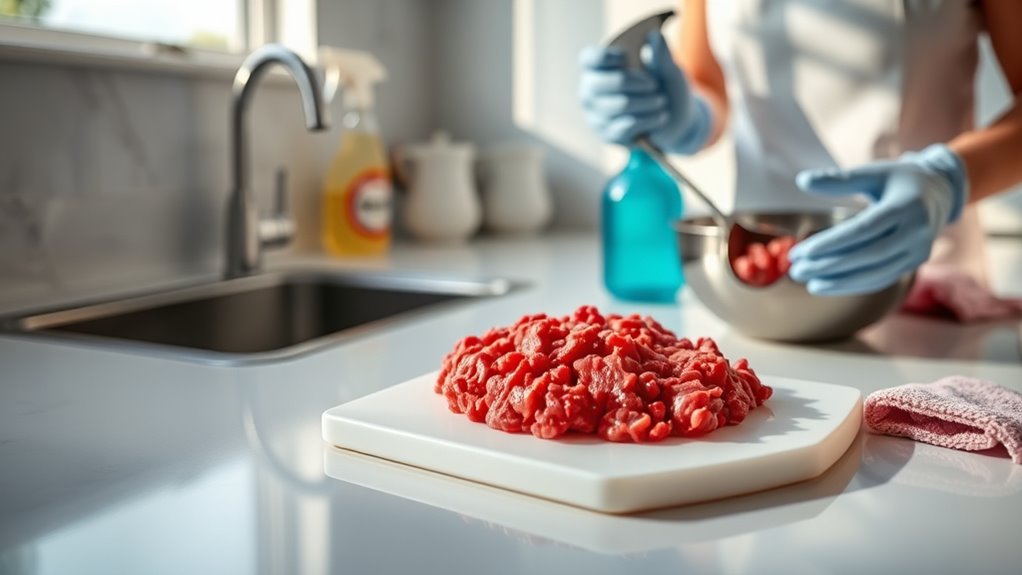
Although feeding your dog raw ground beef can be beneficial, you need to handle it carefully to prevent contamination. Safe handling is essential to avoid bacterial contamination that could harm your pet. Always buy high-quality, USDA-inspected raw ground beef from trusted sources.
Practice good hygiene by washing your hands thoroughly after touching raw beef. Disinfect utensils, cutting boards, and surfaces to maintain food safety. Proper storage is vital—keep raw beef frozen until use and store leftovers in sealed containers in the fridge, using them within 1-2 days.
When thawing, do so in the refrigerator to minimize bacterial growth.
- Purchase USDA-inspected ground beef
- Wash hands after handling raw beef
- Disinfect all contact surfaces
- Store leftovers sealed and refrigerate promptly
Freezing and Thawing Raw Beef Safely
When you freeze raw ground beef at 0°F (-18°C) for at least 24 hours, you help eliminate parasites that could harm your dog. For secure storage, keep the ground beef properly wrapped to avoid freezer burn and contamination.
When it’s time to feed, thaw frozen raw beef in the refrigerator rather than at room temperature; this keeps the beef at a safe temperature, reducing bacterial growth risks. Always thaw the beef in a clean container to catch any drippings.
Use the thawed ground beef within 1-2 days for maximum safety, and don’t refreeze it unless you cook it thoroughly first. Proper freezing and thawing practices ensure that the raw beef stays safe and nutritious for your dog’s diet.
Preparing Raw Ground Beef: Portion Sizes and Removing Bones and Fat
When preparing raw ground beef for your dog, it’s important to adjust portion sizes based on their weight, age, and activity level. Be sure to remove any bones to prevent choking and trim excess fat to avoid digestive issues.
These steps help keep your dog safe and make certain they get the right nutrition.
Appropriate Portion Sizes
Feeding your dog the right portion of raw ground beef depends largely on their size and daily needs. To maintain proper portion control and meet feeding guidelines, adjust serving amounts according to your dog’s weight and activity. Small dogs typically need 1-2% of their body weight daily, while larger dogs require 2-3%.
Keep portion sizes manageable to avoid digestive upset, splitting the daily intake into multiple meals if you feed more than once a day.
- Serve 1-2 ounce portions for puppies, 3-4 ounces for adults
- Remove excess fat to prevent digestive issues
- Follow feeding frequency recommendations to support digestion
- Discard leftovers within 24 hours and store beef properly
Following these tips ensures safe and balanced feeding with raw ground beef.
Bone Removal Importance
Ensuring the right portion size is just one part of preparing raw ground beef for your dog. Bone removal plays an essential role in safe feeding. Always inspect ground beef carefully, removing any bone fragments or cartilage that could pose a choking hazard or cause internal injury.
Use a clean, sharp knife during meat preparation to separate and discard small or brittle bones. This step not only prevents choking but also reduces the risk of bacterial contamination by eliminating hard-to-clean bone particles. Avoid feeding your dog meat containing bones unless they’re safe, non-splintering alternatives.
Managing Excess Fat
Although fat adds flavor, you’ll want to remove excess visible fat from raw ground beef to prevent digestive upset and obesity in your dog. Choosing lean ground beef with less than 10% fat supports healthy weight and better dog nutrition. Fat removal is vital to maintain proper dietary management and avoid unnecessary calories.
Portion control also plays a vital role; feeding 1-3% of your dog’s body weight daily ensures balanced nutrition.
Keep these tips in mind for managing excess fat:
- Trim large fat chunks before serving raw ground beef
- Avoid adding oils or butter to the meat
- Select lean ground beef to reduce fat content naturally
- Adjust portion sizes based on your dog’s size and activity level
This approach promotes healthy weight and overall well-being.
Balancing Raw Ground Beef With Safe, Nutritious Additions
When you combine raw ground beef with nutrient-rich organ meats like liver and kidney, you provide your dog with essential vitamins and minerals that support overall health. To create a balanced diet, include safe vegetables such as carrots, green beans, or pumpkin, which add fiber and important micronutrients. Incorporating small, raw, edible bones like chicken necks or beef knuckles supplies calcium and promotes dental health. Always choose high-quality protein from human-grade, reputable sources to minimize contamination risks.
Introducing Raw Ground Beef Gradually
Since your dog’s digestive system needs time to adjust, start by mixing a small amount of raw ground beef—about 10%—into their regular food. Introducing raw ground beef gradually helps you monitor tolerance and reduces the risk of digestive issues.
Begin with fresh, high-quality, USDA-inspected beef to guarantee safety during the transition. Feed this mixture once daily at first, then increase feedings as your dog adapts. Remember to observe your pet closely for any signs of gastrointestinal upset.
- Use a small amount initially to ease the changeover
- Gradually increase raw ground beef over 7 to 14 days
- Monitor tolerance carefully for digestive issues
- Start with one meal per day before expanding feeding frequency
This approach ensures a safe, smooth introduction of raw ground beef into your dog’s diet.
Monitoring Your Dog’s Health After Feeding Raw Beef
To guarantee your dog stays healthy after introducing raw ground beef, you need to watch closely for any signs of digestive upset like vomiting or diarrhea. Prioritize stool monitoring to catch digestive issues early.
Keep an eye on behavioral changes and overall dog gastrointestinal health by evaluating weight, coat, and energy. Schedule routine veterinary check-ups and fecal tests to detect bacterial infection or parasites early.
| What to Monitor | Why It Matters |
|---|---|
| Vomiting/Diarrhea | Signs of digestive upset |
| Stool Consistency | Detects digestive issues |
| Behavioral Changes | Indicates health assessment |
| Veterinary Check-ups | Prevents bacterial infection |
Promptly consult a vet if symptoms persist or worsen.
Veterinarian Advice on Feeding Raw Ground Beef
Although feeding raw ground beef can benefit your dog, you should always consult your veterinarian first to guarantee the diet suits your pet’s unique nutritional needs and health conditions. Your veterinarian advice is essential for safe feeding, helping you select quality sourcing and avoid health risks.
They’ll guide you on proper handling and nutritional balance to keep your dog healthy.
Keep in mind these key veterinarian recommendations:
- Choose USDA-inspected, human-grade raw ground beef
- Balance meat with organs and bones for complete nutrition
- Follow safe storage and preparation methods to prevent contamination
- Schedule regular vet visits for monitoring dog health and adjusting the diet.
Following this advice ensures you feed raw ground beef safely and responsibly.
Frequently Asked Questions
Can You Give Raw Ground Beef to a Dog?
Yes, you can give raw ground beef to your dog, but you should use fresh, high-quality meat. Freeze it first to kill parasites, and handle it carefully to avoid contamination.
Ensure your dog’s diet is balanced by including organ meats and bones alongside the ground beef. This helps provide essential nutrients for your pet’s health.
How Do I Prepare Raw Beef for My Dog?
You’ll want to thaw the beef in the fridge, use high-quality lean meat, wash your hands and surfaces thoroughly, serve it plain without seasonings, and optionally freeze it beforehand to reduce parasites for your dog’s safety.
How Do I Prepare Ground Beef for My Dog?
You should thaw ground beef fully, serve it plain, and guarantee it’s fresh and high-quality if feeding raw. Mix it with vet-approved veggies, and always clean your hands and surfaces after handling to keep your dog safe.
Be sure to monitor your dog for any adverse reactions when introducing new foods. Consult your veterinarian before making significant changes to your dog’s diet to ensure it meets their nutritional needs.
Can I Give My Dog Ground Beef Daily?
You can give your dog ground beef daily, but make sure it’s cooked thoroughly and part of a balanced diet.
Always vary proteins, include organ meats, and consult your vet to guarantee proper nutrition and portion sizes.
Conclusion
Feeding your dog raw ground beef can be a total game-changer for their health—like revealing secret superpowers you never knew they had! Just remember, selecting quality meat, handling it safely, and introducing it gradually are absolute musts.
Skip these steps, and you might as well be handing your pup a ticking health time bomb.
Follow these tips, and you’ll be the hero of your dog’s mealtime, turning every bite into a powerhouse of nutrition and happiness!
By safely feeding raw ground beef to your dog, you ensure they get the best benefits without the risks. Always prioritize safe food handling and high-quality ingredients to keep your furry friend healthy and thriving.