How Do You Put a Ceramic Pan in the Oven Safely
To safely put your ceramic pan in the oven, first check if it’s labeled oven-safe and note its maximum temperature. Ceramic pans are popular for their durability and heat retention, but proper handling is essential to avoid damage.
Avoid sudden temperature changes by letting the pan come to room temperature before heating. Remove any plastic handles and preheat the oven before placing the pan inside.
Use oven mitts to handle the pan and place it on a heat-resistant surface when removing it.
Follow these basics to keep your ceramic pan safe and durable, and you’ll find more tips to protect and maintain it.
How Can You Tell If Your Ceramic Pan Is Oven Safe?
How can you tell if your ceramic pan is oven safe? First, check the manufacturer label or packaging for clear oven safety instructions and temperature limits. Look closely for oven safety symbols or markings on the bottom or handle of the ceramic pan.
Consult the user manual or cookware specifications online to confirm if it’s designed to handle oven heat. Always inspect your pan for any cracks or damage—these can cause thermal shock and make oven use risky.
Also, verify that handle material and lid materials are oven-safe, such as silicone or glass, and avoid plastic or rubber parts that can melt. By following these steps, you ensure your ceramic pan can safely withstand oven temperatures without damage.
What Oven Temperatures Are Safe for Your Ceramic Pan?
Once you confirm your ceramic pan is oven safe, the next step is knowing the temperatures it can handle. Most ceramic cookware can tolerate oven temperatures between 350°F and 550°F, but you should always check the manufacturer instructions for exact temperature limits.
High-quality oven-safe cookware without plastic parts often withstands higher heat, sometimes up to 500°F or more. Avoid exceeding the maximum temperature to maintain oven safety and prevent damage to your ceramic pan.
| Ceramic Cookware Type | Maximum Temperature | Notes |
|---|---|---|
| Standard ceramic pan | 350°F – 450°F | Check packaging |
| High-quality ceramic | Up to 500°F+ | No plastic handles |
| Mixed materials pan | Below 350°F | Lower heat tolerance |
How to Prepare Your Ceramic Pan for Oven Use
Before you put your ceramic pan in the oven, make sure it’s labeled as oven-safe and note the maximum temperature allowed by the manufacturer to avoid damage. Remove any plastic or rubber handles, since they aren’t oven-safe and could melt or warp. If your pan has been in cold storage, let it come to room temperature first to prevent thermal shock.
When preheating your oven, wait until it reaches the desired temperature before placing the pan inside. Always use oven mitts to handle the hot ceramic pan and set it on a stable, heat-resistant surface to guarantee safety.
Following these steps helps protect your pan and ensures it performs well while cooking at the correct temperature specified by the manufacturer.
How to Avoid Cracks and Damage During Oven Use
Taking care when using your ceramic pan in the oven will help you avoid cracks and damage. To prevent thermal shock, always preheat your oven gradually and never expose a cold ceramic pan to sudden temperature changes.
Check your pan for existing cracks or chips before use, as these can worsen with heat. Follow the manufacturer guidelines closely, especially regarding the maximum oven temperature, to ensure oven safety and avoid coating damage or warping.
Handle your pan carefully using oven mitts, avoiding any knocks or drops that could cause chips or cracks. By avoiding thermal shock and handling your ceramic pan with care, you’ll ensure its longevity and maintain its performance for all your baking and roasting needs.
Tips for Safely Removing Your Ceramic Pan From the Oven
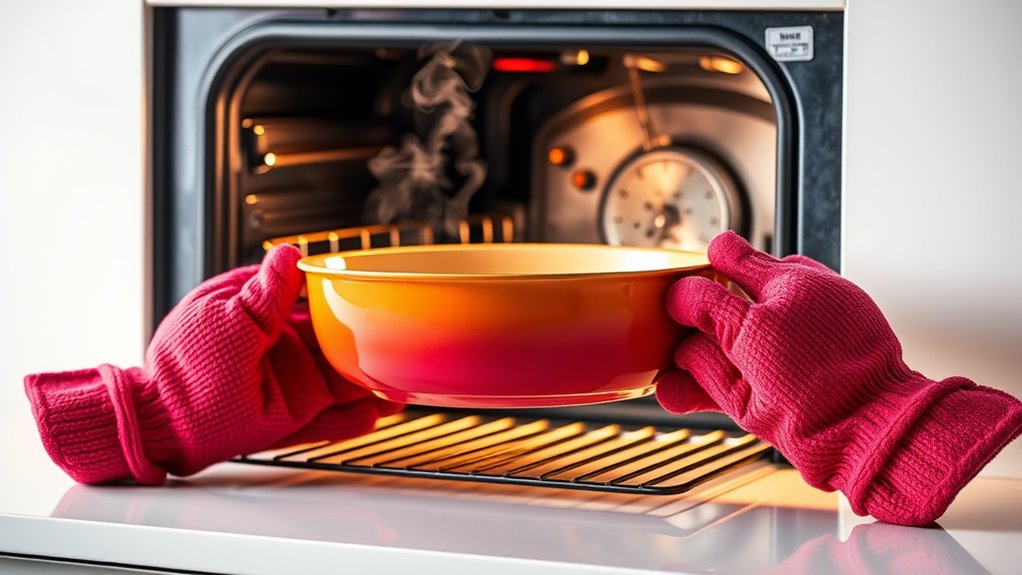
When you remove your ceramic pan from the oven, always wear oven mitts or heat-resistant gloves to protect your hands from burns. Carefully lift the hot pan by its oven-safe handles, checking first that they’re not too hot to touch.
Once out, set the pan on a trivet or heat-resistant surface to avoid damaging your countertop. Let the pan cool down for several minutes before handling it further.
Avoid sudden temperature changes, like placing the hot pan directly on a cold surface or immersing it in cold water, as this can cause thermal shock and lead to cracks or warping. Following these steps ensures your ceramic pan stays in great shape and safe to use every time.
How to Clean and Care for Your Ceramic Pan After Oven Use
Although it’s tempting to clean your ceramic pan right after use, you should let it cool completely to avoid thermal shock that can damage the ceramic coating.
Once cooled, hand wash the oven-safe pan with warm, soapy water using a soft sponge—avoid abrasive pads that can scratch the nonstick surface. For stubborn stains or stuck-on food, apply a baking soda paste or a mix of baking soda and vinegar to gently lift residue without harming the coating.
After cleaning, rinse thoroughly and dry with a soft towel to prevent water spots. Regularly inspect your ceramic pan for chips or cracks, since using damaged cookware can reduce safety and performance.
Proper care guarantees your pan remains effective and long-lasting.
Frequently Asked Questions
Is It Safe to Put a Ceramic Pan in the Oven?
Yes, you can safely put a ceramic pan in the oven if it’s oven-safe and free of plastic parts. Always check the manufacturer’s guidelines, avoid sudden temperature changes, and keep temperatures within recommended limits.
Using a ceramic pan that is not labeled as oven-safe can lead to cracking or damage. Additionally, plastic handles or parts may melt or release harmful fumes when heated.
To ensure safety and longevity, preheat the oven gradually and avoid placing the pan directly from the fridge into a hot oven. Following these precautions will help you use your ceramic pan safely in the oven.
How Do I Tell if My Ceramic Is Oven Safe?
Check your ceramic pan’s label or manual for oven-safe symbols and temperature limits. Avoid pans with plastic or rubber handles, as these materials may not withstand oven heat.
Inspect the pan for any damage such as cracks or chips, which could worsen in the oven. If you are uncertain about its oven safety, contact the manufacturer to confirm it’s safe for oven use.
Can Ceramic Go in the Oven at 450 Degrees?
You can safely put your ceramic pan in the oven at 450°F since most ceramic pans tolerate that heat. Just double-check your pan’s label and avoid sudden temperature changes to keep it from cracking or discoloring.
How to Properly Heat up a Ceramic Pan?
You heat your ceramic pan properly by placing it in a cold oven, then gradually raising the temperature to avoid thermal shock.
Don’t exceed its max safe heat, and always use oven mitts when handling the hot pan.
Conclusion
So, you’ve learned how to safely pop your ceramic pan in the oven without turning it into a cracked disaster. It’s almost ironic that something so delicate can handle the heat—if you treat it right. Just check if it’s oven-safe, keep temperatures reasonable, and avoid sudden changes.
Follow these simple steps, and your pan will thank you by sticking around longer—because who knew being gentle could be the key to surviving the oven’s fiery wrath? Remember, to put a ceramic pan in the oven safely, always preheat the oven gradually and never expose the pan to extreme temperature shocks. This way, you ensure your ceramic cookware stays intact and performs well for years.