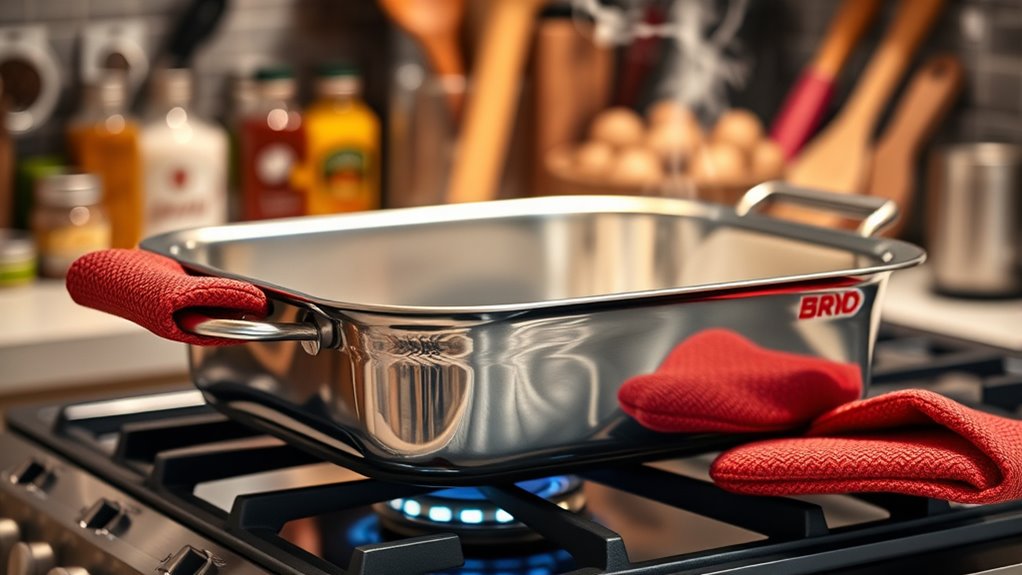
How You Can Safely Put a Roasting Pan on the Stove
You can safely put a roasting pan on the stove by choosing one made of durable materials like stainless steel, cast iron, or enameled metal designed for stovetop use. These materials ensure even heating and prevent damage. Using the right roasting pan is essential for stovetop cooking success.
Use low to medium heat to avoid warping and always center the pan over the burner to guarantee even heating. Avoid thin or non-stick pans as they may not withstand direct heat and can be damaged easily. Never leave the roasting pan unattended while cooking to ensure safety.
Proper care and heat control keep your pan in great shape. Learn how to optimize these steps for the best results and prolong the life of your roasting pan. Following these guidelines will help you cook safely and efficiently on your stove.
Is Your Roasting Pan Safe for the Stove?
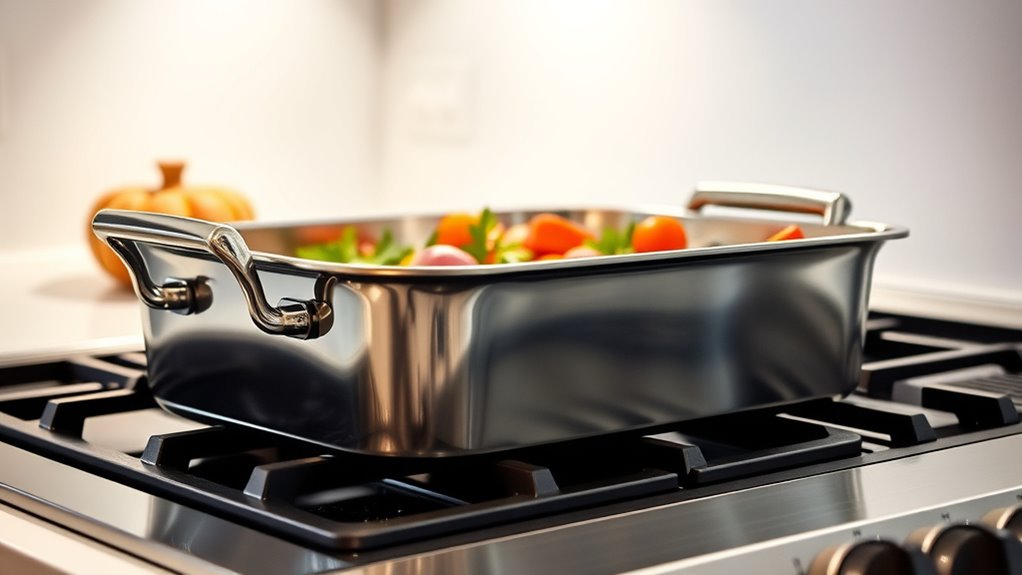
Before you place your roasting pan on the stove, make sure it’s made of materials like stainless steel, cast iron, or enameled metal that can handle direct heat. Stainless steel pans are especially reliable because they distribute heat evenly and resist warping.
Avoid thin or lightweight aluminum, non-stick, or disposable pans—they can easily warp or get damaged when exposed to direct stove heat. Always check the manufacturer’s instructions or product labels to confirm your roasting pan is safe for stovetop use.
Also, ensure your pan has a flat, heavy-bottomed base to promote even heating and prevent warping. After any accidental stove contact, inspect your pan carefully for signs of damage before using it again. This way, you’ll keep your cookware safe and functional.
Choose the Best Materials for Stovetop Use
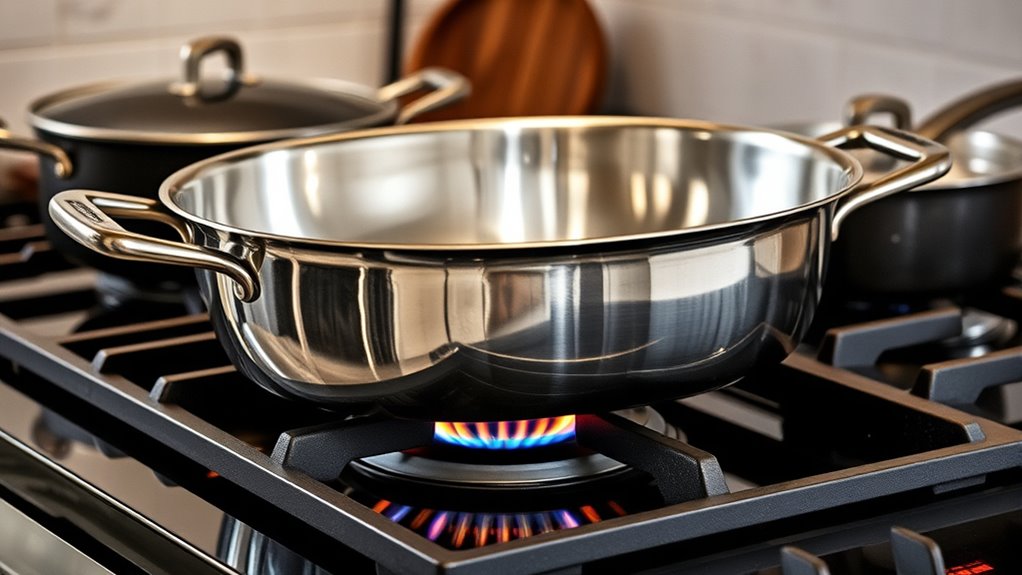
You’ll want to pick roasting pans made from materials that handle stovetop heat well, like stainless steel with aluminum or copper cores. Avoid pans with non-stick Teflon coatings since high heat can damage them and cause peeling.
Stick to heavy-bottomed, multi-layered pans or durable enamel-coated cast iron to guarantee safety and even cooking.
Suitable Pan Materials
When selecting a roasting pan for stovetop use, choosing materials that distribute heat evenly and resist warping is essential. Stainless steel pans with aluminum or copper cores are excellent choices because they provide even heat distribution, preventing hot spots. Cast iron or enameled cast iron pans also work well; they’re durable and retain heat, making them safe when properly maintained.
You want pans with thick, heavy bottoms since they handle high heat better and are less likely to warp, especially on gas burners. Avoid lightweight aluminum or non-stick pans, as they tend to warp or get damaged easily. Always check the manufacturer’s guidelines to ensure your roasting pan is designed for stovetop use before you place it on the stove. This way, you’ll cook safely and effectively.
Avoid Damaging Coatings
Although non-stick and Teflon-coated roasting pans offer easy cleanup, they don’t hold up well to stovetop heat and can peel or release harmful fumes. To prevent damaging coatings, choose roasting pans made from stainless steel or enameled cast iron with thick, flat bottoms designed for stovetop use.
Look for pans with clad construction, combining stainless steel with aluminum or copper cores, ensuring even heat distribution without warping. Always double-check that your roasting pan is explicitly rated for stovetop cooking by the manufacturer.
Following these guidelines prevents damage to your cookware and keeps your kitchen safe. Avoiding non-stick or Teflon-coated pans on the stove ensures your roasting pans last longer and maintain their integrity during stovetop cooking.
Avoid Unsafe Materials Like Teflon and Thin Aluminum
Since the high heat from stovetops can damage certain materials, you should avoid using pans with Teflon coatings or thin aluminum. Teflon’s non-stick layer isn’t made for direct flame and can peel or emit harmful fumes when overheated. Thin aluminum roasting pans lack the thickness needed for stovetop use, often leading to warping or uneven heat distribution.
Instead, choose roasting pans made from steel or stainless steel, which provide durability and excellent heat distribution. These materials resist warping and handle stovetop heat safely. Using heavy-duty stainless steel pans ensures your cooking surface remains stable and your food cooks evenly, protecting both your pan and stovetop from damage.
Avoid unsafe materials to keep your cooking safe and efficient.
Use Low to Medium Heat on Your Roasting Pan
To safeguard your roasting pan and guarantee even cooking, always use low to medium heat on the stove. This approach prevents warping or damage to your stainless steel roasting pan by avoiding sudden temperature spikes. Moderate heat helps distribute warmth evenly, reducing hot spots that could deform the pan.
If you need higher heat, increase it gradually to let the pan adjust without stress. Avoid high heat with thin or lightweight pans to protect coatings and structure. Always monitor your pan closely and never leave it unattended on the stove.
| Heat Level | Effect on Pan | Recommended Action |
|---|---|---|
| Low | Gentle warming, no warping | Safe for all stainless steel pans |
| Medium | Even heat distribution | Ideal for most roasting tasks |
| High | Risk of warping and peeling | Avoid, especially on thin pans |
| Gradual Increase | Allows pan adjustment | Use when more heat is needed |
How to Position Your Roasting Pan for Even Heat
To get even heat, make certain you center your roasting pan directly over the burner without letting the edges hang off.
If your stovetop heats unevenly, use a heat diffuser to spread the warmth more consistently. Keeping the pan stable and well-positioned prevents hot spots and ensures your food cooks evenly.
Centering Over Burner
When you position your roasting pan correctly over the burner, you guarantee even heat distribution for better cooking results. Center your roasting pan directly on the stove top burner to ensure the flame or heating element heats it evenly, preventing hot spots that can cause warping over years old.
Choose a pan size that matches the burner to avoid overhanging edges, which lead to instability and affect cooking performance. Pans with an aluminum or copper core distribute heat well, so keeping them centered maximizes this benefit, especially when cooking dishes like Lamb Shanks.
Make sure the pan’s handles don’t extend beyond the burner edge to prevent tipping or touching hot surfaces. Using hot water to clean after use keeps your pan in top shape for future meals.
Using Heat Diffusers
Centering your roasting pan over the burner sets the stage for even cooking, but adding a heat diffuser takes it a step further by distributing heat more consistently across the pan’s base. Place a diffuser made of cast iron or thickened metal between the burner and the pan to prevent hot spots and guarantee stable cooking.
Make sure the diffuser matches your pan’s base size to maintain full contact and avoid wobbling. Adjust your burner to low or medium heat to protect the diffuser from overheating and keep the temperature steady. Regularly inspect the diffuser for warping or damage, replacing it if it no longer sits flat.
Using a heat diffuser this way helps you achieve even heat distribution and safer stovetop roasting.
Avoiding Overhanging Edges
Although it might seem minor, ensuring your roasting pan sits flat on the burner without any edges hanging over is essential for even heat distribution. Overhanging edges can cause uneven cooking, warping, or instability, risking both your meal and safety. Position your pan carefully to maximize efficiency and avoid accidents.
Follow these tips to avoid overhanging edges:
- Center the pan’s widest part directly over the burner for consistent heat.
- Use a pan with straight, tall sides to keep edges within the burner’s perimeter.
- Align the pan to cover only the burners beneath it, especially when using multiple burners.
Also, make sure handles don’t extend over the stove edge to prevent accidental knocks or heat damage.
Never Leave Your Roasting Pan Unattended
Since roasting pans can quickly overheat or boil over, you should never leave yours unattended on the stove. Always stay close and keep an eye on it to prevent accidents or overcooking. If you step away or get distracted, the pan can overheat, causing warping, burning, or even fires.
When you notice smoke or boiling over, turn off the heat immediately to avoid damage or hazards. Make it a habit to regularly check the pan’s temperature and contents throughout cooking. This vigilance ensures safe use and helps you catch any problems early.
Clean and Inspect Your Roasting Pan After Use
After you finish cooking, make sure you clean your roasting pan promptly with warm, mild soap and a non-abrasive sponge to remove grease and food residue. This prevents buildup and keeps your pan in good shape.
Clean your roasting pan promptly with warm, mild soap and a gentle sponge to prevent buildup and maintain its condition.
Next, inspect your pan carefully before using it on the stove again. Look for any signs of warping, cracks, or damage. Also, check the handles and rivets to ensure they’re secure.
Finally, dry your pan thoroughly to avoid rust or corrosion, especially if it’s metal.
Here’s a quick checklist to follow:
- Remove all food particles and grease completely.
- Examine the pan’s surface and handles for damage.
- Dry the pan entirely to prevent oxidation.
Taking these steps helps you use your roasting pan safely every time.
Why Clad Stainless Steel and Enameled Pans Are Worth It
Keeping your roasting pan in top shape sets the stage for choosing cookware that performs reliably. Clad stainless steel and enameled pans are worth the investment because they combine durability, heat efficiency, and ease of use.
You’ll appreciate their resistance to warping and discoloration, plus their seamless stovetop-to-oven transition. Here’s a quick comparison to help you decide:
| Feature | Clad Stainless Steel | Enameled Pans |
|---|---|---|
| Heat conduction | Excellent (aluminum/copper core) | Good |
| Surface | Stainless steel, durable | Non-reactive, stain-resistant |
| Cleaning | Moderate effort | Easy |
| Oven safe | Yes | Yes |
Choosing either means safer, more efficient cooking, and long-lasting cookware that holds up under frequent use.
Use Roasting Pans Safely for Gravy and Sauces
When you make gravy or sauces, selecting a heavy-bottomed stainless steel or enameled roasting pan guarantees even heat distribution and prevents hot spots that could burn your sauce. Avoid non-stick or aluminum pans on the stove, as they may warp or react with acidic ingredients.
To maximize flavor and safety:
- Deglaze the hot roasting pan by adding broth, wine, or water, then scrape up browned bits for a rich base.
- Pour your finished gravy through a fine sieve to filter out burnt bits or pan residue.
- Always monitor heat closely to avoid scorching, and use oven mitts or sturdy pot holders when handling the pan.
Following these steps helps you create smooth, flavorful sauces without damaging your roasting pan or risking burns.
Frequently Asked Questions
Can You Put a Roasting Pan on the Stovetop?
Yes, you can put a roasting pan on the stovetop if it’s heavy-bottomed and stovetop-safe. Just avoid thin or coated pans, check manufacturer instructions, and make sure the pan fits your burner securely to prevent damage or accidents.
Can You Put an Aluminum Roasting Pan on the Stove?
You generally shouldn’t put an aluminum roasting pan on the stove, as it can warp or melt.
If you must, use a thick, heavy-duty one with a bonded base, and always check the manufacturer’s guidelines first.
Are You Supposed to Put Water in the Bottom of a Roaster Pan?
You don’t always need water in the bottom of a roaster pan. Add it when braising or slow-cooking to keep meat moist, but skip it for roasting if you want crispy, browned results.
Always check your recipe.
Can You Put an Oven Tray on the Stove?
You shouldn’t put an oven tray directly on the stove because it can warp or get damaged.
Instead, use heavy-duty cookware made for stovetop use, and always check the manufacturer’s guidelines to avoid safety risks.
Conclusion
Now that you know how to safely use your roasting pan on the stove, why not give it a try? By choosing the right materials, using low to medium heat, and never leaving it unattended, you’ll protect both your pan and your stove.
Remember to clean and inspect your pan after each use to keep it in great shape. With a little care, your roasting pan can be your go-to for delicious stovetop meals and savory sauces.
By following these tips, you can safely put a roasting pan on the stove and enjoy versatile cooking options without worry.