How You Can Safely Put Aluminum Pans in the Dishwasher
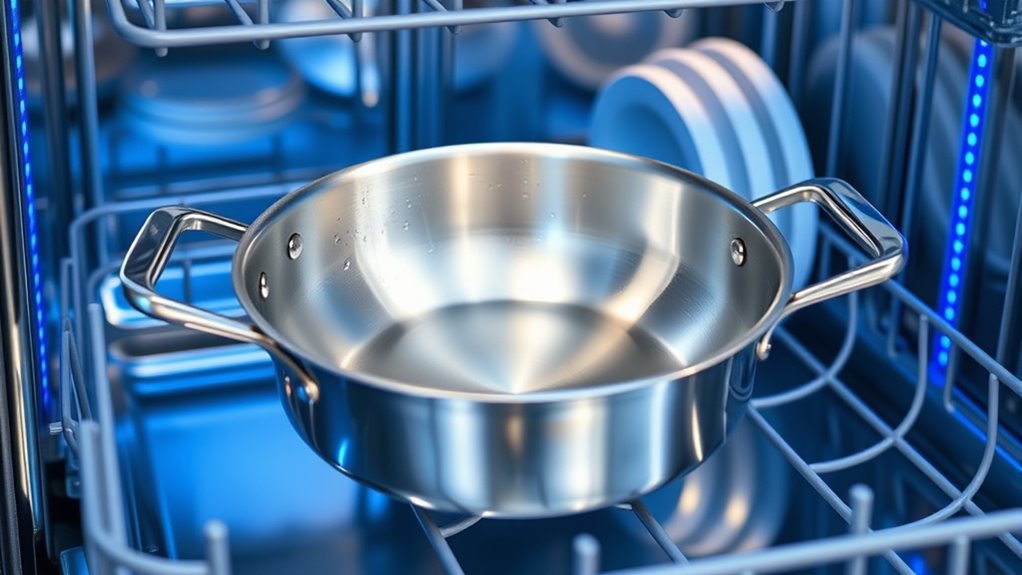
You can safely put aluminum pans in the dishwasher by following a few simple tips to protect their finish and longevity. Placing them on the top rack helps avoid direct heat and harsh detergent exposure, which can cause damage over time.
Use a mild, aluminum-safe detergent and select a short, gentle cycle with water below 130°F to prevent oxidation and discoloration. Rinse pans before loading to remove food residue.
After washing, dry them immediately to stop water spots and corrosion. If you want to keep your pans looking their best, there are more tips you’ll find helpful.
How to Safely Clean Aluminum Pans in the Dishwasher
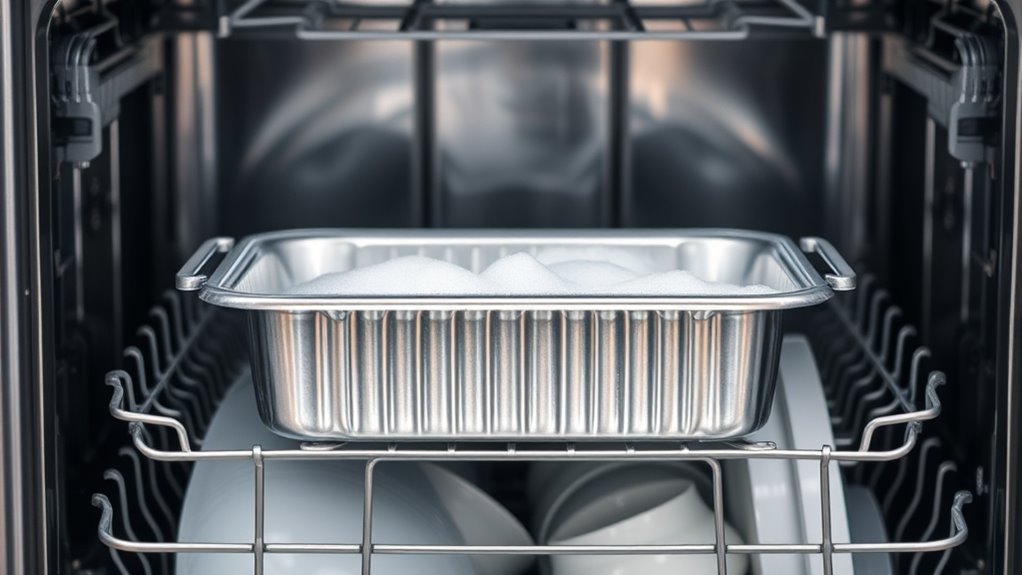
Although aluminum pans are generally sensitive to dishwasher detergents, you can still clean them safely by using a gentle, non-abrasive detergent and selecting a short or delicate cycle. Before placing your aluminum pans in the dishwasher, rinse them thoroughly to remove any food residue that might trigger chemical reactions during cleaning.
Avoid washing aluminum pans alongside other metals or heavily soiled items, as this can increase the risk of surface damage and discoloration. After the dishwasher finishes, dry your aluminum pans immediately with a soft cloth to prevent water spots and oxidation.
Why Dishwashers Can Damage Aluminum Pans
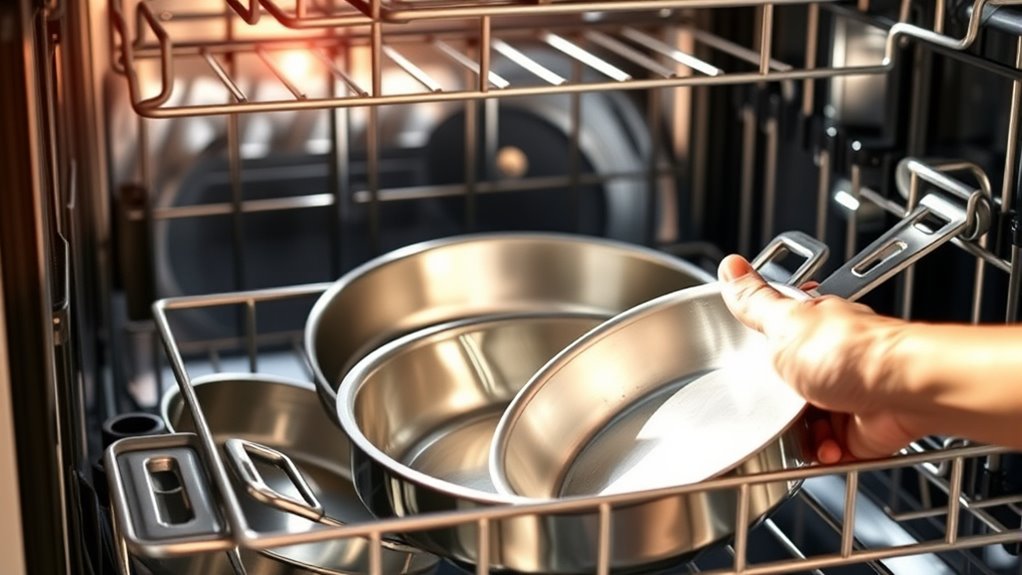
Even with careful washing, aluminum pans face risks in the dishwasher that you should understand. Dishwasher detergents are often alkaline, causing aluminum to corrode or develop dull stains. The high heat and strong water pressure speed up oxidation, leading to surface pitting and discoloration.
Aluminum also reacts chemically with dishwasher chemicals, stripping protective coatings and causing damage. Repeated dishwasher cycles can make aluminum lose its shine and feel rough or sticky.
| Cause | Effect on Aluminum |
|---|---|
| Alkaline detergents | Corrosion and dull stains |
| High heat and water pressure | Accelerated oxidation |
| Dishwasher chemicals | Coating damage and pitting |
Knowing these risks helps you protect your aluminum pans from dishwasher damage and corrosion.
How Coatings Protect Aluminum Pans During Washing
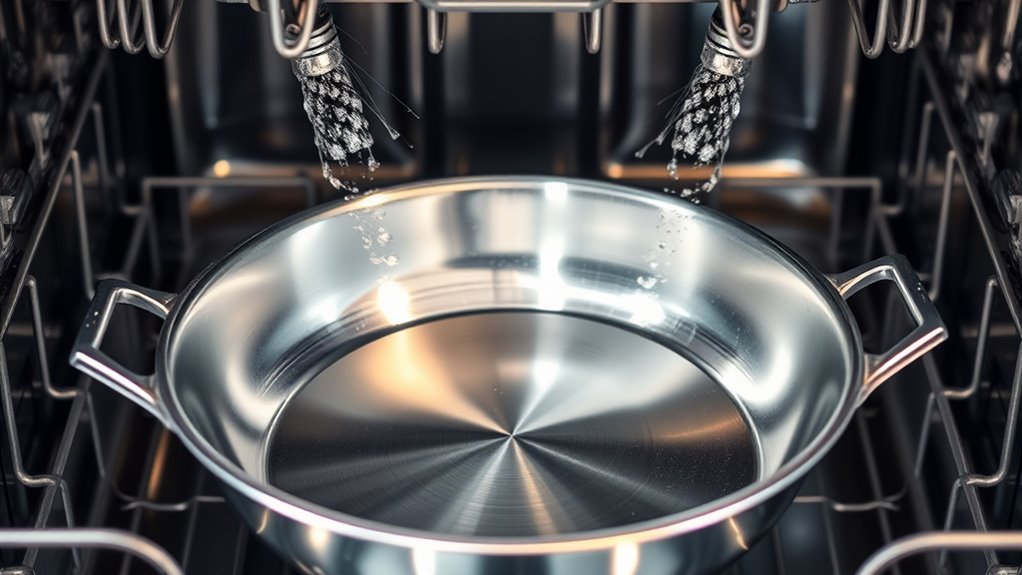
When you use aluminum pans with anodized or non-reactive coatings, you give them a protective shield against harsh dishwasher detergents. These coatings form a barrier that prevents direct contact between the aluminum surface and acidic or alkaline chemicals in the dishwasher. This protection helps stop oxidation, discoloration, and surface damage that can occur during washing.
Durable coatings also reduce the risk of pitting and staining, preserving both the appearance and performance of your pans through many dishwasher cycles. To keep this protection effective, inspect your pans regularly to ensure the coatings remain intact and undamaged.
Choosing the Right Dishwasher Detergent for Aluminum Pans
You’ll want to pick a dishwasher detergent with a mild pH to protect your aluminum pans from harsh chemical reactions. Look for formulas that are phosphate-free and designed specifically for delicate or aluminum cookware.
Using the right detergent helps prevent discoloration and damage, keeping your pans looking their best.
Detergent pH Levels
Because dishwasher detergents vary widely in their chemical composition, selecting one with the right pH level is essential to safeguard your aluminum pans. High pH levels, especially above 9, can accelerate corrosion and cause discoloration or surface damage to aluminum cookware.
To prevent this, choose a mild, phosphate-free detergent with low alkalinity. These detergents reduce the risk of oxidation and help maintain your pan’s finish. Detergents specifically designed for delicate or aluminum items offer extra protection against pitting and dullness.
Before fully cleaning your pan, test the detergent on a small, hidden spot to ensure it won’t harm the surface. Avoid harsh, highly alkaline detergents, as they can strip protective coatings and lead to blackening or dullness over time.
Aluminum-Friendly Ingredients
How do you pick a dishwasher detergent that keeps your aluminum pans looking their best? Start by choosing a mild, phosphate-free detergent designed to be dishwasher safe for aluminum pans. Avoid highly alkaline or abrasive detergents, as they can cause discoloration and surface pitting.
Opt for a gentle cleaning cycle, like a quick or delicate wash, to minimize wear during the cleaning cycle. Using rinse aids formulated for aluminum helps prevent staining and maintains the pan’s finish.
Before committing, test your chosen detergent on a small, inconspicuous area to ensure it won’t cause damage over time. By selecting the right detergents and cleaning cycle, you’ll keep your aluminum pans in great shape while enjoying the convenience of your dishwasher.
Why Water Temperature Matters for Aluminum Pans
While aluminum pans offer great cooking performance, you need to be careful with the dishwasher’s water temperature to keep them looking their best. High water temperature speeds up oxidation on aluminum surfaces, causing discoloration and dullness. Hot water also intensifies reactions with detergents, risking stains or damage.
Using cooler or lukewarm water slows oxidation, preserving your pan’s finish and extending its lifespan. Many manufacturers advise against excessive heat to avoid gray or blackened patinas.
| Water Temperature | Effect on Aluminum |
|---|---|
| High (above 140°F) | Accelerates oxidation, causes discoloration |
| Moderate (120-140°F) | Reduced oxidation risk, safer for aluminum |
| Low (below 120°F) | Best for preserving finish, minimal oxidation |
| Lukewarm | Balances cleaning and protection |
Control water temperature to keep your aluminum pans shiny and intact.
Best Dishwasher Settings to Protect Aluminum Pans
To keep your aluminum pans in great shape, choose a dishwasher cycle with water below 130°F and a gentle duration. Use a mild, aluminum-safe detergent without abrasive additives to prevent damage.
Avoid high heat and long cycles to minimize discoloration and surface wear.
Optimal Water Temperature
Because aluminum pans are sensitive to heat, you should use your dishwasher’s gentle or low-temperature cycle, ideally set between 120°F and 130°F, to prevent discoloration and damage. Maintaining the right water temperature is key to avoiding surface tarnishing and preserving your aluminum pans’ finish. Avoid high-temperature settings above 140°F, which accelerate oxidation and harm the metal.
To optimize care:
- Use a thermometer to verify consistent water temperature within the recommended range.
- Select cycles labeled “air-dry” or “cool-down” instead of heat drying to reduce heat exposure.
- Consult your dishwasher manual for specific temperature guidelines suited for aluminum pans.
Controlling water temperature in your dishwasher safeguards your aluminum pans from damage and keeps them looking their best.
Detergent Selection Tips
You are trained on data up to October 2023. When washing aluminum in the dishwasher, choosing the right dishwasher detergent is vital. Always opt for a mild, phosphate-free detergent to minimize chemical reactions that can dull or damage aluminum surfaces.
Harsh detergents can cause discoloration and pitting, so avoid them to keep your pans looking new. Pair this with selecting a gentle cycle, which uses lower heat and less aggressive water pressure, protecting your aluminum pans from warping or scratching.
This combination ensures your pans receive a thorough yet safe clean. If you’re unsure about your dishwasher’s settings or detergent, consider hand washing to preserve your aluminum cookware’s quality and appearance.
Cycle Duration Choices
When choosing a dishwasher cycle for your aluminum pans, selecting shorter, gentler settings helps prevent discoloration and surface damage. Opt for cycles that reduce heat and chemical exposure to keep your pans looking their best.
Here are three smart cycle duration choices to protect your aluminum pans:
- Use a light wash or quick cycle to minimize exposure to harsh detergents and heat, reducing the risk of discoloration.
- Choose the delicate or hand-wash cycle if available, ensuring minimal agitation and lower water pressure.
- Avoid heavy-duty or long cycles, as extended runs increase surface oxidation and gray discoloration.
Remember to remove your aluminum pans promptly after the cycle ends to prevent moisture buildup and further damage.
How to Load Aluminum Pans Safely in the Dishwasher
Although aluminum pans can be dishwasher-safe, you need to load them carefully to prevent damage. Start by confirming your aluminum pans are labeled dishwasher safe by the manufacturer. Place them on the top rack, away from other metals to reduce exposure to harsh detergents and high heat.
Before loading, make sure your pans are free of food residues and dry thoroughly to minimize oxidation and discoloration. Avoid overcrowding by leaving space around each pan to prevent scratches and ensure proper water flow.
Use a gentle detergent and select a mild wash cycle to safeguard the surface. Proper loading not only maintains your pans’ appearance but also extends their lifespan, letting you enjoy hassle-free cleaning with your dishwasher.
When to Hand Wash Aluminum Pans Instead of Using the Dishwasher
You should hand wash your aluminum pans if you notice discoloration, scratches, or dullness after dishwasher use. Pans with anodized or coated surfaces often can’t handle dishwasher detergents and heat without damage. Knowing these signs helps you protect your cookware and keep it looking its best.
Recognizing Aluminum Damage Signs
If your aluminum pans develop a dull gray or blackened surface after a dishwasher cycle, it’s a clear sign they need gentler care. This aluminum damage signals surface deterioration from harsh dishwasher use. To avoid further harm, watch for these key indicators:
- Pitting or staining on the pan’s surface, showing chemical reactions with detergents.
- A weird or sticky texture, which suggests corrosion from prolonged dishwasher exposure.
- Uneven discoloration or loss of the original shiny finish, indicating uneven coating wear or aggressive cleaning agents.
When you notice any of these signs, it’s best to switch to hand washing. This helps preserve your aluminum’s appearance and prevents staining or further surface damage.
Identifying Dishwasher Unsafe Aluminum
When aluminum pans have anodized or coated surfaces, the dishwasher’s harsh detergents can quickly cause discoloration and damage. You should hand wash anodized aluminum cookware to avoid pitting and staining that weaken the protective layer.
Natural, uncoated aluminum pans often turn dull gray or black after dishwasher cycles, signaling surface damage. If your pan has intricate designs or porous areas, it’s best to skip the dishwasher altogether, as these spots trap detergent and water, increasing the risk of corrosion.
When you notice any discoloration, pitting, or roughness on your aluminum pans after washing, switch to hand washing. This careful approach preserves the pan’s appearance and extends its lifespan, keeping your cookware looking and performing its best.
How to Dry Aluminum Pans After Dishwasher Use
Although aluminum pans come out of the dishwasher wet, it is crucial to dry them immediately with a soft cloth or towel to prevent water spots and oxidation. Leaving water on aluminum pans can cause discoloration and surface damage.
Dry aluminum pans immediately after washing to prevent water spots, discoloration, and surface damage.
To dry your aluminum pans effectively after dishwasher use, follow these steps:
- Use a clean, dry microfiber cloth to gently wipe off all water droplets.
- Avoid air drying, as prolonged moisture exposure increases the risk of corrosion.
- Buff the surface lightly to restore shine, especially for anodized or coated aluminum.
Post-Wash Care to Maintain Aluminum Pans Longer
To keep your aluminum pans looking their best and lasting longer, you need to pay attention to proper post-wash care. After dishwasher use, rinse aluminum pans thoroughly to remove any detergent residues, especially harsh detergents that can cause discoloration. While you can clean it by hand to be gentler, always dry pans completely with a soft cloth to prevent water spots and oxidation.
For storing, avoid stacking pans directly to prevent scratches and surface damage. Store them in a dry, rust-free place—similar to the careful storing of cookies in airtight containers to maintain freshness. Periodically, polish your aluminum pans with a vinegar and baking soda mix to restore their shine and remove minor discoloration, keeping your cookware in top shape for years to come.
Frequently Asked Questions
Can Aluminum Pans Go in the Dishwasher?
You shouldn’t put aluminum pans in the dishwasher because detergents and heat can damage them. If you must, use anodized aluminum and avoid harsh detergents, but hand washing is always safer to keep your pans lasting longer.
Why Can’t You Put Aluminium in the Dishwasher?
You can’t put aluminum in the dishwasher because the detergents and high heat cause discoloration, dullness, and damage to the surface.
This ruins your pan’s appearance and can reduce its effectiveness over time.
Why Do People Put a Ball of Aluminum Foil in a Dishwasher?
People place a ball of aluminum foil in the dishwasher to reduce static cling and soften water.
You might think it scrubs stains or traps debris, but it’s mostly a myth and can harm your dishwasher instead.
How to Clean Aluminum That Went Through the Dishwasher?
You can clean dishwasher-damaged aluminum by soaking it in cream of tartar and water, then gently scrubbing with a soft cloth.
Using a baking soda paste also helps remove discoloration and restore some shine safely.
Conclusion
Treat your aluminum pans like cherished friends—handle them with care in the dishwasher to keep their shine bright. Choose gentle detergents, mind the water temperature, and load them thoughtfully, or risk dulling their brilliance like a fading star.
Sometimes, hand washing is the safer harbor in a stormy sea of harsh chemicals. With mindful care after each wash, your pans will dance through time, gleaming and ready for every culinary adventure ahead.
By following these tips, you can safely put aluminum pans in the dishwasher without compromising their quality. Proper care ensures your aluminum cookware stays beautiful and functional for years to come.