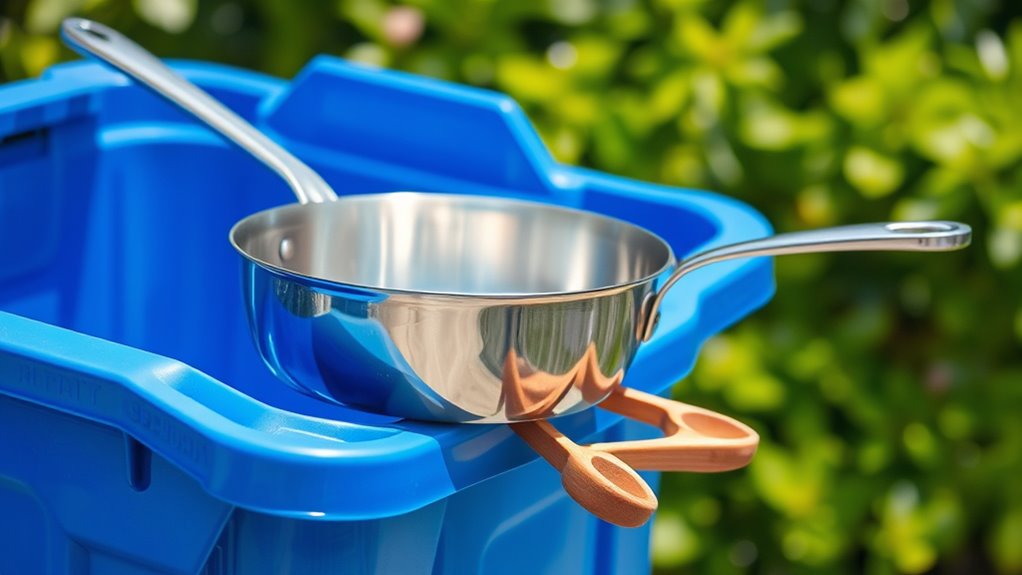
How You Put Cooking Pans in the Recycling Bin
You should first clean your cooking pans thoroughly, removing all food residue, grease, and dirt. Properly cleaning your cookware ensures it is ready for recycling and prevents contamination in the recycling bin.
Take off any non-metal parts like plastic handles before placing them in the recycling bin.
Make sure your pans are made of recyclable metals such as cast iron, stainless steel, or aluminum, and check local rules to be sure.
Avoid putting nonstick pans with damaged coatings in curbside bins, as they may not be accepted.
Keep going to find out how to handle various types of cookware properly.
Types of Cooking Pans Accepted in Recycling
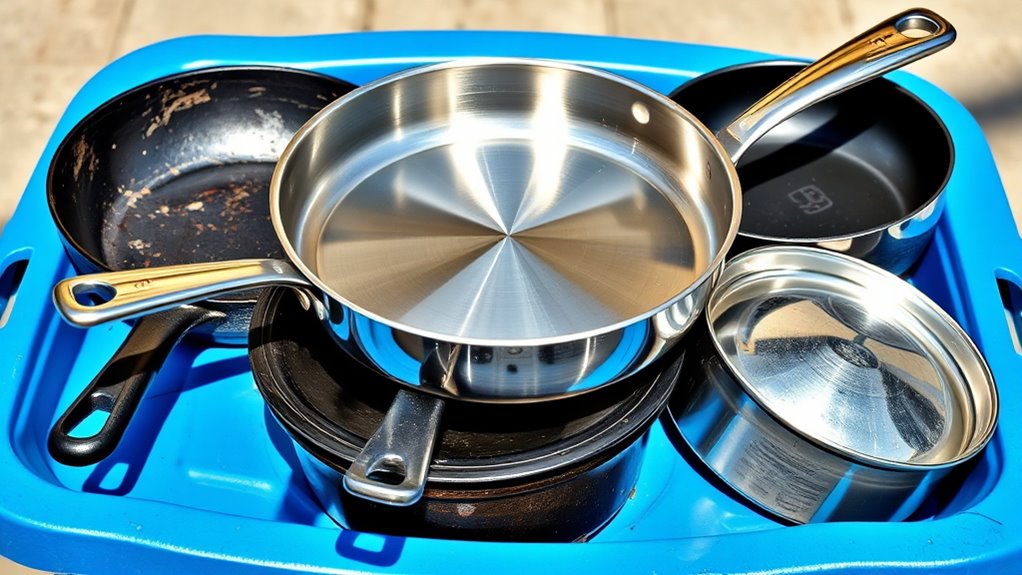
Although not all cooking pans can be recycled, you can recycle metal cookware made from ferrous or nonferrous metals like aluminum, stainless steel, and copper. When recycling old pots and pans, focus on those made of these metals, as they’re accepted in curbside recycling programs.
Cast iron and uncoated steel pans are usually recyclable too, as long as they’re clean and free of non-metal parts like plastic handles. Avoid recycling nonstick pans with damaged coatings through curbside recycling because they may contain harmful chemicals.
Glass cookware, such as Pyrex, isn’t accepted in curbside recycling because it requires special processing and can contaminate the glass stream. To make sure your metal cookware gets recycled properly, stick to accepted materials and follow your local recycling guidelines.
How to Prepare Cooking Pans for Recycling
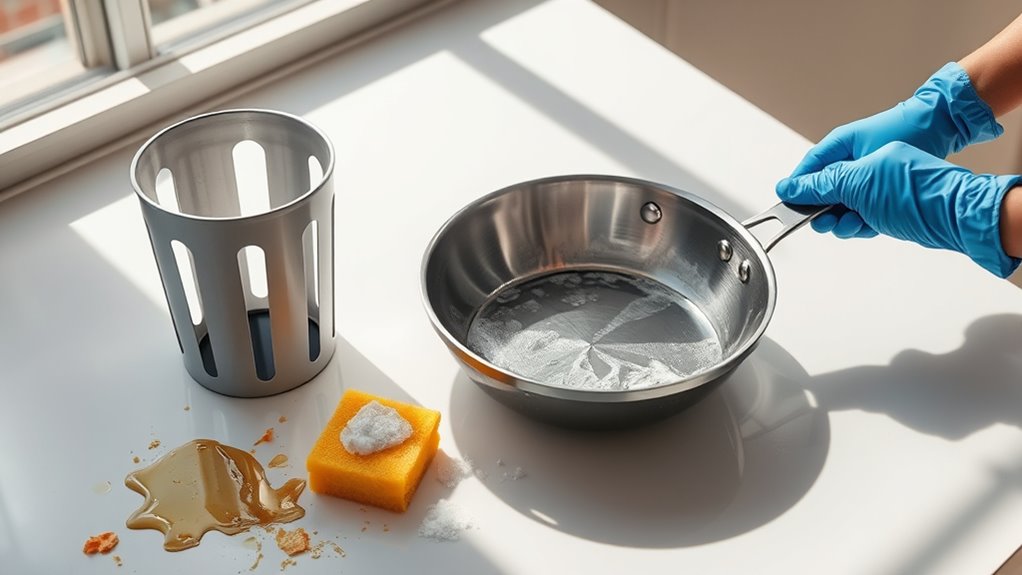
Before recycling your cooking pans, make sure you clean them thoroughly to remove any food residue and inspect them for non-metal parts. You’ll want to separate handles or knobs and package the metal components safely to prevent damage during transport.
Following these steps helps guarantee your pans are accepted and processed efficiently by recycling centers.
Cleaning And Inspection
When preparing your cooking pans for recycling, start by thoroughly cleaning them to remove all food residues, grease, and dirt. This cleaning step is vital to prevent contamination in the recycling process.
After cleaning, carefully inspect your pans for damage like rust, warping, or chipped coatings. If the nonstick surface is scratched or damaged, remove the coating if possible or consider discarding the pan responsibly.
Also, check for any non-metallic parts such as plastic or rubber handles; remove them if they don’t meet recycling guidelines. Finally, verify your pans are completely dry and free of debris before placing them in recycling.
Keeping your cookware clean, inspected, and dry helps maintain recycling quality and efficiency.
Safe Packaging Methods
After cleaning and inspecting your cooking pans, the next step is to package them safely for recycling. Remove any nonstick coatings or paint, as these can contaminate the recycling bin. Wrap sharp edges with cardboard or tape to prevent injury during handling.
Use a sturdy box or original packaging to secure your pans, ensuring they don’t shift or get damaged.
| Step | Reason |
|---|---|
| Remove coatings | Avoid contamination in recycling streams |
| Clean thoroughly | Prevent grease and food residue buildup |
| Wrap sharp edges | Ensure safe handling and transport |
| Pack securely | Avoid damage and facilitate sorting |
Label your package clearly as recyclable metal to help recycling facilities process it correctly. This safe packaging ensures your pans are handled safely and recycled efficiently.
How to Handle Nonstick and Coated Pans Before Recycling
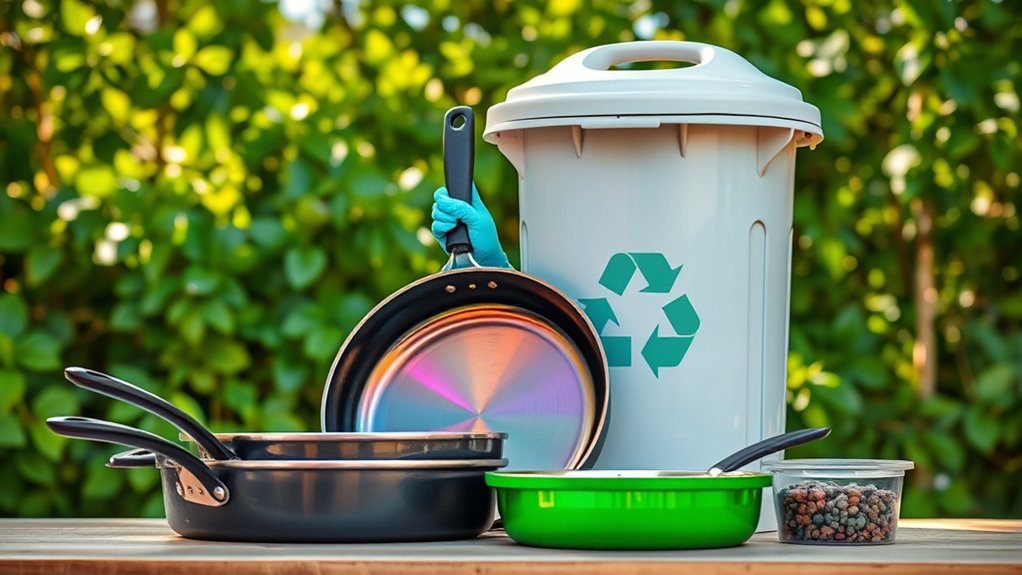
Because nonstick pans often contain PTFE or PFAS coatings, you’ll need to remove these layers carefully to prevent contamination of recycling streams. Before recycling, scrub off any residual coating until the metal surface is clean and free of non-metallic materials.
Coated pans with chipped or flaking surfaces pose health risks, so it’s best to dispose of old cookware like this properly rather than recycle it. Keep in mind, many recycling facilities can’t separate fluoropolymer coatings from the metal, and coated pans might be rejected if the coating isn’t fully eradicated.
To ensure a smooth recycling process, check your local guidelines or contact recycling centers to confirm if they accept nonstick pans after coating removal. This helps you recycle responsibly and avoid contaminating recyclables.
Disposal Options for Cooking Pans Not Accepted in Curbside Recycling
If your cooking pans aren’t accepted in curbside recycling, don’t just toss them out. Look for specialized recycling programs or scrap metal facilities that handle coated or damaged cookware.
You can also explore community reuse options where your pans might find a second life.
Alternative Disposal Methods
Though many curbside recycling programs won’t accept cooking pans with non-stick coatings or plastic parts, you still have several options for disposing of them responsibly. To properly dispose of old pots that can’t enter standard recycling programs due to nonstick surfaces or attached plastics, consider these alternatives:
- Remove any plastic handles and take metal pans to a scrap metal facility.
- Donate pans that are still usable; they can be donated for reuse in schools or community centers.
- Repurpose old pans for gardening or storage projects around your home.
- Contact local waste management for special disposal events or hazardous waste collection.
- If the pan is damaged beyond repair and non-removable parts remain, dispose of it with regular trash to avoid contaminating recycling streams.
These steps help you manage cookware responsibly when curbside recycling isn’t an option.
Community Reuse Opportunities
When you can’t recycle cooking pans curbside, community centers and charities often welcome them for reuse or educational projects. These local organizations provide great reuse opportunities, helping keep your old cookware out of landfills.
Consider donating your pots and pans to schools, community gardens, or art programs that can repurpose them for hands-on projects. Before donation, make sure to clean your pans thoroughly and remove any non-metallic coatings to guarantee safe reuse.
You can also check with recycling centers or use local Facebook groups and online platforms to find nearby donation spots or coordinate with others interested in reuse opportunities. By choosing donation over disposal, you support sustainability and give your cookware a second life within your community.
Specialized Recycling Programs
Donating your cooking pans to community programs is a great way to extend their life, but there are times when reuse isn’t an option and you need to contemplate proper disposal. Many curbside programs don’t accept metal cookware, so you’ll want to seek specialized recycling programs instead.
Here’s how to handle pans that can’t go in your regular bin:
- Visit a local recycling center that handles metal but check if they accept pans.
- Use brand take-back programs from companies like Made In or Calphalon for responsible pan recycling.
- Explore upcycling services that transform old pans into new products.
- Contact scrap metal recyclers who might accept cookware.
- Always check your local recycling guidelines to ensure compliance.
These options help you recycle your pans safely and sustainably when curbside collection falls short.
Using Brand Programs to Recycle Cooking Pans
If you want to recycle your old cooking pans responsibly, many cookware brands have programs designed to make the process easy and eco-friendly. Brands like Made In, Our Place, Calphalon, and GreenPan offer recycling programs that accept used or damaged pans. These initiatives often rely on brand partnerships with organizations such as Habitat for Humanity ReStores or local recycling facilities to guarantee proper disposal.
Some programs recycle materials like aluminum to create recycled aluminum products, reducing waste and conserving resources. You can find collection points or even use prepaid shipping labels to send your cookware back. By using these brand programs, you not only simplify recycling but also support sustainable practices that keep valuable materials in circulation and reduce landfill impact.
Disposing of Cooking Utensils and Non-Metal Cookware
Although metal cookware often fits into recycling programs, disposing of cooking utensils and non-metal pans requires extra care. Non-metal cookware like ceramic or glass pans shouldn’t go into metal recycling bins and often needs special disposal. You must follow local recycling guidelines closely to avoid contaminating recycling streams.
Here’s what to keep in mind:
- Clean metal utensils and check if coated items are recyclable or need disposal.
- Avoid recycling damaged non-stick pans with chipped coatings due to health risks.
- Remove plastic parts from wooden utensils; untreated wood can often be composted.
- Dispose of ceramic, glass, and other non-metal cookware through designated programs.
- Always consult your local waste management for specific disposal and recycling guidelines.
This careful approach ensures proper disposal and preserves recycling stream quality.
Frequently Asked Questions
Can Pots and Pans Be Put in the Recycle Bin?
You can recycle pots and pans only if they’re metal, clean, and free of non-metal parts or coatings.
Always check your local guidelines, since many curbside programs don’t accept cookware or require special handling.
How to Dispose of an Old Cooking Pan?
You might think tossing an old pan is simple, but it’s not. First, clean and remove non-metal parts.
If it’s reusable, donate it; if damaged, check local recycling rules or dispose of it properly in the landfill.
Can I Throw Old Pans in the Recycling Bin?
You can recycle old metal pans if they’re clean and free of coatings, but avoid tossing nonstick or plastic-handled ones in the bin.
Always check your local rules to guarantee proper recycling or disposal.
Can Metal Pans Go in the Recycling Bin?
You can put metal pans in the recycling bin, but don’t count your chickens before they hatch—make sure they’re clean, dry, and free of non-stick coatings.
Otherwise, take them to a scrap metal facility.
Conclusion
Recycling cooking pans might seem tricky, but it’s easier than you think. For example, Sarah cleaned and separated her aluminum pans before placing them in her curbside bin, making sure nonstick pans went to a specialty program.
By prepping your pans properly, you help reduce landfill waste and support metal recycling efforts.
So next time you’re ready to toss old cookware, remember these steps—you’ll make a real difference with just a little effort! Properly recycling cooking pans not only conserves resources but also promotes sustainability in your community.