How Do Salt Water Pools Kill Bacteria Effectively?
You kill bacteria in a saltwater pool by converting salt into chlorine through electrolysis, which continuously disinfects the water. This natural process ensures effective bacteria control while maintaining a more comfortable swimming environment. The chlorine produced forms hypochlorous acid, which destroys bacteria efficiently while being gentle on your skin and eyes.
Maintaining proper salt levels and balanced pH is crucial for optimal chlorine production. Regular cleaning of the salt cell also helps keep the system running smoothly.
By following these steps, you ensure steady sanitizer levels that keep your pool safe and clean. Keep exploring to understand how to maximize your pool’s bacteria control.
How Saltwater Pools Turn Salt Into Chlorine
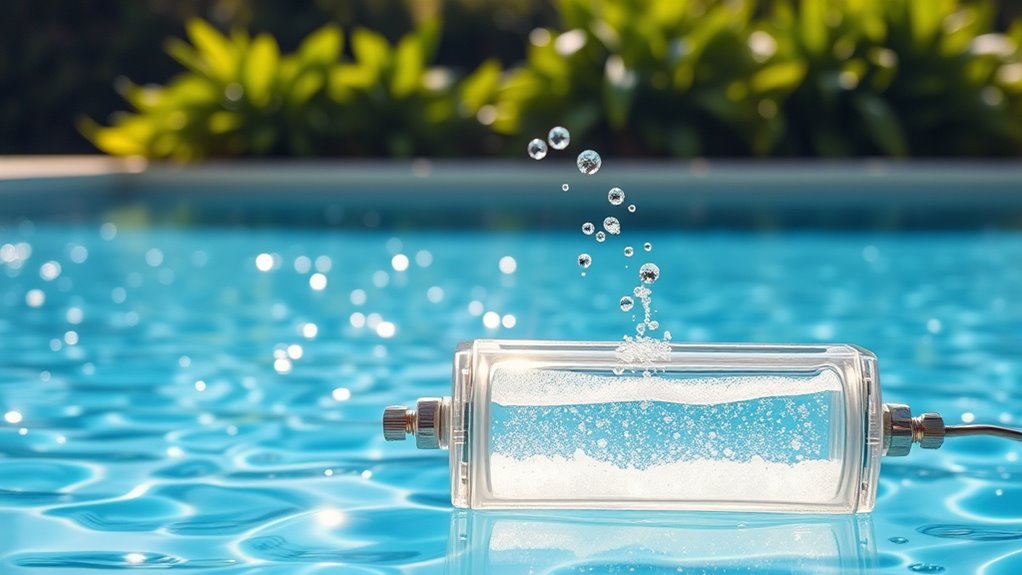
While you might think saltwater pools simply rely on salt to keep water clean, they actually convert salt into chlorine using a salt chlorine generator. This device uses electrolysis to split salt molecules, which are sodium chloride, into sodium and chloride ions.
The chloride ions then produce chlorine gas, which dissolves in the pool water.
Once dissolved, the chlorine forms hypochlorous acid and hypochlorite ions, the active disinfectants that keep your pool safe. This continuous process generates fresh chlorine on-site, maintaining a steady sanitizer level without the need for you to add chemicals manually.
Thanks to the salt chlorine generator, saltwater pools deliver effective, ongoing disinfection by harnessing salt’s natural components through electrolysis.
How Chlorine Kills Bacteria in Saltwater Pools
Because saltwater pools generate chlorine continuously, you get a steady supply of powerful disinfectants that kill bacteria effectively. Through electrolysis, saltwater pools convert salt into chlorine, which then forms hypochlorous acid and hypochlorite ions—key sanitizing agents.
These compounds attack bacteria by breaking down their cell walls, disrupting metabolic functions, and oxidizing essential cellular components.
Maintaining proper water chemistry with free chlorine levels between 1-3 ppm guarantees these disinfectants remain strong enough to neutralize bacteria swiftly.
This continuous chlorine production provides a consistent barrier against bacterial contamination, keeping your pool safe and clean.
How Salt Levels Affect Chlorine Production and Sanitizing Power
Chlorine’s ability to sanitize your saltwater pool depends heavily on maintaining the right salt concentration. In saltwater pools, the electrolysis process converts dissolved salt into chlorine, specifically hypochlorous acid, which kills bacteria effectively.
Proper salt concentration is key for chlorine generation and effective sanitation in saltwater pools.
If salt levels drop below the ideal range—typically 2700-3400 ppm—chlorine production slows, reducing the sanitizing power and compromising water quality.
On the other hand, excessively high salt concentration can damage pool components and lower chlorine generation efficiency.
To keep your pool safe, you need to regularly test and adjust salt levels, ensuring consistent chlorine production. This balance maximizes the sanitizing power of your saltwater pool, maintaining clear, bacteria-free water while protecting your pool equipment from unnecessary wear.
Why pH and Water Balance Matter for Bacteria Control
To keep bacteria under control in your saltwater pool, you need to maintain proper pH and water balance. When pH stays between 7.2 and 7.6, chlorine works at peak effectiveness, producing enough hypochlorous acid to kill bacteria efficiently.
Imbalanced water chemistry, especially high pH, lowers sanitizer efficiency and bacteria control.
Regular water testing lets you adjust pH and alkalinity, ensuring chlorine remains potent. Proper water balance also prevents chloramine buildup, which can shelter bacteria and reduce sanitizer power.
Remember these key points:
- Keep pH in the ideal range for maximum chlorine effectiveness
- Test water chemistry frequently to catch imbalances
- Adjust alkalinity to stabilize pH levels
- Prevent chloramines by maintaining water balance
- Ensure hypochlorous acid concentration stays sufficient for bacteria control
Why Saltwater Pools Keep Chlorine Levels Steady
You rely on your saltwater pool’s system to produce chlorine automatically, so you don’t have to add it manually.
The continuous electrolysis process converts salt into chlorine, keeping levels steady around the clock.
This steady production helps maintain effective sanitation without sudden dips or spikes.
Automated Chlorine Production
Although maintaining proper sanitation can be challenging, saltwater pools keep chlorine levels steady by using an automated chlorine generator. This device uses electrolysis to convert dissolved salt into chlorine gas, which then forms hypochlorous acid—the powerful disinfectant that effectively kills bacteria.
Automatic chlorination adjusts chlorine production based on water chemistry and pool usage, ensuring consistent sanitation. This steady supply prevents bacteria growth and algae, making maintenance simpler and more reliable.
- Chlorine generator continuously produces disinfectant
- Electrolysis converts salt into active sanitizer
- Hypochlorous acid targets harmful bacteria
- Automatic chlorination adapts to water chemistry
- Stable chlorine levels reduce manual chemical errors
With this system, saltwater pools maintain ideal hygiene effortlessly.
Continuous Electrolysis Process
When an electrical current passes through the saltwater, the salt chlorine generator continuously produces chlorine through electrolysis, keeping sanitizer levels steady. This process splits sodium chloride in the water into sodium and chlorine ions.
The chlorine ions then form hypochlorous acid, a powerful disinfecting agent that effectively kills bacteria and other pathogens.
Thanks to continuous chlorine production, your pool maintains a consistent sanitizer level—usually between 1-3 ppm—without the need for manual chemical additions. This steady supply of fresh chlorine ensures bacteria can’t thrive, unlike traditional chlorination methods that cause fluctuating sanitizer levels.
How Cleaning Salt Cells Keeps Chlorine Working Effectively
Because mineral deposits build up on salt cells over time, regularly cleaning them is essential to keep chlorine production strong and consistent.
When calcium deposits clog the salt cell plates, they interfere with the electrolysis process, reducing chlorine output. This decrease weakens the pool’s disinfectant power, allowing bacteria to survive.
Proper maintenance, including cleaning the salt cell every six months with vinegar or a specialized cleaner, prevents buildup and maintains efficiency.
To keep your salt cell in top shape:
- Remove calcium and mineral deposits promptly
- Clean salt cells biannually
- Use appropriate cleaning solutions
- Monitor chlorine production levels
- Prevent bacteria and algae growth Consistent cleaning ensures your salt system produces enough chlorine to keep the pool safe and clean.
Debunking Common Myths About Saltwater Pool Disinfection
Keeping your salt cell clean guarantees your pool produces enough chlorine to fight bacteria effectively, but there are still plenty of misconceptions about how saltwater pools disinfect.
Many think saltwater pools don’t use chlorine, but they actually rely on chlorine production through electrolysis. This process converts salt into hypochlorous acid, a powerful sanitizer that kills bacteria efficiently.
Saltwater pools produce chlorine via electrolysis, turning salt into effective bacteria-killing hypochlorous acid.
Another myth is that saltwater pools require no chemical maintenance, yet proper water chemistry remains essential to keep disinfectant levels balanced.
Some assume saltwater pools lack disinfectants entirely, but chlorine is continuously generated to maintain safe water.
Understanding these facts helps you appreciate how saltwater pools combine natural salt with electrolysis to provide effective sanitation and reliable bacteria control.
Why Saltwater Pools Cause Less Skin and Eye Irritation
When you swim in a saltwater pool, the chlorine is produced gently through electrolysis, keeping levels steady and balanced. This means you’ll experience less harsh chemical exposure, which helps prevent skin and eye irritation.
You’ll also notice a milder chlorine smell and fewer symptoms like red eyes or dryness.
Gentler Chlorine Production
Although saltwater pools still rely on chlorine to keep the water clean, they produce it on-site through electrolysis, creating hypochlorous acid that kills bacteria gently and effectively. This method guarantees a continuous, low concentration of chlorine production, maintaining stable sanitizer levels that prevent harsh chemical shocks.
As a result, you’ll notice fewer irritations on your skin and eyes compared to traditional pools. The water conditions feel softer and more natural, thanks to this gradual chlorine release.
- Electrolysis generates chlorine directly in the pool water
- Hypochlorous acid kills bacteria effectively without harshness
- Stable sanitizer levels avoid spikes in chlorine concentration
- Low concentration chlorine reduces chemical shocks and odors
- Softer water is less drying and irritating to skin and mucous membranes
Balanced Water Chemistry
The gentle chlorine produced in saltwater pools works best when the water chemistry stays balanced. By maintaining ideal pH levels between 7.2 and 7.6, you reduce skin and eye irritation commonly caused by unbalanced pools.
Proper alkalinity (80-120 ppm) stabilizes pH balance, preventing fluctuations that lead to discomfort.
Keeping free chlorine levels within 1-3 ppm ensures effective bacteria elimination without overexposure to harsh chemicals. Regular testing and adjustments help you avoid water that’s too acidic or alkaline, both of which can cause redness and dryness.
With consistent water chemistry management in saltwater pools, you enjoy softer water and improved water quality, making your swimming experience more comfortable while still effectively killing harmful bacteria and pathogens.
How to Maintain Optimal Bacteria Control in Saltwater Pools
To keep bacteria under control in your saltwater pool, you need to maintain proper chlorine levels generated by the salt cell through electrolysis. This process produces hypochlorous acid, a powerful disinfectant that kills bacteria effectively.
To optimize bacteria control, you should:
- Regularly test and maintain free chlorine levels between 1-3 ppm.
- Balance pH between 7.2 and 7.6 to enhance chlorine efficiency.
- Clean the salt cell every six months to prevent mineral buildup.
- Ensure proper water circulation to maximize disinfectant contact with microorganisms.
- Keep your filtration system in good condition for consistent water flow.
Frequently Asked Questions
How Does a Saltwater Pool Kill Germs?
A saltwater pool kills germs by creating chlorine through electrolysis. You’ll constantly have hypochlorous acid in the water, which penetrates and destroys bacteria cells. This process keeps your pool clean and safe without adding harsh chemicals manually.
How Long Does It Take Salt Water to Kill Bacteria?
You’d think bacteria vanish instantly in saltwater, right? Well, it takes about 30 seconds to 2 minutes for saltwater pools to kill bacteria effectively, thanks to the steady chlorine that’s always working hard for you.
How Sanitary Is a Salt Water Pool?
You’ll find saltwater pools just as sanitary as traditional ones when properly maintained. They consistently keep chlorine levels ideal, ensuring bacteria and viruses are effectively eliminated.
This means you can enjoy clean, safe water every swim.
What Is the Downside of a Saltwater Pool?
You’ll face equipment corrosion and maintenance challenges with saltwater pools. If you don’t balance water chemistry or replace salt cells timely, bacteria might thrive.
Plus, salt buildup can damage pool surfaces and systems over time.
Conclusion
You’ll find saltwater pools provide powerful, persistent protection by producing chlorine consistently from salt. This natural process ensures a continuous supply of sanitizer without the harshness of traditional chlorine additions. By balancing salt levels, pH, and regular cleaning, you can keep chlorine’s sanitizing strength strong and steady.
This steady system effectively stops stubborn bacteria, sparing your skin and eyes from irritation. The gentle, consistent chlorination creates a safe swimming environment that’s both clean and comfortable.
So, stay smart, stay steady, and savor saltwater’s superior shield—safe, sparkling, and strikingly simple to sustain for seamless swimming satisfaction. Embrace saltwater pools for effective bacteria control and enjoy crystal-clear water with minimal effort.