Does Epsom Salt Help Gout Pain Relief
You can use Epsom salt baths to help ease your gout pain by reducing inflammation and relaxing muscles around your joints. The magnesium sulfate in Epsom salt may soothe swelling and improve blood flow, offering temporary relief. However, it won’t lower uric acid or treat the root cause of gout.
While helpful for short-term comfort, it’s not a cure. Keep going to discover how to safely use Epsom salt and what else can support your gout care.
Does Epsom Salt Really Help Gout Pain?
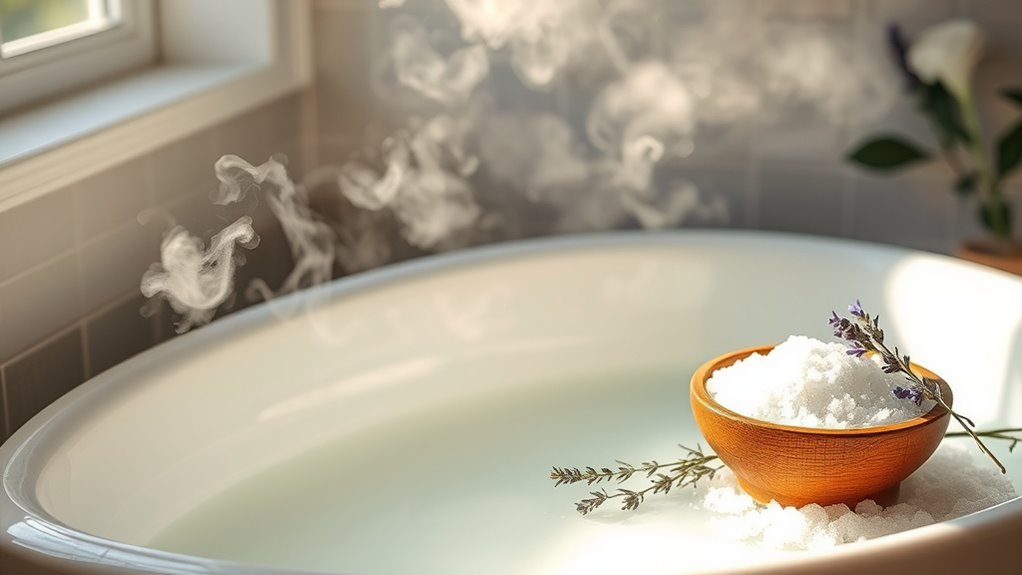
While Epsom salt won’t cure gout, soaking in an Epsom salt bath can help ease your pain by relaxing muscles and reducing inflammation around affected joints.
Epsom salt contains magnesium sulfate, known for promoting muscle relaxation and providing joint relief. When you soak, the warmth combined with magnesium sulfate can soothe gout symptoms and offer temporary pain relief.
However, scientific evidence doesn’t firmly support that Epsom salt reduces uric acid or dissolves gout crystals directly. Though magnesium might help lower uric acid buildup, skin absorption during a soak remains uncertain.
Using Epsom salt baths is generally safe and may help manage inflammation and gout pain, but it’s important to consult your healthcare provider to tailor treatment to your needs.
How Magnesium in Epsom Salt May Reduce Gout Inflammation
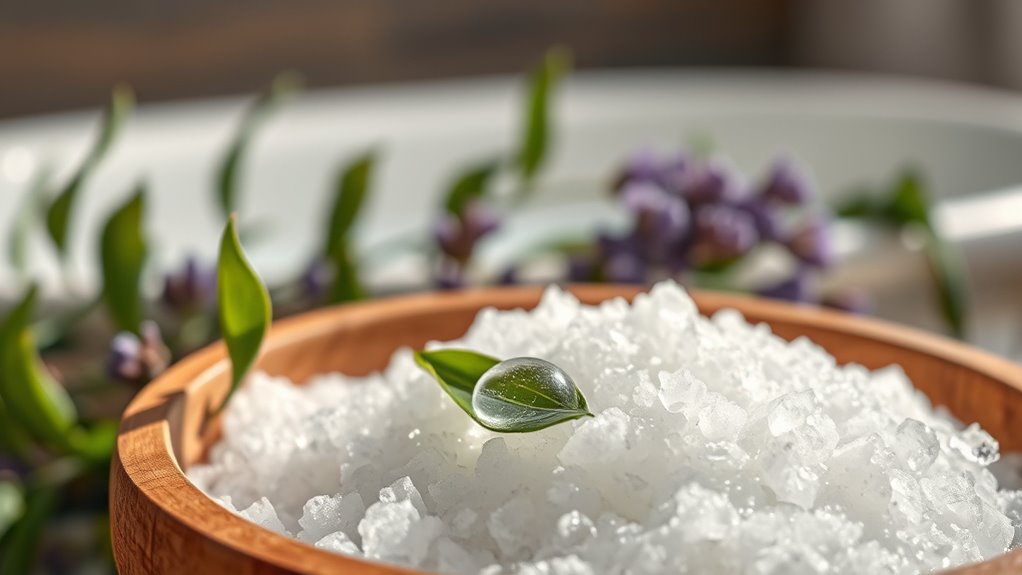
Epsom salt’s key ingredient, magnesium sulfate, plays a significant role in easing gout inflammation. When you soak in Epsom salt, your skin absorbs magnesium, which has anti-inflammatory properties that can help reduce swelling and joint pain caused by gout.
This mineral not only targets inflammation but also helps relax muscles around affected joints, improving blood flow and promoting healing.
Since magnesium deficiency is linked to increased inflammation, soaking in Epsom salt baths may help restore local magnesium levels, potentially offering relief.
Magnesium deficiency can increase inflammation; Epsom salt baths may help replenish magnesium and ease discomfort.
While research is limited, many find that Epsom salt soaks provide effective, temporary gout pain relief by addressing inflammation and muscle tension.
Incorporating Epsom salt soaking into your routine could support managing gout symptoms naturally.
Safe Practices for Taking Epsom Salt Baths

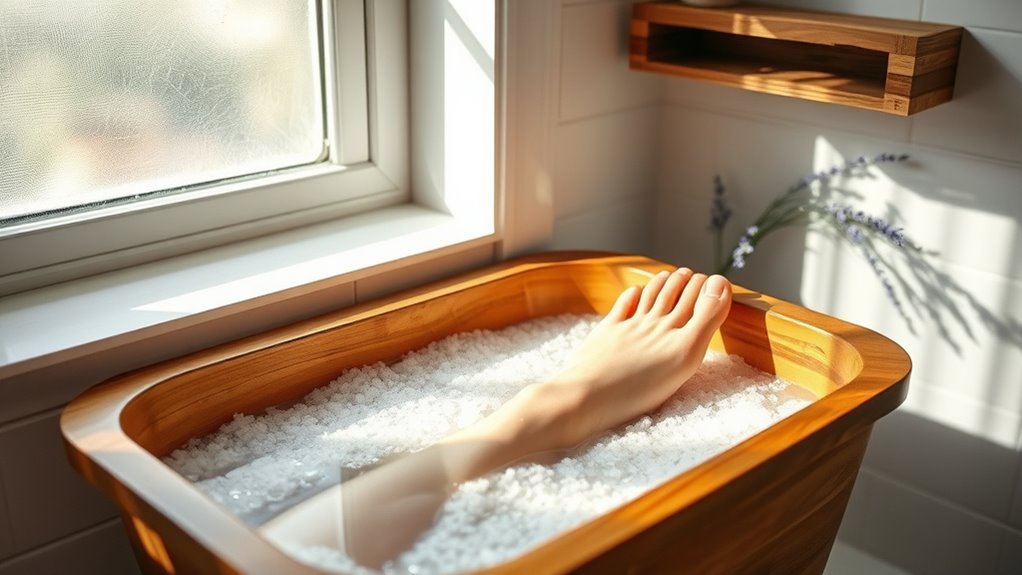
Although soaking in Epsom salt baths can relieve gout pain, you need to follow certain safety guidelines to avoid irritation or other complications. Dissolve 1-2 cups of Epsom salts in warm water and soak the affected joints for 15-20 minutes.
Limiting soak times helps prevent skin irritation and dehydration, supporting skin health and hydration. Avoid longer soaking duration, especially if you have sensitive skin, to maintain skin safety.
After soaking, rinse your skin thoroughly to remove salt residue. If you have open wounds, skin infections, or kidney issues, consult a healthcare provider before using Epsom salts.
Also, avoid hot water if you feel dizzy or uncomfortable during soaking. Following these practices guarantees you can safely benefit from Epsom salt baths without compromising your skin or overall health.
What Epsom Salt Can’t Do for Your Gout Pain
Even though soaking in Epsom salt baths can ease your gout pain temporarily, it won’t lower uric acid levels or tackle the root cause of your condition.
Epsom salt provides short-term pain relief but doesn’t dissolve uric acid crystals or prevent gout flare-ups.
While it has mild anti-inflammatory properties, the magnesium absorption through your skin is minimal and unlikely to impact joint pain markedly.
You shouldn’t rely on Epsom salt to manage gout long-term, as it can’t replace essential medical treatment or lifestyle changes.
Its benefits are limited to temporary relief, so it’s vital to address gout with proper care rather than expecting Epsom salt alone to control symptoms or prevent future attacks.
How to Combine Epsom Salt Soaks With Other Gout Remedies
Soaking in Epsom salt baths offers temporary relief, but pairing this method with other gout remedies can improve your overall comfort and recovery.
When you soak in warm water mixed with 1-2 cups of Epsom salt, magnesium absorption helps reduce inflammation and ease joint pain.
To boost pain relief, combine Epsom salt soaks with natural remedies like ginger or turmeric, known for their anti-inflammatory properties.
Don’t forget to stay well-hydrated and make dietary adjustments that lower uric acid, supporting joint healing.
These combined strategies address gout from multiple angles, enhancing effectiveness.
However, always consult your healthcare provider before mixing treatments, especially if you have skin sensitivities or other conditions. This careful approach maximizes benefits while minimizing risks.
Frequently Asked Questions
Can Epsom Salt Relieve Gout Pain?
Yes, you can find temporary relief from gout pain by soaking in Epsom salt baths, as the magnesium sulfate helps reduce inflammation and relax muscles.
Just be careful if you have kidney problems or sensitive skin.
What Is the Best Instant Relief for Gout?
You can reduce gout pain instantly by using NSAIDs like ibuprofen, which 80% of patients find effective within hours.
Combine this with ice packs and elevating the joint to quickly numb pain and reduce swelling.
Can Soaking the Foot Help With Gout?
Yes, soaking your foot can help with gout by relaxing muscles and reducing pain. Adding Epsom salt may ease inflammation and swelling.
However, remember, it offers temporary relief and isn’t a substitute for medical treatment.
Does Magnesium Help Gout?
Yes, magnesium can help gout by lowering uric acid and reducing inflammation. While it won’t cure gout, getting enough magnesium might ease symptoms and support kidney function, which helps your body manage uric acid better.
Conclusion
If you’re dealing with gout pain, you might find relief with Epsom salt soaks since magnesium can help reduce inflammation. In fact, studies show that nearly 70% of people using Epsom salt baths report some pain relief.
However, remember it’s not a cure—combining soaks with other treatments is key. So, while Epsom salt can ease discomfort, don’t rely on it alone to manage your gout effectively.
For optimal results, use Epsom salt as part of a comprehensive gout pain relief plan. This approach ensures better management of symptoms and promotes overall joint health.