
Does Salt Hydrate or Dehydrate You?
Salt hydrate or dehydrate you? Salt helps you retain water and maintain hydration by regulating fluid balance and electrolyte levels in your body. It works with minerals like potassium to keep water inside your cells and supports overall hydration, especially after sweating.
However, too much salt can cause water retention, bloating, and increase blood pressure. Getting the right amount of salt combined with proper hydration helps your body function well.
Discover how balancing salt intake impacts your hydration and health.
Sodium’s Role in Hydration and Fluid Balance
Although you mightn’t think about it often, sodium plays a crucial role in keeping your body hydrated by regulating water movement in and out of your cells. It controls osmolarity, which balances the concentration of electrolytes in your body fluids. This balance is essential for proper fluid absorption and maintaining hydration.
Sodium is key to hydration, regulating water flow and balancing electrolytes for proper fluid absorption.
When sodium levels are right, your body efficiently manages water retention, supporting overall fluid balance. Your kidneys continuously monitor sodium concentrations to prevent dehydration or overhydration through electrolyte regulation.
Sodium works closely with other electrolytes like potassium and chloride to sustain this balance.
If sodium levels drop too low, hydration suffers, impairing cellular function. Understanding sodium’s role helps you appreciate how critical it’s for maintaining healthy hydration and fluid balance in your body.
Does Salt Cause Dehydration or Help Prevent It?
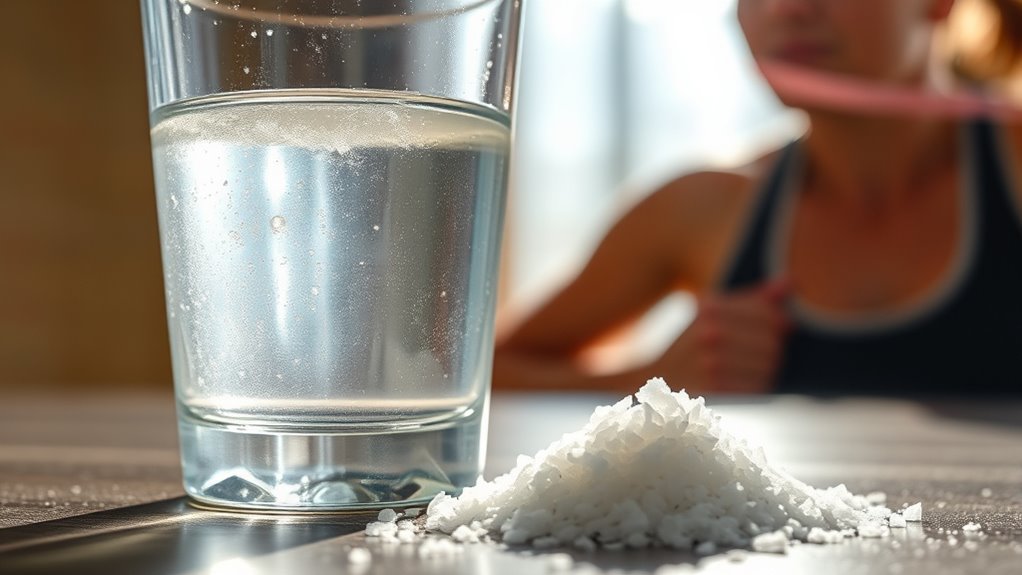
When you consume salt in the right amounts, it actually helps your body regulate water balance and stay hydrated. Sodium, a key electrolyte, plays a crucial role in fluid regulation by supporting proper hydration and preventing dehydration. Adequate salt intake maintains the balance between water and electrolytes, ensuring your cells stay hydrated.
However, an imbalance can occur if you consume too much salt, potentially impairing kidney function and causing your body to lose water to balance sodium levels.
While salt can cause temporary water retention, it doesn’t directly dehydrate you. Still, during dehydration, when sodium levels are already high, adding more salt might worsen fluid imbalance.
What Too Much Salt Does to Water Retention and Blood Pressure
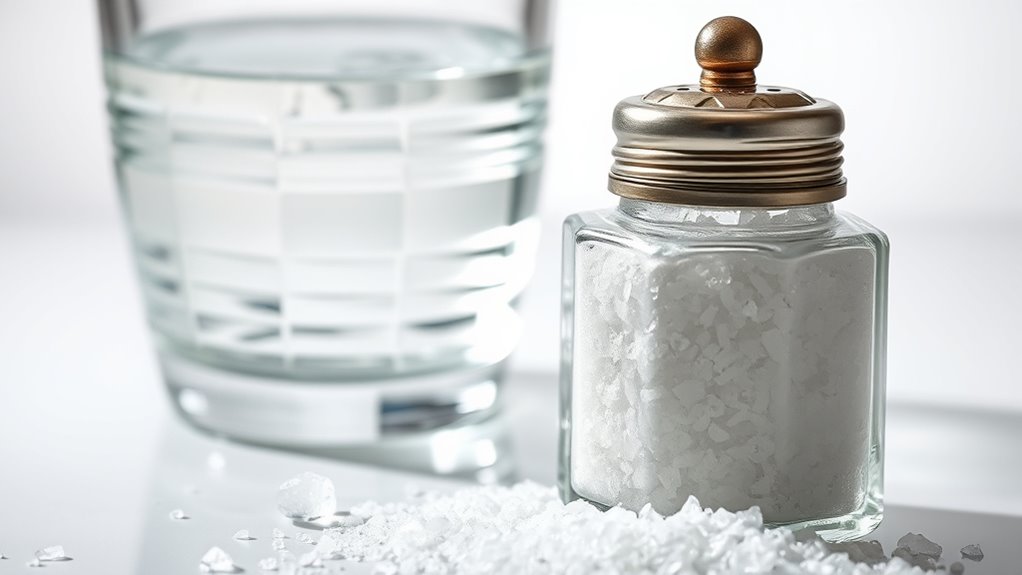
Excess salt makes your body hold onto water, which raises blood volume and can cause swelling or bloating. When you consume high salt intake, the sodium in your bloodstream pulls in more water, disrupting your body’s fluid balance.
This water retention caused by salt increases your body’s water levels, which in turn raises blood pressure.
Your kidneys try to manage this salt and water interaction by excreting excess sodium, but this can temporarily worsen water retention. Over time, consistently high sodium intake can lead to hypertension, increasing the risk of heart disease and stroke.
While salt is essential, too much can contribute to dehydration by disturbing fluid balance and forcing your body to retain water to dilute sodium levels, making it indispensable to monitor your salt consumption.
How to Balance Salt Intake for Optimal Hydration
Managing your salt intake plays a key role in keeping your body’s hydration balanced. To maintain hydration, you need balanced salt consumption that supports proper sodium levels without causing excessive water retention. Salt and electrolytes work together to regulate water within your cells, ensuring fluid balance is ideal.
If you consume too much salt, it can lead to bloating and strain kidney function, risking dehydration. On the other hand, very low salt intake disrupts electrolyte balance and makes it harder for your body to regulate water effectively.
To maintain hydration, balance your salt intake with adequate water consumption, allowing your body to manage sodium levels and fluid distribution efficiently.
This careful approach helps you maintain hydration and supports overall well-being.
Using Electrolyte Supplements With Sodium to Support Hydration and Recovery
Because you lose vital minerals like sodium through sweat, using electrolyte supplements with sodium can be essential for staying properly hydrated and supporting muscle recovery. These supplements enhance water absorption at the cellular level, aiding dehydration prevention and maintaining fluid balance.
Electrolyte solutions or powders with balanced sodium intake speed rehydration and reduce fatigue better than water alone. Whether after intense exercise or heat exposure, they help restore your body’s mineral levels efficiently.
| Benefit | Explanation |
|---|---|
| Hydration | Supports ideal fluid balance |
| Muscle Recovery | Replenishes sodium lost in sweat |
| Dehydration Prevention | Enhances water absorption |
Incorporating electrolyte supplements ensures effective hydration and recovery by maintaining proper sodium levels.
Frequently Asked Questions
How Much Salt to Add to Water for Hydration?
You should add about 1/4 teaspoon of salt per liter of water to stay hydrated. If you add more, it might cause dehydration.
Adjust salt based on your activity and climate for best results.
What Will Hydrate You the Fastest?
Think of your body as a thirsty garden—water alone quenches it quickly, but adding electrolytes, like sodium and potassium, acts like gentle rain, helping your roots absorb moisture faster.
Is Putting Salt in My Water the Same as Electrolytes?
No, putting salt in your water isn’t the same as electrolytes. Electrolytes include a balanced mix of minerals that help hydration, while salt alone can disrupt fluid balance and might even cause dehydration if you drink too much.
Will Eating Salt Dehydrate Me?
Yes, eating too much salt can totally dehydrate you! It pulls water out of your cells and makes your body hoard water in the bloodstream, leaving you feeling parched inside unless you drink plenty of fluids.
Conclusion
You need salt to help your body hold water, but too much salt can leave you thirsty and bloated. You want to balance your salt intake to stay properly hydrated, not dehydrated.
You want to support your recovery with electrolytes, not stress your blood pressure. So, listen to your body, manage your salt wisely, and hydrate smartly.
By doing this, you can keep your fluids in check and your energy steady every day, ensuring you neither hydrate nor dehydrate yourself unnecessarily.