Does Salt Kill Termites and How to Use It Effectively
Yes, salt can kill termites by dehydrating them on contact, making it a useful natural remedy for termite control. However, it works best for small, surface infestations where you can directly apply it.
To use salt effectively, mix it with warm water and spray the solution directly on visible termites or inject it into their tunnels. Reapply regularly, especially after rain, to maintain its effectiveness.
Keep in mind that salt alone won’t reach deep colonies or prevent future termite problems. Combining salt treatments with other methods like boric acid can improve your results. Explore further to understand salt’s limitations and when it’s time to seek professional help.
How Salt Kills Termites by Causing Dehydration
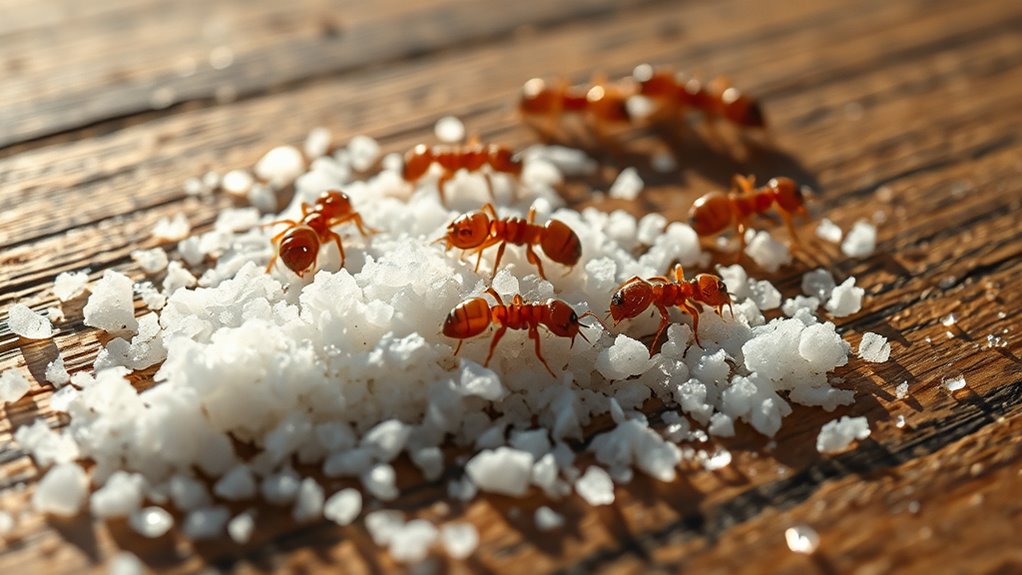
When you apply salt directly to termite-infested areas, it draws moisture out of their bodies, causing rapid dehydration. This happens because salt, especially Sodium chloride found in table salt or rock salt, creates a high concentration of solutes outside termite cells.
This osmotic effect pulls water from the termites, disrupting their internal moisture balance and shutting down essential functions.
By targeting entry points and wooden structures where termites thrive, you can effectively use salt to eliminate termites. Mixing salt with warm water enhances its spread, improving pest control results.
However, using salt works best on surface or near-surface termite infestations, as sufficient contact is critical.
When you use salt properly, you disrupt termite survival by dehydrating and ultimately killing them.
How to Use Salt to Kill Termites: A Simple Guide
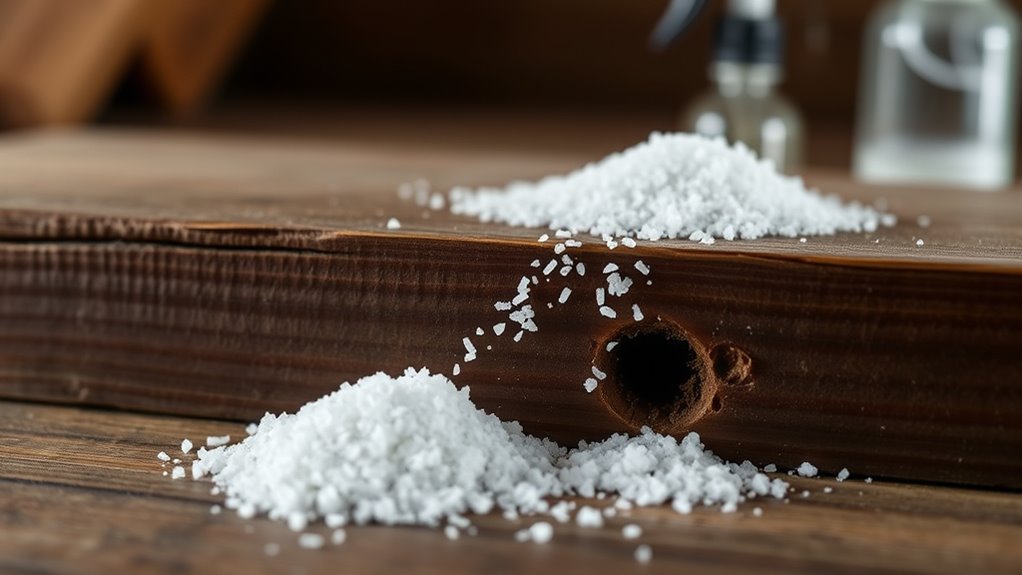
Although salt can effectively kill termites, you need to apply it correctly to see results. Start by mixing equal parts salt and warm water in a spray bottle to make a saline solution. Spray this directly on visible termites, entry points, and infested surfaces for a quick contact kill.
For deeper infestations, use a syringe or dropper to inject the saltwater into termite tunnels and cracks where they hide.
Additionally, sprinkle dry salt around your home’s perimeter and known entry points to create a natural barrier.
Remember to reapply the salt solution regularly, especially after rain, to maintain its termite-killing power. Following these simple steps ensures you effectively use salt to combat termite problems.
How Effective Is Salt for Termite Control?
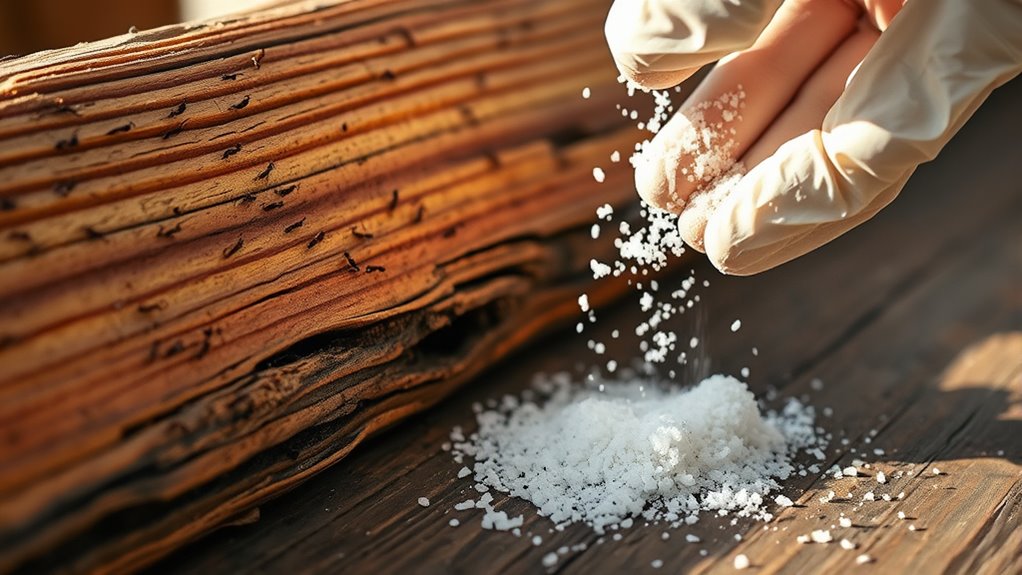
You might think salt is a simple fix since it can dehydrate termites on contact, but its reach is limited. Applying salt usually only affects surface termites and often needs multiple treatments to see any results.
Keep in mind, salt isn’t reliable for deep infestations, so understanding its practical use and limitations is key.
Salt’s Termiticidal Properties
Because salt draws moisture from termites’ bodies, it can cause dehydration that may kill them upon direct contact. This dehydrating effect disrupts their bodily functions, making salt a potential, though limited, insecticide.
However, the effectiveness depends heavily on applying salt in high concentrations and ensuring termites are directly exposed.
Keep in mind, salt mainly affects surface-dwelling termites and won’t reach deep into hidden colonies. Scientific backing for salt’s termite-killing power is scarce, and it lacks EPA approval, making it an unreliable standalone solution.
- Salt kills by dehydrating termites through moisture absorption
- Requires direct and concentrated contact for any effect
- Ineffective against entire colonies or termites inside wood
- Not recognized by regulatory agencies as a termite treatment
Practical Application Methods
Salt’s ability to kill termites by dehydration opens up several practical ways to apply it for pest control. You can spray a salt-water solution directly onto visible termites to kill them on contact, though this won’t reach hidden colonies. Injecting saltwater into termite tunnels or entry points targets surface pests more effectively.
Sprinkling dry salt around your home’s perimeter creates a deterrent barrier but won’t eliminate established infestations. Using salt-treated wooden stakes can attract termites, serving as bait, but this method alone won’t eradicate deep or large colonies.
To see any noticeable effect, you’ll need to apply salt repeatedly.
Limitations And Effectiveness
Although salt can kill termites on contact by dehydrating them, it struggles to reach deep or hidden colonies, limiting its overall effectiveness. You’ll find that salt mainly affects surface termites, so it won’t eliminate an entire infestation. Scientific support for salt as a termite treatment is limited, and it’s not approved by agencies like the EPA.
Overusing salt can damage beneficial soil organisms, harming soil health and reducing its long-term use. Because of these factors, salt should only be a supplementary method, not your primary termite control solution.
- Limited penetration means salt can’t reach termite nests deep underground
- Effective only on exposed or surface-dwelling termites
- Lack of regulatory approval questions its reliability
- Potential harm to soil ecosystem with excessive application
Combining Salt With Boric Acid and Other Natural Treatments
You can boost termite control by combining salt with boric acid, since boric acid disrupts termites’ gut bacteria while salt dehydrates them.
This synergy makes natural treatments more effective at eliminating colonies faster. Just be careful to balance the mix, so you don’t reduce its power or harm the environment.
Boric Acid Benefits
When you combine boric acid with salt, you boost the effectiveness of natural termite treatments by targeting termites through dehydration from two angles. Boric acid disrupts termite gut bacteria, starving them, while salt draws moisture out of their bodies.
Together, they create a powerful, eco-friendly barrier against infestations.
You can apply boric acid as a spray, dust, or wood treatment to penetrate deep into wood and soil, reaching hidden colonies. Using this combo offers a safer alternative to harsh chemicals and helps prevent future termite problems.
- Boric acid starves termites by disrupting gut bacteria
- Salt dehydrates termites externally
- Boric acid penetrates wood and soil for thorough treatment
- Regular use creates an inhospitable environment for termites
Salt And Borate Synergy
Because salt and boric acid attack termites in different ways, combining them creates a powerful synergy that boosts termite control effectiveness. Boric acid disrupts termite gut bacteria, while salt causes dehydration, hitting termites from multiple angles.
When you mix and apply both properly, you target termites on contact and deep within their colonies more thoroughly. This approach not only improves results but also lets you use smaller amounts of each substance, reducing environmental impact.
By exploiting these distinct mechanisms together, you tackle various termite castes effectively. To get the most out of this combination, make sure you apply the right proportions and distribute it evenly where termites are active.
This synergy offers a natural, efficient alternative to harsher chemicals in termite management.
Natural Treatment Combinations
Although salt alone can deter termites by causing dehydration, combining it with boric acid and other natural treatments considerably strengthens your termite control strategy.
When you mix salt with boric acid, you attack termites from multiple angles—salt dehydrates them while boric acid disrupts their digestion. Applying this combo to wooden surfaces creates a powerful barrier that’s hard for termites to overcome.
You can also enhance effectiveness by carefully adding vinegar or diatomaceous earth. Just be sure to use proper ratios and application methods to protect beneficial insects and maximize termite mortality.
- Salt’s dehydrating effect weakens termites externally
- Boric acid poisons termites internally by disrupting digestion
- Vinegar can improve penetration and control when combined
- Diatomaceous earth adds abrasive damage to termite exoskeletons
Limits and Risks of Using Salt for Termite Control
While salt might seem like a simple solution for termite control, you should be cautious about its limits and risks. Using too much salt can harm beneficial soil microorganisms and disrupt the natural soil ecology. It also raises soil salinity, which stunts plant growth and may degrade your land over time.
If salt seeps near foundations or groundwater, it risks contaminating local water sources. Additionally, salt doesn’t penetrate deeply, so it won’t reach hidden or deep termite colonies, making it ineffective for complete eradication.
Relying solely on salt can lead to environmental harm and mightn’t fully solve your termite problem.
Understanding these drawbacks helps you avoid unintended damage while managing termites more responsibly.
When to Call a Professional for Termite Treatment
Salt can help with minor termite problems, but it often falls short when infestations grow or hide deep inside walls. When you notice persistent termite sightings or structural damage, it’s time to call a professional.
DIY salt treatments mightn’t reach entire colonies, especially if termites have tunneled deeply.
Experts can identify the termite species and apply targeted solutions like termiticides or bait systems, ensuring thorough eradication.
You should seek professional help if you experience:
- Recurring termite activity despite DIY efforts
- Visible damage to wood or structural components
- Early signs of infestation you can’t fully access
- Need for long-term prevention and monitoring
Calling a licensed pest control specialist guarantees all-encompassing treatment and peace of mind.
Frequently Asked Questions
How to Use Salt to Kill Termites?
You mix equal parts salt and warm water, spray it on visible termites, nests, and entry points, then reapply regularly.
Also, sprinkle dry salt around your home’s perimeter to create a natural termite barrier.
What Kills Termites Instantly?
You can kill termites instantly by applying commercial insecticides or using heat treatments on infested items. Physical removal also works immediately.
Salt alone isn’t reliable for instant results, so use stronger, proven methods instead.
Does Iodized Salt Kill Termites?
No, iodized salt doesn’t effectively kill termites. You shouldn’t rely on it because its insecticidal properties are minimal.
Instead, use proven termite treatments to protect your home and avoid ineffective methods like iodized salt.
What Was the Old School Termite Treatment?
Think of old school termite treatments as a fortress: you’d use chemical fumigation, metal or concrete barriers, and borate-coated wood to block invaders.
You’d also remove infested wood, replacing it with treated materials to keep termites out.
Conclusion
Using salt to kill termites works by dehydrating them, but it’s not a guaranteed fix—studies show salt alone only controls about 30% of infestations effectively. If you want a simple, natural approach, combining salt with boric acid can boost results.
However, for serious termite problems, don’t hesitate to call a professional. Remember, early action is key to protecting your home from costly damage and keeping those termites at bay.
For effective termite control, salt can be a helpful tool but should be part of a broader termite treatment plan. Using salt to kill termites can aid in reducing infestations, but professional termite control methods offer the most reliable protection for your home.