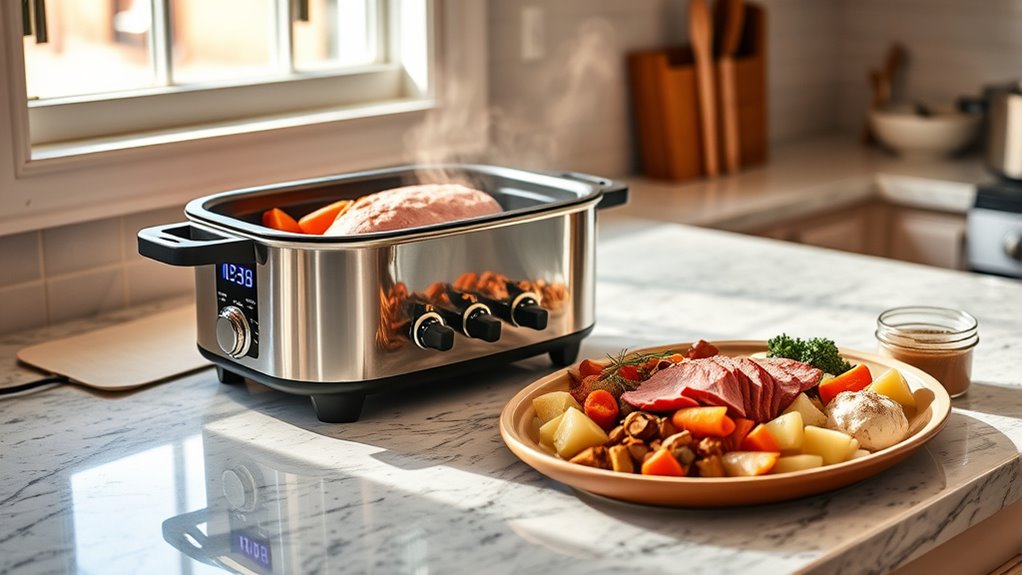
How Long to Cook Corned Beef in an Electric Roaster in 10 Steps
You’ll cook corned beef in your electric roaster at 300°F for about 3 to 4 hours, aiming for an internal temperature of 145°F. This method ensures tender, flavorful corned beef that’s perfect for any meal.
Start by rinsing and trimming the meat to prepare it for cooking. After the beef has cooked for an hour, add vegetables to enhance the flavor and create a complete dish.
Check tenderness and temperature regularly to avoid overcooking. Once done, rest the meat before slicing and keep it wrapped to retain juices.
Adjust cooking time based on the size and thickness of your corned beef for the best results.
Keep going to discover tips for perfect texture and flavor in your electric roaster corned beef.
How Long Should You Cook Corned Beef in a Roaster?
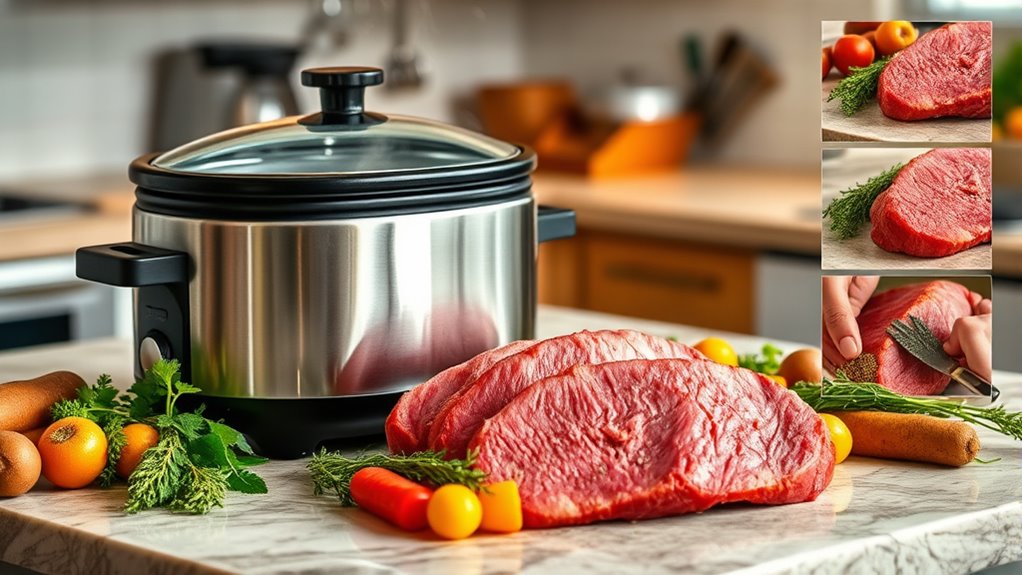
When you cook corned beef in a 20-quart electric roaster at 300°F, it usually takes about 3 to 4 hours to become tender. The exact cooking time depends on the size and thickness of your brisket—thicker cuts need more time.
To guarantee your corned beef is perfectly cooked, use a meat thermometer and check the internal temperature. Aim for at least 145°F, which guarantees safety and tenderness.
If you’re using a smaller roaster or cooking less meat, the cooking time might drop to as little as 2.5 to 3 hours. On the other hand, larger or denser cuts could require up to 5 hours.
As a general rule, plan for about 1 hour per pound, but always adjust based on your roaster and the meat’s size.
What Temperature Should You Set the Roaster for Corned Beef?
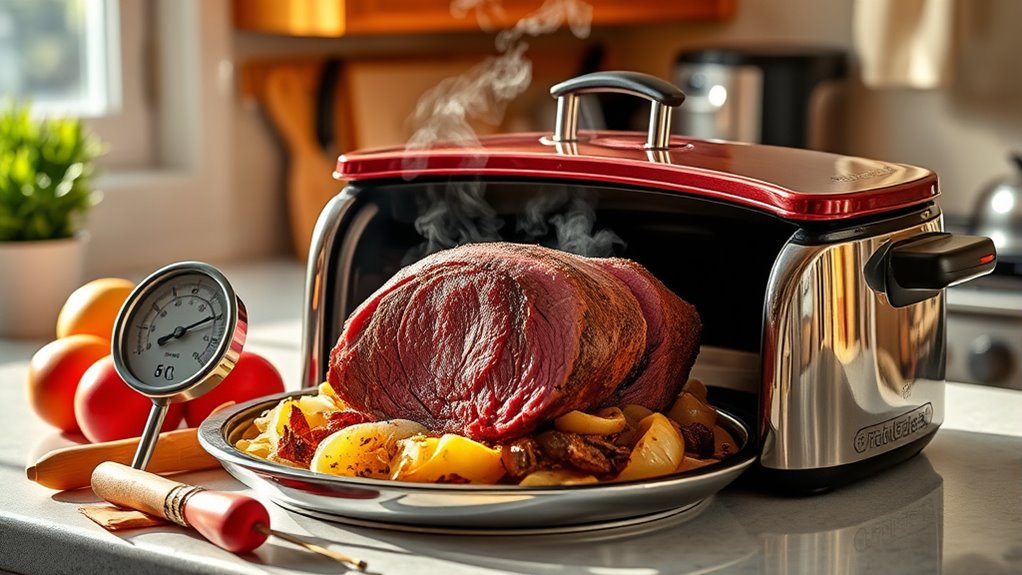
Although you can cook corned beef at various temperatures, setting your roaster between 275°F and 300°F works best for tender, evenly cooked results. This temperature range promotes slow cooking, breaking down tough fibers without drying the meat.
If your roaster has a low setting (around 200°F to 250°F), it’s ideal for very long cooking times, but 300°F typically balances speed and tenderness. Always use a meat thermometer to ensure your corned beef reaches an internal temperature of at least 145°F for safety and perfect doneness.
| Roaster Temperature | Cooking Effect |
|---|---|
| 200°F – 250°F | Slow cooking, very tender |
| 275°F – 300°F | Suitable for even, tender meat |
| 300°F – 325°F | Faster cooking, careful watch |
How Do You Prepare Corned Beef Before Roasting?
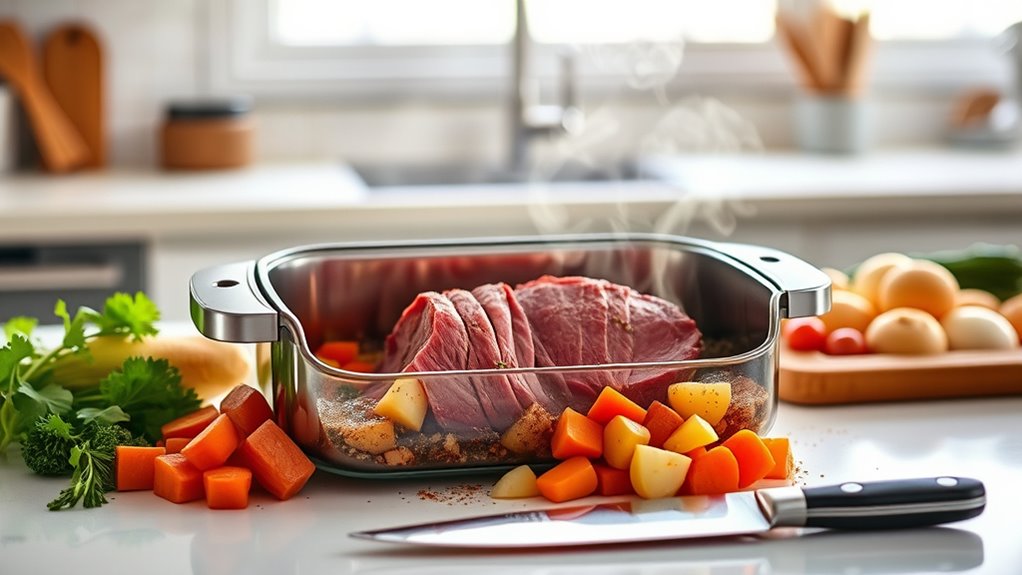
How should you prepare corned beef before roasting to guarantee the best flavor and texture? Start by rinsing the corned beef brisket under cold water to wash away excess brine and salt. Then, pat it dry thoroughly with paper towels to help seasonings stick better.
Trim any excess surface fat with a sharp knife for even cooking and a better presentation. Next, let the brisket sit at room temperature for about 30 minutes before roasting. This helps the meat cook evenly throughout.
When and How Should You Add Vegetables During Corned Beef Roasting?
Since vegetables need less cooking time than corned beef, you should add them about an hour into the roasting process. When cooking corned beef, wait until the beef reaches an internal temperature of 145°F before adding vegetables like potatoes, cabbage, onions, carrots, and celery.
Use large chunks—halved cabbage and quartered potatoes—to ensure they hold up during the remaining 1.5 to 2 hours of cooking. Place the vegetables away from the roaster’s corners to avoid burning and promote even cooking.
If the liquid level seems low, adding water can help maintain moisture and prevent scorching. Check the vegetables every 30 minutes after the initial two hours to confirm tenderness.
This method prevents overcooking and results in perfectly cooked corned beef with tender vegetables.
How Do You Adjust Cooking Time for Corned Beef Size and Roaster?
When you cook corned beef, adjusting the time based on the size of the cut and the roaster you use is essential to achieve the best tenderness. Larger cuts, like those weighing 4-5 pounds, need 30-50% more cooking time than smaller pieces.
If your roaster is bigger, say a 22-quart instead of a 20-quart, you’ll want to modify cooking time upward to account for heat distribution differences. Thicker cuts require an additional 30 minutes to an hour to ensure the inside reaches 145°F.
Conversely, smaller roasters or less full ones cook faster, so start checking doneness 15-30 minutes early. Always monitor the internal temperature rather than relying solely on cooking time to adapt based on your beef’s size and your roaster’s specifics.
How Can You Tell When Corned Beef Is Done and Tender?
You’ll know your corned beef is done when a meat thermometer reads at least 145°F in the thickest part. Check tenderness by twisting a fork or skewer—if it turns easily and the meat pulls apart with little resistance, it’s ready. Letting it rest for 10-20 minutes helps the juices redistribute, making it easier to judge its tenderness.
Visual Tenderness Indicators
Although the internal temperature should reach at least 145°F, the best way to tell if your corned beef is done is by checking its texture. When tenderness is achieved, a fork will twist easily into the meat with little resistance. You’ll notice the fibers feel soft and yielding instead of firm or chewy, signaling that the connective tissues are breaking down.
Another clear indicator is how the meat pulls apart; it should shred effortlessly with a gentle tug. After cooking, let the corned beef rest for 10-15 minutes to allow juices to redistribute, which enhances tenderness and makes judging doneness easier.
Relying solely on internal temperature isn’t enough—texture is the true test of a perfectly cooked corned beef.
Internal Temperature Guidelines
Since achieving the right internal temperature is essential, you should use a digital meat thermometer to check your corned beef’s doneness. Insert it into the thickest part of the meat to get an accurate reading. The USDA recommends cooking corned beef to at least 145°F, followed by a 3-minute rest, for safe consumption.
However, if you want tender, easily shreddable corned beef, aim for an internal temperature between 190°F and 200°F. At this range, the meat becomes fork-tender, allowing you to twist a fork easily into it.
After cooking, let the meat rest for 10-20 minutes to redistribute juices and confirm it’s fully cooked. Using a meat thermometer guarantees you cook corned beef perfectly every time.
Should You Slice or Shred Corned Beef After Roasting?
Deciding whether to slice or shred corned beef after roasting depends on how you plan to serve it. If you want neat, tender slices, wait 10-15 minutes for the meat to rest so juices redistribute, making slicing easier. For best results, slice against the grain, and chilling the corned beef for several hours or overnight helps achieve clean cuts, perfect for traditional meals.
On the other hand, shredding works well if you’re aiming for a versatile texture in sandwiches, sliders, or dips. Use two forks to pull apart the warm corned beef, as it’s easier to handle while still hot. So, choose slicing for presentation and shredding for casual, textured dishes to get the most from your roasted corned beef.
How Do You Keep Corned Beef Warm and Juicy Without Drying It Out?
To keep your corned beef warm and juicy, wrap it tightly in foil or place it in a covered dish to lock in moisture. Then, maintain a low heat—around 140°F to 165°F—using a warming drawer or roaster’s keep-warm setting.
Don’t forget to add a bit of beef broth or reserved juices occasionally to prevent it from drying out.
Proper Foil Wrapping
When you wrap corned beef tightly in heavy-duty foil, you lock in its natural juices and prevent it from drying out during cooking. Proper foil wrapping is key to moisture retention and maintaining the meat’s juiciness. Use heavy-duty foil to assure a secure seal that won’t tear or leak.
Place the corned beef in the center, then fold the foil tightly around it, completely enclosing the meat. For added flavor and tenderness, sprinkle a packet of pickling spices on top before sealing.
After cooking, keep the beef wrapped and let it rest 10-15 minutes; this allows the juices to redistribute evenly. Avoid unwrapping too soon to prevent moisture evaporation, which could dry out your corned beef. Proper foil wrapping guarantees tender, juicy results every time.
Maintain Low Heat
After wrapping your corned beef tightly in foil to lock in juices, the next step is keeping it warm without drying it out. Set your electric roaster to a low heat, around 200°F or use the “keep warm” setting. This gentle temperature maintains moisture while preventing the beef from overcooking.
Avoid raising the temperature too high, as that risks drying your meat. Using low heat lets the corned beef slow cook slightly, preserving tenderness and juiciness. Let it rest wrapped for at least 20 minutes so juices redistribute evenly.
This approach ensures the beef stays moist and flavorful until serving. By controlling the temperature and slow cooking at low heat, you keep your corned beef tender and delicious without losing moisture.
Retain Cooking Juices
Although it’s tempting to slice into your corned beef right away, keeping it tightly wrapped in foil while it rests locks in the cooking juices and prevents drying out. Resting corned beef for 10-15 minutes lets the juices redistribute, ensuring juicy meat when sliced.
After resting, slice the meat against the grain and return it to the warm electric roaster, set around 300°F, to keep it warm without overcooking. Pour a small amount of beef broth or reserved cooking juices over the slices to maintain moisture and enhance flavor.
This foil wrapping and careful reheating method helps you retain cooking juices, so your corned beef stays tender and juicy, not dry or tough, right up to serving time.
How Can You Use Leftover Corned Beef?
Transforming leftover corned beef into new meals lets you enjoy its rich flavor beyond the initial dinner. You can slice leftover corned beef thin for sandwiches like Reubens or chop it up for salads and wraps. When reheating, add broth or extra cooking juices to keep the meat moist and tender.
Shredded corned beef offers versatile uses—it’s perfect for making hash, tacos, or stuffing baked potatoes. You can also incorporate your leftovers into casseroles, such as a corned beef and cabbage bake.
To conserve flavor and prevent dryness, store your corned beef in airtight containers and reheat gently. These simple steps ensure your leftover corned beef remains delicious and ready for a variety of quick, satisfying meals.
What Are Common Corned Beef Cooking Problems and How Do You Fix Them?
If your corned beef turns out undercooked, don’t worry—you can fix it by cooking it longer until it’s fork-tender.
To keep your vegetables from overcooking and getting mushy, try adding them later in the process or lowering the heat.
Paying attention to these details will help you get a perfectly cooked meal every time.
Undercooked Beef Solutions
When corned beef comes out undercooked, it usually means the internal temperature hasn’t reached the safe 145°F, leaving the meat tender but not easily shreddable. To fix undercooked beef, continue cooking it in your electric roaster, checking the internal temperature every 15-20 minutes with a reliable meat thermometer.
This ensures you don’t overcook or dry out the meat. Maintain a consistent roaster temperature around 300°F for even cooking. If the beef hits 145°F but still isn’t tender, extend the cooking time, as it may need more time to break down connective tissues.
Finally, let the beef rest for 20 minutes after cooking to redistribute juices and achieve the perfect texture before slicing. This approach guarantees a thoroughly cooked, tender corned beef.
Vegetables Overcooking Prevention
Although corned beef requires a longer cooking time, you should add vegetables like cabbage and potatoes later to avoid overcooking them. Overcooked vegetables lose their texture, becoming mushy and unappetizing. To get the timing right, add vegetables after the beef has cooked about an hour, then check their tenderness every 30 minutes.
This way, you maintain their ideal texture without sacrificing flavor.
To prevent vegetables overcooking:
- Add vegetables after the first hour of beef cooking.
- Monitor vegetable tenderness frequently.
- Remove vegetables promptly once tender and keep warm separately.
Frequently Asked Questions
How Long Does It Take to Cook Corned Beef in a Roaster Oven?
You’ll cook corned beef in a roaster oven for about 3 to 4 hours at 300°F. Larger cuts might take up to 5 hours, so check tenderness and verify the internal temperature hits 145°F for safety.
How Long Does It Take to Cook a Brisket in an Electric Roaster?
You’ll need about 3 to 4 hours at 300°F to cook a typical brisket in your electric roaster. Larger or thicker cuts might take longer, so check the internal temperature around 3 hours to guarantee it’s done.
How Many Minutes per Pound Should I Cook Corned Beef?
You should cook corned beef about 45 to 60 minutes per pound in an electric roaster at 300°F.
Always check the internal temperature reaches 145°F to make certain it’s tender and perfectly cooked every time.
How Long Does It Take to Cook a Roast in an Electric Roaster?
You’ll cook a roast in an electric roaster for about 3 to 4 hours at 300°F. Adjust based on size—smaller roasts take less time, larger ones need longer to become tender and reach 145°F inside.
Be sure to use a meat thermometer to check the internal temperature for perfect doneness. This will help ensure your roast is safe to eat and cooked to your preference.
Conclusion
Cooking corned beef in an electric roaster is like tuning a fine instrument—you need the right temperature, timing, and care to hit the perfect note. By prepping properly, adding veggies at the right moment, and adjusting for size, you’ll serve tender, juicy beef every time.
Keep leftovers handy for creative meals, and troubleshoot common issues confidently. With these steps, your corned beef will always be a delicious masterpiece worth savoring.
Following this guide on how long to cook corned beef in an electric roaster ensures a flavorful and satisfying meal. Mastering the timing and technique will make your cooking experience enjoyable and successful every time.