How Many Calories Are in Two Fried Eggs
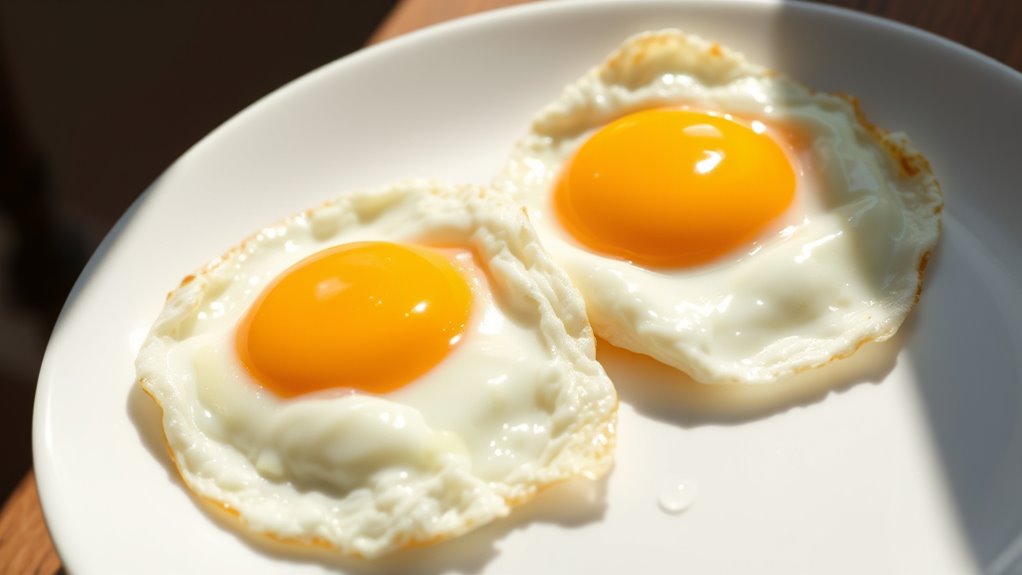
Two fried eggs usually pack around 180 to 200 calories, depending on how you cook them and the fats you use.
If you’re counting calories, it’s important to know that each large egg provides about 70 to 80 calories and 6–7 grams of protein.
Adding butter or oil can boost calories considerably, so using less or healthier fats like olive oil helps keep it light.
Want to know how to track your calories more accurately or make your eggs healthier?
You’ll find useful tips ahead.
What Are the Macros in Two Fried Eggs?
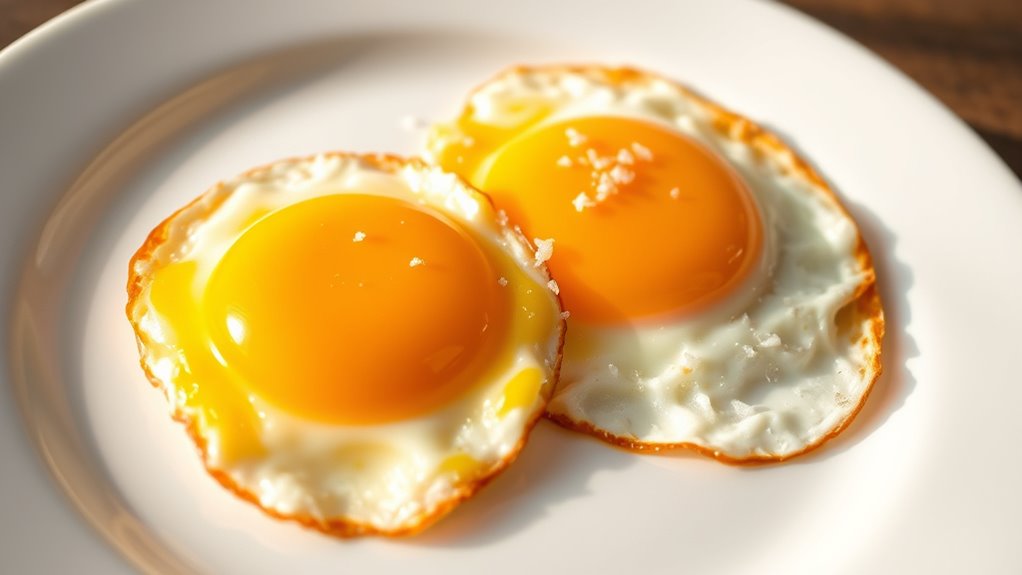
Although the exact macros in two fried eggs depend on how you cook them, you can expect around 148 to 200 calories, 12 to 14 grams of protein, and 20 to 32 grams of fat. The egg size plays a role, with large eggs providing about 6 to 7 grams of complete protein each.
Fats vary more widely, influenced by the type and amount of added fats like butter, oil, or cooking spray. Using minimal fat or healthier options such as olive oil helps keep calories and fats lower. Keep in mind, the carbohydrate content remains under 2 grams, making two fried eggs a great low-carb, high-protein choice.
Your cooking style and fat additions largely determine the final macros you get.
How Does Cooking Affect Fried Egg Macros and Calories?
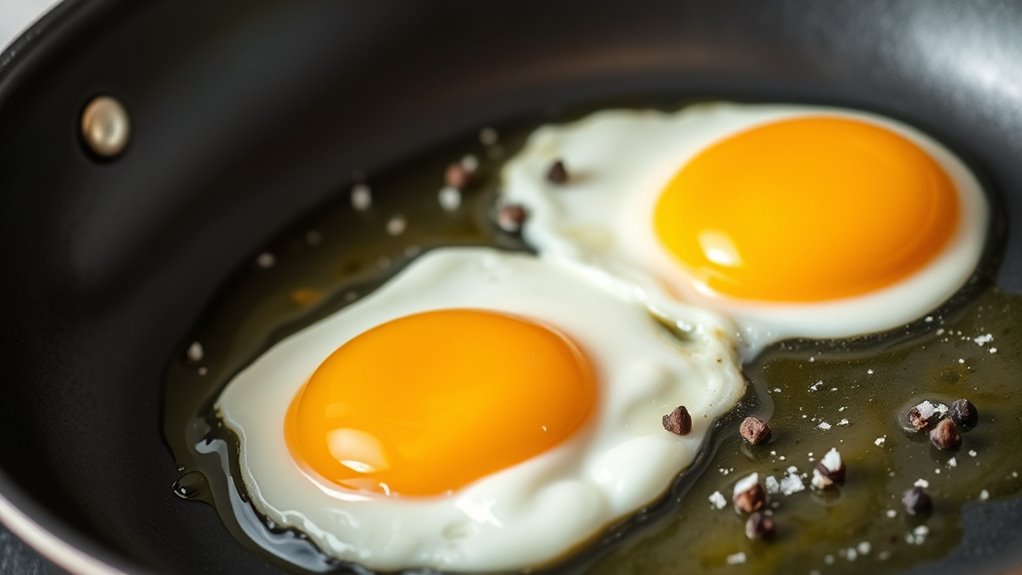
How you cook your eggs and the type of fat you use can change the macros and calories quite a bit. Using butter, olive oil, or non-stick spray adds different amounts of fat and calories to your two fried eggs.
Plus, the portion size of the cooking fat you choose will impact the final nutritional content you get.
Cooking Methods Impact
When you fry eggs, the cooking method you choose can considerably change their calorie and macro content. Different cooking methods and oils impact the fat content and calories in your egg preparation. For example, frying with non-stick spray adds about 10g of fat and 148 calories per large egg, while using a teaspoon of olive oil raises calories to roughly 175 with increased monounsaturated fat.
If you opt for butter, expect around 200 calories and more saturated fat. The amount of oil you use directly influences the macros — more fat means more calories. Also, cooking at high temperatures or with excess oil can cause nutrient loss and more fat absorption, altering your fried eggs’ nutritional value.
Type Of Cooking Fat
Since the type of fat you use can dramatically change the nutritional profile of your fried eggs, it’s important to choose wisely. The type of fat you pick directly affects calories and fat composition. For example, using a teaspoon of olive oil adds about 40-50 calories and boosts healthy fats like monounsaturated fats.
Cooking with a tablespoon of butter increases calories by 100-120 and considerably raises saturated fat content. If you prefer minimal added fat, non-stick spray adds just 1-2 calories with little impact on macros. Remember, draining excess fat after frying helps reduce both calories and fat, especially when using oil or butter.
Portion Size Variations
Although frying two large eggs without added fat provides about 140 calories, adding just a teaspoon of butter can raise that number to around 200 calories, showing how cooking methods influence the macros and calorie content you get.
Your portion size and egg size also play key roles. Extra-large eggs add roughly 25% more calories and protein than large ones. Using oils or butter increases fat and calories substantially.
Controlling the cooking method and fat amount helps manage your serving’s nutritional profile.
| Portion Size | Calories (approx.) |
|---|---|
| 2 large eggs, no fat | 140 |
| 2 large eggs + 1 tsp butter | 200 |
| 2 extra-large eggs, no fat | 175 |
| 2 large eggs + olive oil spray | 180 |
| 2 large eggs + butter + drained oil | 190 |
Which Fats and Oils Add the Most Calories to Fried Eggs?
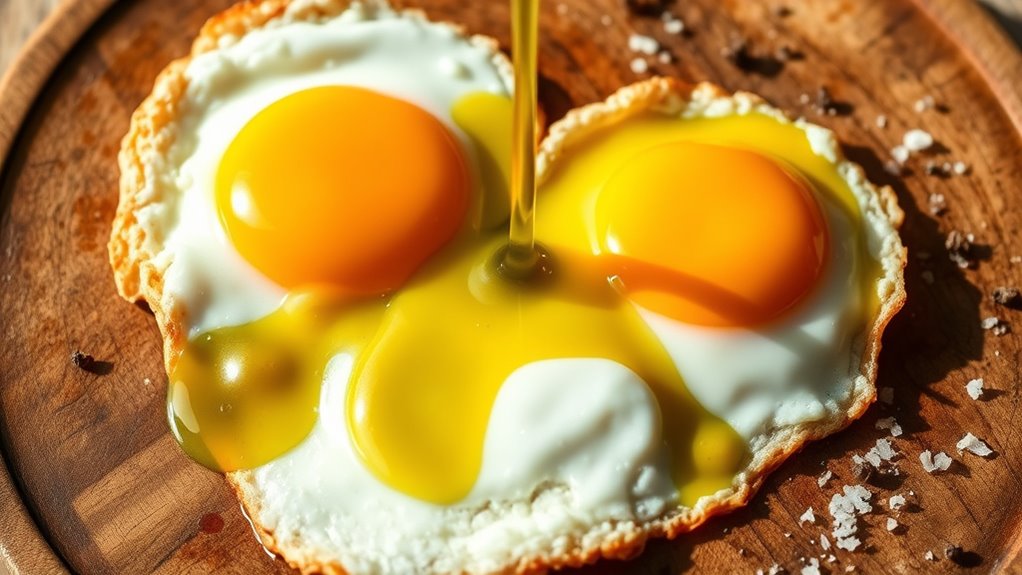
If you want to keep the calorie count of your fried eggs in check, choosing the right fat or oil is essential. Butter, for example, adds about 102 calories per tablespoon, mostly from saturated fats, making it one of the highest-calorie options. Olive oil, by contrast, adds roughly 40 calories per tablespoon and contains healthier monounsaturated fats.
The oil type you choose greatly impacts calories since full-fat oils like coconut or palm oil can add 120-130 calories per tablespoon due to their dense fat content. Even healthier oils like canola or avocado still contribute significant calories when used liberally. Keep in mind that the amount of fat absorbed during frying varies with oil type, affecting the final calorie count of your fried eggs.
How Can You Estimate Calories When Frying Eggs at Home?
Choosing the right fat or oil sets the stage for your fried eggs’ calorie content, but estimating those calories at home requires a bit more attention.
To get an accurate picture of the energy content in your fried eggs, you should:
- Measure the amount of oil or butter you use with spoons or a food scale.
- Multiply the measured fat by its calorie density (for example, 120 calories per tablespoon of vegetable oil).
- Account for the natural calories in the eggs themselves, roughly 70-80 calories per large egg.
What Are Simple Tips to Make Your Fried Eggs Healthier?
When you want to enjoy fried eggs without excess calories or unhealthy fats, simple adjustments can make a big difference. Use a nonstick pan and spray it lightly with calorie-free cooking spray instead of butter. Choose healthy oils like olive or avocado oil, but use sparingly to avoid extra calories.
Cook at lower heat to reduce oil needs and drain any excess fat with paper towels. Adding nutrient-dense toppings such as fresh herbs or veggies boosts flavor while keeping it healthy.
| Tip | Action | Benefit |
|---|---|---|
| Nonstick Spray | Use calorie-free cooking spray | Minimizes added fats |
| Healthy Oils | Use olive or avocado oil | Lowers saturated fat intake |
| Cook at Low Heat | Avoid excess oil use | Reduces extra calories |
| Nutrient-Dense Toppings | Add veggies or herbs | Enhances flavor and nutrients |
Practical Takeaways for Tracking Fried Egg Nutrition
Making healthier choices while frying eggs sets a solid foundation, but tracking their nutrition accurately helps you stay on target with your dietary goals. Two fried eggs can range from 140 to 200 calories, depending largely on the oil or butter used.
To track nutrition effectively, consider these practical tips:
- Measure the amount of oil or butter added to control added calories.
- Note the serving size carefully, as it impacts your macro nutrients and overall calorie count.
- Use food tracking apps or calorie counters to log your eggs and frying fats precisely.
Frequently Asked Questions
How Many Calories Are in 2 Whole Fried Eggs?
Two whole fried eggs usually have about 140 to 200 calories, depending on the cooking fat you use.
If you fry them with minimal oil or spray, expect closer to 140-150 calories total.
Is 2 Fried Eggs a Day Healthy?
Yes, eating two fried eggs a day can be healthy if you use minimal oil and balance your diet.
Just watch your overall fat intake and consult a doctor if you have cholesterol or heart issues.
How Many Calories Are in 2 Fried Eggs With Butter?
Two fried eggs with one teaspoon of butter have about 200 calories.
You’ll get extra fat and saturated fat from the butter, so it adds both flavor and calories compared to frying without butter.
How Many Calories Are in 2 Fried Eggs Without Butter?
You’ll find about 140 calories in two fried eggs without butter. Since you’re not adding fat, most calories come from the eggs themselves, keeping your meal lighter and lower in fat compared to frying with butter.
Conclusion
Counting calories in two fried eggs is like reading a recipe—you need to contemplate every ingredient. While two fried eggs alone offer about 180 calories, the type and amount of oil you use can quickly boost that number.
By choosing healthier fats and controlling portions, you can enjoy tasty eggs without guilt. Keep these tips in mind, and you’ll fry up nutritious meals that fit perfectly into your daily calorie goals.
Understanding how many calories are in two fried eggs helps you make smarter dietary choices and maintain a balanced diet.