How Many Calories Are in a Quarter Pound of Ground Beef?
You’ll find that a quarter pound of ground beef usually contains between 210 and 290 calories, depending on its fat content and cooking method.
Leaner options, like 90-95% lean beef, have fewer calories—around 170 to 200 per quarter pound—while fattier varieties pack more calories.
Cooking methods matter too; grilling or draining fat reduces calories compared to frying.
If you want to explore how nutrition and preparation affect your meal, keep going for more insights.
How Many Calories Are in a Quarter Pound of Ground Beef?
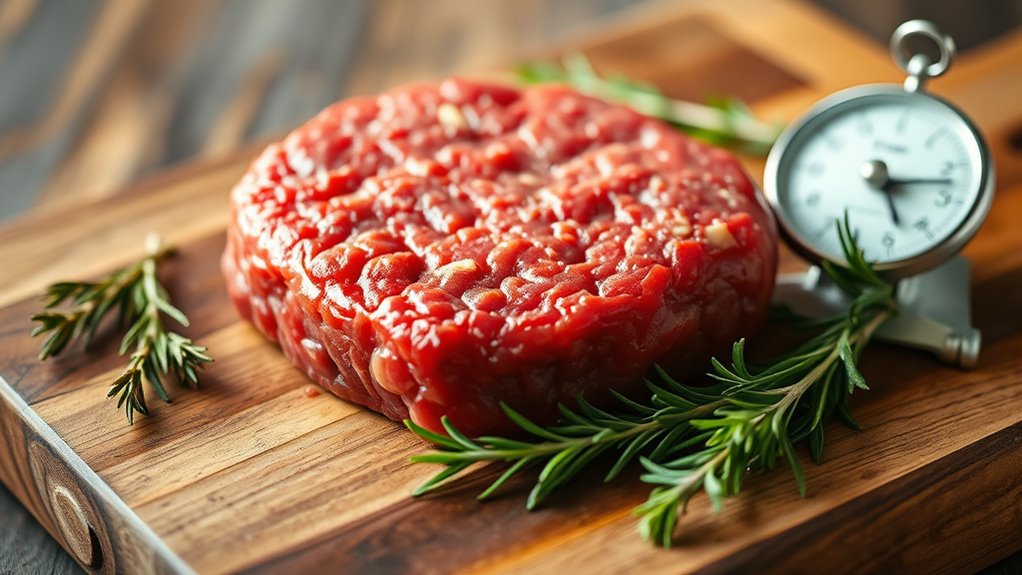
A quarter pound of cooked ground beef typically packs around 290 calories, but this number can shift depending on the fat content and how you prepare it. If you’re working with leaner ground beef, you might notice the calories are a bit lower, while fattier cuts generally have more.
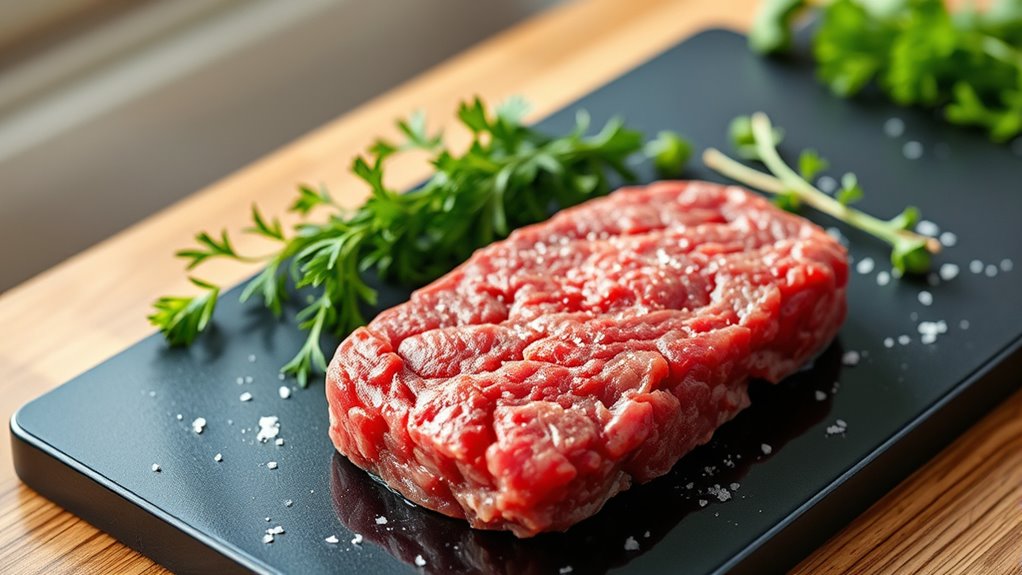
Raw ground beef in the same amount usually contains between 250 and 280 calories, again depending on fat percentage. When cooking, draining off excess fat can also reduce the calorie count in your serving.
You should also consider that seasonings or added ingredients might slightly impact the overall calories in your ground beef dish. Knowing these factors helps you manage your intake without sacrificing flavor or texture.
How Does Fat Content Affect Ground Beef Calories?
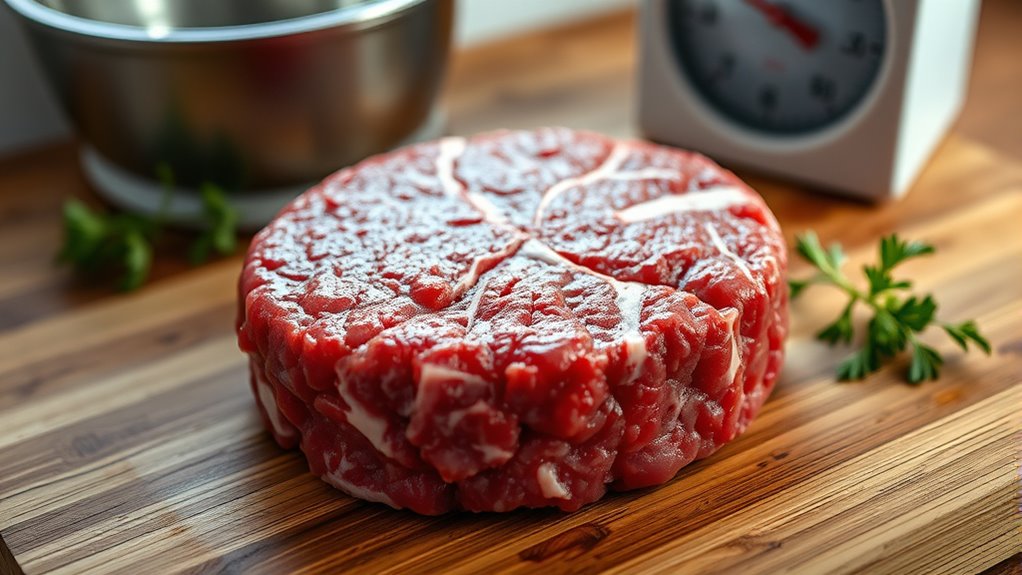
You’ll notice that the fat percentage in ground beef directly affects its calorie count, with higher fat meaning more calories. Choosing leaner options can cut your calorie intake, but it might change the flavor and juiciness.
Understanding these variations helps you pick the right balance for your health and taste preferences.
Fat Percentage Impact
Since fat contains about 9 calories per gram, ground beef with higher fat percentages packs markedly more calories than leaner options. For example, 80% lean ground beef has roughly 290 calories per quarter pound, while 95% lean contains about 180 calories. This difference comes from fat contributing more calories, as 80% lean beef has 20% fat compared to only 5% in leaner cuts.
When you choose ground beef with less fat, you cut down your calorie intake substantially without sacrificing essential protein. The fat percentage directly impacts the total calories and energy density of your meat, so knowing these numbers helps you make smarter, calorie-conscious choices.
Opting for leaner ground beef is a straightforward way to enjoy your meal while managing calorie consumption effectively.
Calorie Variation Factors
Though ground beef’s calorie content varies, fat percentage plays the biggest role in the difference you see between options. Understanding how fat content affects calories helps you make smarter choices for your meals. Here’s what you need to know:
- Higher fat content means more calories—80% lean beef has about 290 calories per quarter pound, while 95% lean drops to around 200 calories.
- Each 1% increase in fat adds roughly 10-15 calories per 4-ounce serving, making fattier ground beef more calorie-dense.
- Leaner beef contains fewer calories because fat contributes more calories than protein or water, affecting both nutrition and taste.
Healthier Fat Options
When choosing ground beef, the fat content substantially affects the calorie count, so opting for leaner options can help you manage your calorie intake more effectively. For instance, 80% lean beef packs about 290 calories per quarter pound, while 90% lean drops that to roughly 200 calories.
By choosing leaner ground beef, like 95% lean, you reduce calorie content markedly—usually around 150-170 calories per quarter pound—without sacrificing essential nutrients like protein and iron. Lower fat percentages mean fewer calories, which supports healthier eating habits.
Comparing Calories: Lean vs. Regular Ground Beef

If you want to manage your calorie intake, understanding the difference between lean and regular ground beef is key. Lean ground beef, typically 90% lean, contains about 170 calories per quarter pound, while regular ground beef (80% lean) has around 210 calories. This difference mainly stems from fat content, which affects calories directly.
Here’s what to keep in mind:
- Lean ground beef has fewer calories due to less fat.
- Regular ground beef offers more calories but tends to be juicier.
- Higher-fat options (like 70% lean) can have up to 290 calories per quarter pound.
Choosing lean beef helps you cut calories, but be prepared for a drier texture compared to regular ground beef.
What Nutrients Are in Ground Beef Besides Calories?
When you eat ground beef, you’re not just getting calories—you’re fueling your body with protein that supports muscle growth.
It also delivers essential vitamins and minerals like iron, zinc, and B vitamins to keep your energy up and immune system strong.
Plus, understanding the types and amounts of fat in ground beef helps you manage your heart health effectively.
Protein Content Benefits
Although many focus on calories, you’ll benefit from the high-quality protein in a quarter-pound of ground beef, which delivers about 19 grams per serving. Protein is essential because it contains all the amino acids your body needs for various functions.
Here’s why this protein and other nutrients matter:
- Muscle Repair: The amino acids help rebuild and maintain muscle tissue after exercise or daily wear.
- Immune Support: Protein supports your immune system by aiding the production of antibodies and enzymes.
- Energy Metabolism: Along with protein, ground beef provides nutrients that help convert food into energy efficiently.
Essential Vitamins And Minerals
Ground beef packs more than just protein and calories; it also delivers essential vitamins and minerals that support your overall health. You’ll find important B vitamins like B12, niacin (B3), riboflavin (B2), and B6 in a quarter-pound serving, which help boost energy production and maintain nerve function.
Besides vitamins, ground beef provides crucial minerals such as iron, zinc, selenium, and phosphorus. Iron, about 2 mg per serving, aids oxygen transport and helps prevent anemia. Zinc supports your immune system and wound healing, covering roughly 30-40% of your daily needs with 4-5 mg.
Selenium acts as an antioxidant, protecting your cells from damage, providing around 20-25 micrograms per portion. These vitamins and minerals make ground beef a nutrient-rich choice beyond just calorie content.
Fat Types And Amounts
Since fat substantially influences both the calorie content and nutritional profile of beef, it’s important to understand the types and amounts present in a quarter pound serving. Ground beef typically contains about 8 grams of total fat, including roughly 3 grams of saturated fat. The fat content varies with the leanness of the meat, affecting both calories and health impact.
Here’s what you should know:
- Saturated fat makes up around 3 grams and can impact heart health if consumed in excess.
- Trans fats are present in small amounts, usually between 0.2 to 1.5 grams, depending on fat content.
- Leaner ground beef has more monounsaturated fats, which are considered healthier fats.
Besides fat, ground beef also provides protein, iron, zinc, and B vitamins, making it a nutrient-rich choice.
How to Read Nutrition Labels on Ground Beef Packages
When you pick up a package of ground beef, you’ll want to start by checking the nutrition label to understand what you’re getting per serving. Nutrition labels typically list serving sizes—often 4 oz or 113 grams—helping you manage portion control.
Focus first on the total calorie count per serving, which can range from 200 to 290 calories depending on fat content. Next, check the fat breakdown, including saturated and trans fats, to gauge how healthy the meat is. Don’t forget to look at protein grams to see how much muscle-building nutrient you’re getting. Finally, review additional details like sodium, cholesterol, iron, and calcium to get a full picture of the beef’s nutritional profile before making your choice.
How Cooking Methods Can Change Ground Beef Calories
You’ll notice that how you cook ground beef can change its calorie count quite a bit. Adding fats like oil or butter, draining excess grease, and even the cooking temperature all play a role in the final calories.
Paying attention to these factors helps you control the calorie content in your meals.
Cooking Techniques Impact
Although ground beef starts with a set calorie count, the way you cook it can substantially change its final calorie content. Different cooking methods affect how much fat stays in or drips away, directly impacting calories. Here’s how cooking techniques can influence your meal:
- Frying with added fats like oil or butter increases calorie content, making your beef richer but heavier in calories.
- Grilling or broiling lets fat drip off, lowering calorie density compared to pan-frying.
- Baking or roasting avoids adding extra fat, helping control calorie intake while preserving flavor.
Also, draining excess fat after cooking reduces calories, while overcooking can concentrate calories due to moisture loss. Choose your cooking method wisely to manage calorie content effectively.
Calorie Variation Factors
Since cooking methods directly affect fat retention and added ingredients, they play a crucial role in changing the calorie content of ground beef. When you fry or grill ground beef, added oils or fats can increase its calorie content considerably. Draining excess fat after cooking helps reduce calories, making your meal lighter.
Choosing leaner cuts and cooking techniques like baking or broiling keeps the calorie content lower by minimizing added fats. Keep in mind that adding marinades, sauces, or cheese will boost calories further. Also, cooking ground beef to higher temperatures causes moisture loss, slightly reducing its weight but not the calorie density per ounce.
How to Cook Ground Beef With Fewer Calories
If you want to cut calories when cooking ground beef, start by choosing lean or extra-lean options with 10-15% fat content and make sure to drain any excess fat during cooking. Using the right cooking methods can also help you keep calories in check.
Here are three tips to cook ground beef with fewer calories:
- Opt for baking, broiling, or grilling instead of frying to avoid adding extra fat.
- Add vegetables or broth-based sauces for flavor without increasing calories.
- Cook ground beef thoroughly to 160°F and remove any visible fat or grease.
Easy Low-Calorie Meals With Lean Ground Beef
When you choose lean ground beef, you can easily create delicious meals that stay low in calories without sacrificing flavor. Lean ground beef (92% lean) offers roughly 190-200 calories per quarter pound, making it perfect for low-calorie meals. Adding vegetables like spinach or zucchini boosts nutrition and volume without many extra calories.
Try grilling or baking lean ground beef dishes to keep calories down.
| Meal Idea | Key Ingredients | Cooking Method |
|---|---|---|
| Lettuce-Wrapped Burger | Lean ground beef, lettuce | Grilled |
| Stuffed Peppers | Lean ground beef, bell peppers, zucchini | Baked |
| Spinach Beef Stir-Fry | Lean ground beef, spinach | Sautéed |
| Zucchini Meatballs | Lean ground beef, zucchini | Baked |
| Beef & Veggie Skewers | Lean ground beef, assorted veggies | Grilled |
These meals are easy, tasty, and support your low-calorie goals.
Health Benefits of Choosing Lean Ground Beef
Although ground beef is often seen as a high-fat option, choosing lean ground beef lets you enjoy its rich protein and essential nutrients without excess saturated fat. Opting for lean ground beef supports heart health by reducing cholesterol and lowering cardiovascular risk.
Here are three key benefits:
- You get high-quality protein vital for muscle maintenance and overall body functions.
- Lean ground beef contains fewer calories per serving, helping you manage weight effectively.
- It’s packed with iron, zinc, and B vitamins that boost energy and immune health.
Where Can You Find Quality Lean Ground Beef?
Choosing lean ground beef is a smart step toward healthier meals, but finding quality options matters just as much. You can find high-quality ground beef at most grocery stores, including major supermarkets and specialty health food stores. Look for labels like “grass-fed,” “pasture-raised,” or “organic” to confirm natural, quality meat.
Local butcher shops and farmers’ markets offer fresh, locally sourced options, often with clear information about the beef’s origin. Online retailers also provide premium lean ground beef, letting you choose specific fat content and learn about sourcing.
Reputable brands usually share detailed info about USDA grading and animal welfare standards, either on packaging or their websites. By knowing where to look, you can enjoy lean ground beef that’s both nutritious and responsibly sourced.
Frequently Asked Questions
How Many Calories Are in a Quarter Pound of Cooked Ground Beef?
You’ll find about 290 calories in a quarter pound of cooked ground beef.
Keep in mind, the exact count depends on fat content and cooking method, which can add or reduce calories slightly.
Which One Is Healthier, Big Mac or Quarter Pounder?
When choosing between a Big Mac and a Quarter Pounder, you’ll find the Quarter Pounder healthier.
It cuts through the noise with fewer calories, less fat, and fewer additives, giving your body a cleaner, stronger fuel source.
How Much Protein Is 1/4 Lb of Ground Beef?
You’ll get about 19 grams of protein from a quarter pound of ground beef. That’s a solid amount to help build muscle and keep you full, especially if you choose leaner options like 92% lean ground beef.
How Many Calories Does 93% Lean Ground Beef Have?
If calories were coins, you’d hold about 180 in a quarter pound of 93% lean ground beef.
You’ll enjoy a lean, protein-packed choice that’s kinder on calories but still rich in flavor and nutrients.
Conclusion
You might think all ground beef packs the same calories, but the fat content makes a big difference. Choosing lean ground beef cuts calories without sacrificing flavor or nutrition. By reading labels and cooking smart, you’ll enjoy tasty meals that fit your health goals.
Don’t let calorie concerns keep you from enjoying ground beef—it’s all about making informed choices that work for you and your lifestyle. Understanding how many calories are in a quarter pound of ground beef helps you manage your diet effectively. Opting for leaner options can reduce calorie intake while still providing the rich taste and nutrients you want.