7 Steps to Cook Beef Brisket Perfectly on a Charcoal Grill
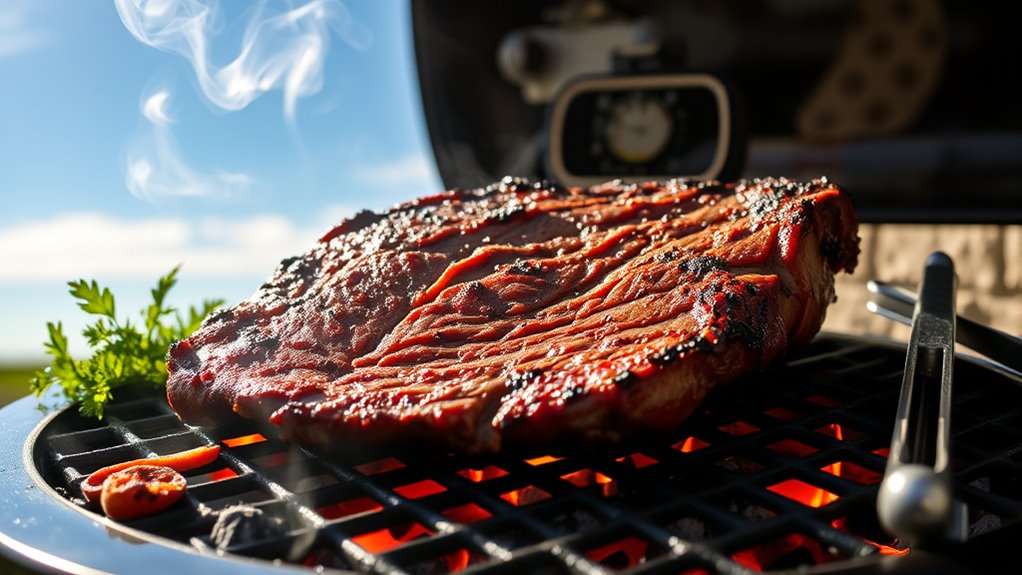
To cook a perfect beef brisket on your charcoal grill, first pick a 10-12 lb brisket and trim excess fat, then season it well.
Setting up your charcoal grill properly is essential for achieving that authentic smoky flavor. Use indirect heat and place a water pan inside to maintain moisture during cooking.
Add soaked wood chunks for smoke flavor to enhance the taste. Maintain a steady temperature between 225-250°F to slowly cook the brisket.
Cook until it hits the stall at around 165°F, then wrap it tightly to finish.
After cooking, let the brisket rest to ensure juicy tenderness. Following these steps will help you master the art of cooking beef brisket on a charcoal grill for mouthwatering results.
Keep going to perfect each step and impress your guests.
Choose the Right Brisket and Prep It Properly
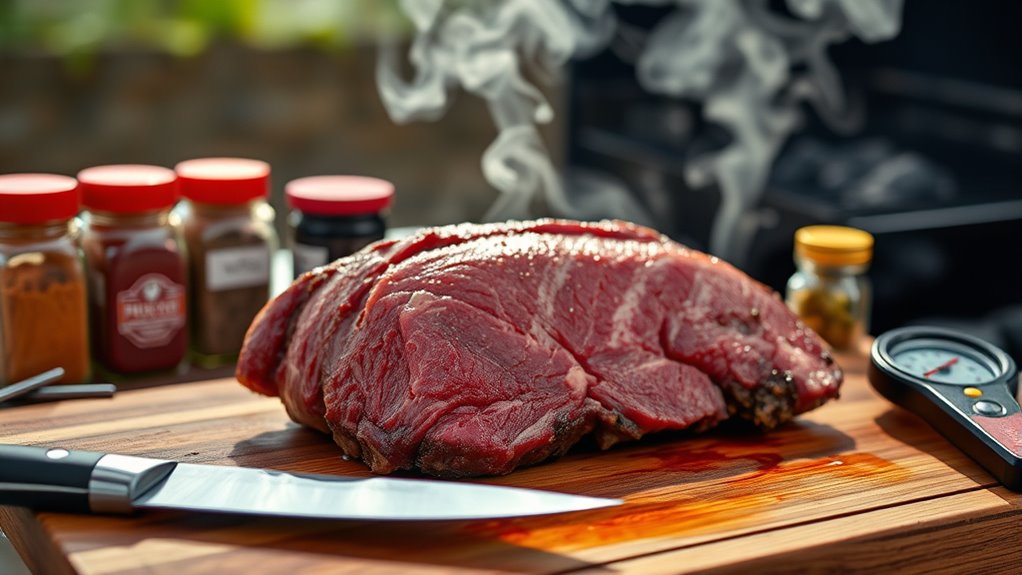
When you choose a whole brisket weighing between 10 to 12 pounds, you set yourself up for consistent smoking and cooking results. Start your brisket selection by trimming excess fat, leaving about a ¼-inch fat cap to ensure moisture retention during the long cook.
Next, rinse the brisket under cold water and pat it dry; this step helps the dry rub adhere better for proper seasoning. Apply your seasoning—a blend of salt, black pepper, and spices—and refrigerate the brisket uncovered for 12 to 24 hours. This preparation enhances the flavor deeply.
Before placing the brisket on the grill, let it come to room temperature for about an hour. Following these steps guarantees your whole brisket is primed for a flavorful, evenly cooked finish.
Set Up Your Charcoal Grill for Brisket Smoking
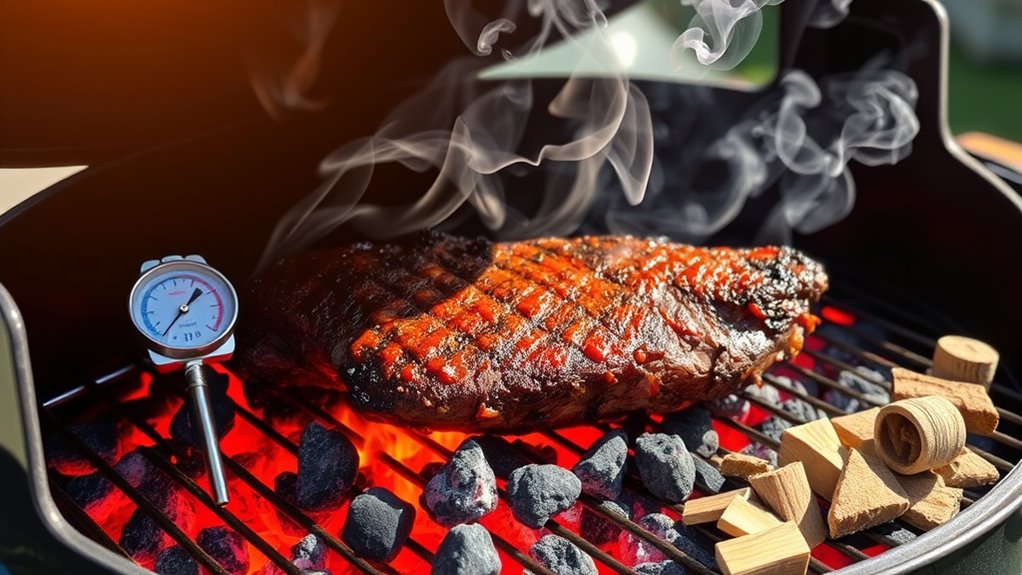
Once your brisket is seasoned and rested, it’s time to prepare your charcoal grill for smoking. Arrange 10-16 unlit coals in a semi-circular snake pattern for indirect heat. Add 3-4 smoking wood chunks evenly spaced for smoke flavor.
Place a water pan in the center to maintain moisture and stabilize temperature. Light one end of the coals, letting the fire slowly spread to reach a steady temperature of 225-250°F. Adjust grill vents—top fully open, bottom partially closed—for ideal airflow and temperature control.
| Step | Action | Purpose |
|---|---|---|
| Arrange unlit coals | Semi-circular snake pattern | Indirect heat |
| Add wood chunks | Evenly spaced on coals | Smoke wood flavor |
| Place water pan | Center of coals | Maintain moisture |
| Manage fire & vents | Light one end, adjust vents | Fire management & control |
Pick and Prep Wood Chunks for Great Smoke Flavor
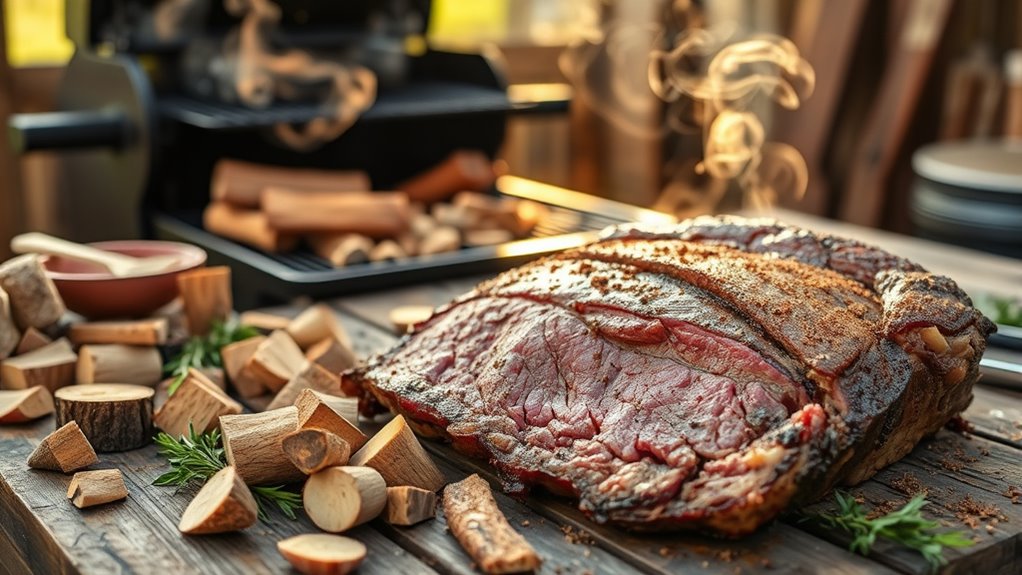
You’ll want to choose hardwoods like mesquite or hickory for a strong, traditional smoke flavor that complements your brisket. Soak your wood chunks in water for about 30 minutes to boost smoke production and prevent quick burning.
Balancing the smoke intensity is key, so use mild to medium woods and add chunks gradually throughout the cook.
Selecting Ideal Wood Types
Although selecting the right wood might seem straightforward, choosing and preparing your wood chunks plays a crucial role in achieving that perfect brisket smoke flavor. Start with seasoned wood chunks that are dry and free from resin or chemicals to avoid off-flavors.
Popular wood types for smoking brisket include mesquite for its strong, robust smoke flavor, as well as hickory, apple, cherry, post oak, and pecan, each offering unique wood flavoring. Your wood selection impacts the final taste, so pick smoking woods that complement beef well.
While wood chips are an option, larger wood chunks provide longer, consistent smoke. Proper wood preparation, including wood chunks soaking, enhances smoke production and prevents quick burning, ensuring your brisket absorbs rich, balanced smoke flavor throughout the cook.
Soaking Wood For Smoke
How long should you soak your wood chunks to get the best smoke flavor? Soaking hardwood chunks for about 30 minutes is ideal. This wood soaking technique prevents burning too quickly and boosts smoke production, giving you steady, flavorful smoke for even flavor infusion.
Using quality hardwood chunks like hickory or fruit woods enhances smoke flavor without bitterness. Place soaked wood directly on hot coals or in a smoker box for optimal smoke control. Keep your wood management tight by replenishing soaked wood chunks every 1-2 hours to maintain consistent smoke output.
| Aspect | Recommendation |
|---|---|
| Soaking Time | 30 minutes |
| Wood Type | Hardwood (mesquite, hickory) |
| Purpose | Prevent burning, steady smoke |
| Placement | On coals or smoker box |
| Replenish Frequency | Every 1-2 hours |
Balancing Smoke Intensity
Mastering smoke intensity starts with selecting and preparing the right wood chunks. Choose hardwoods like mesquite, hickory, or post oak to achieve a bold smoke flavor perfect for beef brisket. Cut your wood chunks into 2-4 inch pieces and soak wood for 30 minutes before use.
This soaking wood step helps produce steady smoke and prevents rapid burning. Arrange the soaked wood chunks evenly among the unlit coals in your charcoal setup’s snake configuration to promote consistent smoke distribution during the long cook. Maintain indirect heat by replenishing wood chunks every 1-2 hours, ensuring steady smoke and balanced smoke intensity throughout.
Proper wood replenishment keeps the smoke flavor rich without overpowering your brisket.
Keep Your Grill Temperature Steady and Manage the Fire
When you keep your grill temperature steady around 225°F, you guarantee your beef brisket cooks slowly and evenly, revealing its full flavor potential. Focus on temperature control by adjusting the vents to manage airflow, which stabilizes grill temperature and maintains steady heat.
Place a water pan between the charcoal and the brisket to absorb heat spikes and add moisture, preventing flare-ups from fat drippings. Use indirect heat by arranging charcoal off to the side, then add unlit charcoal and wood chunks gradually for consistent fuel management and smoke production. Avoid opening the lid too often; instead, monitor internal temperatures with a probe thermometer through a vent or small opening. These steps help you maintain a steady, controlled environment that’s perfect for slow-cooked brisket.
Smoke the Brisket Slowly Until the Stall Temperature
After you’ve set a steady temperature and managed your fire, it’s time to let the brisket absorb smoke gradually until it hits the stall. The stall occurs around 165°F when collagen breaks down and moisture evaporates, causing the internal temperature to plateau.
Maintaining a consistent charcoal grill temperature near 225°F ensures even cooking and tender results. During this phase, patience is key as the brisket’s internal temperature holds steady for hours.
| Stage | Key Point |
|---|---|
| Stall Temp | About 165°F |
| Smoke Duration | Several hours until plateau ends |
| Grill Temp | Steady 225°F on charcoal grill |
This slow smoke process locks in moisture and tenderness until the brisket is ready for the next step.
Wrap and Finish Cooking for Tender, Juicy Brisket
Once your brisket hits 165°F, you’ll want to wrap it tightly in foil or butcher paper to lock in moisture and speed up cooking. This wrapping traps steam that breaks down collagen, making the meat tender and juicy as it finishes cooking.
After wrapping, let the brisket rest for at least an hour to allow carryover heat to finish the job and redistribute the juices evenly.
Wrapping Techniques
Because wrapping the brisket at around 165°F traps moisture and speeds up cooking, you’ll create a tender, juicy final product by sealing it tightly in foil or butcher paper. Wrapping during the stall prevents evaporative cooling, maintaining moisture retention and pushing the internal temperature toward 190°F.
The tightly sealed foil or butcher paper forms a steam environment that softens collagen, enhancing juiciness and tenderness.
| Wrapping Material | Benefits |
|---|---|
| Foil | Maximum moisture retention, faster cooking |
| Butcher Paper | Breathable, retains juiciness, bark preservation |
| Stall Phase | Wrapping here prevents evaporative cooling |
| Steam Environment | Breaks down collagen for tenderness |
| Sealing | Must be tight to trap steam and moisture |
Choose your wrap wisely to master brisket tenderness and juiciness.
Resting And Carryover
How do you guarantee your brisket stays tender and juicy after it’s off the grill? The key is proper resting and understanding carryover cooking. Once your brisket hits an internal temperature of about 165-170°F, wrap it tightly in foil or butcher paper. This wrap traps moisture, creating a steamy environment that breaks down collagen and enhances tenderness.
During the resting time—ideally 1 to 3 hours—the brisket’s internal temperature will rise about 10°F due to carryover cooking, reaching the perfect final temperature around 190°F for ideal doneness. Resting allows the juices to redistribute evenly, preserving moisture and preventing dryness. Avoid slicing too soon; cutting early causes juices to escape, reducing tenderness.
Rest, Slice, and Serve Your Perfect Smoked Brisket
After you’ve taken your brisket off the grill, let it rest wrapped tightly in foil or butcher paper for 1 to 3 hours so the juices can redistribute and keep the meat moist. During the resting period, the meat temperature evens out, ensuring a juicy smoked brisket.
When ready, slice against the grain with the fat side up, cutting about ¼-inch thick slices to enhance flavor and tenderness. Serve promptly to enjoy peak texture and smoky flavor.
| Step | Detail | Tip |
|---|---|---|
| Rest | 1-3 hours | Wrap in foil or butcher paper |
| Slice | Against the grain | Fat side up |
| Slice thickness | ¼ inch | Start with flat, then point |
| Serve | Immediately | Keeps brisket juicy |
| Store leftovers | Up to 5 days fridge | Airtight container |
Frequently Asked Questions
How Do You Cook Brisket on a Charcoal Grill?
You cook brisket on a charcoal grill by maintaining low heat, smoking it slowly, and monitoring its internal temperature.
Wrap it once tender, then let it rest before slicing against the grain for juicy, flavorful results.
What Is the 3-2-1 Rule for Brisket?
The 3-2-1 rule isn’t ideal for brisket. It’s a ribs method: smoke 3 hours, wrap 2, then cook 1.
For brisket, focus on internal temperature, not strict timing, to avoid drying it out.
Should I Wrap My Brisket in Foil on the Grill?
You should wrap your brisket in foil, but not too soon. Waiting until it hits about 165°F lets you lock in moisture and tenderness without sacrificing that perfect bark.
Timing’s key—don’t rush it!
Should Brisket Be Fat Side up or Down on Charcoal Grill?
You should place your brisket fat side up on the charcoal grill. This lets the fat baste the meat as it melts, keeping it moist and flavorful while developing a tender, delicious bark throughout the cook.
Conclusion
Now that you’ve mastered these steps, your brisket will rival the legends of Texas BBQ. Like a maestro conducting a symphony, you control the fire and smoke to create tender, juicy perfection.
Remember, great brisket takes patience and care—just like any timeless masterpiece. So fire up your charcoal grill, trust the process, and get ready to impress your friends with a smoky feast worthy of any backyard showdown.
With these 7 steps to cook beef brisket perfectly on a charcoal grill, you’ll achieve mouthwatering results every time. Embrace the art of slow cooking and the rich flavors of charcoal smoke for an unforgettable BBQ experience.