How to Cook Swordfish in a Pan
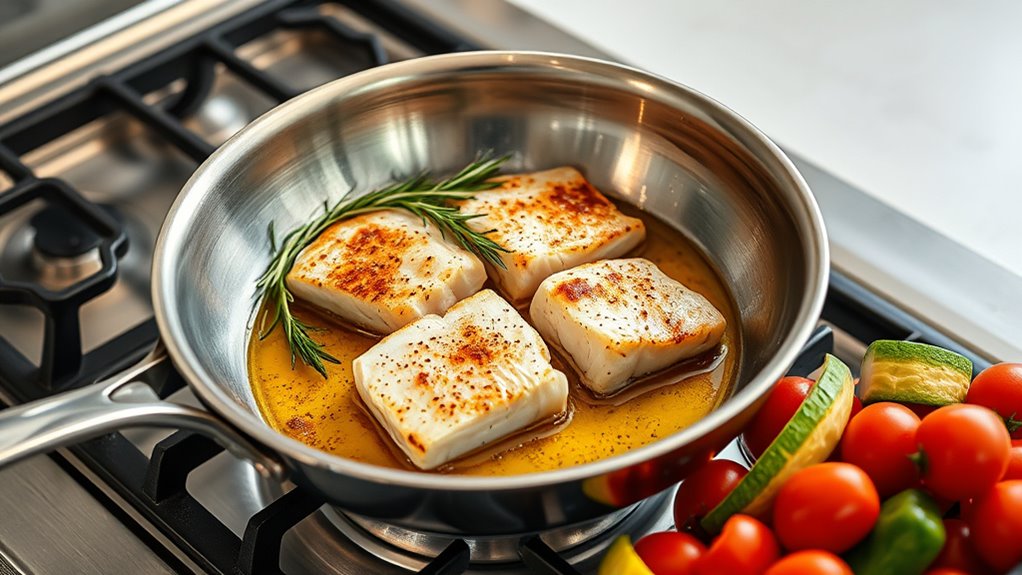
To cook swordfish in a pan, start with fresh, firm fillets about an inch thick. Pat them dry and season with salt and pepper. Heating a skillet over medium-high heat with olive oil until shimmering is key to a perfect sear.
Then, sear the fillets 4-5 minutes per side, flipping every couple of minutes for even cooking. Aim for an internal temperature of 130°F for the best texture and flavor.
Finish with a quick garlic lemon butter sauce to add extra flavor. Keep going to explore tips, tasty variations, and perfect pairings.
Choosing the Best Swordfish for Pan Searing
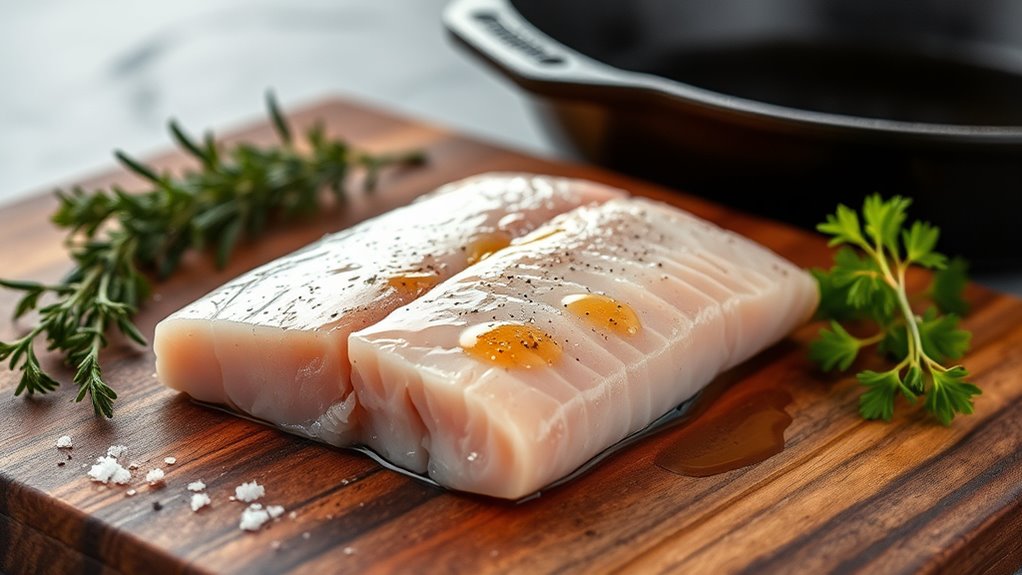
When choosing swordfish for pan searing, pick fillets about 3/4 to 1 inch thick to guarantee even cooking and a perfect sear. Look for swordfish fillets with a firm texture, as this indicates freshness and quality. Avoid fillets that feel mushy or have a strong fishy smell.
Make sure both sides of the fillet have a clean, even cut and are similar in size to promote uniform doneness. If you’re using frozen fish, thaw frozen swordfish in the refrigerator overnight, then pat it dry to remove excess moisture. This helps the fillet sear properly without steaming.
Choosing the right fillets and properly thawing them sets you up for delicious, evenly cooked swordfish every time.
Preparing Swordfish Fillets for Cooking
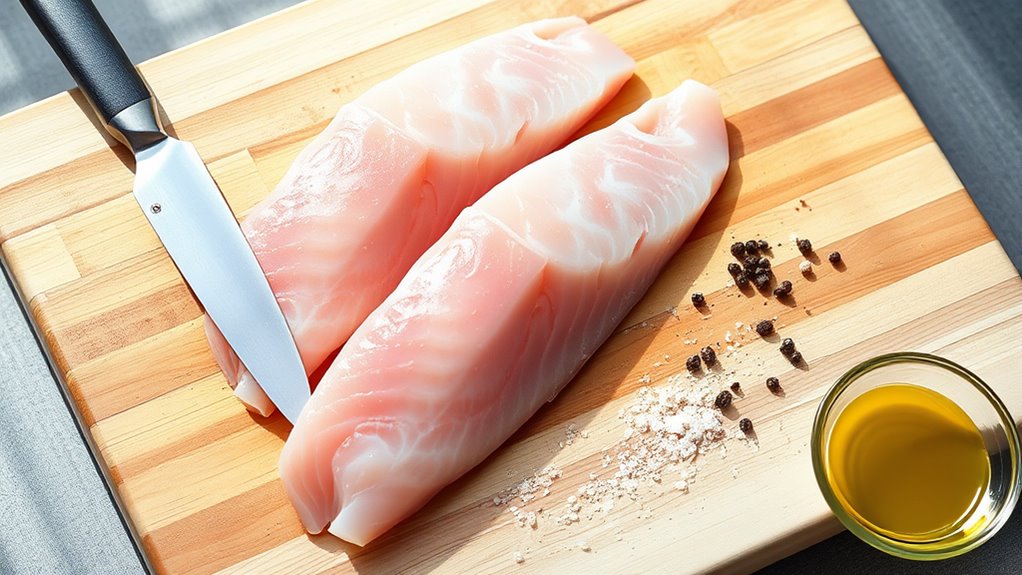
Start by choosing firm, fresh swordfish fillets about ¾ to 1 inch thick for even cooking. Make sure to thaw frozen fillets in the fridge overnight and pat them dry before seasoning. Removing the skin and any white myoglobin line will improve both texture and flavor.
Selecting Quality Swordfish
Although selecting the right swordfish fillets might seem straightforward, choosing pieces that are about 3/4 to 1 inch thick and similar in size guarantees even cooking. When you pick your swordfish, focus on freshness and fish quality to bring out the best flavor. Swordfish with firm, dense flesh and a mild, slightly sweet aroma signals quality fishing and freshness.
Avoid fillets with a strong fishy smell.
To ensure you’re getting the best swordfish:
- Look for thick, uniform fillets that cook evenly
- Choose fish with a clean, fresh scent and firm texture
- Prefer sustainably sourced swordfish for responsible fishing practices
This careful selection sets the stage for a delicious, perfectly cooked swordfish meal.
Cleaning And Prepping
A clean, well-prepared swordfish fillet makes all the difference in cooking a flavorful meal. Start by removing the white myoglobin line from the center to avoid a strong mineral taste. Next, pat dry the fillet with paper towels to get rid of excess moisture, which helps achieve a perfect sear.
Check for any skin and remove it completely to improve texture and presentation. Finally, use a sharp knife to trim uneven edges and excess fat for even edges, ensuring the fillet cooks uniformly.
| Step | Why It Matters |
|---|---|
| Remove myoglobin | Prevents strong mineral flavor |
| Pat dry | Ensures proper searing |
| Skin removal | Improves texture and appearance |
| Trim edges | Promotes even cooking |
Thawing And Marinating
You thaw frozen swordfish fillets, do it overnight in the refrigerator to guarantee even and safe defrosting. Once thawed, pat the fillets dry with paper towels to remove surface moisture—this step is vital for a perfect sear.
Remove the skin and any white myoglobin lines to improve texture and flavor. Next, marinate the swordfish fillets in a simple mix of salt, lemon juice, and your favorite spices for about 10 minutes.
Then, let them sit at room temperature for another 10-15 minutes to ensure even cooking.
- Feel the anticipation as the fresh citrus and spices soak in
- Enjoy the satisfying ritual of prepping your meal with care
- Imagine the juicy, flavorful swordfish ready to hit the pan
Key Ingredients You’ll Need
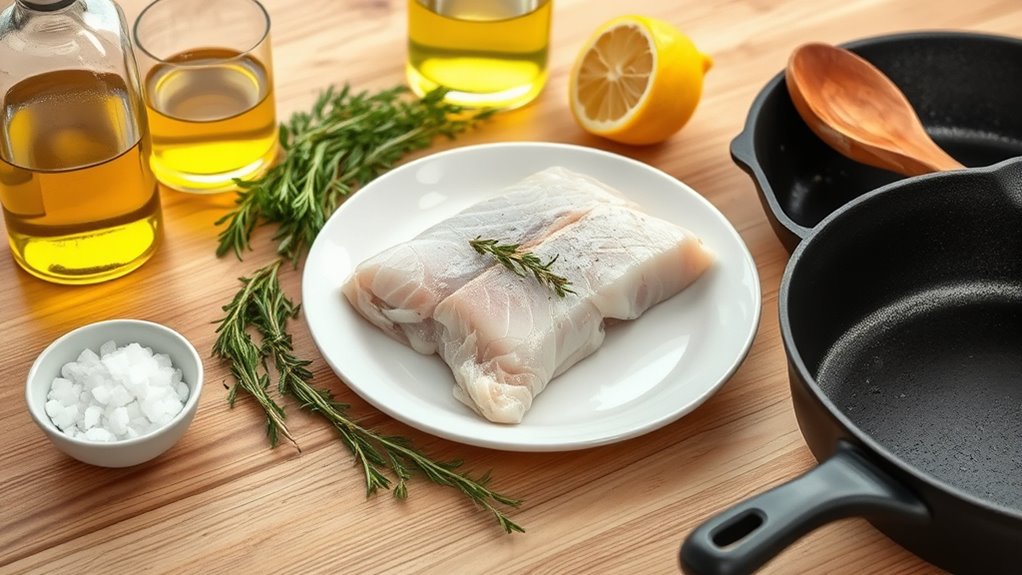
When selecting swordfish for pan-cooking, start with fresh, 1-inch thick fillets that have firm flesh and little to no fishy odor to guarantee a tender, flavorful result. You’ll need high-quality olive oil for a perfect sear and seasoning like kosher salt and freshly ground black pepper to enhance the natural taste. Lemon adds a bright, fresh flavor without overpowering the fish.
Here’s a quick look at key ingredients:
| Ingredient | Purpose | Notes |
|---|---|---|
| Swordfish fillets | Main protein | 1-inch thick, fresh |
| Olive oil | Cooking medium | Use high-quality for best sear |
| Seasoning | Flavor enhancer | Salt, pepper, optional lemon |
These simple ingredients keep the focus on the rich swordfish flavor.
Step-by-Step Pan Searing Instructions
Start by patting your swordfish fillets dry to guarantee a crisp, golden crust. Heat your skillet to the right temperature and add oil with a high smoke point to prevent sticking.
Then, cook the fillets evenly, flipping regularly and checking the internal temperature for perfect doneness.
Preparing Swordfish Fillets
Although selecting the right swordfish fillets is essential, ensuring they’re about 3/4 to 1 inch thick and similar in size will help you cook them evenly. Start by patting the fillets dry with paper towels to remove excess moisture—this step is vital for a perfect sear.
Preheat your heavy skillet or cast iron pan over medium-high heat until it’s very hot. Add a high smoke point oil like olive or vegetable oil, and wait until it shimmers before placing the fillets in the pan. Properly preparing swordfish fillets sets the stage for mouthwatering cooking results.
- Feel the anticipation as you prepare fresh, thick fillets.
- Enjoy the satisfying sizzle once the fillets hit the hot oil.
- Watch the golden crust form, promising rich flavor and texture.
Searing And Cooking Tips
Once your swordfish fillets are properly prepared and your pan is hot, it’s time to focus on searing them perfectly. Preheat a nonstick or cast iron pan over medium-high heat until it reaches 400-450°F for ideal pan temperature. Pat the fillets dry to remove moisture, then add a high smoke point oil like olive or canola, swirling to coat the pan evenly.
Place the fillets in the pan and cook for about 4-5 minutes on each side, flipping every 2 minutes to ensure even searing and prevent sticking. Use an instant-read thermometer to check the internal temperature; once it hits at least 130°F, your swordfish is cooked through and juicy. Proper searing and monitoring cooking time guarantee delicious results.
Making a Simple Garlic Lemon Butter Sauce
When you melt butter over medium-low heat, it creates the perfect base for a simple garlic lemon butter sauce that enhances your swordfish. Start by melting 4 tablespoons of butter gently, then sauté 4 minced garlic cloves for 30-40 seconds until fragrant—don’t let them brown or they’ll turn bitter.
Next, add 2 tablespoons of lemon juice and let it bubble briefly before turning off the heat. Stir in ½ teaspoon of finely chopped parsley for a fresh touch.
Pour this warm, tangy lemon butter sauce over your perfectly pan-seared swordfish to add richness and zest. This sauce will:
- Elevate your swordfish with vibrant garlic aroma
- Add a bright, citrusy finish that excites the palate
- Provide a luscious buttery coating that keeps every bite moist
Checking Swordfish Doneness and Resting Tips
To guarantee your swordfish is perfectly cooked, use a meat thermometer to check its internal temperature, aiming for 130°F. This ensures the ideal doneness, keeping the fish moist and tender. Besides temperature, rely on visual cues like a golden crust and an even opaque color to confirm it’s cooked without overdoing it.
When the fish flakes easily with a fork, you know it’s ready. After cooking, let your swordfish rest for 3-5 minutes. This resting period allows the internal temperature to rise to about 140°F and lets the juices redistribute, preventing dryness.
Avoid cutting into the fish immediately; resting is key to maintaining juiciness and enhancing the overall flavor and texture of your pan-seared swordfish.
Flavor Variations for Pan-Seared Swordfish
Although swordfish has a naturally mild flavor, you can easily elevate your pan-seared dish by experimenting with herbs, spices, and complementary toppings. Start by infusing your fish with fragrant herbs like rosemary, thyme, or dill, either in the marinade or as a fresh garnish. Then, try bold spice blends such as Old Bay, lemon pepper, or smoked paprika to add a smoky or zesty kick.
During cooking, a splash of white wine brings a subtle, savory depth that enhances every bite. Finally, brighten your dish with vibrant fruit salsas—mango, pineapple, or tomato-based—that introduce invigorating, tangy notes.
- Imagine the aroma of rosemary mingling with sizzling swordfish
- Savor the smoky warmth from paprika or lemon pepper
- Delight in the sweet and tangy burst of fresh fruit salsas
These flavor twists transform your simple pan-seared swordfish into a memorable meal.
Serving Suggestions and Side Dish Ideas
You can brighten your pan-seared swordfish with a squeeze of fresh lemon or a drizzle of garlic lemon butter sauce. Pair it with roasted vegetables like asparagus or buttery mashed potatoes to balance its rich texture.
Adding a light side salad or cilantro lime rice will round out your meal perfectly.
Complementary Side Dishes
When you pan-sear swordfish, pairing it with bright, citrusy sides like lemon wedges or lime instantly elevates its flavor. These zesty accents cut through the richness, creating a perfect balance.
To complete your plate, consider these complementary side dishes that bring color, texture, and heartiness:
- Roasted vegetables like asparagus, zucchini, or bell peppers add vibrant, nutritious contrast.
- Rice varieties such as cilantro lime rice or yellow rice offer a flavorful and filling base.
- Simple bread or grilled baguette slices with herb butter deliver satisfying crunch and richness.
Together, these sides transform your swordfish meal into a delightful, well-rounded experience that’s both fresh and comforting.
Flavorful Serving Enhancements
Since pan-seared swordfish boasts a rich, meaty texture, enhancing its natural sweetness with a squeeze of fresh lemon or lime brightens the dish beautifully. You can drizzle a simple garlic lemon butter sauce or a tangy caper sauce over the fish to add richness and a touch of acidity.
Pair your swordfish with roasted vegetables like asparagus or zucchini; their subtle flavors complement without overpowering. For sides, cilantro lime rice or yellow rice balance the savory, buttery notes perfectly. Don’t forget to garnish with fresh herbs such as parsley or thyme to add an aromatic, fresh finish.
These flavorful serving enhancements elevate your pan-seared swordfish, creating a balanced and memorable meal.
Fixing Common Problems When Pan Searing Swordfish
Although pan searing swordfish seems straightforward, common issues like sticking, uneven cooking, or dryness can easily ruin the dish. To fix these problems, avoid overcooking, which makes the fish dry and tough. Use a very hot pan for proper searing, and make sure the fish is patted dry before seasoning to get a crisp exterior.
Flip the swordfish every 2 minutes for even cooking and never overcrowd the pan, so heat stays consistent.
- No more frustration from sticking fish ruining your meal
- Enjoy perfectly seared, juicy swordfish every time
- Say goodbye to dry, tough bites that disappoint
Storing and Using Leftover Swordfish
After mastering the art of pan searing swordfish to juicy perfection, you’ll want to make the most of any leftovers without sacrificing flavor or texture. Store leftover cooked swordfish in an airtight container in the refrigerator and consume it within 2-3 days to keep it fresh.
When you’re ready to reheat, do so gently—either in a skillet over low heat or in the oven at 275°F—to avoid drying out the fish. Avoid microwaving, as it can cause uneven heating and damage the texture.
If you need to freeze leftover swordfish, wrap it tightly in plastic wrap and foil, then place it in a freezer-safe container for up to two months. Always guarantee the internal temperature reaches 140°F when reheating for safety and juiciness.
Frequently Asked Questions
What Is the Best Method of Cooking Swordfish?
You’ll get the best swordfish by pan-searing it; studies show 4-5 minutes per side locks in moisture perfectly.
Heat a heavy pan, season well, then rest it to keep it juicy and tender.
How Long Does Swordfish Take to Cook in a Pan?
You’ll want to cook swordfish about 4 to 6 minutes per side, depending on thickness. Flip every 2-3 minutes for even cooking, and check that the internal temperature hits around 130°F before resting.
What Is the Best Seasoning to Put on Swordfish?
You’ll want to season swordfish simply with salt, black pepper, and lemon juice to highlight its natural flavor.
Adding paprika, garlic powder, or fresh herbs like thyme can boost its taste perfectly without overpowering it.
Is It Better to Grill or Pan Fry Swordfish?
Think of cooking swordfish like choosing a playlist: pan frying gives you quick, precise control for a juicy, flavorful hit, while grilling adds smoky depth.
Pick based on your mood and setup, and you can’t go wrong.
Conclusion
Now that you know how to pan sear swordfish perfectly, you’re ready to impress at your next meal. Did you know swordfish can grow up to 10 feet long and weigh over 1,200 pounds? Cooking a fillet from such a powerful fish feels pretty special, doesn’t it?
With these tips, you’ll enjoy a flavorful, restaurant-quality dish right at home. So grab your pan, and get cooking! Mastering how to cook swordfish in a pan ensures a delicious, tender, and perfectly seared result every time. Enjoy the rich taste of this magnificent fish with your new skills!