Is Aquarium Salt the Same as Epsom Salt? Key Differences Explained
No, aquarium salt and Epsom salt aren’t the same and aren’t interchangeable. Aquarium salt is mainly sodium chloride, helping with external fish health like parasite control and gill function. Epsom salt is magnesium sulfate, used for internal issues like constipation and swelling.
Using the wrong salt can harm your fish or be ineffective. If you want to understand how each works and when to use them, keep exploring how they specifically benefit your aquarium.
Aquarium Salt: Composition and Function
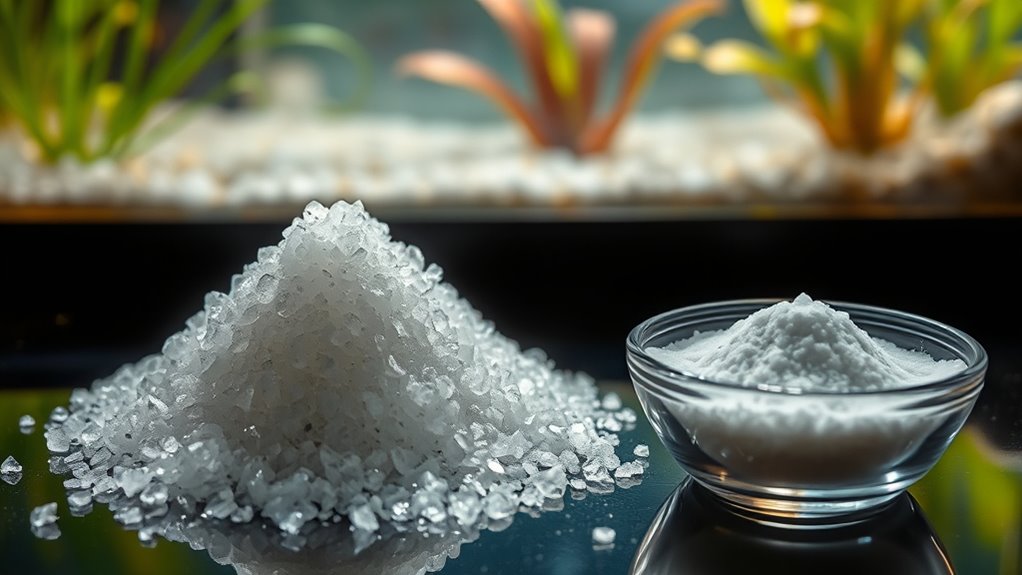
Although aquarium salt closely resembles regular table salt, it’s specially formulated with sodium chloride to benefit freshwater fish. When you add this salt to your tank, you’re mainly introducing sodium and chloride ions, which help fish maintain proper osmoregulation.
Aquarium salt, rich in sodium chloride, supports freshwater fish by aiding their osmoregulation and overall health.
This process allows your fish to balance fluids and electrolytes, improving gill function and encouraging a healthy slime coat.
Unlike products containing magnesium, aquarium salt focuses on sodium chloride for its specific aquatic benefits. You typically add about one tablespoon per five gallons of water to support your fish during stress or minor infections.
This salt creates a less favorable environment for bacteria and parasites, reducing their impact on your fish.
Just be careful not to use it with sensitive species or plants, as they mightn’t tolerate the salt well.
Epsom Salt: Composition and Uses
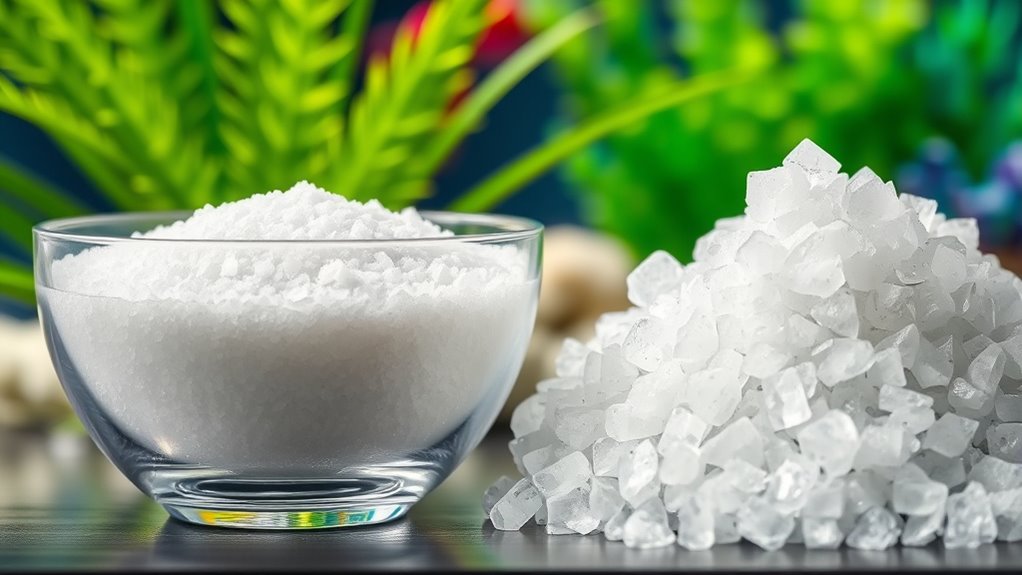
While aquarium salt mainly supports external health by improving osmoregulation and fighting parasites, Epsom salt serves a different purpose inside your fish’s body. Chemically known as magnesium sulfate, Epsom salt helps treat internal issues like constipation, swim bladder disorders, and dropsy in freshwater aquariums.
It acts as a natural laxative by relaxing fish muscles and aiding the evacuation of bloated or swollen tissues, directly benefiting fish health.
Unlike aquarium salt, it doesn’t contain sodium chloride and isn’t effective against external parasites. You can safely use magnesium sulfate in your freshwater tanks to address internal problems, but you must be cautious with dosing to avoid overdose.
Epsom salt’s unique role complements aquarium salt, targeting internal fish health rather than external conditions.
Chemical Differences Between Aquarium Salt and Epsom Salt
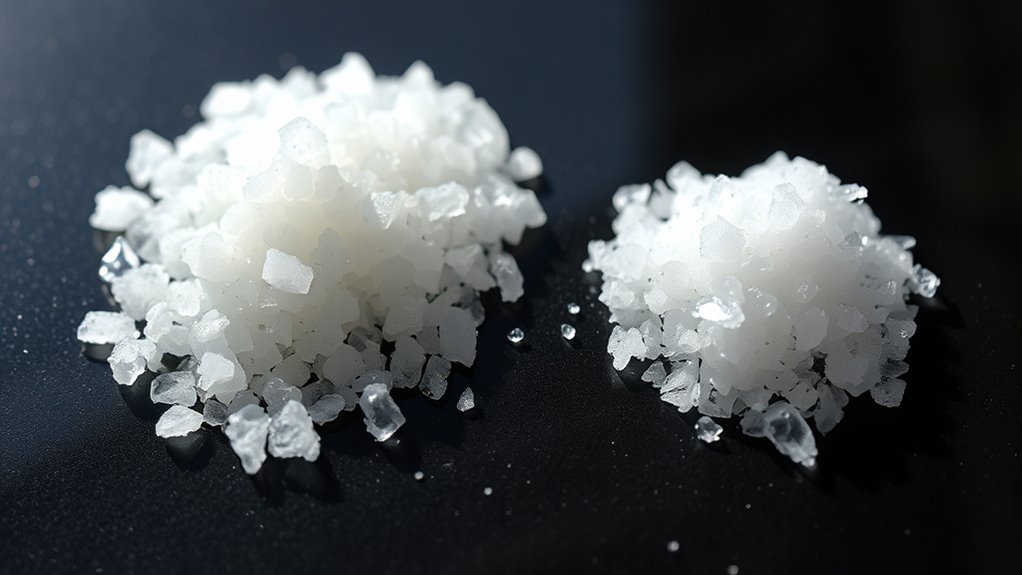
Because aquarium salt and Epsom salt have different chemical compositions, they serve distinct roles in fish care. Aquarium salt mainly contains sodium chloride (NaCl), helping with osmoregulation and parasite control. Epsom salt is magnesium sulfate (MgSO4), providing magnesium and sulfate ions, used for internal issues like swim bladder problems.
Understanding their chemical composition clarifies why they’re not interchangeable.
| Salt Type | Main Components | Primary Use |
|---|---|---|
| Aquarium Salt | Sodium Chloride (NaCl) | Osmoregulation, parasite control |
| Epsom Salt | Magnesium Sulfate (MgSO4) | Internal health, constipation |
| Chemical Role | Na+ and Cl- ions | Mg2+ and SO4 2- ions |
This table highlights the key chemical differences you should know.
Why Aquarium Salt and Epsom Salt Are Not Interchangeable
You can’t swap aquarium salt for Epsom salt because their chemical makeup and purposes are completely different.
Aquarium salt helps with external parasites and stress, while Epsom salt targets internal issues like constipation.
Using one instead of the other can cause harm, so it’s vital to choose the right salt for your fish’s needs.
Chemical Composition Differences
Although both are called “salts,” aquarium salt and Epsom salt differ markedly in their chemical makeup, which affects how they work in your tank. Aquarium salt is primarily sodium chloride, while Epsom salt is magnesium sulfate. This difference in chemical composition means they introduce different ions to the water, impacting your aquatic environment uniquely.
| Salt Type | Chemical Composition | Key Ions Introduced |
|---|---|---|
| Aquarium Salt | Sodium Chloride (NaCl) | Sodium (Na⁺), Chloride (Cl⁻) |
| Epsom Salt | Magnesium Sulfate (MgSO₄) | Magnesium (Mg²⁺), Sulfate (SO₄²⁻) |
Using one instead of the other won’t provide the needed minerals and can harm fish or plants due to this fundamental chemical difference.
Distinct Fish Health Roles
When treating your fish, understanding the distinct roles of aquarium salt and Epsom salt is crucial since they serve very different purposes and aren’t interchangeable.
Aquarium salt, made of sodium chloride, primarily targets external parasites and supports osmoregulation, helping freshwater fish maintain proper fluid balance. It also protects against bacterial infections and enhances the slime coat.
On the other hand, Epsom salt, which is magnesium sulfate, works internally to relieve constipation and swim bladder issues by drawing excess fluids out of the fish. It doesn’t treat external parasites or act as a disinfectant.
Using these salts incorrectly can harm your fish because their chemical actions differ markedly.
Risks Of Substitution
Understanding the distinct functions of aquarium salt and Epsom salt makes it clear why swapping one for the other can be dangerous. Aquarium salt, made of sodium chloride, treats external issues like parasites and stress.
Epsom salt, magnesium sulfate, addresses internal problems such as constipation or swelling.
If you substitute one salt for the other, you risk causing osmotic shock or dehydration in your fish because Epsom salt draws water out of their tissues. This substitution not only leads to ineffective treatment but can also harm fish by damaging gills or increasing stress.
To protect your fish’s health, always use the correct salt type for the specific condition—never assume aquarium salt and Epsom salt are interchangeable.
Benefits of Aquarium Salt for Fish and Tanks
You’ll find aquarium salt boosts your fish’s slime coat and helps reduce stress by supporting their osmoregulation. It also fights off external parasites and bacterial infections, making your tank a healthier environment.
Using it correctly can prevent disease and speed up your fish’s recovery from wounds or fin damage.
Enhancing Fish Health
Although aquarium salt might seem simple, it plays a critical role in boosting your fish’s health by enhancing their slime coats, reducing stress, and warding off external infections.
Unlike Epsom salt (magnesium sulfate), aquarium salt (sodium chloride) helps protect gills and aids in healing torn fins. Proper use creates an environment less friendly to parasites and bacteria, promoting resilience.
| Benefit | Aquarium Salt | Epsom Salt (Magnesium Sulfate) |
|---|---|---|
| Improves slime coat | Yes | No |
| Reduces stress | Yes | No |
| Heals torn fins | Yes | No |
| Protects gills | Yes | No |
| Mineral source | Sodium chloride | Magnesium sulfate |
Disease Prevention Benefits
Beyond enhancing fish health, aquarium salt plays a key role in preventing diseases in your tank. By supporting the fish’s slime coat, aquarium salt helps fend off external bacterial infections and fin rot.
It also creates an environment that’s less welcoming to parasites like ich and flukes, reducing their chances of thriving.
Using aquarium salt regularly in low doses can lower stress in your fish, making them less vulnerable to illness. During stressful events such as transport or breeding, it can boost their immune response, offering extra protection.
Additionally, adding aquarium salt to quarantine tanks helps stop infections from spreading to healthy fish.
When and How to Use Epsom Salt for Fish Care
When treating fish for constipation, swim bladder issues, or swelling, using Epsom salt can provide effective relief by drawing excess fluids out of their system.
For freshwater fish suffering from swim bladder disorder, an Epsom salt bath is a common remedy.
Dissolve 1-3 teaspoons of Epsom salt per gallon of water and soak your fish for 10-15 minutes, watching carefully for stress.
Before treatment, fast your fish for 24 hours to enhance effectiveness against internal bloating.
Alternatively, you can add 1-2 teaspoons of Epsom salt per 5 gallons directly to the tank but only for short durations.
Always reintroduce your fish to regular water gradually and monitor closely to ensure their recovery without adverse effects.
Effects of Aquarium Salt and Epsom Salt on Fish and Plants
Since both aquarium salt and Epsom salt serve different purposes, understanding their effects on fish and plants helps you choose the right treatment.
Aquarium salt promotes slime coat development and reduces infections in fish, but too much can stress fish, increase mucus, and damage tissues. Many fish, like mollies, tolerate aquarium salt well, while scaleless fish and sensitive plants may suffer osmotic stress.
Epsom salt works by pushing fluids out of fish to relieve bloating and constipation, relaxing internal muscles without harming most plants. It generally benefits plants by adding magnesium but can cause nutrient imbalances if overused.
When treating fish and caring for plants, aquarium salt suits external infections, while Epsom salt is safer for internal ailments without risking plant health or stressing sensitive fish species.
Safe Dosage Guidelines for Aquarium Salt and Epsom Salt
Although aquarium salt and Epsom salt serve distinct purposes, you need to follow precise dosage guidelines to keep your aquatic life safe.
For aquarium salt, the standard safe dosage is about 1 tablespoon per 5 gallons of water, but this can vary with treatment type and fish species.
Epsom salt is typically dosed at 1-3 teaspoons per gallon, mainly for internal issues like swim bladder problems.
Always dissolve both salts thoroughly before adding them to the tank to avoid harmful concentration spikes.
Never exceed recommended amounts, as high levels can stress or harm sensitive fish.
Follow manufacturer or expert instructions carefully for treatment duration and dosage to ensure the health and safety of your aquarium inhabitants.
Expert Tips for Choosing and Using Aquarium and Epsom Salt
Choosing the right salt for your aquarium depends on the specific health issue your fish face. Use aquarium salt, which is sodium chloride, for external problems like parasites and to support gill function.
For internal issues such as constipation or swelling, epsom salt (magnesium sulfate) is your go-to.
Don’t substitute one for the other—they serve different purposes. Always follow the recommended salt dosage, usually about 1 tablespoon per 5 gallons, but adjust based on your fish’s sensitivity and condition.
Avoid mixing aquarium salt and epsom salt in the same treatment, as this can harm your fish.
Opt for high-quality, additive-free salts like kosher salt for aquarium salt, and ensure epsom salt is plain magnesium sulfate to keep treatments safe and effective.
Frequently Asked Questions
What Is Equivalent to Aquarium Salt?
Equivalent to aquarium salt, you can use pure, additive-free sodium chloride like kosher salt, rock salt, or solar salt.
Just make sure it contains no anti-caking agents or chemicals to keep your aquatic life safe.
Is Epsom Salt or Aquarium Salt Better for Swim Bladder?
You’ll find Epsom salt better for swim bladder issues since it relaxes muscles and reduces internal swelling.
Aquarium salt mainly helps with parasites and stress, so it won’t effectively treat your fish’s buoyancy problems.
What Is the Closest Thing to Epsom Salt?
If Epsom salt were a superhero, magnesium sulfate would be its sidekick—you’ll find it in pure Epsom salts.
It’s the closest thing, so you can trust it for medicinal, gardening, or aquatic needs without second-guessing.
What Kind of Salt Is Aquarium Salt?
Aquarium salt is primarily sodium chloride, just like table salt but pure and free of additives.
You’ll use it to keep your fish healthy, supporting their gills and treating parasites without harmful chemicals.
Conclusion
Think of aquarium salt and Epsom salt as two different spices in your fish care kitchen—each adds its own unique flavor but isn’t meant to be swapped. Aquarium salt soothes your aquatic friends and balances their environment, while Epsom salt acts like a healing balm for specific ailments.
Knowing their differences helps you keep your tank a healthy, shimmering oasis. Use each wisely, and your underwater world will thrive like a well-tended garden.
When choosing between aquarium salt vs Epsom salt, remember that aquarium salt is best for general tank health, while Epsom salt is ideal for treating specific fish health issues. Understanding aquarium salt vs Epsom salt ensures your aquatic pets stay happy and healthy.