
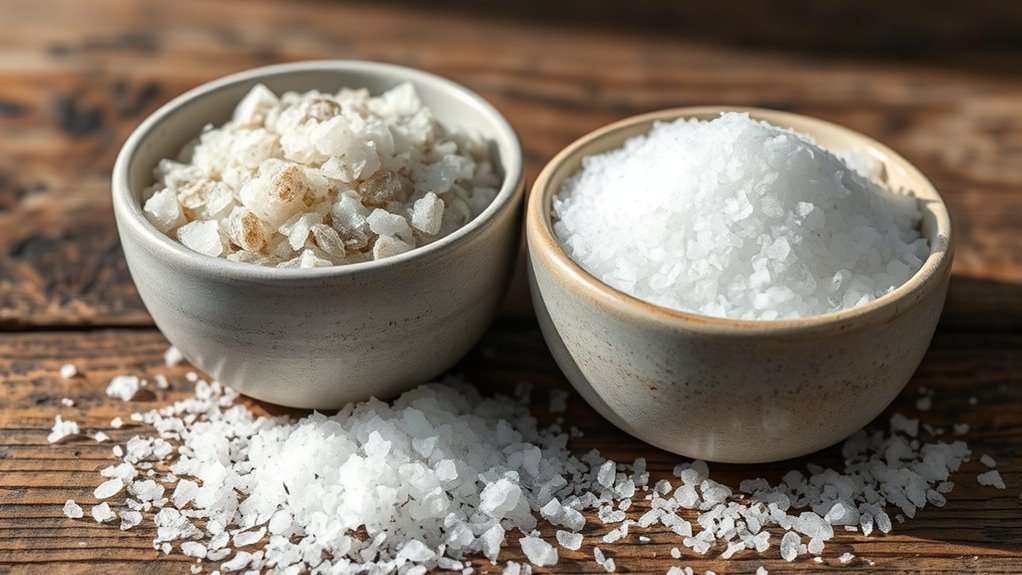
Is Celtic Sea Salt the Same as Regular Sea Salt? Key Differences
Celtic sea salt isn’t the same as regular sea salt. You’ll notice it’s hand-harvested from French coast salt ponds, keeping more minerals like magnesium and calcium, with a moist, coarse texture.
Regular sea salt is drier, more processed, and usually has fewer minerals. Both mainly provide sodium chloride and should be used in moderation for health.
If you want to understand how these differences influence flavor, texture, and cooking uses, there’s more to explore.
Celtic Sea Salt: Harvesting and Production
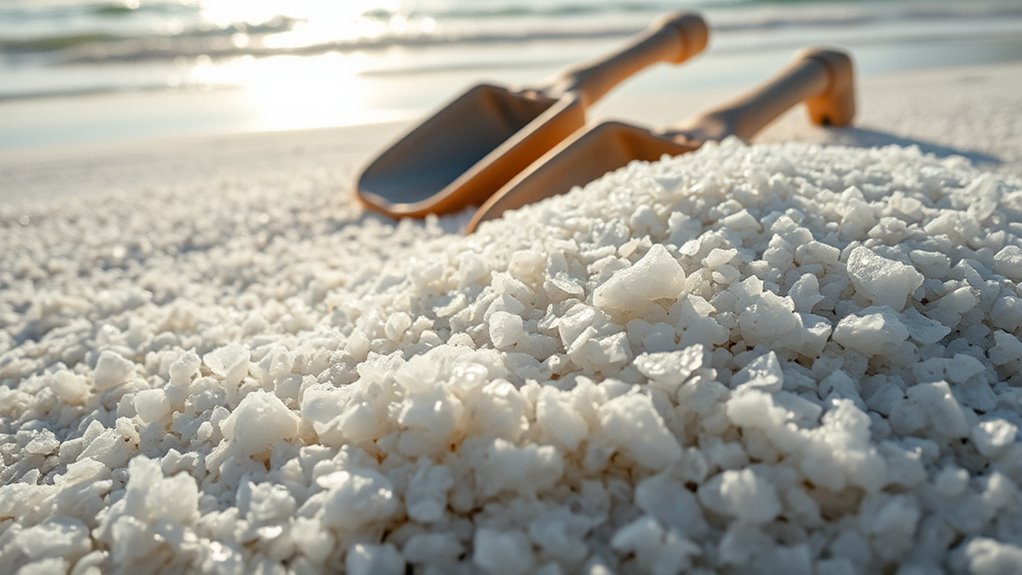
Although you might find many types of sea salt, Celtic sea salt stands out because it’s harvested by hand from traditional salt ponds along France’s Brittany coast. During harvesting, workers use time-honored, manual techniques like raking and scooping in clay-lined evaporation ponds where seawater naturally dries under sun and wind.
This traditional method helps retain the salt’s moisture and rich mineral content, unlike heavily processed salts. The evaporation ponds allow minerals from the clay and seawater to infuse the salt, giving Celtic sea salt its distinctive grey hue and coarse, moist texture.
Because the production involves minimal processing—avoiding refining or bleaching—you get a salt packed with natural trace minerals. This careful harvesting approach ensures that Celtic sea salt maintains its unique mineral profile and traditional quality you won’t easily find elsewhere.
Regular Sea Salt: Harvesting and Processing Methods
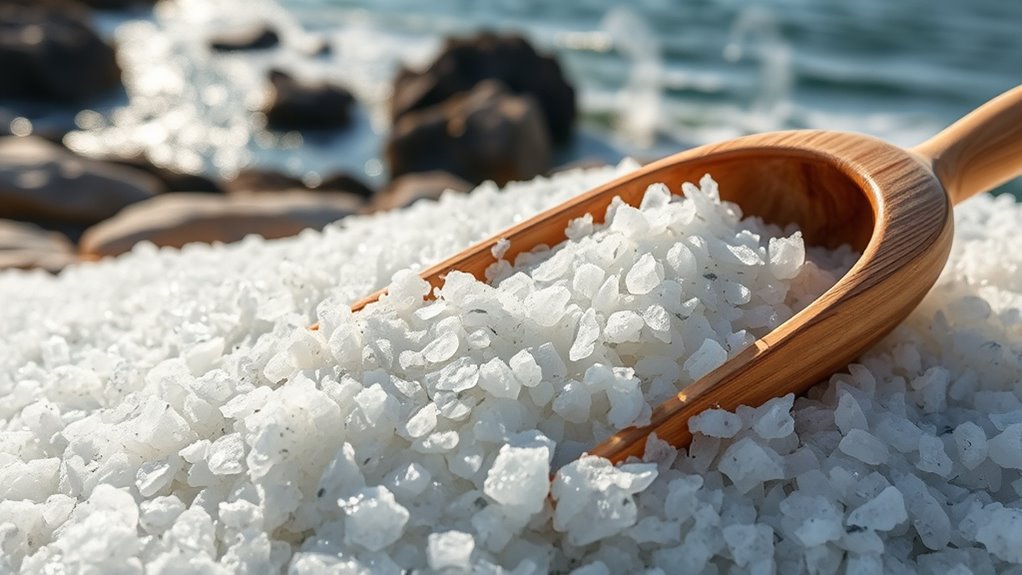
While Celtic sea salt is hand-harvested using traditional methods in specific regions, regular sea salt comes from a broader range of coastal areas worldwide.
You’ll find that sea salt is produced through the evaporation of seawater collected in large shallow ponds or salt pans. Natural sunlight and wind aid this evaporation, leaving behind salt crystals.
During harvesting, producers often use mechanical raking or scooping to gather the salt once the water evaporates enough, though some still rely on hand-harvesting.
Processing varies depending on the source, producing sea salt with textures from fine grains to large flakes while retaining natural minerals.
This combination of evaporation, harvesting, and processing methods shapes the variety and quality of regular sea salt available to you.
Mineral Content and Sodium Levels in Celtic vs. Sea Salt
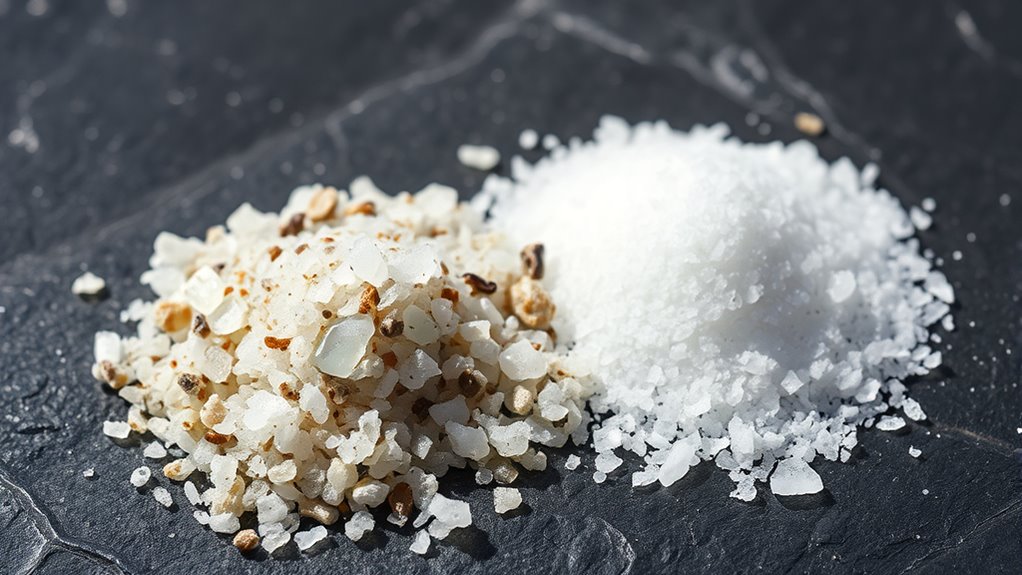
Because Celtic sea salt undergoes minimal processing, it retains a broader range of trace minerals like magnesium, calcium, and iron that regular sea salt often lacks. This richer mineral profile gives Celtic salt a more complex composition compared to the typically simpler makeup of regular sea salt, which varies depending on its source.
When it comes to sodium content, Celtic salt contains about 480 mg per ¼ teaspoon, slightly less than the 575-590 mg found in regular sea salt. Its coarser, moister grains help preserve these minerals while slightly lowering sodium density.
Flavor Differences Between Celtic Salt and Sea Salt
When you taste Celtic salt, you’ll notice its rich, briny flavor shaped by a high mineral content, unlike the cleaner, simpler taste of regular sea salt. Its moist, coarse texture adds a unique complexity that dry, flaky sea salt often lacks.
Plus, the flavor can shift depending on where the salt comes from, giving you a range of regional tastes to explore.
Mineral Influence On Flavor
If you pay close attention to flavor nuances, you’ll notice that Celtic sea salt offers a richer and more complex taste than regular sea salt. This difference comes down to the minerals and trace elements present in the salt.
Celtic salt has a broader mineral content, including magnesium, calcium, and iron, which gives it a briny, earthy flavor that stands out.
In contrast, regular sea salt tends to have a cleaner, milder taste due to fewer minerals.
Here’s how mineral influence shapes flavor:
- Celtic salt’s trace elements create a robust, nuanced profile.
- Mineral content enhances aroma with a distinct, natural scent.
- Regular sea salt offers a straightforward salty taste with less complexity.
Understanding these differences helps you choose salt that best suits your culinary needs.
Texture And Taste Impact
Although both Celtic salt and regular sea salt add saltiness to your dishes, their texture and taste impact differ noticeably.
Celtic salt features a moist texture and larger grain size, giving your food a distinct mouthfeel as it dissolves more slowly. This moisture, combined with its higher mineral content, creates a robust, briny flavor profile that’s richer and more complex than regular sea salt.
In contrast, regular sea salt tends to have a finer, drier grain size and delivers a cleaner, more neutral salty taste. The mineral content in Celtic salt imparts subtle earthy notes, enhancing your dishes with depth.
When you choose Celtic salt, you’re not just adding saltiness—you’re boosting flavor complexity through its unique texture and mineral-rich profile.
Regional Flavor Variations
Because Celtic salt comes from the unique environment of Brittany, France, it offers a strong, briny flavor with earthy undertones that you won’t find in most regular sea salts. This distinct regional flavor variation stems from its rich mineral content and traditional harvesting methods.
In contrast, sea salts from other geographic origins tend to have a cleaner, milder flavor profile with subtle mineral hints. When you choose Celtic salt, you’re getting a more complex and robust taste experience.
Consider these points about regional flavor variations:
- Celtic salt’s mineral content creates a moist, coarse texture and intense flavor
- Regular sea salts vary widely, often lighter due to different geographic origins
- The unique flavor profile of Celtic salt enhances dishes with depth and character
Understanding these differences helps you pick the right salt for your cooking.
Texture and Moisture: How Celtic Salt Differs From Sea Salt
When you handle Celtic sea salt, you’ll notice its moist, coarse grains immediately set it apart from regular sea salt. This difference in texture comes from minimal processing, which preserves the salt’s natural moisture.
Unlike most sea salts that are dry and free-flowing, Celtic salt retains water, giving it a sticky, earthy feel.
Celtic salt’s natural moisture makes it uniquely sticky and earthy, unlike dry, free-flowing sea salts.
Its grain size is larger and more irregular, a result of traditional harvesting from clay-lined ponds. Regular sea salt, often evaporated in shallow pans, tends to have finer, flakier grains.
Because of its moisture and coarse texture, Celtic salt often clumps and usually requires a grinder, while regular sea salt is ready to use straight from the package. This unique combination of moisture and grain size defines Celtic salt’s distinct character.
Culinary Uses for Celtic Salt and Regular Sea Salt
The unique texture and moisture of Celtic salt influence how you use it in the kitchen compared to regular sea salt. Celtic salt’s moist, coarse grains make it an excellent finishing salt that adds a briny punch to roasted vegetables and meats.
Regular sea salt, with its dry and flaky texture, works well for everyday seasoning and baking, offering a clean, neutral saltiness. Both salts can enhance dishes, but your choice depends on flavor intensity and texture preference.
Consider these culinary uses:
- Sprinkle Celtic salt sparingly as a finishing salt to elevate robust dishes.
- Use fine sea salt in baking for even flavor distribution.
- Season soups and salads with either salt, adjusting for moisture and texture.
Health Benefits, Risks, and Common Myths About Celtic and Sea Salt
How much difference does Celtic sea salt really make to your health compared to regular sea salt? While Celtic salt contains more trace minerals due to traditional harvesting and less processing, both salts mainly consist of sodium chloride. The health benefits from these minerals are minor, and excessive sodium intake poses similar risks regardless of salt type.
Here’s a quick comparison:
| Aspect | Celtic Sea Salt | Regular Sea Salt |
|---|---|---|
| Trace Minerals | Higher due to less processing | Varies, often lower |
| Sodium Content | About 32% | Typically higher |
| Health Benefits | Minor mineral differences | Similar basic nutrition |
| Risks | Excess sodium risks same | Excess sodium risks same |
Don’t buy into myths about detoxing; focus on moderation for real health benefits.
Where to Buy Celtic and Sea Salt: And What They Cost
If you’re looking to buy Celtic sea salt, expect to pay more than for regular sea salt due to its traditional harvesting and higher mineral content. Celtic salt usually costs between $10 and $20 per pound, while regular sea salt ranges from $2 to $8 per pound.
You’ll find Celtic salt mainly in specialty health food stores, French import shops, and gourmet retailers online.
Regular sea salt, on the other hand, is widely available at supermarkets, bulk stores, and various online outlets.
Here’s where you can buy and compare the price of both salts:
- Celtic salt: Specialty health shops, gourmet stores, online retailers
- Sea salt: Supermarkets, bulk stores, online marketplaces
Cost difference: Celtic salt typically costs about twice as much as regular sea salt due to its labor-intensive collection process and mineral richness.
Choosing the Right Salt: When to Use Celtic or Regular Sea Salt
When deciding which salt to use, consider the distinct qualities Celtic and regular sea salt bring to your dishes. Celtic salt, rich in trace minerals and moisture, shines as a finishing touch, adding depth and an earthy flavor.
Regular sea salt, with its cleaner taste and drier texture, suits everyday culinary uses like cooking and baking.
| Feature | Celtic Salt | Regular Sea Salt |
|---|---|---|
| Origin | Brittany, France | Worldwide |
| Trace Minerals | High | Moderate |
| Texture | Moist, coarse | Dry, fine or coarse |
| Flavor Profile | Earthy, complex | Clean, neutral |
| Culinary Uses | Finishing, wellness | Cooking, preservation |
Choose Celtic salt for gourmet finishing and trace mineral benefits; opt for regular sea salt for versatile cooking needs.
Final Tips for Cooking and Buying Celtic and Sea Salt
Choosing between Celtic and regular sea salt is just the start; knowing how to buy and use them properly makes all the difference. When shopping, focus on labels highlighting minimal processing methods to preserve mineral content.
Consider grain sizes—coarse or flaky salts are best as finishing touches, maintaining texture and flavor.
Opt for coarse or flaky grains to add texture and flavor as a perfect finishing touch.
For cooking, remember Celtic salt’s moist texture might need grinding or adjustments in recipes. Proper storage is key: keep your salt in an airtight container in a cool, dry place to avoid clumping.
- Look for natural harvesting and minimal processing to ensure quality mineral content.
- Use coarse or flaky grain sizes as finishing salts to enhance dishes.
- Store salt properly to maintain texture and prevent moisture absorption.
Frequently Asked Questions
Is Celtic Salt Better Than Regular Sea Salt?
Celtic salt isn’t necessarily better, but it offers more minerals and moisture, giving it a richer flavor. You’ll enjoy its unique taste, but both salts have similar sodium, so use either wisely in your diet.
What Does Putting Celtic Salt Under Your Tongue Do?
Putting Celtic salt under your tongue may speed up mineral absorption, helping your body balance electrolytes and boost hydration.
While some swear by it, you should use small amounts and check with a healthcare provider first.
Can You Substitute Sea Salt for Celtic Salt?
Yes, you can substitute regular sea salt for Celtic salt, but expect some changes in flavor and mineral content. Since Celtic salt is moister with larger grains, your dish’s taste and texture might differ slightly.
Keep in mind that the moisture level and mineral complexity in Celtic salt contribute to its unique characteristics, which regular sea salt might lack. Adjust the quantity accordingly to achieve the desired seasoning.
Is Celtic the Same as Sea Salt?
No, Celtic salt isn’t the same as regular sea salt. You’ll notice it’s moister, grayer, and richer in minerals because it’s hand-harvested traditionally from specific clay-lined ponds along France’s coast.
Conclusion
So, is Celtic sea salt just another sea salt, or does it bring something special to your table? With its unique harvesting methods, distinct mineral content, and moist texture, Celtic sea salt offers a different experience than regular sea salt.
Whether you want a subtle flavor boost or a specific texture, choosing the right salt can elevate your cooking. Why settle for ordinary when you can explore these flavorful options? Celtic sea salt and regular sea salt each have their own qualities, making your choice important for enhancing taste and presentation.