Are Epsom Salt and Sea Salt the Same? Key Differences Explained
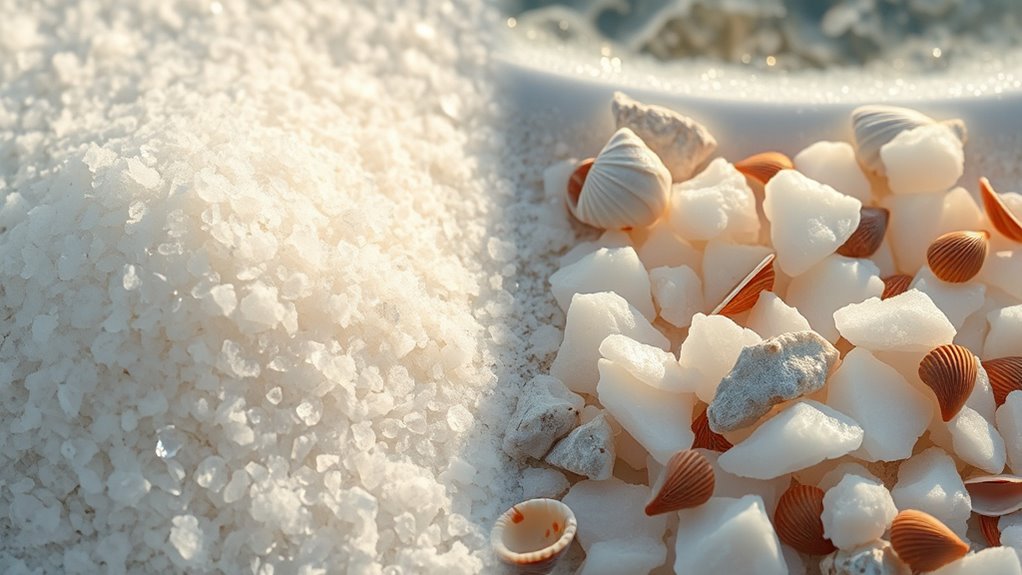
You might think Epsom salt and sea salt are the same, but they’re quite different. Epsom salt is pure magnesium sulfate, great for muscle soothing and quick baths. Sea salt, especially from the Dead Sea, contains many minerals like calcium and potassium, offering deeper skin hydration and healing.
They also differ in texture and how fast they dissolve. If you want to know which fits your needs best, there’s more to discover about their unique benefits and uses.
What Is Epsom Salt? Key Differences From Table Salt
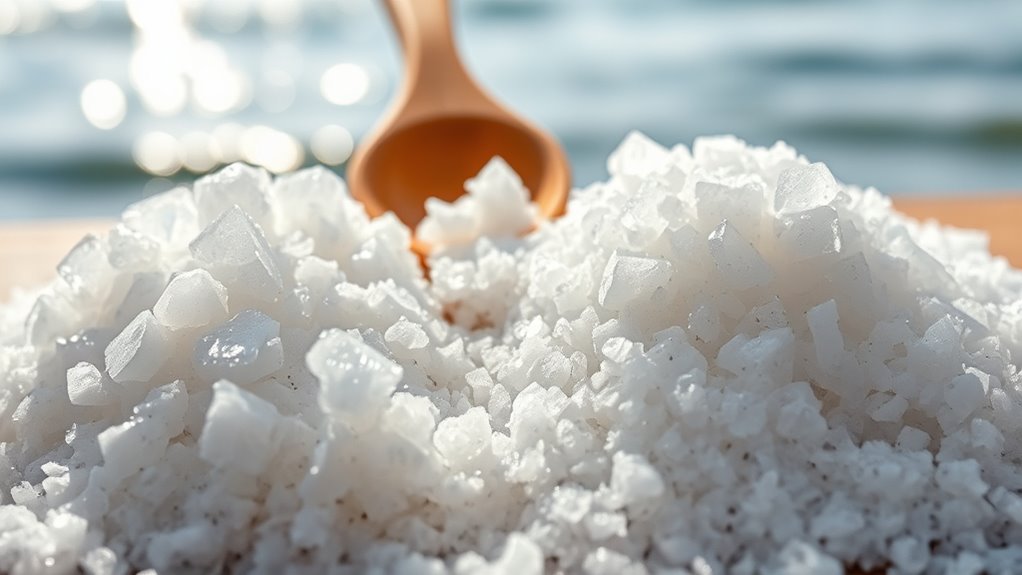
What makes Epsom salt different from the table salt you keep in your kitchen? Unlike table salt, which is primarily sodium chloride, Epsom salt is actually magnesium sulfate—a mineral compound with a distinct crystalline structure.
While both Epsom salt and sea salt fall under the category of soluble salts, Epsom salt doesn’t contain sodium or chloride ions.
Instead, it releases magnesium and sulfate minerals when dissolved in water, which your skin can absorb, offering notable health benefits.
This unique composition sets it apart from common salts and sea salt, which mainly consist of sodium chloride.
What Is Dead Sea Salt? How It Differs From Epsom Salt
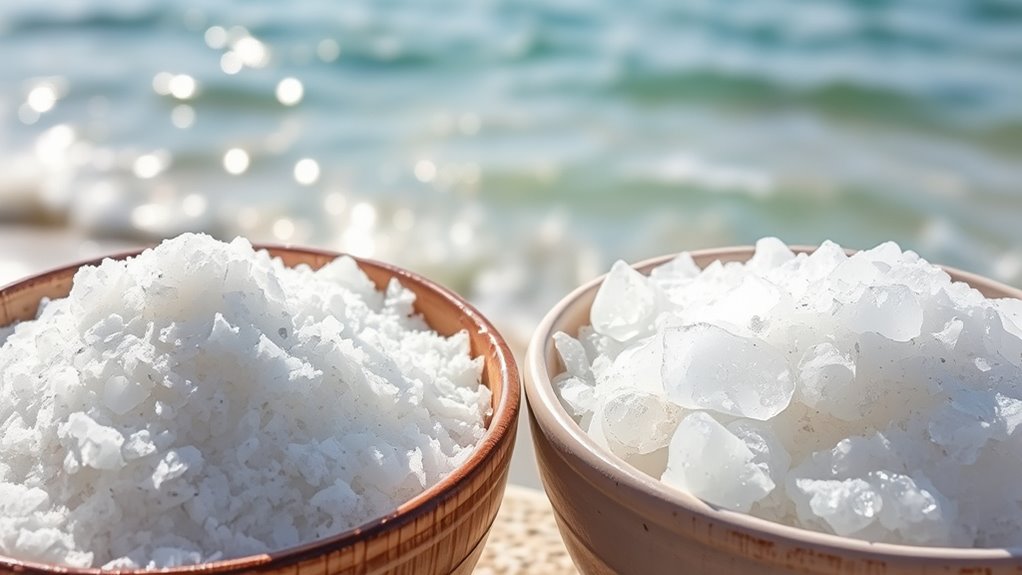
You’re probably wondering how Dead Sea salt stacks up against Epsom salt. Dead Sea salt comes packed with a variety of minerals like magnesium, calcium, and potassium.
Meanwhile, Epsom salt is mainly magnesium sulfate.
Knowing these differences helps you choose the right salt for your skin or muscle needs.
Dead Sea Salt Composition
Although both Dead Sea salt and Epsom salt are popular for their therapeutic uses, Dead Sea salt comes from the mineral-rich waters of the Dead Sea and contains up to 21 different minerals. Its mineral profile includes magnesium, calcium, potassium, bromide, iodine, and sodium, making it a natural mineral salt with a complex mineral composition.
You’ll notice its coarse, crumbly texture and moist appearance, reflecting this unique mineral blend. This combination supports skin hydration, reduces inflammation, and offers various therapeutic benefits.
Unlike Epsom salt, Dead Sea salt isn’t a single chemical compound but a diverse mix of minerals sourced directly from mineral-rich waters.
When you use Dead Sea salt, you tap into this rich mineral profile for holistic wellness and skin care.
Epsom Salt Characteristics
Since Epsom salt is primarily magnesium sulfate, it differs markedly from Dead Sea salt, which contains a wide range of minerals. Epsom salts are a mineral compound with a crystalline structure resembling common salt but are known mainly for muscle relaxation and detoxification.
You’ll find that Epsom salt dissolves quickly due to its high solubility, allowing easy skin absorption during baths or compresses.
| Feature | Epsom Salt | Dead Sea Salt |
|---|---|---|
| Composition | Magnesium sulfate | Multiple minerals |
| Primary Use | Muscle relaxation, detoxification | Skin nourishment, mineral replenishment |
| Solubility | High (clear solution) | Moderate |
Understanding these characteristics helps you choose the right salt for your wellness needs.
Mineral Content Differences
Dead Sea salt contains over 20 different minerals, making it vastly more complex than Epsom salt, which is primarily just magnesium sulfate.
While Epsom salt’s composition centers on magnesium sulfate alone, Dead Sea salt boasts a diverse mineral content including magnesium, calcium, potassium, and a lower sodium chloride level.
This rich mineral profile gives Dead Sea salt unique therapeutic properties and enhances its skin benefits, nourishing and revitalizing your skin more effectively.
In contrast, Epsom salt’s simpler makeup limits its uses mainly to providing magnesium for muscle relief.
Understanding these mineral content differences helps you choose the right salt for your needs—Dead Sea salt for broader skin and health benefits, or Epsom salt for targeted magnesium supplementation.
Comparing Minerals: Epsom Salt vs. Dead Sea Salt
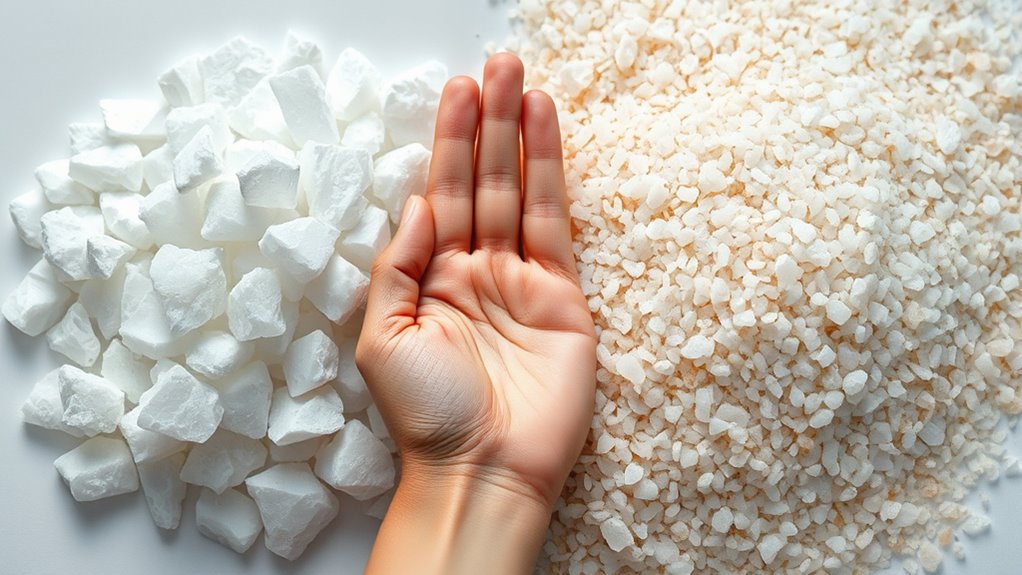
When you compare the mineral content of Epsom salt and Dead Sea salt, you’ll notice they serve different purposes. Epsom salt mainly consists of magnesium sulfate, offering targeted therapeutic properties, especially for muscle relaxation and natural remedies.
Dead Sea salt, on the other hand, contains a rich blend of minerals like magnesium, calcium, potassium, and sodium, providing diverse skin benefits.
While Epsom salt dissolves quickly in water, Dead Sea salt’s coarser texture leaves mineral residues that nourish the skin more broadly.
The broader mineral content in Dead Sea salt supports enhanced skin health, whereas Epsom salt focuses on delivering magnesium sulfate’s specific effects.
Understanding these differences helps you choose the right salt for your needs based on mineral content and desired outcomes.
Using Epsom and Dead Sea Salts for Baths and Skin Care
Although both Epsom salt and Dead Sea salt are popular additions to baths and skincare routines, they serve different functions due to their unique mineral compositions. You’ll find Epsom salt perfect for muscle relaxation, detoxification, and soothing aches quickly, while Dead Sea salt offers lasting mineral benefits that hydrate and heal skin.
Dead Sea salt is ideal for spa treatments and managing skin conditions, providing deep nourishment and moisture. Epsom salt, on the other hand, excels at muscle relief and quick detox baths, making it a staple for physical recovery.
| Feature | Epsom Salt | Dead Sea Salt |
|---|---|---|
| Main Benefit | Muscle relaxation | Skin hydration |
| Dissolving Speed | Fast | Slow |
| Use in Baths | Foot soaks, detox baths | Mineral baths, spa rituals |
| Skin Care Focus | Exfoliation, pain relief | Healing, moisturizing |
| Ideal For | Detox and muscle aches | Psoriasis and eczema |
Choose based on your skin care and baths needs!
How to Store Epsom Salt and Dead Sea Salt Properly
To keep your Epsom and Dead Sea salts effective, store them in airtight containers away from heat and humidity. Moisture is the main enemy, so sealing the containers tightly after each use is essential to prevent clumping or dissolving. Make sure you choose a cool, dry spot to preserve their texture and benefits. Proper storage helps maintain their quality and ensures they remain ready for use whenever you need them.
Ideal Storage Conditions
Since both Epsom salt and Dead Sea salt easily absorb moisture, you’ll want to store them in airtight containers kept in cool, dry places. Using an airtight container prevents moisture absorption that leads to clumping and spoils the salts’ granular texture.
Make sure your storage spot is a dry environment, away from humidity and direct sunlight, to preserve each salt’s mineral integrity.
Proper sealing is essential; resealable bags or airtight jars work best for long-term storage, minimizing contamination.
Regularly check your salts for signs of moisture or clumping, and replace or dry them if needed.
Moisture Prevention Techniques
Keeping your Epsom salt and Dead Sea salt dry starts with how you store them. To prevent clumping and ensure mold prevention, use airtight containers or resealable jars that are moisture-proof. Proper storage in a cool dry place away from humidity is essential to maintain their quality.
Here’s how to keep your salts fresh:
- Store salts in airtight containers or resealable jars to block moisture.
- Place containers in a cool, dry place away from heat and direct sunlight.
- Avoid areas with high humidity to prevent clumping and mold.
- Regularly inspect salts for any signs of moisture or spoilage and replace if needed.
Following these moisture prevention techniques helps you enjoy your salts longer and keeps them effective.
Choosing Between Epsom Salt and Dead Sea Salt for Your Needs
Choosing between Epsom salt and Dead Sea salt depends on what you want to achieve with your soak.
If you’re after muscle relief and detoxification, Epsom salt, rich in magnesium sulfate, works fast and dissolves quickly without residue. It’s perfect for easing sore muscles and stress.
On the other hand, Dead Sea salt offers a broader mineral content, including calcium and potassium, making it ideal for skincare and addressing dry or sensitive skin conditions. Though it dissolves slowly, it provides deep skin benefits and supports long-term skin health.
Both natural salts have their strengths—Epsom salt is affordable and practical for muscle care, while Dead Sea salt delivers a luxurious, mineral-rich experience for those focused on skincare and mineral supplementation.
Choose based on your specific needs.
Frequently Asked Questions
Is Sea Salt the Same as Epsom Salt?
No, sea salt isn’t the same as Epsom salt. You’ll find sea salt mainly contains sodium chloride, while Epsom salt is magnesium sulfate, so they serve different purposes in skincare and health treatments.
Can Sea Salt Be Used in Place of Epsom Salt?
You shouldn’t use sea salt instead of Epsom salt if you want muscle relaxation or anti-inflammatory benefits.
Sea salt lacks magnesium sulfate, so it won’t provide the same therapeutic effects as Epsom salt does.
Can You Use Epsom Salts While Pregnant?
Yes, you can use Epsom salts during pregnancy, but always check with your healthcare provider first. Avoid hot baths, don’t consume them internally, and stick to recommended doses to keep you and your baby safe.
Which Is Better, Epsom or Dead Sea Salt for Joint Pain?
Dead Sea salt is better for joint pain because it contains a broader range of minerals like magnesium, calcium, and potassium that reduce inflammation.
You’ll find it offers more extensive relief compared to Epsom salt’s magnesium sulfate alone.
Conclusion
So, while Epsom salt and sea salt might seem similar, they serve different purposes. Imagine Sarah, who struggled with sore muscles; she found relief using Epsom salt baths because of its magnesium content.
On the other hand, if you’re looking to nourish your skin with minerals, Dead Sea salt is your go-to.
Knowing these differences helps you pick the right salt for your needs, ensuring you get the best results every time with Epsom salt and sea salt.