How to Tell if Epsom Salt Is Sea Salt: Key Differences Explained
You can tell if Epsom salt is sea salt by checking its texture, taste, and how it dissolves. Epsom salt has smooth, clear crystals that dissolve quickly in water and taste bitter or medicinal, unlike sea salt’s coarse, grainy texture with a salty, briny flavor and slower dissolution.
Labels also help—Epsom salt lists magnesium sulfate, while sea salt shows sodium chloride. If you want to identify them confidently, there are simple tests and clues you can try yourself.
What Is Epsom Salt?
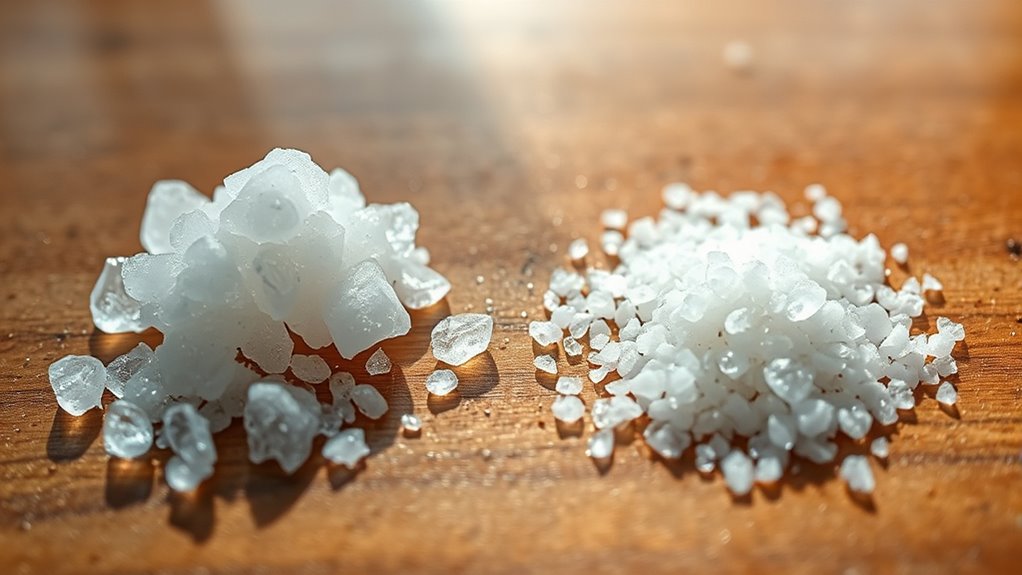
Although it looks like table salt, Epsom salt isn’t a true salt but a mineral compound called magnesium sulfate. When you examine Epsom salt, you’ll notice its crystalline structure resembles that of table salt, yet it’s chemically distinct.
Instead of sodium chloride, Epsom salt contains magnesium, sulfur, and oxygen. This difference is important because it means Epsom salt dissolves quickly in water, making it ideal for baths that help relax muscles and relieve pain.
You mightn’t realize that Epsom salt was first discovered in the spring waters near Epsom, England, which is where it gets its name.
When you use Epsom salt, you’re primarily getting magnesium sulfate’s benefits rather than the typical effects associated with common salt.
What Is Sea Salt and How Does It Differ?
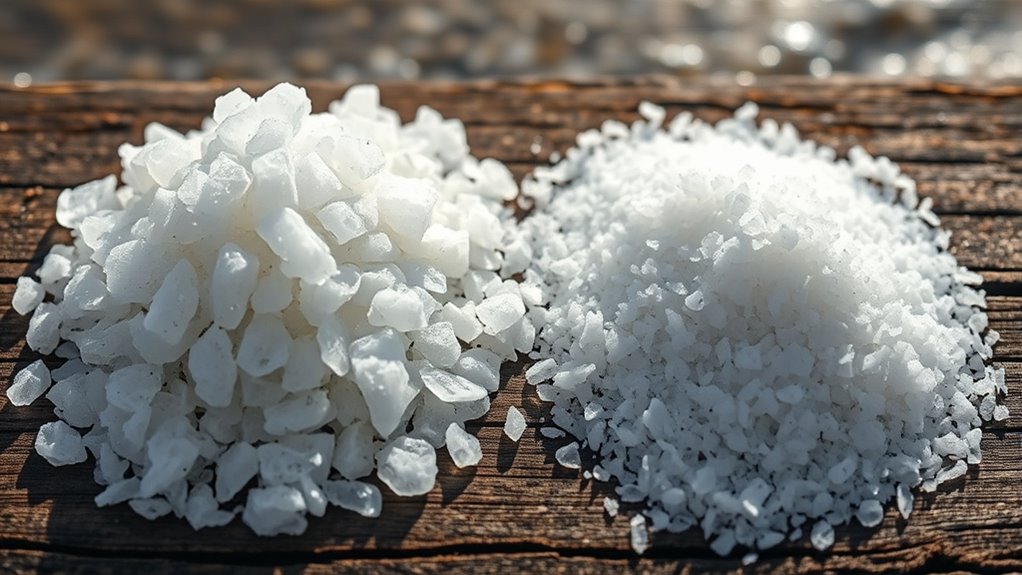
How exactly does sea salt differ from Epsom salt? Sea salt is harvested directly from seawater through evaporation, containing a diverse mineral content like sodium chloride, calcium, and potassium. Epsom salt, on the other hand, is magnesium sulfate, a purified compound not sourced from seawater.
You’ll notice sea salt’s coarse, moist texture contrasts with the smooth, clear crystals of Epsom salt.
| Feature | Sea Salt | Epsom Salt |
|---|---|---|
| Origin | Evaporated seawater | Purified mineral compound |
| Texture | Coarse, grainy, moist | Smooth, clear crystals |
| Mineral Content | Multiple minerals, trace elements | Primarily magnesium and sulfate |
These differences help you identify each salt clearly.
Chemical and Mineral Differences Between Epsom and Sea Salt
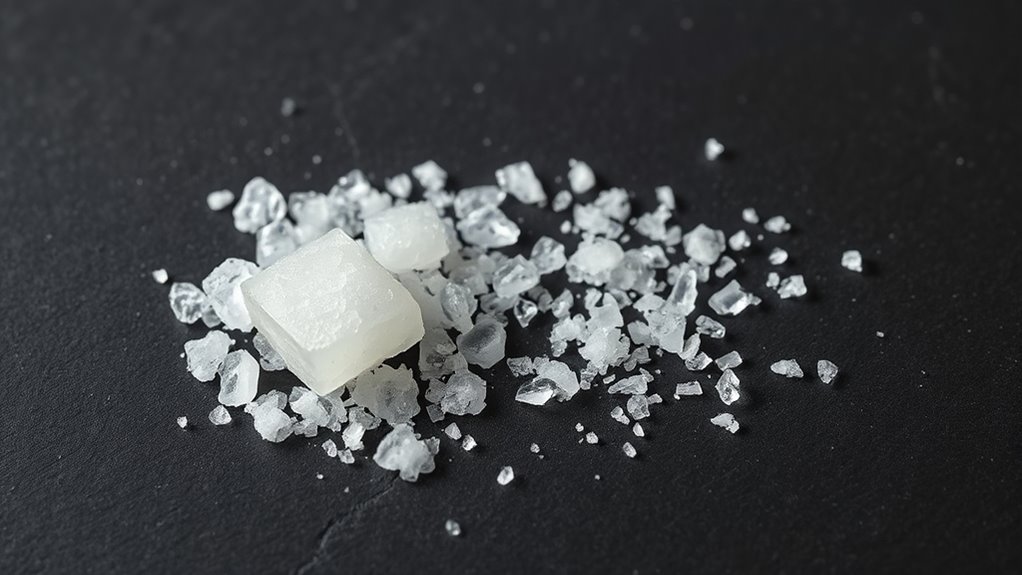
When you compare Epsom salt and sea salt chemically, you’ll find they differ considerably in composition and structure.
Epsom salt is composed of magnesium sulfate (MgSO₄·7H₂O), a single mineral compound.
In contrast, sea salt mainly contains sodium chloride alongside a complex mineral composition including magnesium chloride, calcium chloride, and potassium chloride.
This difference affects their crystal shapes and textures—Epsom salt crystals are smooth, clear, and uniform.
Whereas sea salt crystals are coarser and more irregular.
Sea salt’s diverse mineral composition provides essential elements like magnesium, calcium, and potassium in varying amounts.
These elements are mostly absent or minimal in pure Epsom salt.
Understanding these chemical and mineral differences helps you accurately distinguish between these two salts, especially when their appearances might seem similar at first glance.
Why Epsom Salt Isn’T Harvested From the Sea
You might wonder why Epsom salt isn’t collected from the sea like sea salt. Unlike sea salt, Epsom salt is made up of magnesium sulfate, not sodium chloride.
It comes from land-based mining or chemical processes.
That’s why you won’t find it harvested directly from ocean water.
Mineral Composition Differences
Although both Epsom salt and sea salt are salts used for various purposes, you won’t find Epson salt harvested from the sea because it’s chemically distinct.
Epsom salt’s mineral composition centers on magnesium sulfate (MgSO₄·7H₂O), a crystalline hydrate mineral.
In contrast, sea salt primarily consists of sodium chloride, derived from evaporated seawater containing various trace minerals.
This fundamental difference means Epsom salt doesn’t naturally occur in seawater like sea salt does.
Instead, it comes from mineral-rich springs or synthetic production.
When you compare them, sea salt offers a complex mix of minerals contributing to its flavor and texture, whereas Epsom salt is a pure compound with no sodium chloride content.
Understanding these mineral composition differences clarifies why Epsom salt isn’t classified or harvested as a sea salt.
Land-Based Mining Sources
Because Epsom salt contains magnesium sulfate rather than sodium chloride, it isn’t harvested from seawater like sea salt. Instead, you get Epsom salt from land-based mineral deposits rich in magnesium and sulfate, found deep underground.
Unlike sea salt, which is produced by evaporating seawater to leave behind sodium chloride crystals, Epsom salt requires a different approach.
You dissolve these mineral deposits and then crystallize the magnesium sulfate chemically. This process means Epsom salt doesn’t rely on evaporation of ocean water like sea salt does.
Absence Of Ocean Harvesting
Since Epsom salt is made of magnesium sulfate crystals rather than sodium chloride, it isn’t harvested from the ocean like sea salt. You won’t find Epsom salt in natural ocean harvesting processes because it’s either synthetically produced or mined from mineral deposits.
Unlike sea salt, which forms from seawater evaporation, Epsom salt’s origin lies in chemical processes or mineral-rich springs. Here’s a quick comparison:
| Aspect | Sea Salt | Epsom Salt |
|---|---|---|
| Source | Ocean water | Mineral deposits or lab |
| Main Compound | Sodium chloride (NaCl) | Magnesium sulfate (MgSO4) |
| Harvesting Method | Ocean harvesting | Mining or synthesis |
| Natural Origin | Yes | No (synthetic/mined) |
| Usage | Culinary, seasoning | Bath salts, health |
This distinction clarifies why Epsom salt isn’t a natural sea salt product.
How to Identify Epsom and Sea Salt by Appearance and Texture
When you look closely at Epsom salt and sea salt, you’ll notice distinct differences in their appearance and texture that can help you tell them apart.
Epsom salt features smooth, clear crystals that often appear larger and more uniform. Its texture feels flaky and consistent.
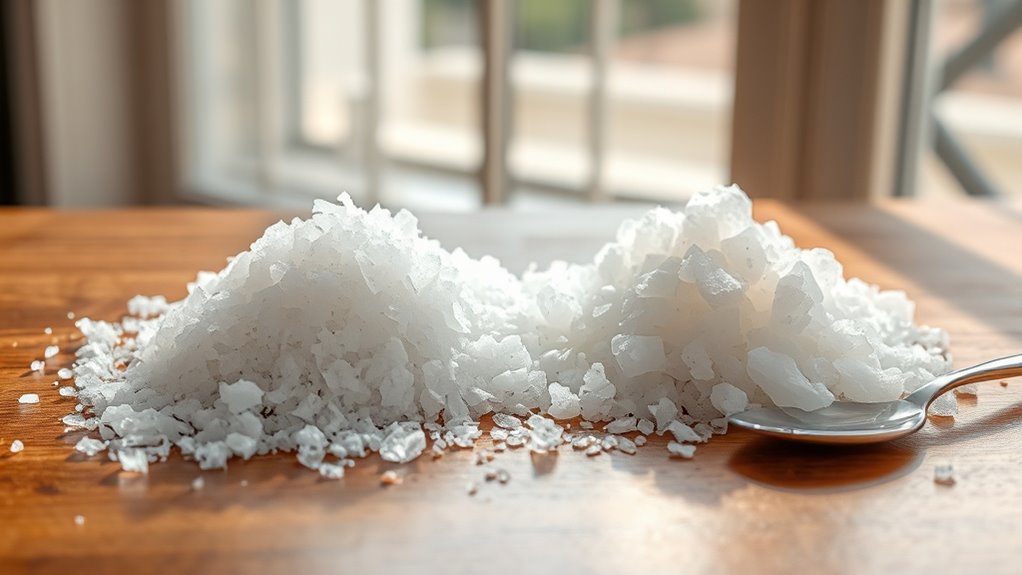
Sea salt, on the other hand, has a grainy, coarse texture with irregularly shaped crystals. You might also see visible mineral particles or slight color variations in sea salt, ranging from white to grayish tones.
Epsom salt’s pure white or transparent appearance contrasts with sea salt’s varied hues.
How to Read Salt Labels to Tell Epsom Salt From Sea Salt
Identifying Epsom salt and sea salt by sight and feel gives you a good start, but reading the label confirms exactly what you’re getting. Here’s how to decode it:
- Check the label for the ingredient: Epsom salt lists magnesium sulfate, while sea salt shows sodium chloride and other minerals.
- Look at the full ingredient list: Epsom salt is pure magnesium sulfate, but sea salt includes calcium, potassium, and magnesium chlorides.
- Note the origin information: Epsom salt often comes from mineral springs or specific countries; sea salt states harvesting from seawater or ocean sources.
- Review the recommended use on the label: Epsom salt is for baths and muscle relief; sea salt is for skincare, exfoliation, or cooking.
This approach guarantees you’re buying exactly what you intend.
Simple Home Tests to Distinguish Epsom Salt From Sea Salt
You can easily tell Epsom salt and sea salt apart by looking at their crystals, feeling their texture, and testing how they dissolve in water.
Epsom salt has smooth, uniform crystals that dissolve quickly without residue, while sea salt is coarser and may leave mineral traces.
Tasting a small amount also helps—Epsom salt isn’t salty, but sea salt has a distinct salty flavor.
Visual Appearance Differences
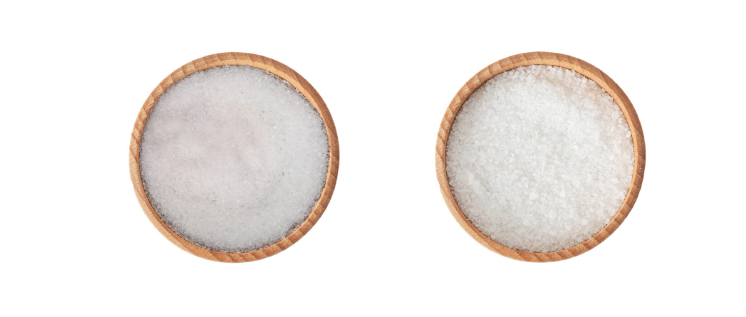
Although both Epsom salt and sea salt look like simple crystals, you can easily tell them apart by examining their texture and shape. Their distinct appearance helps you identify which is which.
Epsom salt has smooth, clear crystals that are uniform in size and shape.
Sea salt crystals are coarser, irregularly shaped, and often grainy. Sea salt may contain small mineral particles or impurities, altering its texture.
When crushed, Epsom salt breaks easily into smaller pieces, while sea salt feels more crumbly or damp.
Solubility And Texture
Beyond their visual differences, Epsom salt and sea salt reveal distinct characteristics when mixed with water. You’ll notice Epsom salt dissolves quickly due to its high solubility, creating a clear, colorless solution without residue.
In contrast, sea salt dissolves more slowly, often leaving behind mineral particles and a cloudy appearance.
Feel their texture too: Epsom salt’s crystalline structure is smooth and uniform, reflecting its purity as mostly magnesium sulfate.
Sea salt, however, feels coarser and grainier, reflecting its natural mineral content and slight impurities.
To test at home, add each salt to warm water in separate cups; Epsom salt dissolves completely without stirring, while sea salt may need agitation and leaves some grains undissolved, making solubility and texture reliable clues to identify them.
Taste And Smell
When you taste or smell Epsom salt and sea salt, their differences become clear quickly. You can easily distinguish them by following these simple steps:
- Taste a tiny bit—Epsom salt tastes bitter and medicinal, unlike sea salt’s salty flavor.
- Smell both—Epsom salt has a faint sulfur-like scent, while sea salt carries a briny, mineral aroma.
- Dissolve each salt in water; Epsom salt leaves a bitter taste, sea salt tastes distinctly salty.
- Note the aftertaste—Epsom salt feels soapy and bitter, but sea salt leaves a clean, mineral taste.
When to Use Epsom Salt vs. Sea Salt for Baths and Skincare
If you want to soothe sore muscles or recover from an intense workout, Epsom salt is your best bet because its magnesium sulfate content absorbs quickly and promotes relaxation. Epsom salts dissolve fast, leaving no residue, making them perfect for muscle relief and magnesium absorption.
On the other hand, sea salt is ideal for skincare routines like exfoliation and skin detox. Its coarser texture and mineral mix, including sodium chloride, help remove dead skin and replenish minerals, enhancing hydration.
Use sea salt in spa treatments or masks to support skin detox and improve texture.
Frequently Asked Questions
Are Sea Salt and Epsom Salt the Same?
No, sea salt and Epsom salt aren’t the same. You’ll find sea salt’s mainly sodium chloride with minerals, while Epsom salt is magnesium sulfate. They look, feel, and work differently, so don’t confuse their uses or textures.
How Do You Identify Epsom Salt?
You identify Epsom salt by its smooth, clear crystals that dissolve quickly in water without a salty taste or residue.
It lacks the briny smell of sea salt and forms a clear, odorless magnesium sulfate solution.
How to Tell the Difference Between Sea Salt and Regular Salt?
You can tell sea salt from regular salt by texture and taste. Sea salt’s coarser, multi-colored grains have a mineral-rich flavor, while regular salt is finer, white, and tastes purely salty without extra minerals.
How to Identify Pure Sea Salt?
You’ll find pure sea salt contains about 80 trace minerals, giving it a briny aroma and coarse texture.
Check the label for only sodium chloride and minerals—no additives—and look for natural colors like gray or pink.
Conclusion
Though Epsom salt and sea salt may look alike, their origins and uses couldn’t be more different. Epsom salt comes from mineral-rich deposits, while sea salt is harvested directly from ocean water. You might think they’re interchangeable, but knowing their unique textures, chemical makeup, and benefits helps you choose the right one.
Epsom salt primarily contains magnesium sulfate, which is known for its muscle-relaxing properties. Sea salt, on the other hand, is mostly sodium chloride and is commonly used for seasoning food and skincare.
So next time you reach for salt, remember—one soothes muscles, the other flavors food and skin. Understanding how to tell if Epsom salt is sea salt ensures you use the right salt for your needs, each with its own special role.