Is Epsom Salt the Same as Aquarium Salt and How to Use Each Safely
Epsom salt and aquarium salt aren’t the same—they have different chemicals and uses. Epsom salt is magnesium sulfate and helps with internal issues like swim bladder or bloating, usually in short baths. Aquarium salt is mostly sodium chloride and supports external health by preventing infections and strengthening slime coats.
Always use them separately, follow proper dosages, and avoid mixing to prevent harming your fish. Keep going, and you’ll find out how to safely apply each salt and protect your aquatic life.
Epsom Salt vs. Aquarium Salt: What’s the Difference?
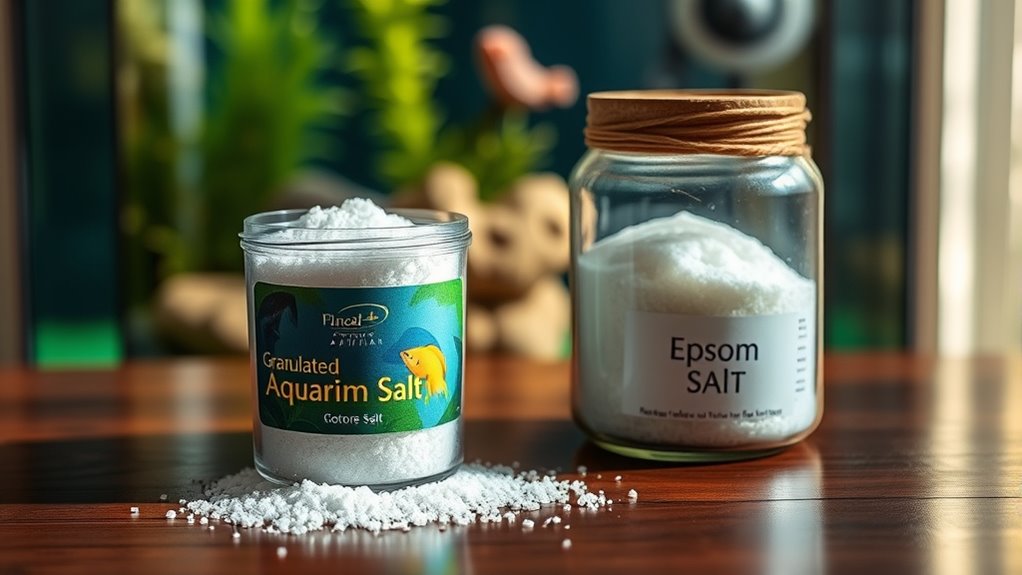
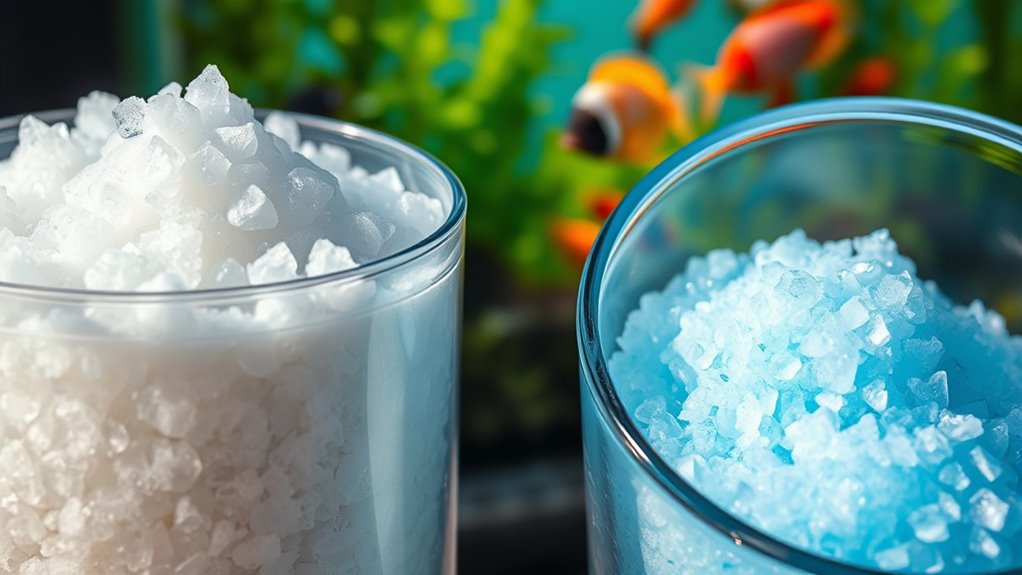
Although both are called “salt,” Epsom salt and aquarium salt have different chemical compositions and serve distinct purposes in fish care. Epsom salt is magnesium sulfate, while aquarium salt is sodium chloride. This difference means they affect fish health in unique ways.
You’ll use Epsom salt mainly to address internal issues like constipation and swelling because it helps push fluids out of the fish and acts as a laxative.
On the other hand, aquarium salt supports external health by promoting osmoregulation, helping fish retain fluids, and reducing infection risk.
It’s vital not to swap one for the other since Epsom salt won’t provide the benefits of aquarium salt and might even harm your fish due to their chemical differences and targeted uses.
How Aquarium Salt Helps Your Fish and When to Use It
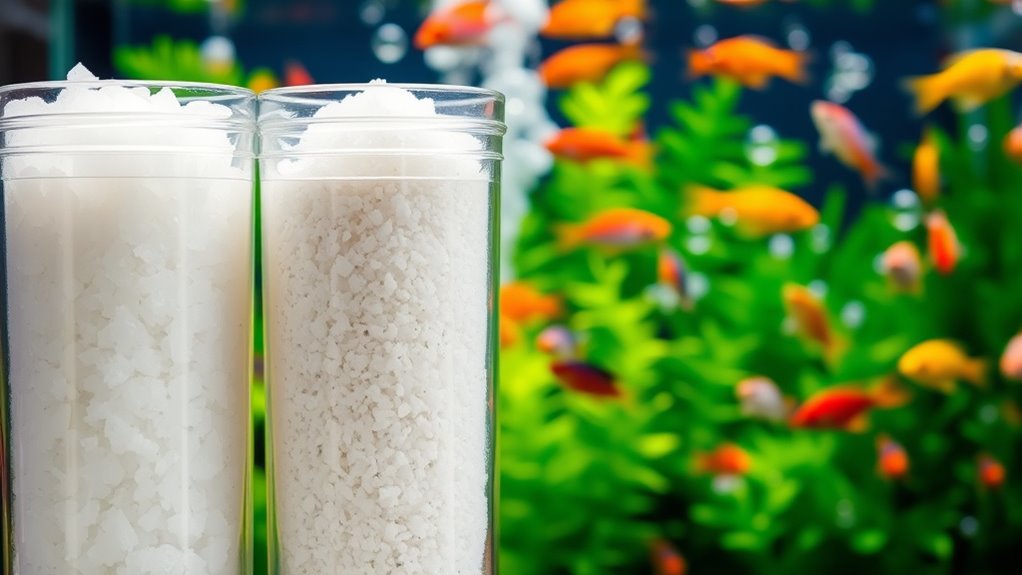
When you add aquarium salt to your tank in the right amounts, it strengthens your fish’s slime coat and helps ward off bacterial infections. This simple water treatment boosts fish health by creating a hostile environment for parasites and harmful bacteria.
You should use aquarium salt specifically for short-term treatments, not as a routine additive. Here’s when to contemplate using it:
- Treat external parasites like ich
- Help heal fin rot
- Support fish under stress during quarantine
- Reduce bacterial infection risks
- Aid recovery from minor external wounds
Remember to dose carefully—typically 1 tablespoon per 5 gallons—and avoid sensitive species. Using aquarium salt thoughtfully protects your fish and keeps your tank healthier overall.
When Should You Use Epsom Salt for Internal Fish Issues?
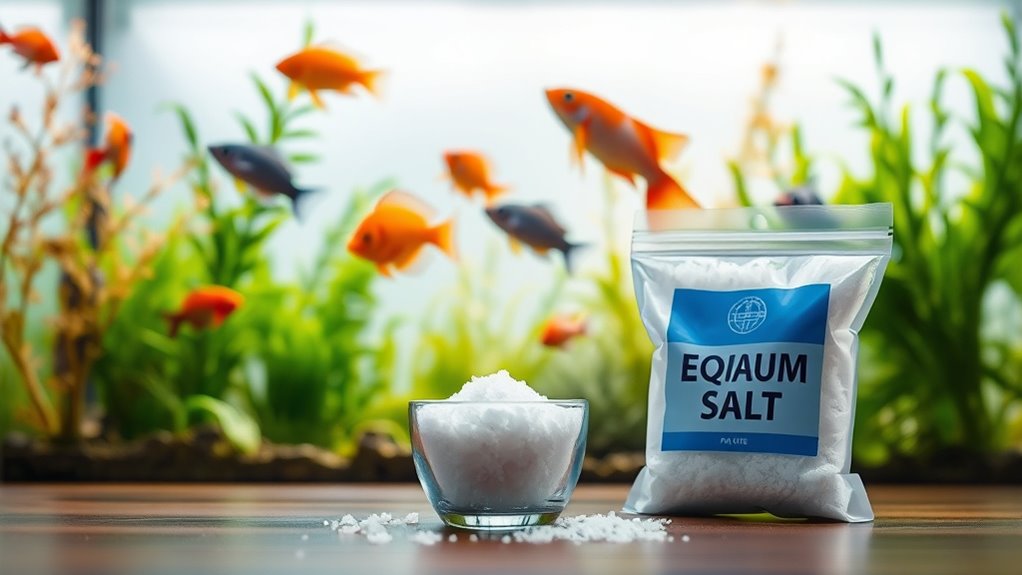
Since internal fish issues like constipation and swim bladder disorder can seriously impact your pet’s health, using Epsom salt offers an effective solution by relaxing digestive muscles and easing fluid buildup. You should use Epsom salt when your fish shows signs of bloating, difficulty swimming, or constipation.
Always fast your fish for 24 hours before treatment and administer Epsom salt baths at 1-2 teaspoons per gallon in a separate tank.
| Condition | Symptom Example | Treatment Benefit |
|---|---|---|
| Constipation | Loss of appetite | Natural laxative effect |
| Swim bladder | Unbalanced swimming | Reduces fluid retention |
| Bloat | Swollen abdomen | Relieves swelling |
| Internal swelling | Enlarged organs | Eases fluid buildup |
Using Epsom salt this way helps your fish recover safely from internal issues.
How to Dose and Use Aquarium Salt Safely
When using aquarium salt, start with about 1 teaspoon per 5 gallons of water. Adjust the amount based on your fish’s sensitivity and treatment needs.
Add the salt slowly to avoid stressing your fish. Limit the duration of use to prevent harm.
Always check species tolerance and follow guidelines to keep your aquarium safe.
Proper Dosage Guidelines
Although aquarium salt can benefit your fish, you need to dose it carefully to avoid stress or harm. Using the right dosage ensures a safe environment and effective treatment.
Remember these guidelines when adding salt:
- Use 1 teaspoon of aquarium salt per 5 gallons of water as a common safe dosage.
- Check species-specific salt tolerance before adding any salt.
- For Epsom salt, use 1 to 3 teaspoons per gallon for internal issues, adjusting carefully.
- Increase salt gradually over several hours during treatment to prevent shock.
- Reduce or remove salt slowly after treatment to avoid long-term stress.
Following these dosage tips helps you maintain a healthy aquarium without endangering your fish.
Always prioritize safety when using any salt.
Treatment Duration Limits
To use aquarium salt safely, you need to limit treatment duration to prevent stress or harm to your fish. Typically, aquarium salt treatments last 1-2 weeks at 1 teaspoon per 5 gallons.
For short-term parasite control, treatments run 24-72 hours before salt is removed. Epsom salt, by contrast, can be used longer for internal issues like swim bladder problems but requires careful monitoring.
| Treatment Type | Salt Type | Duration |
|---|---|---|
| External parasite | Aquarium salt | 24-72 hours |
| General health | Aquarium salt | 1-2 weeks |
| Internal issues | Epsom salt | Longer, monitored |
Always follow instructions and gradually remove salts after treatment to avoid osmotic shock.
Species Sensitivity Considerations
Limiting treatment duration is just one part of using aquarium salt safely—you also need to take into account how sensitive your fish species are to salt. Species sensitivity varies widely, especially among freshwater fish.
For example, scaleless species like Corydoras and loaches are far more vulnerable to salt, so you must adjust your salt dosage accordingly.
- Research your fish’s salt tolerance before treatment
- Use half the recommended salt dosage for sensitive or scaleless fish
- Increase salt concentration gradually over several days to help fish acclimate
Watch for distress signs like rapid gill movement or clamped fins.
Consult species-specific care guides or a vet for safe dosing advice.
Using Epsom Salt Safely to Treat Swim Bladder and Constipation
When you treat swim bladder or constipation issues in fish, using Epsom salt properly can make a big difference. Epsom salts relax the digestive muscles, helping relieve bloating and buoyancy problems.
For safe use, dissolve 1 to 2 teaspoons per gallon in a separate quarantine tank and let your fish soak for 15-30 minutes. This controlled bath promotes internal drainage without stressing the fish.
Avoid prolonged treatments or overdosing, as that can cause health issues. Pairing Epsom salt baths with fasting enhances effectiveness against constipation and swim bladder disorders.
Always check your fish species’ tolerance before treatment to ensure safety. By following these guidelines, you’ll support your fish’s recovery while minimizing risks associated with Epsom salt use.
Why You Should Never Mix Aquarium Salt and Epsom Salt
You shouldn’t mix aquarium salt and Epsom salt because their chemical compositions are very different and serve opposite purposes.
Combining them can create harmful reactions or stress your fish by disrupting fluid balance.
To keep your tank safe, use each salt separately and follow proper treatment guidelines.
Chemical Composition Differences
Although both aquarium salt and Epsom salt are common additives for fish tanks, you shouldn’t mix them because their chemical compositions differ fundamentally. Aquarium salt is sodium chloride, while Epsom salt is magnesium sulfate. When combined, their ions can react unpredictably, disrupting your tank’s water chemistry and harming fish health.
Keep in mind:
- Sodium chloride and magnesium sulfate serve different purposes
- Mixing can cause chemical reactions or precipitation
- Altered water chemistry reduces treatment effectiveness
- Each salt requires separate, specific application
- Combining salts risks unexpected tank conditions
To protect your aquatic environment, always use aquarium salt and Epsom salt individually and according to their intended use.
Risks Of Simultaneous Use
Since aquarium salt and Epsom salt have different chemical properties, mixing them can create harmful osmotic imbalances that stress or injure your fish.
When you combine these salts, the conflicting electrolyte levels disrupt your fish’s internal balance, leading to dehydration or internal damage.
This salt combination doesn’t neutralize effects but instead creates unpredictable and dangerous conditions.
Using both simultaneously increases the risk of toxicity, especially if you don’t calculate dosages carefully for each salt.
To protect your aquatic pets, treat them with only one type of salt at a time and follow proper dosage guidelines.
Avoiding this risky salt combination helps maintain a safe environment and prevents unnecessary stress or harm caused by osmotic imbalance and toxicity.
Which Fish and Plants Are Sensitive to Aquarium and Epsom Salt?
When you add aquarium or Epsom salt to your tank, be aware that scaleless fish like loaches, catfish, and certain gouramis react poorly even at low doses. These sensitive fish can experience stress or damage quickly.
Many freshwater plants also suffer from salt exposure, showing signs like wilting or leaf burn.
Some species, such as neon tetras and dwarf cichlids, tolerate only minimal salt levels, as it may cause gill irritation or osmotic stress.
Prolonged use of aquarium salt or Epsom salt can weaken delicate fish’s health.
Keep these in mind:
- Scaleless fish (loaches, catfish, gouramis)
- Neon tetras and dwarf cichlids
- Most freshwater aquatic plants
- Delicate fish prone to anemia
- Species thriving in pure freshwater
Always research your tank’s inhabitants before adding salt.
Setting Up a Hospital Tank for Aquarium and Epsom Salt Treatments
To protect your main tank and guarantee effective treatment, you should set up a separate hospital tank for aquarium and Epsom salt therapies.
Setting up a separate hospital tank ensures safe, effective aquarium and Epsom salt treatments.
Use clean, dechlorinated water, matching the temperature and parameters your fish need.
When adding Epsom salt, follow the recommended dose—usually 1-3 teaspoons per gallon—and watch your fish for any signs of stress.
Perform regular water changes in the hospital tank to maintain water quality throughout treatment.
For salt baths, use a separate container with Epsom salt solution and gently aerate for 10-20 minutes, then rinse fish with clean water.
Keep a close eye on them after treatment before moving them back to the main tank.
This approach prevents cross-contamination and ensures safer, more effective care.
Frequently Asked Questions
What Is the Difference Between Aquarium Salt and Epsom Salt?
You’ll find aquarium salt is sodium chloride, mainly for treating parasites and improving fish health, while Epsom salt is magnesium sulfate, used to relieve swelling and muscle issues.
Don’t mix them up—they serve different purposes.
Why Did Jessica Biel Use so Much Epsom Salt?
Jessica Biel used so much Epsom salt to relieve muscle soreness and inflammation effectively. You’d do the same for a deep, soothing soak that helps ease tension and promotes relaxation, but always watch for skin sensitivity.
What Can You Use Aquarium Salt For?
Think of aquarium salt as a healing potion for your fish; you’ll use it to banish parasites, soothe injuries, and boost their slime coat.
Just dose carefully, or you might upset their delicate underwater world.
Can I Use Aquarium Salt and Epsom Salt Together?
You shouldn’t use aquarium salt and Epsom salt together because their different chemicals can harm your fish.
Instead, treat with one salt at a time, following dosage instructions carefully to keep your aquatic pets safe.
Conclusion
Just like a skilled sailor knows when to navigate calm seas or stormy waters, you’ve learned when to use aquarium salt versus Epsom salt for your fish’s health. Each has its own role, and mixing them could spell trouble like a ship caught in a perfect storm.
Stay attentive, dose carefully, and set up a safe haven—your fish will thank you with vibrant life and smooth swimming. Keep your tank’s balance, and sail on confidently!
Remember, using aquarium salt correctly helps maintain the right water chemistry, while Epsom salt is great for treating specific ailments. Proper use of aquarium salt and Epsom salt ensures your aquatic pets thrive in a healthy environment.