Is Epsom Salt the Same as Magnesium Flakes?
Epsom salt and magnesium flakes aren’t the same. Epsom salt is magnesium sulfate, while magnesium flakes are magnesium chloride. These differences affect how your body absorbs and uses the magnesium.
Your skin absorbs magnesium chloride more effectively and for a longer duration than the sulfate found in Epsom salt. Epsom salt works faster for quick muscle relief but may not keep magnesium levels elevated as long.
If you want to find out which suits your needs best and how to maximize their benefits, there’s more to explore ahead.
What Are Epsom Salt and Magnesium Flakes?
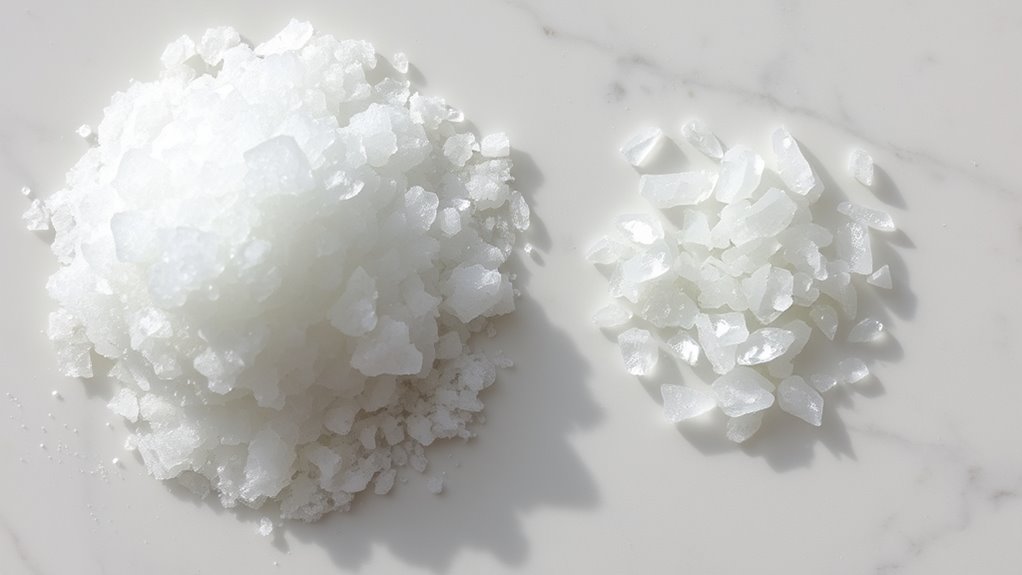
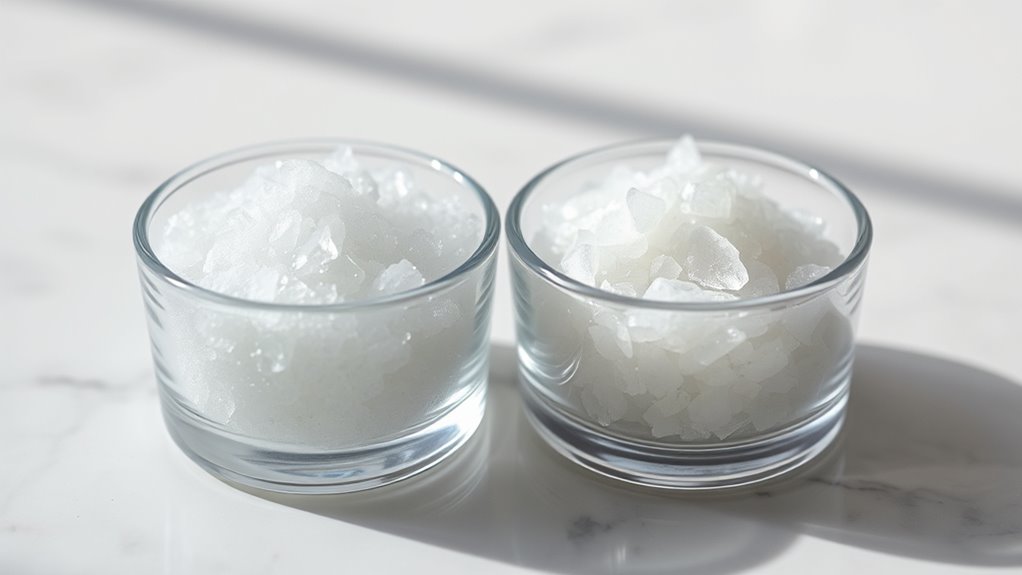
Although both Epsom salt and magnesium flakes are popular for magnesium baths, they differ chemically and in their sources. Epsom salts consist of magnesium sulfate, a compound made from magnesium, sulfur, and oxygen. Magnesium flakes are made from magnesium chloride.
These bath salts come from different natural sources: Epsom salts often originate from natural springs or are synthetically produced. In contrast, magnesium flakes are mined from ancient sea beds.
Epsom salts come from springs or are made synthetically, while magnesium flakes are mined from ancient seabeds.
Their chemical differences influence the mineral content and absorption rates when you soak in a bath. While both deliver magnesium through your skin, the way your body absorbs them and their effectiveness can vary because of these distinct chemical compositions and sources.
Understanding these basics helps you choose the right bath salts for your needs.
Chemical Differences Between Epsom Salt and Magnesium Flakes
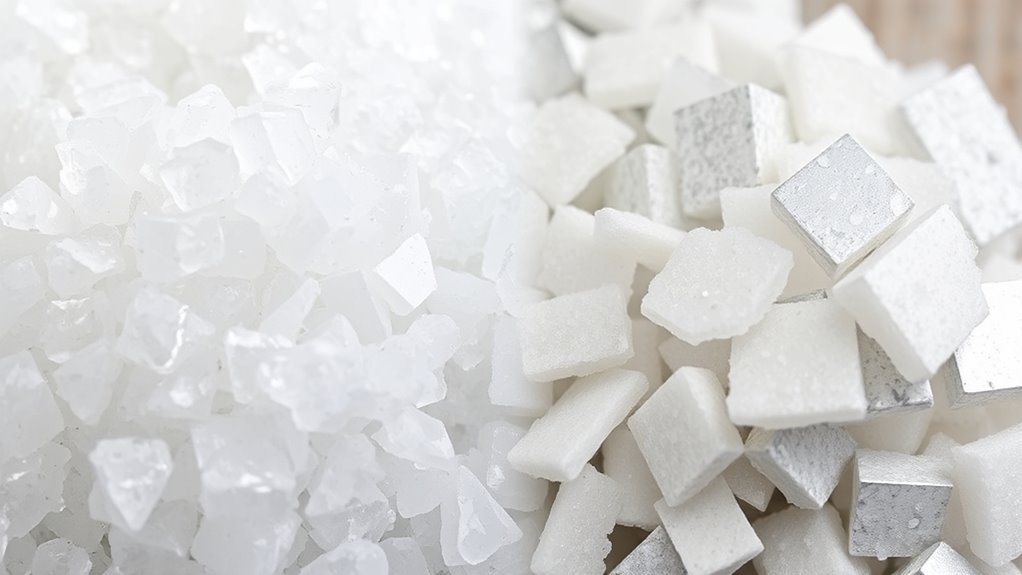
When you compare Epsom salt and magnesium flakes, their chemical makeup reveals key differences that influence how they work. Epsom salt is magnesium sulfate (MgSO₄), containing sulfate ions, while magnesium flakes are magnesium chloride (MgCl₂), containing chloride ions. This difference in chemical composition affects their absorption rate and interaction with your body.
| Compound | Molecular Formula | Ions Released |
|---|---|---|
| Epsom Salt | MgSO₄ | Magnesium + Sulfate |
| Magnesium Flakes | MgCl₂ | Magnesium + Chloride |
| Ion Type | Sulfate ions | Chloride ions |
| Absorption Effect | Influences sulfate | Influences chloride |
| Use | Bath salts, laxatives | Bath salts, topical use |
Understanding these chemical differences helps you choose the right product for your needs.
How Magnesium Absorbs Differently From Epsom Salt vs. Flakes
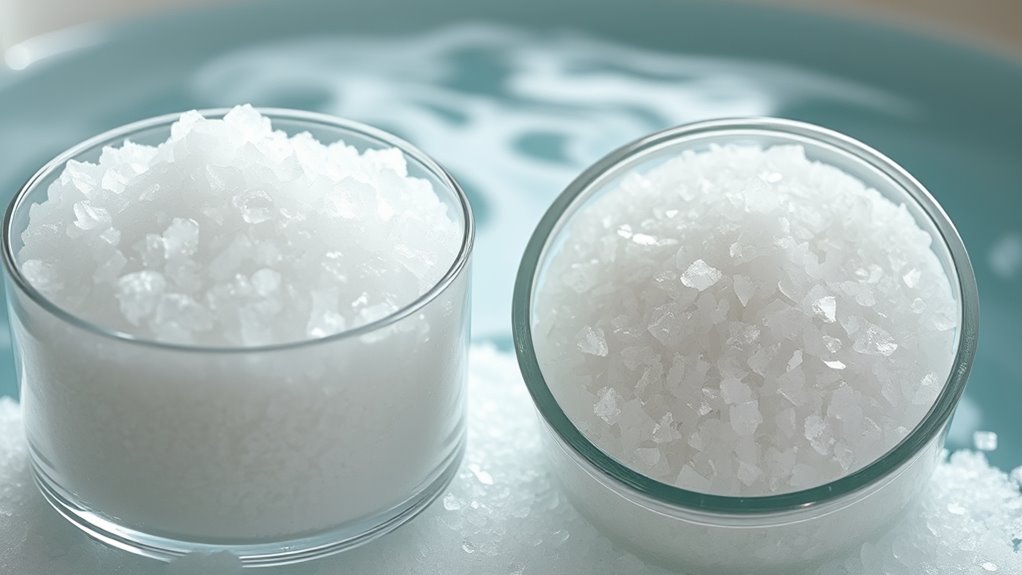
Because magnesium chloride flakes dissolve more readily in water than Epsom salt, your skin absorbs magnesium from flakes faster and more efficiently. This difference in solubility stems from the distinct chemical structure: magnesium chloride dissociates into magnesium and chloride ions more quickly than magnesium sulfate found in Epsom salts.
During topical application, this results in higher magnesium bioavailability with magnesium flakes compared to Epsom salts. Studies show that magnesium sulfate is often excreted rapidly, limiting sustained absorption, while magnesium chloride maintains elevated magnesium levels longer.
Benefits of Using Epsom Salt for Muscle Recovery and Relaxation
If you want to soothe sore muscles and unwind after a tough workout, using Epsom Salt in your bath can be highly effective. This form of Magnesium Sulfate supports Muscle Recovery by penetrating the skin, easing Muscle Tension, and promoting Relaxation. Unlike Magnesium Flakes, Epsom Salt’s Bath Benefits include reducing inflammation and improving blood circulation, enhancing Magnesium Absorption naturally.
While Magnesium Chloride (found in flakes) also aids relaxation, Epsom Salt remains a popular choice for its proven effects on muscle cramps and spasms.
| Feeling | Before Bath | After Epsom Salt Bath |
|---|---|---|
| Muscle Tension | Tight, sore | Loosened, relieved |
| Relaxation | Stressed, restless | Calm, peaceful |
| Recovery Time | Prolonged | Shortened |
| Energy | Drained | Renewed |
Advantages of Magnesium Flakes Over Epsom Salt Baths
Although Epsom salt baths provide quick relief, you’ll find magnesium flakes offer deeper, longer-lasting benefits thanks to their superior absorption and higher bioavailability. Made from magnesium chloride, magnesium flakes enable more efficient transdermal absorption than Epsom salts, which contain magnesium sulfate.
This means your body can utilize the magnesium more effectively, enhancing muscle recovery and relaxation for a prolonged period.
If you’re dealing with magnesium deficiency or sensitive skin, magnesium flakes provide naturally occurring magnesium that replenishes levels better and reduces irritation. The soaking benefits of magnesium flakes are more intense and sustained, making them a smarter choice for therapeutic use.
Why Purity and Source Matter for Epsom Salt and Magnesium Flakes
You want to choose magnesium products with clean, natural sources to avoid contaminants like aluminum or mercury. Epsom salts can sometimes contain pollutants due to synthetic production or polluted springs.
Magnesium flakes often come from purer, mineral-rich lakes.
This difference directly affects the safety and quality of what you’re applying to your skin or using for health benefits.
Natural Versus Synthetic Origins
Because the source and purity of Epsom salts and magnesium flakes directly affect their safety and effectiveness, you should understand where they come from.
Epsom salts often undergo synthetic production, starting from mineral springs or chemical processes, which can introduce contamination.
In contrast, magnesium flakes are typically harvested from natural brine lakes or ancient sea beds, offering higher purity through careful extraction methods.
The refinement of magnesium flakes includes advanced filtration, minimizing impurities.
While natural sources of Epsom salts may contain trace contaminants like aluminum or mercury, magnesium flakes usually undergo rigorous purification to ensure quality.
Knowing these differences helps you choose a product that meets your standards for purity and safety, especially when using them for health and wellness purposes.
Contaminant Risks And Safety
When selecting Epsom salts or magnesium flakes, understanding their contaminant risks and safety is crucial to protect your health. Contamination from heavy metals like aluminum and mercury can occur if the source isn’t pure or if manufacturing standards slip.
To avoid pollutants, consider these key points:
- Verify the source—natural springs may carry heavy metals, while ancient sea beds tend to be cleaner.
- Check for rigorous purification processes that ensure high purity.
- Avoid synthetic products that might introduce unwanted contaminants.
- Choose trusted brands that disclose their source and purity standards.
Impact On Magnesium Quality
Although both Epsom salts and magnesium flakes provide valuable magnesium, their quality depends heavily on their source and purity. Epsom salts often come from natural springs or synthetic methods, which might introduce contaminants like aluminum or mercury.
In contrast, magnesium flakes are typically mined from ancient seabeds or lakes, such as the Dead Sea, and undergo thorough purification. This extraction process ensures higher purity, enhancing both bioavailability and safety, especially for topical use.
When you choose magnesium flakes from reputable sources, like those from BetterYou in Holland, you avoid contaminants that could compromise effectiveness or cause harm.
Ultimately, the source and purity directly impact magnesium’s quality, making it essential to select products with guaranteed safety and minimal impurities for the best results.
How to Use Epsom Salt and Magnesium Flakes for Best Results
To get the most from Epsom salt and magnesium flakes, dissolve 1 to 2 cups in warm bath water that’s comfortably warm but not hot, allowing your skin to absorb the minerals effectively.
Dissolve 1 to 2 cups of Epsom salt or magnesium flakes in comfortably warm water for optimal mineral absorption.
For targeted soaking, add ¼ to ½ cup in a basin for foot soaks, soaking at least 15-20 minutes.
Here’s how to maximize your experience:
- Soak 2-3 times weekly to enjoy ongoing muscle relief and skin health benefits.
- Add essential oils like lavender for enhanced relaxation and soothing effects.
- Stay hydrated before and after your bath to boost magnesium absorption.
- Keep bath water warm but not hot to avoid drying your skin and reduce absorption.
This routine ensures you tap into the full benefits of Epsom salts and magnesium flakes for relaxation and muscle relief.
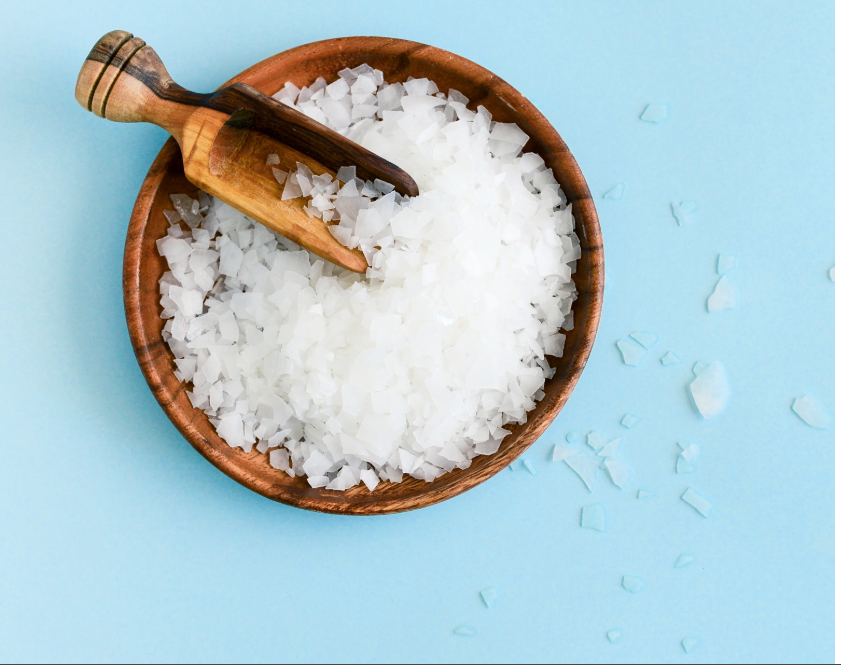
Comparing Muscle Recovery and Relaxation Effects: Epsom Salt vs. Flakes
Understanding how Epsom salt and magnesium flakes differ in their effects on muscle recovery and relaxation can help you choose the best option for your needs.
Epsom salts contain magnesium sulfate, which offers quick muscle relaxation and pain relief during soaking but is absorbed less efficiently.
Magnesium flakes, made of magnesium chloride, have higher absorption rates through the skin, providing more effective and longer-lasting muscle recovery and relaxation. This enhanced absorption means your body benefits from sustained magnesium replenishment, which is essential for muscle repair.
Athletes often prefer magnesium flakes for post-exercise recovery due to their superior bioavailability.
While Epsom salts give fast relief, magnesium flakes deliver more efficient, enduring results, making them a better choice if you want to maximize muscle recovery and relaxation.
Choosing Between Epsom Salt and Magnesium Flakes for Your Needs
When deciding between Epsom salt and magnesium flakes, consider how quickly you want relief versus how long you need magnesium to stay in your system.
Epsom salts, made of magnesium sulfate, offer fast muscle relief but have a lower absorption rate and shorter retention.
Magnesium flakes, composed of magnesium chloride, come from natural sources and provide longer-lasting benefits due to better skin absorption.
Here’s how to choose:
- Use Epsom salts if you want quick, temporary muscle relief.
- Opt for magnesium flakes for sustained magnesium absorption.
- Choose bath salts based on your preferred magnesium compounds.
- Consider skin absorption efficiency for ongoing relaxation.
Tips for Maximizing Benefits From Magnesium Baths
Although magnesium baths offer great benefits, you’ll get the most from them by following a few simple tips. Use magnesium flakes or Epsom salts dissolved in warm water with a temperature between 92°F and 104°F. This range optimizes skin penetration and magnesium absorption without causing dehydration.
Aim for a soaking time of 15-20 minutes to allow magnesium chloride and other minerals to fully absorb and deliver bath benefits. Avoid hot water, as it can hinder absorption and cause lightheadedness.
Stay well-hydrated before, during, and after your bath to enhance magnesium uptake and prevent dehydration. Adding essential oils can boost relaxation and overall effects, but focus on water temperature, soaking time, and hydration to maximize your magnesium bath experience.
Frequently Asked Questions
Is Epsom Salt Safe to Drink During Pregnancy?
You shouldn’t drink Epsom salt during pregnancy because it can cause dehydration, diarrhea, and magnesium overdose.
Always talk to your healthcare provider before using any magnesium supplements or Epsom salt internally while pregnant.
What Is Another Name for Magnesium Flakes?
Imagine holding tiny, shimmering ice sheets—those are magnesium flakes, also called magnesium chloride flakes or crystals.
When you use them, you’re tapping into nature’s salty treasure, straight from ancient sea beds, in a flaky form.
Is Epsom Salt Safe for Toddlers?
You shouldn’t use Epsom salt on toddlers without consulting a pediatrician first. Their sensitive skin and risk of ingestion can cause irritation or serious health problems, so always supervise and keep baths very dilute if approved.
What Does Soaking in Magnesium Flakes Do?
Soaking in magnesium flakes helps you relax muscles, reduce cramps, and ease joint pain. It also supports skin hydration, detoxifies your body, and promotes better sleep, so you feel refreshed and less stressed afterward.
Conclusion
Now that you know the difference between Epsom salt and magnesium flakes, you can choose what suits you best. Did you know that about 80% of people are magnesium deficient? Using either can boost your magnesium levels, helping with muscle recovery and relaxation.
Just remember, flakes absorb more quickly, while Epsom salt offers a gentler experience. Pick what feels right and enjoy your magnesium bath for maximum benefits! Incorporating Epsom salt or magnesium flakes into your routine is an easy way to enhance your wellness and support overall health.