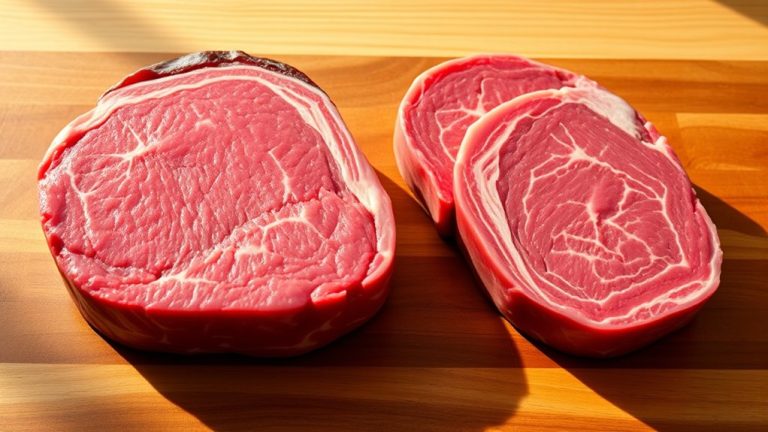

10 Reasons Ground Pork Is Healthier Than Ground Beef
You’ll find ground pork generally has less saturated fat and sodium than ground beef, helping your heart and blood pressure. It’s richer in zinc, selenium, and vitamin B6, boosting your immune system and metabolism.
Its tender texture makes meals easier to digest and more enjoyable, while being lower in calories supports weight goals.
Plus, it’s often more affordable, so choosing ground pork benefits both your health and budget. Keep exploring to see how it outshines beef in many ways.
Why Choose Ground Pork Over Ground Beef for Health?

Although both ground pork and ground beef can fit into a balanced diet, choosing ground pork often benefits your heart health since it usually contains less saturated fat and cholesterol.
Choosing ground pork supports heart health with typically lower saturated fat and cholesterol than ground beef.
When you opt for ground pork, you’re also getting a high-quality protein source that’s easier on calories and overall fat. This means you can enjoy flavorful meals without worrying as much about excess saturated fat intake.
Plus, ground pork provides essential nutrients like vitamin B1, selenium, and zinc, which support your energy levels and immune system.
Lean cuts, such as pork tenderloin, offer calorie content comparable to lean beef but with fewer additives and preservatives.
Lower Saturated Fat in Ground Pork Than Ground Beef
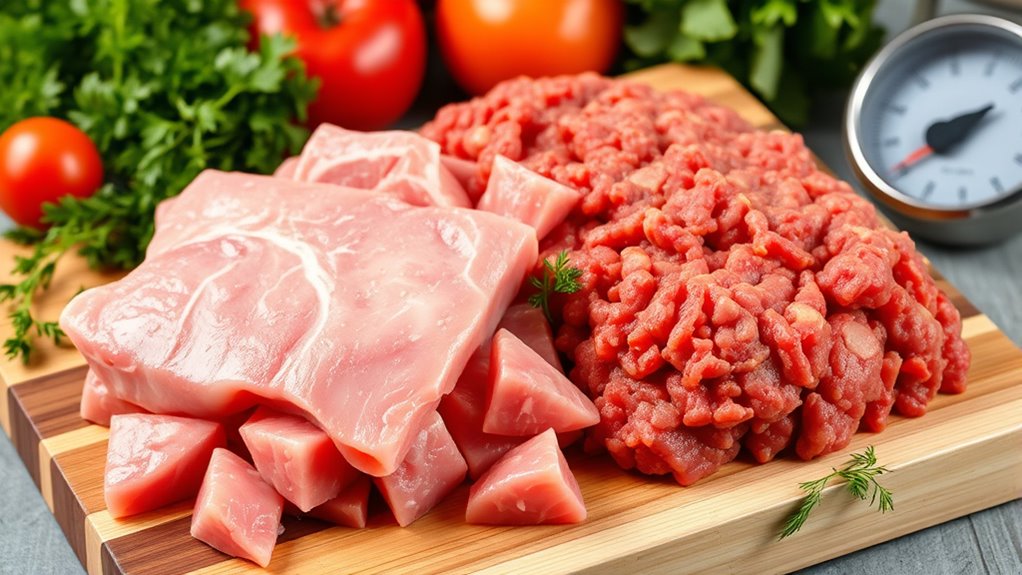
You’ll find that ground pork generally has less saturated fat than ground beef, which can be better for your heart health. Choosing lean ground pork lowers your saturated fat intake even more, helping reduce cholesterol levels.
Reduced Saturated Fat Content
If you want to lower your saturated fat intake, choosing ground pork over ground beef is a smart move. Ground pork typically contains less saturated fat per 100 grams, especially when you opt for lean cuts. While standard ground beef (80/20) has about 9 grams or more of saturated fat per serving, ground pork usually has around 8 grams, and lean ground pork can have as little as 3 grams.
This reduced saturated fat content is important for maintaining heart health since it helps lower cholesterol levels and decreases the risk of cardiovascular disease. By incorporating lean ground pork into your meals, you’re supporting a heart-healthy diet without sacrificing flavor or nutrition.
Benefits Of Lower Saturated Fat
Choosing ground pork over ground beef not only reduces your saturated fat intake but also offers clear benefits for your heart health. Ground pork, especially lean cuts like pork tenderloin, contains less saturated fat per 100 grams compared to higher-fat ground beef varieties. Lower saturated fat means you can decrease your LDL cholesterol levels, directly reducing your risk of heart disease.
Higher Zinc and Selenium Levels in Ground Pork

While both ground pork and ground beef provide essential minerals, ground pork offers higher levels of zinc and selenium, which play crucial roles in supporting your immune system and protecting your body from oxidative stress. Ground pork contains about 2.9 mg of zinc per 100 grams, slightly more than beef’s 2.7 mg, helping improve immune function and speed up wound healing.
Additionally, ground pork provides around 27 micrograms of selenium per 100 grams, surpassing beef’s 19 micrograms. Selenium contributes to antioxidant defenses and supports thyroid health. These increased zinc and selenium levels in ground pork help you meet daily nutritional needs more efficiently, giving it a clear advantage over ground beef when it comes to boosting your immune health and reducing oxidative damage.
Ground Pork’s Tender Texture and Better Digestibility
Because ground pork contains more fat and is ground finer than many types of ground beef, it has a tender, light texture that you’ll find easier to chew and digest. This softer structure makes ground pork especially suitable if you have a sensitive stomach or want to improve digestibility. Its finer grind and higher moisture retention keep it juicy, preventing overcooking that often toughens ground beef.
When you cook ground pork, its smooth consistency helps it absorb flavors evenly, enhancing your overall eating experience and aiding digestion. Plus, ground pork’s natural tenderness supports quick cooking, which preserves nutrients and promotes better digestibility. Choosing ground pork means opting for a texture and ease of digestion that benefits your meals and your gut health.
Lean Ground Pork as a Nutrient-Dense, Lower-Calorie Protein
You’ll find lean ground pork offers a lower-calorie option without sacrificing protein quality. It packs essential vitamins like B6 and B12, plus minerals such as zinc and selenium.
Choosing lean ground pork helps you get nutrient-dense fuel while keeping calories in check.
Lower Calorie Content
How does lean ground pork stack up against ground beef when it comes to calories? Lean ground pork contains about 122 calories per 3-ounce serving, making it a lower-calorie option compared to many ground beef cuts, especially fattier ones.
It delivers a solid amount of protein with fewer calories from fat, making it a nutrient-dense choice. Choosing lean ground pork helps you reduce overall calorie intake without sacrificing protein quality, supporting weight management and low-calorie diets.
| Meat Type | Calories (per 3 oz) | Protein (g) |
|---|---|---|
| Lean Ground Pork | 122 | High |
| Ground Beef 80/20 | ~215 | High |
| Ground Beef 90/10 | ~170 | High |
High Quality Protein
Beyond just calories, lean ground pork stands out as a high-quality protein source that packs a nutritional punch. When you choose lean ground pork, you get all nine essential amino acids your body needs, making it a complete protein that supports muscle repair and immune function.
In fact, a 100-gram serving delivers about 22 grams of protein, which is comparable to or slightly higher than lean ground beef. Since it’s lower in fat yet rich in protein, lean ground pork offers a nutrient-dense option for anyone focused on health.
This means you can enjoy a satisfying, protein-packed meal without the extra calories or saturated fat, making it a smart choice for your diet.
Essential Vitamins Abundance
While choosing a protein source, consider that lean ground pork delivers a rich supply of essential B vitamins like B1, B2, B6, and B12, which support your energy metabolism and nerve health. It provides more vitamin B1 (thiamin) than ground beef, making it a nutrient-dense, lower-calorie option.
Plus, it contains selenium, enhancing its antioxidant benefits. Here’s a quick comparison of key nutrients per 100 grams:
| Nutrient | Lean Ground Pork | Ground Beef |
|---|---|---|
| Vitamin B1 (mg) | 0.83 | 0.07 |
| Vitamin B2 (mg) | Moderate | Moderate |
| Vitamin B6 (mg) | Present | Present |
| Vitamin B12 (µg) | Present | Present |
| Selenium (µg) | Good Source | Lower Amount |
Choosing lean ground pork boosts your intake of essential vitamins B while keeping calories and fat in check.
Lower Cholesterol in Ground Pork Than Ground Beef Supports Heart Health
Because ground pork contains less cholesterol than ground beef, choosing it can benefit your heart health. By opting for ground pork, you reduce your cholesterol intake, which supports better cardiovascular function. Here’s how ground pork aids your heart health:
Choosing ground pork over beef lowers cholesterol intake, promoting healthier heart function and better cardiovascular health.
- Contains about 70-80 mg cholesterol per 100 grams, lower than ground beef’s 85-90 mg
- Lower saturated fat helps improve cholesterol levels
- Lean cuts like pork tenderloin further reduce cholesterol intake
- Provides high-quality protein while maintaining healthy blood cholesterol
Reduced Sodium in Ground Pork Helps Manage Blood Pressure
In addition to lower cholesterol, ground pork usually has less sodium than ground beef, especially when unseasoned. That reduced sodium content makes it easier for you to manage your blood pressure and lower the risk of hypertension. Processed ground beef often contains added salt, increasing its sodium level, while fresh ground pork helps keep your sodium intake in check.
Choosing ground pork supports heart health by aligning with dietary guidelines that recommend limiting sodium.
| Meat Type | Sodium per 4 oz Serving (mg) |
|---|---|
| Fresh Ground Pork | 55 |
| Fresh Ground Beef | 75 |
| Processed Ground Beef | 150 |
| Processed Ground Pork | 90 |
| Dietary Sodium Limit | 2300 |
Lower sodium helps maintain healthy blood pressure, so ground pork is a smart choice.
More Vitamin B6 in Ground Pork Supports Metabolism and Immunity
If you want to boost your metabolism and strengthen your immune system, choosing ground pork is a smart move. Ground pork contains about 0.85 mg of vitamin B6 per 100 grams, more than double the amount in ground beef. This vitamin B6 plays a key role in amino acid metabolism, helping your body produce energy efficiently.
It also supports your immune system by aiding antibody production. Including ground pork in your diet helps prevent vitamin B6 deficiency, which can affect cognitive function and mood.
Benefits of vitamin B6 in ground pork include:
- Enhanced energy production through metabolism
- Stronger immune system via antibody support
- Improved cognitive function and mood regulation
- Better nutrient intake for those with higher metabolic needs
Ground Pork’s Flavor Makes Healthy Eating More Enjoyable
You’ll love how ground pork’s natural sweetness brightens up your meals and pairs perfectly with acidic flavors like lemon or vinegar. Its tender texture keeps dishes juicy, making every bite more satisfying. This combination helps you enjoy healthy eating without sacrificing taste.
Sweetness Enhances Dish Appeal
Because ground pork carries a natural, slightly sweet flavor, it makes healthy dishes more enjoyable and appealing to your palate. This subtle sweetness enhances the overall flavor, allowing you to savor nutritious meals without relying on extra sugars or salts.
When you choose ground pork, you can:
- Enjoy lighter, brighter dishes like stir-fries and salads with boosted taste
- Use less seasoning while still achieving a rich, satisfying flavor
- Mask the sometimes bitter taste of vegetables, making them more palatable
- Elevate simple, wholesome recipes, encouraging you to eat healthily more often
Complements Bright, Acidic Flavors
When you pair ground pork with bright, acidic flavors like citrus or vinegar, its natural sweetness and tenderness bring out the best in your dish. Ground pork’s mild taste lets these acidic flavors shine, enhancing freshness without overpowering. This combo encourages adding vibrant herbs and colorful veggies, making healthy meals more enjoyable and balanced.
| Aspect | Benefit |
|---|---|
| Ground pork flavor | Slightly sweet, tender |
| Acidic flavors | Citrus, vinegar brighten and refresh |
| Pairing effect | Enhances vibrancy, highlights freshness |
| Healthy dishes | Balanced, flavorful salads and light meals |
| Enjoyment | Makes health-conscious recipes tastier |
Using ground pork with acidic flavors creates dishes that are both nutritious and delicious, perfect for your healthy eating goals.
Tender Texture Boosts Enjoyment
Although healthy eating can sometimes feel like a challenge, ground pork’s tender texture and mild sweetness make your meals more enjoyable and satisfying. This softer consistency lets you create moist recipes that are bursting with flavor without extra fat.
You’ll find it easier to experiment with herbs and spices, boosting the appeal of healthy seasonings. Plus, the tender texture means less added fat is needed, cutting calories while keeping taste intact. Here’s why ground pork enhances your healthy eating:
- Tender texture enhances mouthfeel, making meals more satisfying
- Perfect for moist recipes like meatballs and stir-fries
- Pairs well with diverse herbs and spices for flavorful, healthy dishes
- Requires less fat for moisture, reducing overall calories without sacrificing taste
Enjoy nutritious meals that feel indulgent with ground pork!
How Ground Pork’s Lower Cost Makes Healthy Eating Accessible
If you’re watching your grocery budget but still want to eat healthy, ground pork offers a smart solution. Thanks to its affordable pricing, you can enjoy nutritious meals without overspending. Ground pork generally costs less than ground beef, letting you buy leaner, higher-quality cuts that fit your budget.
This affordability means you can regularly include ground pork in your meal plans, supporting a balanced diet for you and your family. Plus, the money you save can go towards adding more vegetables and whole grains to your dishes, boosting overall nutrition.
Choosing ground pork helps you reduce food expenses while still getting essential protein and nutrients, making healthy eating more accessible and sustainable for your lifestyle.
Frequently Asked Questions
Is Ground Pork Better for You Than Ground Beef?
Yes, ground pork can be better for you than ground beef. It usually has less saturated fat and cholesterol, offers more essential B vitamins, and provides higher quality protein.
These factors make it a healthier choice when prepared properly.
Is It Healthier to Eat Pork Than Beef?
Think of choosing between pork and beef like picking a lighter paint shade for your walls. You’ll find pork often healthier, with leaner fat and essential nutrients, helping you maintain energy without extra calories or sodium.
This makes pork a great option if you’re looking to manage your weight or reduce intake of saturated fats. Additionally, pork provides important vitamins like B6 and B12, which support brain and nerve function.
Why Do Doctors Say Not to Eat Pork?
Doctors warn you against pork mainly because it can carry parasites like trichinella if undercooked, and processed pork often contains harmful nitrates.
Improper handling also risks bacterial infections, so you need to be cautious.
What Is the Healthiest Ground Meat to Eat?
You’ll want to choose ground turkey, which has about 40% less saturated fat than beef. It’s lean, packed with protein, and versatile.
Just watch for added fillers or high sodium in processed options.
Conclusion
Choosing ground pork over ground beef can boost your health in surprising ways—from lower saturated fat and sodium to more essential vitamins and minerals.
Plus, its tender texture and delicious flavor make eating well feel like a treat, not a chore. With its affordability, healthy eating becomes even easier for you.
So, why settle for less when ground pork offers so much more? It’s time to make the healthier, tastier choice for your meals. Ground pork is not only a nutritious option but also a versatile and budget-friendly ingredient that enhances your diet.