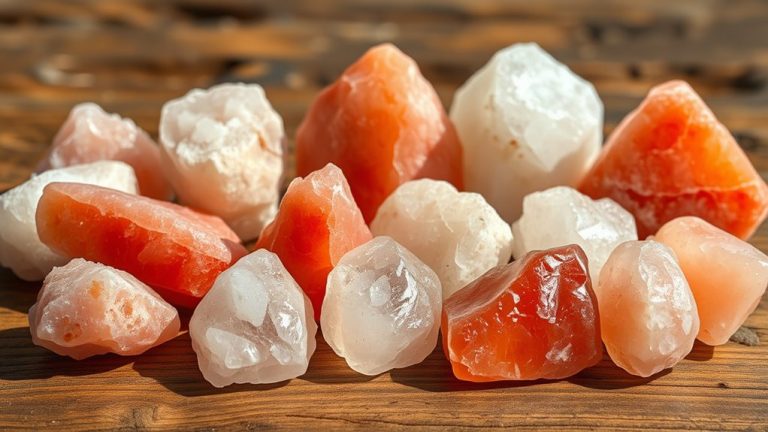
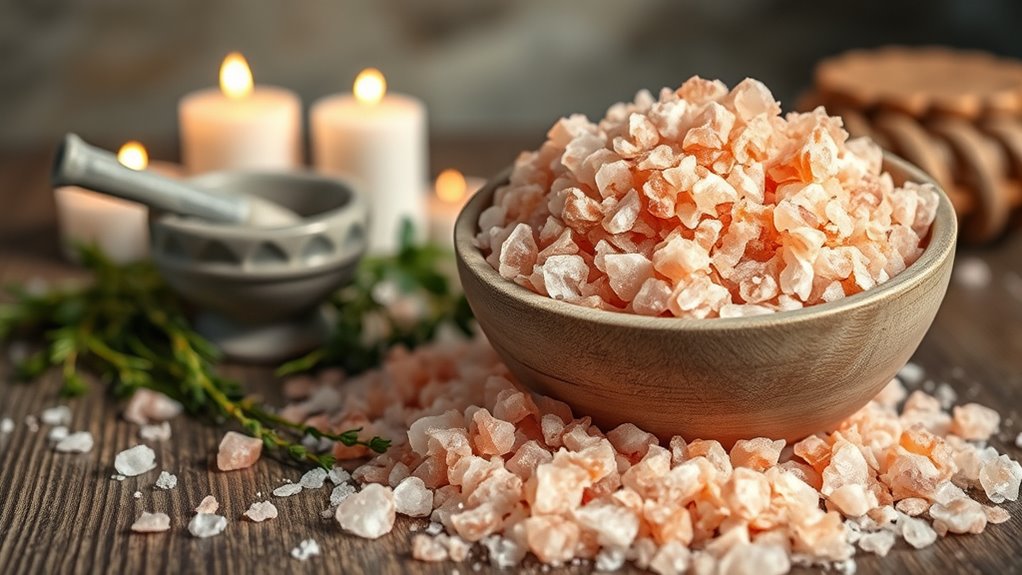
What Are the Anti-Inflammatory Benefits of Himalayan Salt?
You’ll benefit from Himalayan salt’s natural mix of minerals like magnesium, calcium, and potassium, which help reduce muscle, joint, skin, and respiratory inflammation. These minerals support healing by calming immune responses and easing soreness.
Using it in baths, scrubs, or gargles can soothe irritation and promote recovery. Since it’s less processed than regular salt, it offers unique anti-inflammatory effects you won’t find elsewhere.
Explore how it can fit into your wellness routine for relief and healing.
Why Himalayan Salt Might Help With Inflammation
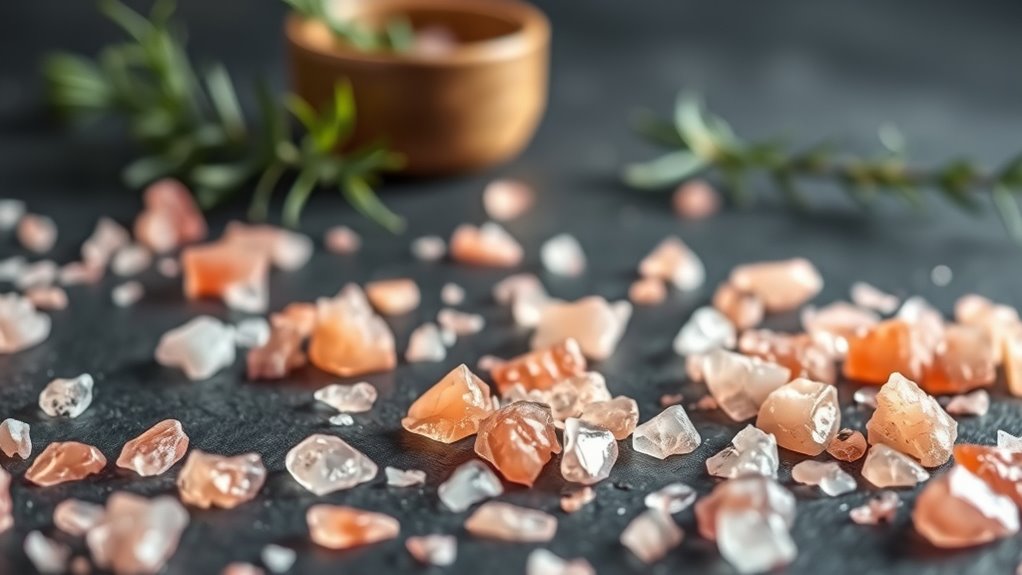
Although you mightn’t expect it, Himalayan salt offers several anti-inflammatory benefits due to its rich content of trace minerals like magnesium and calcium. When you use Himalayan salt in salt therapy or soak in salt baths, these minerals absorb through your skin, helping to reduce skin inflammation and soothe irritated tissues.
Magnesium, in particular, plays a key role in modulating immune responses, which can ease inflammation.
Salt therapy, such as inhaling air infused with Himalayan salt, may thin mucus and calm airway inflammation.
Additionally, applying Himalayan salt externally—through scrubs or compresses—can further alleviate skin inflammation.
Minerals That Support Himalayan Salt’s Anti-Inflammatory Effects
You’ll find key minerals like magnesium, calcium, and potassium in Himalayan salt that help reduce inflammation and support healing.
These trace elements work together to soothe your muscles and skin, enhancing anti-inflammatory effects.
Understanding how their synergy contributes can show you why Himalayan salt is more than just seasoning.
Key Anti-Inflammatory Minerals
When you look closely at Himalayan salt, you’ll find it contains key minerals like magnesium, calcium, and potassium that actively reduce inflammation. These minerals, along with trace minerals such as zinc, support your body’s natural anti-inflammatory and healing processes.
Here’s how they work:
- Magnesium eases muscle soreness and joint pain by reducing inflammation.
- Calcium strengthens bones and lowers inflammation in connective tissues.
- Potassium helps regulate fluid balance, minimizing swelling linked to inflammation.
- Zinc, a trace mineral, modulates immune responses to decrease inflammatory reactions.
Together, these minerals in Himalayan salt create a powerful blend that supports your body’s fight against inflammation, promoting overall healing and wellness.
Trace Minerals’ Healing Role
Since trace minerals like magnesium, calcium, and potassium are present in Himalayan salt, they play a crucial role in its anti-inflammatory effects, especially when absorbed through the skin or inhaled during salt therapy. Magnesium helps reduce muscle inflammation and promotes relaxation of inflamed tissues.
Calcium and potassium regulate cellular functions that support tissue repair and lower inflammation.
Additionally, mineral impurities such as iron oxide provide antioxidant benefits, helping combat oxidative stress linked to inflammation. Though these trace minerals exist in small amounts, their combined anti-inflammatory properties enhance your body’s natural healing responses.
Mineral Synergy Inflammation Relief
Although each mineral in Himalayan salt offers unique benefits, their combined action creates a powerful synergy that enhances anti-inflammatory effects. When you use Himalayan salt, you tap into this mineral synergy that helps your body manage inflammation more effectively.
Here’s how key minerals support this process:
- Magnesium regulates cytokine production, lowering inflammatory responses.
- Trace minerals like calcium and magnesium ease muscle tension and joint stiffness.
- Iron oxide provides antioxidant power, reducing oxidative stress linked to inflammation.
- The 80+ minerals collectively promote cellular repair, aiding recovery from inflammatory damage.
How Himalayan Salt Differs From Other Salts for Inflammation
Because Himalayan salt contains a unique blend of trace minerals like magnesium and calcium, it offers anti-inflammatory benefits that typical table salt lacks. You’ll find that its richer mineral content supports salt therapy and helps reduce skin inflammation more effectively.
Unlike highly processed salts, Himalayan salt retains natural trace elements linked to soothing inflammation, making it a better option for topical use and inhalation treatments.
| Salt Type | Mineral Content | Anti-Inflammatory Use |
|---|---|---|
| Himalayan Salt | Magnesium, Calcium, Iron | Salt therapy, skin inflammation |
| Table Salt | Mostly Sodium Chloride | Basic seasoning, limited effect |
| Sea Salt | Varies, fewer trace elements | Mild skin benefits |
This distinct profile makes Himalayan salt stand out for inflammation relief.
Soothing a Sore Throat With Himalayan Salt Gargles
You can soothe a sore throat by gargling with a warm Himalayan salt solution—just dissolve ¼ to ½ teaspoon of salt in a cup of water.
Gargling helps reduce inflammation, clear mucus, and promote healing thanks to the salt’s natural minerals.
With the right technique, this simple remedy can ease irritation and speed up your recovery.
Preparing Salt Gargle Solution
When you dissolve a quarter to half a teaspoon of fine Himalayan salt in a cup of warm water, you create a simple yet effective gargle solution that can soothe your sore throat. This mineral-rich mixture helps reduce inflammation by drawing out toxins and excess fluids from irritated tissues, offering natural detox benefits.
To prepare your salt gargle:
- Measure 1/4 to 1/2 teaspoon of fine Himalayan salt.
- Stir the salt into one cup of warm water (not hot).
- Gargle the solution for about 30 seconds to soothe throat irritation.
- Spit it out and repeat 2-3 times daily as needed.
Using warm water ensures the solution is soothing without causing further irritation while harnessing Himalayan salt’s anti-inflammatory power.
Gargling Technique Benefits
Although sore throats can be stubborn, gargling with warm Himalayan salt water offers quick relief by reducing inflammation and calming irritation. When you gargle, the antimicrobial properties of Himalayan salt help eliminate harmful bacteria and viruses, while its mineral content promotes healing of minor wounds in your throat.
This technique also decreases swelling of mucous membranes and clears mucus, supporting better respiratory health.
| Benefit | How It Helps |
|---|---|
| Reduces inflammation | Calms irritation and swelling |
| Antimicrobial action | Eliminates infection-causing germs |
| Mineral content | Aids healing of throat tissues |
| Clears mucus | Improves respiratory comfort |
Soothing Throat Inflammation
Gargling with warm Himalayan salt water not only clears mucus and reduces swelling but also provides soothing relief for throat inflammation. When you use saltwater gargles, the natural anti-inflammatory properties of Himalayan salt help you:
- Reduce throat swelling by drawing out excess fluids.
- Soothe soreness through minerals that promote healing.
- Loosen and clear mucus, easing discomfort.
- Combat bacterial infections thanks to its antibacterial traits.
The minerals in Himalayan salt support tissue repair, accelerating recovery from irritation caused by colds or allergies. By regularly gargling with about 1/4 to 1/2 teaspoon of Himalayan salt in warm water, you can efficiently soothe throat inflammation and promote faster healing.
This simple remedy provides natural relief, making it a great addition to your self-care routine when you feel that scratchy, sore throat coming on.
Healing Joint and Muscle Pain With Himalayan Salt Baths
If you’ve been struggling with joint stiffness or muscle soreness, soaking in a Himalayan salt bath can offer significant relief. Himalayan salt’s anti-inflammatory properties help reduce swelling and ease joint pain, making salt baths a natural remedy for discomfort.
Soaking in a Himalayan salt bath reduces swelling and relieves joint pain naturally.
The minerals in Himalayan salt, like magnesium and calcium, penetrate your skin to support muscle relaxation and improve circulation in inflamed areas.
Regularly taking these soothing baths can calm chronic inflammation linked to conditions such as arthritis, promoting overall joint and muscle health.
By incorporating Himalayan salt baths into your routine, you encourage your body to heal while enjoying a calming, mineral-rich soak that targets soreness and stiffness effectively.
This simple practice can make a noticeable difference in your comfort and mobility.
How Himalayan Salt Can Calm Skin Inflammation
When you soak in a Himalayan salt bath, the minerals like magnesium and potassium quickly absorb into your skin, helping to reduce inflammation and soothe irritated areas. Thanks to its mineral content and anti-inflammatory properties, Himalayan salt effectively calms skin inflammation linked to various skin conditions.
You can also use salt scrubs to gently exfoliate and alleviate surface redness. Here’s how Himalayan salt benefits your skin:
- Salt baths reduce swelling and irritation from eczema or psoriasis.
- Magnesium and potassium minerals promote faster skin healing.
- Salt scrubs remove dead skin cells, easing inflammation.
- Regular use supports smoother, less inflamed skin overall.
Incorporating Himalayan salt into your skincare routine can be a natural way to calm and heal inflamed skin.
Himalayan Salt’s Effect on Respiratory Inflammation?
Although respiratory inflammation can be challenging to manage, inhaling Himalayan salt offers a natural way to ease symptoms. Salt therapy using Himalayan salt aerosols helps reduce airway inflammation by attracting water molecules, which clears mucus and decreases bronchial swelling.
The trace minerals in Himalayan salt, like magnesium and calcium, support airway health by relaxing airway muscles and potentially lowering inflammation. When you inhale these salt aerosols, you may notice relief from conditions such as asthma and chronic bronchitis, as salt therapy soothes irritated respiratory pathways.
Studies show that salt therapy rooms with Himalayan salt particles can also reduce pro-inflammatory cytokines in respiratory tissues. By incorporating Himalayan salt inhalation, you can naturally support your respiratory system and improve breathing comfort during inflammation.
Precautions When Using Himalayan Salt for Inflammation
Since Himalayan salt contains sodium, you should be careful not to overuse it, as excessive intake can worsen inflammation and related health issues. Taking the right precautions is essential to avoid negative effects.
Here are key points to remember:
- Excessive use increases sodium intake, which may aggravate inflammation and conditions like arthritis.
- Salt baths with too much Himalayan salt can cause skin irritation or allergic reactions, especially if you have sensitive skin.
- If you have high blood pressure or kidney problems, consult a doctor before adding Himalayan salt to your routine to prevent elevated cardiovascular risks.
- Don’t rely solely on Himalayan salt for inflammation treatment—always seek medical advice to address underlying issues properly.
These precautions help you safely explore Himalayan salt’s benefits without risking your health.
Safe Ways to Use Himalayan Salt in Your Daily Routine
Taking precautions with Himalayan salt doesn’t mean you can’t enjoy its benefits in your daily routine. You can add 1/4 to 1/2 cup of coarse Himalayan salt to your bathwater for soothing salt therapy that reduces inflammation and eases sore muscles.
For skin health, mix the salt with olive or essential oils to create a gentle exfoliant that removes dead skin cells and calms irritation. Gargling warm water with 1/4 teaspoon of Himalayan salt helps relieve throat inflammation, while a salt compress can reduce swelling in joints or muscles.
You can also season your meals with Himalayan salt to support anti-inflammatory wellness. Just use it in moderation to maintain balance and safely harness its soothing, anti-inflammatory effects every day.
Frequently Asked Questions
Does Himalayan Salt Reduce Inflammation?
Himalayan salt may help reduce inflammation when you use it in baths or scrubs, thanks to minerals like magnesium.
However, you shouldn’t rely on it solely since scientific proof is still limited and more research is needed.
Is Himalayan Pink Salt Good for Pregnancy?
You might worry about salt intake, but Himalayan pink salt can be safe during pregnancy if you use it moderately.
Always check with your healthcare provider to avoid risks like high blood pressure while enjoying its potential benefits.
Is It Safe to Take a Teaspoon of Himalayan Salt Every Day?
You shouldn’t take a teaspoon of Himalayan salt daily because it can exceed recommended sodium limits, raising blood pressure and causing dehydration or kidney strain.
Always watch your salt intake and consult a doctor if you have health issues.
What Does Pink Himalayan Salt Do for Your Body?
Pink Himalayan salt helps balance your body’s minerals, supports hydration, and may soothe sore throats or joint pain. It can also improve respiratory health through salt therapy, though you shouldn’t rely on it as a cure-all.
Conclusion
If you’re looking to ease inflammation naturally, Himalayan salt might just be your new best friend—think of it as an ancient remedy meeting modern wellness. Its unique minerals can soothe sore throats, calm skin irritations, and ease muscle aches.
Just like a trusty old quill in a tech-driven world, this salt offers timeless benefits. Remember to use it wisely and enjoy its healing touch safely every day.
Incorporating Himalayan salt into your routine can provide powerful anti-inflammatory benefits, supporting overall health and wellness. Your body will thank you!