Is Ice Melt the Same as Rock Salt?
Ice melt and rock salt are common products used to clear icy surfaces, but they aren’t the same. Both serve the purpose of melting ice, yet their composition and effectiveness differ significantly. Understanding these differences can help you choose the right product for your needs.
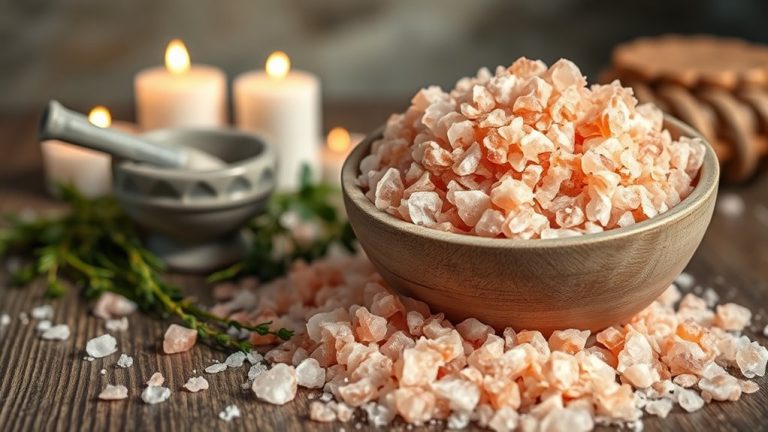
Rock salt is basically coarse sodium chloride. It works best for melting ice above 20°F but becomes less effective in extreme cold conditions.
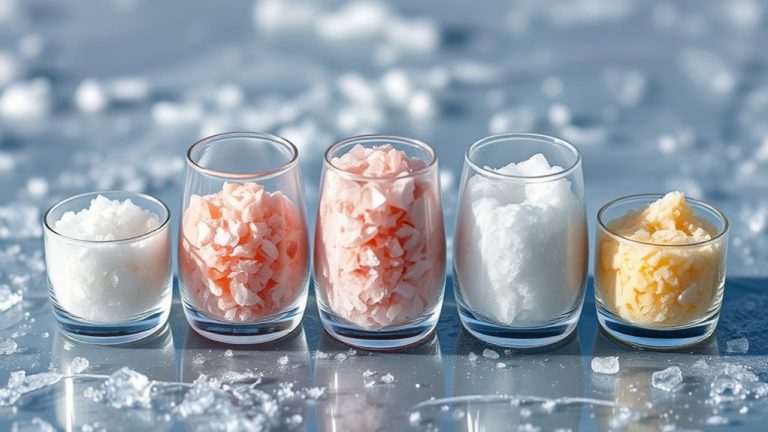
Ice melt often contains calcium or magnesium chloride, which works faster and at lower temperatures. It is also gentler on surfaces, pets, and plants, especially when you select pet-safe formulas. If you want to understand their differences and which works best for your needs, keep exploring the details.
What Is Rock Salt and How Does It Work
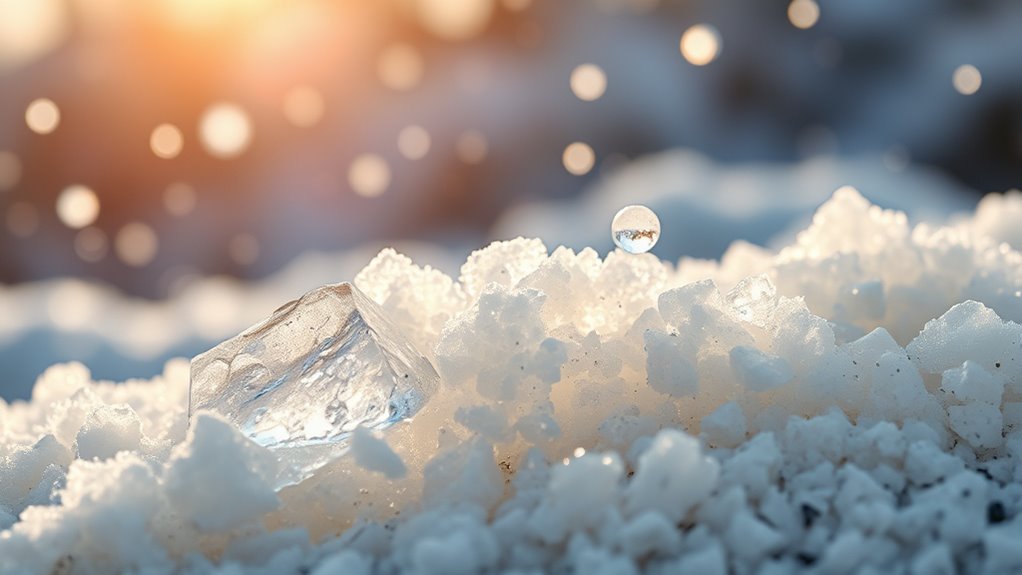
Rock salt, also called sodium chloride or halite, is a natural mineral commonly used to melt ice and snow.
When you apply rock salt for de-icing, it lowers the freezing point of water, creating a brine that prevents ice from forming and aids in melting ice already present.
This ice melt works best at temperatures above 5°F; below that, its effectiveness drops sharply.
Unlike purified table salt, rock salt is coarser and less refined, which makes it a cost-effective option but can lead to concrete damage, harm vegetation, and corrode vehicles over time.
What Is Ice Melt Made Of and Its Purpose
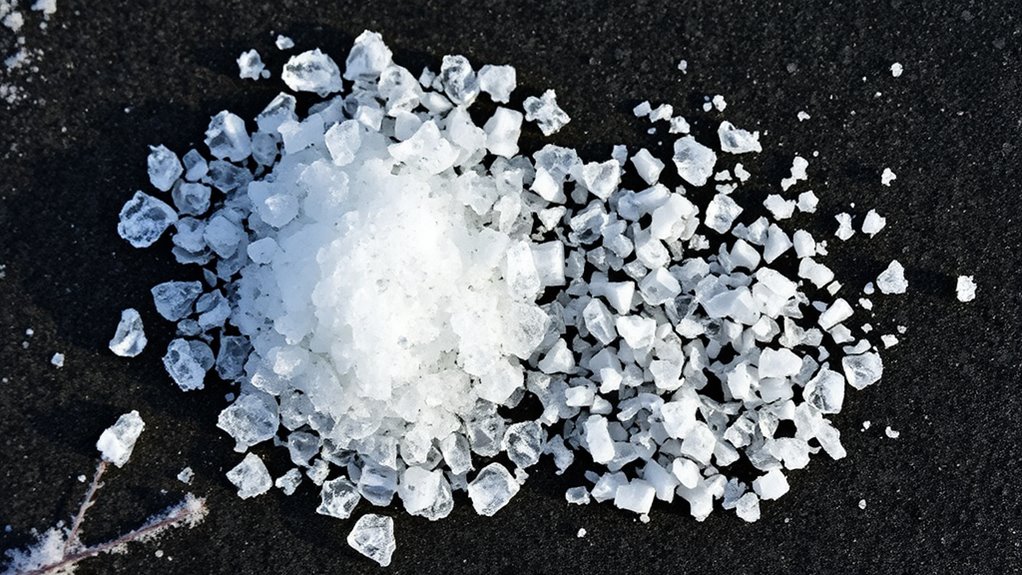
You’ll find that ice melt is made from a mix of chemicals like calcium chloride and magnesium chloride, designed to lower water’s freezing point quickly. This blend helps melt ice efficiently, even in extreme cold.
Understanding what’s inside and how it works can show you why ice melt often outperforms traditional rock salt.
Ice Melt Ingredients
Although ice melt products come in various formulas, they all share one main goal: lowering water’s freezing point to prevent ice buildup and make snow removal easier. Most ice melt blends include sodium chloride, calcium chloride, and magnesium chloride as key ingredients.
Sodium chloride, commonly known as rock salt, is a traditional de-icing agent but works best at higher temperatures.
Calcium chloride and magnesium chloride, however, lower the melting point further, with calcium chloride effective down to -25°F.
These ingredients not only melt ice faster but also cause less corrosion than pure rock salt, making them safer for surfaces and the environment.
Ice melt products may also contain additives like anti-caking agents to improve application, ensuring efficient and reliable ice control during winter.
Melting Mechanism Explained
Since ice melt combines chemicals like calcium chloride, magnesium chloride, and sodium chloride, it effectively lowers water’s freezing point to break down ice quickly. When you apply ice melt, these chemicals dissolve into the water on the surface, forming a brine solution.
This brine penetrates the ice, disrupting its structure and causing it to melt even at temperatures well below water’s normal freeze point.
Calcium chloride stands out because it can melt ice at temperatures as low as -25°F, making it more efficient than rock salt alone. Magnesium chloride and sodium chloride work alongside calcium chloride to maintain the melting process.
This chemical reaction not only melts the ice but also prevents refreezing, ensuring safer, clearer surfaces. You’ll notice ice melt acts faster and works in colder conditions due to this powerful chemical blend.
Purpose And Benefits
When you need to clear ice quickly and safely, ice melt offers a powerful solution by combining chemicals like sodium chloride, calcium chloride, and magnesium chloride.
Unlike plain rock salt, ice melt includes additives and multiple chlorides that boost melting performance, especially at lower temperatures. These blends effectively lower the freezing point of water, allowing ice melt to work on surfaces down to -25°F.
This means you can rely on ice melt for faster, more efficient ice removal and prevention on driveways, sidewalks, and roads. Its surface application is safer and more effective than rock salt alone, reducing slip hazards and damage.
Chemical Differences Between Rock Salt and Ice Melt
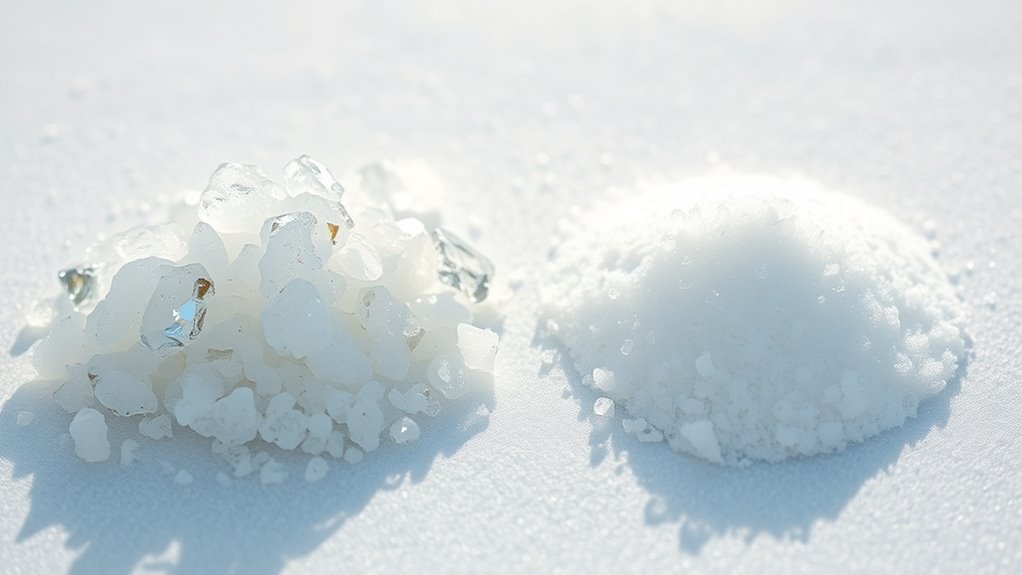
If you look closely, you’ll see that rock salt and ice melt differ markedly in their chemical makeup. Rock salt is primarily sodium chloride, while ice melt blends sodium chloride with calcium chloride, magnesium chloride, or other chlorides. These additives alter the chemical composition, lowering the melting point more effectively.
Calcium chloride, for example, reacts exothermically with water, generating heat that speeds up melting.
Ice melt formulations often include corrosion reduction treatments to protect surfaces and the environment, unlike pure rock salt.
Each brand’s formulation varies, designed to optimize melting speed and efficiency across conditions.
Which Product Works Better at Different Temperatures
Although both rock salt and ice melt serve to clear ice, they perform differently depending on the temperature. Rock salt works well at temperatures down to about 20°F, offering good traction and decent de-icing effectiveness. However, its melting efficiency drops below that point.
Ice melt products containing calcium chloride or magnesium chloride are more effective in colder conditions, maintaining strong melting power even at temperatures as low as -25°F.
If you’re dealing with temperatures below 15°F, ice melt clearly outperforms rock salt in speed and effectiveness.
For moderate temperatures above 20°F, rock salt provides faster traction, while ice melt ensures quicker melting in the cold. Combining both can optimize de-icing across a wider temperature range, giving you the best melting efficiency regardless of conditions.
Environmental and Surface Impacts of Rock Salt and Ice Melt
You’ll want to contemplate how rock salt can corrode concrete and harm plants around your home.
Ice melt products with magnesium or calcium chloride tend to be gentler on surfaces and safer for pets and vegetation.
Understanding these impacts helps you choose the best option while protecting your environment.
Corrosion Effects on Surfaces
When you use rock salt to melt ice, you expose metal surfaces and infrastructure to significant corrosion risks. Rock salt’s chloride content accelerates rust and metal damage, affecting vehicles, machinery, and concrete surfaces.
This corrosion can weaken steel and aluminum components, causing costly repairs over time.
In contrast, de-icing products with calcium chloride or magnesium chloride are generally less harsh on surfaces, reducing the chance of concrete harm and corrosion. Choosing these gentler formulations helps protect your property while still effectively melting ice.
By understanding the corrosion effects on surfaces, you can minimize damage and extend the life of metal and concrete structures.
Managing de-icing product application carefully also limits the environmental impact linked to excessive chloride exposure.
Environmental Impact Considerations
Because rock salt contains high levels of sodium chloride, it can severely harm vegetation, soil, and freshwater ecosystems if overused. You need to be aware that runoff pollution from rock salt leads to soil salinization, damaging plant roots and aquatic life.
This environmental impact also accelerates corrosion of concrete, metal structures, and vehicles.
Ice melt products often include eco-safe additives like magnesium or calcium chloride, which are more eco-friendly and less harmful to plant safety and aquatic organisms. By choosing these alternatives and applying them carefully, you reduce environmental harm.
While no deicer is completely harmless, opting for eco-friendly formulations and controlling usage helps protect the environment and limits corrosion and pollution risks around your property and natural habitats.
Pet And Plant Safety
How does using rock salt or ice melt affect your pets and plants? Rock salt is highly corrosive and toxic, causing significant landscaping damage by dehydrating roots and burning foliage. It also contributes to soil contamination, which harms plant growth and nearby aquatic life.
On the other hand, many ice melt products use pet-safe ingredients like potassium chloride or propylene glycol, making them less harmful and more environmentally friendly. These alternatives reduce risks to both pet safety and plant safety.
However, no de-icer is completely harmless. To protect your greenery and animals, limit application near vegetation and clean up any leftover salt. Choosing the right ice melt can minimize toxic effects and help maintain a safer environment for your pets and plants alike.
Pet-Friendly Rock Salt and Ice Melt Options
Choosing the right pet-friendly rock salt and ice melt can protect your furry friends from harmful chemicals while keeping your walkways clear. Look for pet-safe products that include additives like potassium chloride or magnesium chloride, which are less toxic than traditional sodium chloride. These alternatives help reduce paw irritation and skin discomfort during winter maintenance.
Some ice melts also use propylene glycol, further minimizing risks to pets. Always pick products specifically labeled pet-safe to ensure their safety around your animals.
Even with safer options, use rock salt and ice melt sparingly to limit your pet’s exposure through paws or accidental ingestion.
How to Apply Rock Salt and Ice Melt Safely and Effectively
When you apply rock salt or ice melt, make sure to follow the manufacturer’s instructions closely to guarantee proper use and avoid damage. Use a spreader for a precise, even application, which maximizes melting efficacy and prevents overuse that could harm surfaces or the environment.
Always apply salt or ice melt after clearing snow or ice to enhance melting power and reduce the amount needed. For safety, wear gloves to protect your skin, especially when handling calcium chloride. Reapply as necessary, but avoid excessive spreading.
Once melting occurs, shovel away the slush promptly to maintain traction and prevent refreezing.
Choosing Between Rock Salt and Ice Melt
After knowing how to apply rock salt and ice melt safely, you might wonder which option suits your needs best. If you face temperatures above 20°F, rock salt offers an affordable choice for melting ice and snow removal. However, its effectiveness drops in lower temperatures.
Ice melt products, often containing calcium and magnesium chlorides, perform well down to -25°F, melting ice faster and more efficiently in extreme cold.
While rock salt can damage concrete and vegetation more, ice melt is gentler, making it a safer option.
Ice melt is a safer choice as it is gentler on concrete and plants than rock salt.
Consider the pros and cons: rock salt saves money but works best in milder cold, while ice melt costs more but excels in harsh conditions and minimizes damage.
Your choice hinges on temperature and how quickly you need ice melted.
Frequently Asked Questions
Which Is Better, Ice Melt or Rock Salt?
Ice melt is better if you want faster results and safer use around pets and plants. You’ll also handle colder temperatures better.
But if budget matters most, rock salt can work, though it might damage surfaces more.
What Can I Use if I Don’t Have Ice Melt?
Don’t worry if you lack ice melt—you can use rock salt, which lowers freezing points, or sand and kitty litter for traction.
Just avoid relying solely on warm water, as it might refreeze and create hazards.
Does Rock Salt Make Ice Melt?
Yes, rock salt helps ice melt by lowering water’s freezing point, but it doesn’t turn into ice melt itself.
You can use it to break up ice, but it works slower than specialized ice melt products.
What Can Be Substituted for Rock Salt?
You can substitute rock salt with calcium chloride, magnesium chloride, or blended ice melt products. For pet-safe or eco-friendly options, try potassium chloride or calcium magnesium acetate.
Sand and ash also provide traction without melting ice.
Conclusion
You might think ice melt and rock salt are the same, but they’re not quite alike. While both help clear ice, ice melt often includes additional chemicals that work better in colder temps. Rock salt is simpler and cheaper but less effective in extreme cold.
So, if you’re battling harsh winter conditions, ice melt might be your best bet. Knowing these differences helps you choose smarter and stay safer this winter. Understanding the distinction between ice melt and rock salt ensures you pick the right solution for effective and safe ice removal.