How to Put Salt on a Canker Sore for Good Treatment
You shouldn’t apply dry salt directly to a canker sore because it causes pain and delays healing. Instead, dissolve half a teaspoon of salt in half a cup of warm water to make a saltwater rinse. This method is a safe and effective way to treat canker sores.
Swish the saltwater gently around your mouth for 15-30 seconds, then spit it out. Do this 3-4 times a day, especially after meals, to reduce pain and speed healing. Regular use helps keep the sore clean and promotes recovery.
Keep going to discover more about safe use and other relief tips for canker sores.
How To Prepare A Saltwater Rinse For Canker Sores
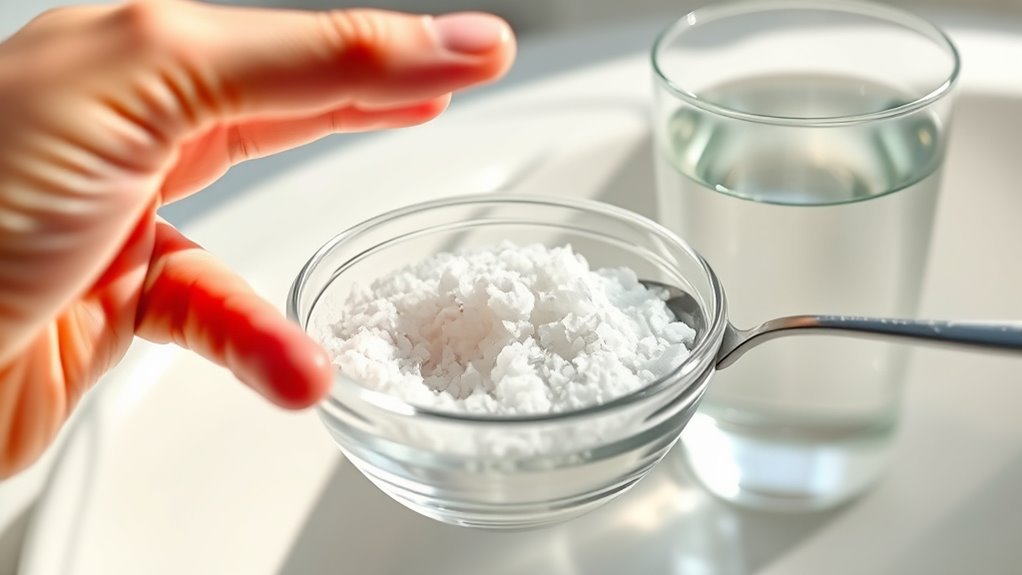
When you prepare a saltwater rinse for canker sores, start by dissolving half a teaspoon of table salt into half a cup of warm water. Make sure the water is warm—not hot—to avoid irritating the sore further.
This simple saltwater rinse helps soothe the discomfort and promotes faster healing by reducing inflammation and cleaning the area.
Once the salt dissolves completely, gently swish the solution around your mouth, focusing on the canker sore for about 15 to 30 seconds.
Gently swish the saltwater around your mouth, targeting the canker sore for 15 to 30 seconds.
Spit the rinse out afterward; don’t swallow it, as the salt can upset your stomach.
Using this saltwater rinse three to four times daily can considerably soothe the pain and accelerate the healing process, making it a reliable home remedy for canker sores.
Step-By-Step Guide To Using Saltwater Rinse Effectively
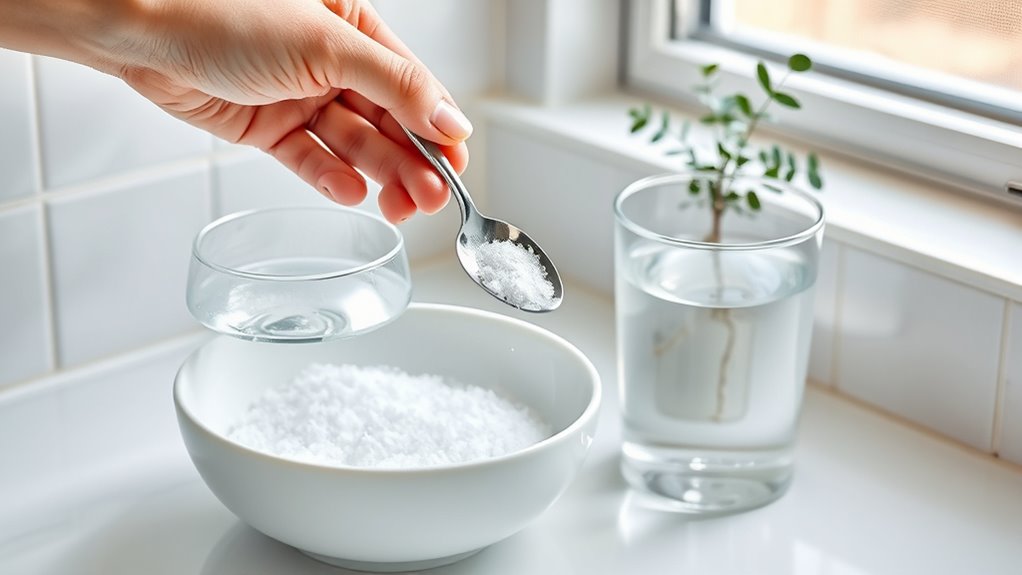
Start by mixing half a teaspoon of salt into a cup of warm water to prepare your rinse. Swish the solution gently around your mouth, focusing on the sore, and avoid swallowing it.
Repeat this process 3-4 times daily to help soothe the canker sore safely and effectively.
Preparing Saltwater Solution
Although it may seem simple, preparing your saltwater rinse correctly guarantees it soothes your canker sore effectively.
Start by heating eight ounces of warm water—make sure it’s warm enough to dissolve the salt comfortably but not so hot it burns your mouth.
Next, take half a teaspoon of salt and add it to the warm water. Stir the mixture thoroughly until the salt completely dissolves, creating a uniform saltwater solution.
Use a clean cup or glass to avoid introducing bacteria that could irritate your sore.
For best results, prepare this rinse fresh each time and use it immediately.
Following these steps ensures your saltwater rinse is both safe and effective in promoting healing and relief.
Rinsing Technique Tips
To get the most from your saltwater rinse, you’ll want to swish the solution gently around your mouth, focusing on the canker sore for about 30 seconds. Use gentle swishing to avoid irritating the sore, ensuring the saltwater covers the affected area thoroughly.
Prepare your saltwater rinse by mixing half a teaspoon of salt in a cup of warm water—not too hot to prevent discomfort. After swishing, spit out the solution; don’t swallow it.
Maintaining the right salt concentration is key to effective healing without causing extra pain. Incorporate this rinsing technique into your daily oral hygiene routine, repeating it 3-4 times a day to promote recovery and keep your mouth clean without aggravating the sore.
Frequency And Precautions
Once you’ve mastered the proper rinsing technique, it’s important to focus on how often and when you should use the saltwater rinse. The ideal frequency is every 2-3 hours, especially after meals, to enhance healing and reduce pain.
However, keep in mind some key precautions to avoid irritation or discomfort.
| Frequency | Precautions |
|---|---|
| Every 2-3 hours | Use diluted saltwater, not pure salt |
| After eating or drinking | Don’t swallow the rinse |
| Until the sore heals | Rinse gently for about 30 seconds |
How Often Should You Use Saltwater Rinse For Canker Sores?
If you want to speed up healing and ease discomfort, you should rinse your mouth with saltwater 3 to 4 times daily when dealing with canker sores. This frequency helps reduce inflammation and promotes healing without irritating your mouth.
In the first few days, rinsing every 2 to 3 hours can further ease pain and inflammation, but avoid exceeding 6 times in 24 hours to prevent dryness or irritation.
Consistent use of a saltwater rinse over 5 to 10 days supports faster recovery and lowers the risk of secondary infection.
Why Saltwater Rinses Help Your Canker Sore Heal Faster
You’ll find that saltwater rinses work wonders because they fight bacteria that can worsen your canker sore. The salt also helps reduce inflammation, easing pain and swelling quickly.
Antibacterial Properties
Because saltwater rinses create an alkaline environment, they effectively inhibit bacterial growth around your canker sore, reducing the risk of infection. Saltwater’s antibacterial properties work by eliminating harmful bacteria that can worsen your sore or cause secondary infections.
When you rinse regularly, saltwater lowers the microbial load in your mouth, making the environment less hospitable for bacteria to thrive. This cleaner environment helps speed up healing by preventing additional irritation and complications.
Salt also promotes tissue regeneration, supporting your body’s natural repair process. By maintaining this antibacterial barrier, saltwater rinses keep your canker sore cleaner and safer, allowing you to heal faster and with less discomfort.
Using saltwater is a simple but powerful way to protect your mouth while promoting recovery.
Reduces Inflammation
When you rinse with saltwater, it creates an alkaline environment that helps reduce inflammation around your canker sore. This alkaline setting, combined with salt’s osmotic effect, draws excess fluid out of swollen tissues, which decreases the redness and swelling you feel.
Saltwater also inhibits bacterial growth at your sore, lowering inflammation caused by infection. By regularly rinsing, you cleanse the area and reduce inflammatory mediators, promoting faster healing.
Clinical studies confirm that saltwater gargles markedly decrease inflammation and discomfort in oral ulcers like canker sores.
Is Applying Dry Salt To Canker Sores Safe?
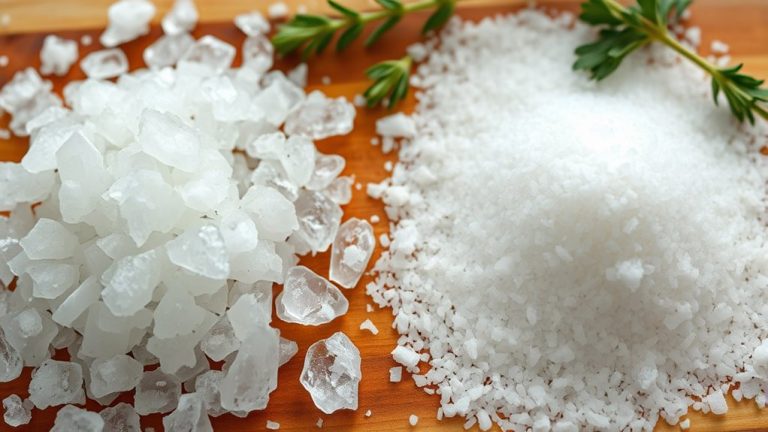
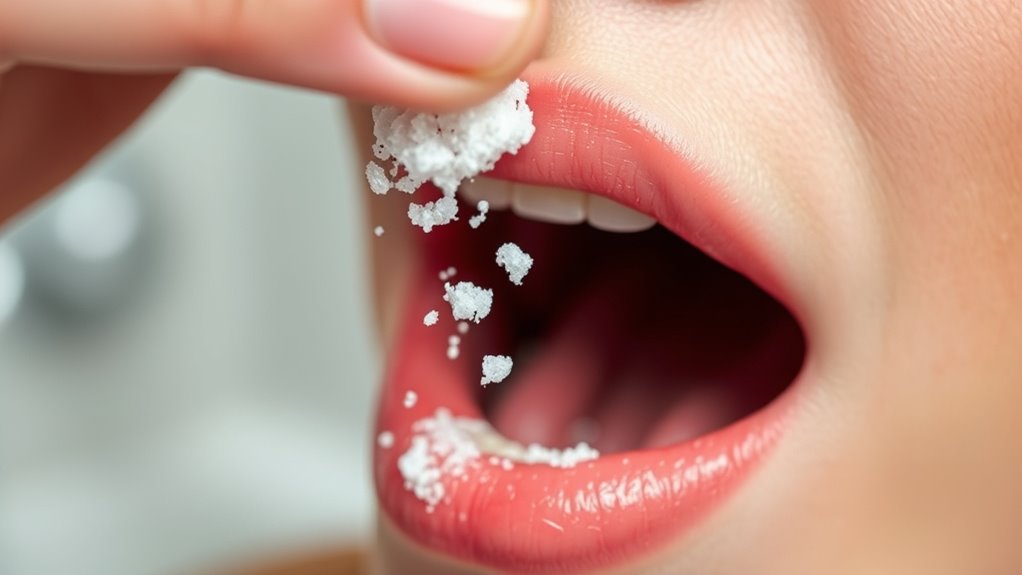
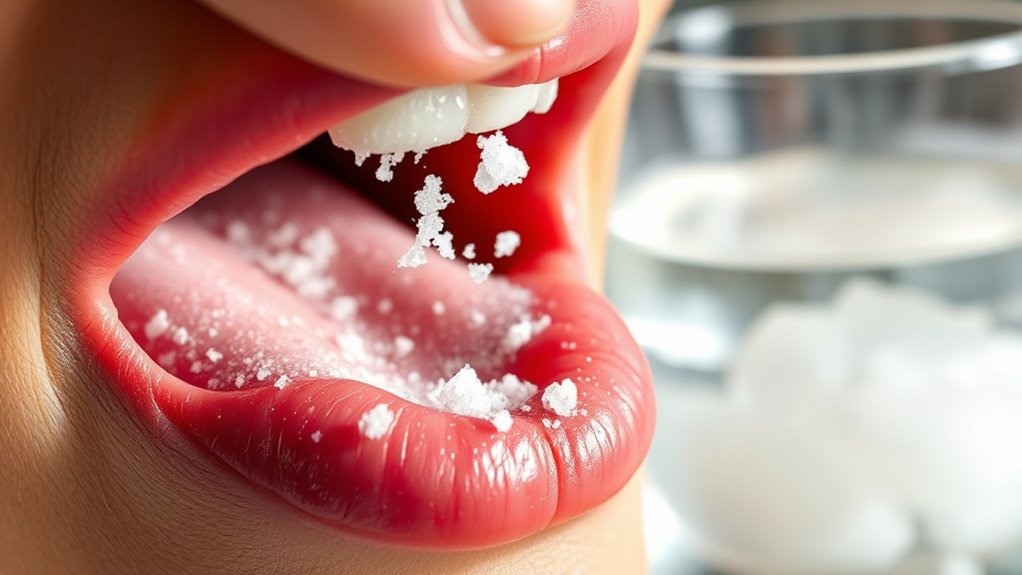
Although salt has healing properties, applying dry salt directly to a canker sore can cause intense pain and worsen irritation. You might think dry salt speeds healing, but it actually poses risks that can delay recovery.
Here’s what happens when you apply dry salt:
- Causes sharp, stinging pain immediately
- Irritates and inflames sensitive tissue further
- Damages the mucous membrane around the sore
- Increases risk of infection due to tissue damage
- Slows down the natural healing process
To avoid these issues, steer clear of dry salt on sores. Instead, opt for gentler methods like saltwater rinses that promote healing without added irritation or pain. Your sore will thank you for a safer approach.
Saltwater Rinses Vs. Other Home Remedies: Which Works Best?
You might wonder how saltwater rinses stack up against other home remedies for canker sores. Saltwater helps reduce inflammation and speeds healing without causing pain, unlike some treatments that can irritate the sore. Let’s compare its benefits to alternatives so you can choose the best option for quick relief.
Saltwater Rinse Benefits
Since saltwater rinses create an alkaline environment that reduces bacteria, they help your canker sores heal faster and with less pain. Using a saltwater rinse regularly can effectively reduce pain and speed up healing time for mouth ulcers.
Compared to other home remedies, saltwater rinses stand out because they’re gentle yet powerful.
Here’s what makes them beneficial:
- Create an alkaline environment that hinders bacterial growth
- Reduce inflammation and discomfort in canker sores
- Decrease ulcer size within days of regular use
- Are safer than direct salt application, avoiding tissue damage
- Soothe mouth ulcers better than baking soda or hydrogen peroxide
Alternative Home Remedies
When comparing saltwater rinses to other home remedies for canker sores, you’ll find that saltwater stands out for its balance of effectiveness and gentleness. Saltwater rinses reduce inflammation and promote healing without causing the intense discomfort that direct salt application can bring.
While other home remedies like baking soda or hydrogen peroxide rinses also help with healing, saltwater is simpler and less harsh on your tissues.
It works by drawing out fluids and reducing bacterial growth, which speeds recovery. Using saltwater rinses consistently several times a day offers a natural, cost-effective way to soothe your sore and ease discomfort.
Comparative Effectiveness
Saltwater rinses offer a unique combination of effectiveness and gentleness compared to other home remedies for canker sores. When you use saltwater rinses, you reduce inflammation and bacteria, which speeds up healing without irritating the tissue like some alternatives might.
Here’s why saltwater rinses stand out:
- Draw out fluids by increasing osmotic pressure
- Reduce swelling more effectively than topical salt
- Are gentler than baking soda or hydrogen peroxide
They cause less pain and tissue damage. Additionally, saltwater rinses provide an affordable, accessible treatment option.
Combining Salt Treatment With Other Therapies For Relief
Although canker sores can be stubborn, combining salt treatment with other therapies can substantially boost your relief and healing speed. Rinsing with salt water before and after applying topical remedies enhances their effectiveness and soothes pain.
For example, alternating salt water rinses with baking soda or milk of magnesia helps reduce soreness and speeds tissue repair. Using salt water alongside hydrogen peroxide mouthwash creates a bacteria-hostile environment, cutting inflammation and preventing infection.
To maximize healing, incorporate salt treatment into a solid oral care routine: avoid irritant foods and maintain good hygiene. Just remember, applying salt paste directly to the sore isn’t recommended, but salt water rinses paired with other therapies offer a powerful approach to managing canker sores effectively.
When To See A Doctor For Canker Sores
Combining salt treatment with other remedies can ease your canker sore, but some symptoms require professional attention. You should seek medical care if your ulcers don’t heal within two weeks or if the pain worsens. Also, consult a doctor if your canker sores are unusually large or make eating and swallowing difficult.
Watch for signs like fever, foul taste, or infection, which need prompt evaluation. Frequent or unresponsive ulcers should also prompt a visit to your healthcare provider.
- Sores lasting more than two weeks
- Ulcers larger than a pea or causing pain
- Difficulty eating or swallowing
- Fever, foul taste, or infection signs
- Unusual patches, bleeding, or cancer risk
Don’t hesitate to get medical care when these symptoms appear.
Tips To Prevent Canker Sores From Coming Back
To reduce the chances of canker sores returning, you should maintain good oral hygiene and avoid injuring the inside of your mouth. Use gentle oral care products and protect your mouth during dental work to prevent trauma.
Practice trigger avoidance by steering clear of spicy, acidic, or abrasive foods that irritate your tissue.
Managing stress with relaxation techniques also helps prevent recurrence by reducing immune system flare-ups.
Make sure you get proper nutritional support by addressing deficiencies in vitamin B12, iron, and folate, which are linked to canker sore development.
Common Mistakes When Using Salt For Canker Sores
When you apply salt directly onto a canker sore, you risk causing intense pain and further tissue damage. Many mistakes happen when using salt for canker sore treatment, often leading to more irritation instead of relief.
To avoid these pitfalls, keep in mind:
- Rubbing salt on the sore’s surface, which worsens inflammation
- Using salt without dissolving it properly, causing abrasive particles
- Applying salt too forcefully, increasing irritation
- Overconcentrating your salt rinse, delaying healing
- Overusing salt rinses multiple times daily, leading to dryness and discomfort
Instead, prepare a mild salt rinse and gently swish it around your mouth to soothe the sore. This approach minimizes irritation and supports faster recovery without unnecessary pain.
Frequently Asked Questions
Can I Put Salt Directly on a Canker Sore?
You shouldn’t put salt directly on a canker sore because it causes pain and irritation.
Instead, dissolve salt in warm water and gently rinse your mouth to help healing without damaging the sore or causing discomfort.
How Do You Get Rid of a Canker Sore Fast?
Want to get rid of a canker sore fast? Just wish it away! Or better, rinse your mouth with warm saltwater several times daily—it reduces pain, kills bacteria, and speeds healing.
Trust the salty magic!
Conclusion
Using salt on your canker sore is like sending a gentle tide to wash away discomfort and speed healing. With each saltwater rinse, you’re nurturing your sore like a garden thirsty for relief. Just remember to use it wisely—too much can sting like a sudden storm.
Combine treatments thoughtfully, and watch your pain fade like morning mist. When in doubt, don’t hesitate to seek a doctor’s guidance to keep your smile shining bright.
For good treatment, putting salt on a canker sore can provide effective relief. Proper use and care are essential for the best results in managing your canker sore.