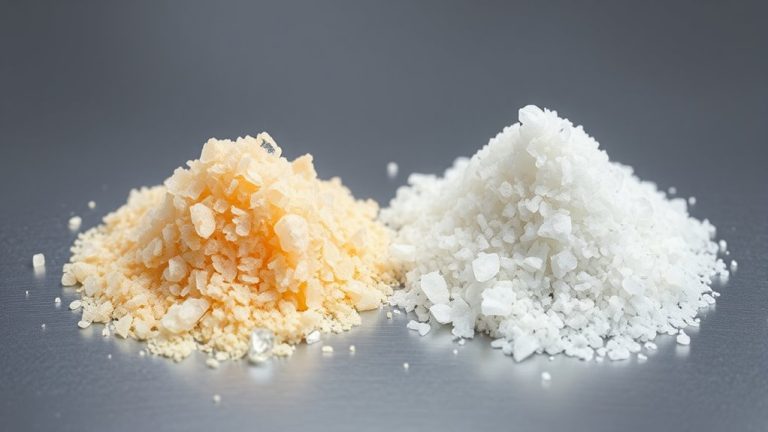
How to Use Pickling Lime and Pickling Salt: Are They the Same?
You can’t use pickling lime and pickling salt interchangeably—they serve different purposes in the pickling process. Pickling lime firms cucumbers before you rinse them thoroughly to remove any residue that could risk food safety. Pickling salt, pure and additive-free, dissolves clear in brines and helps preserve without cloudiness.
Using pickling lime requires careful handling, but many now avoid it for health reasons. If you want to make perfectly crisp, safe pickles, knowing these differences is essential. Understanding how to use pickling lime and pickling salt correctly ensures your pickles come out delicious and safe to eat.
Understanding Pickling Lime and Pickling Salt
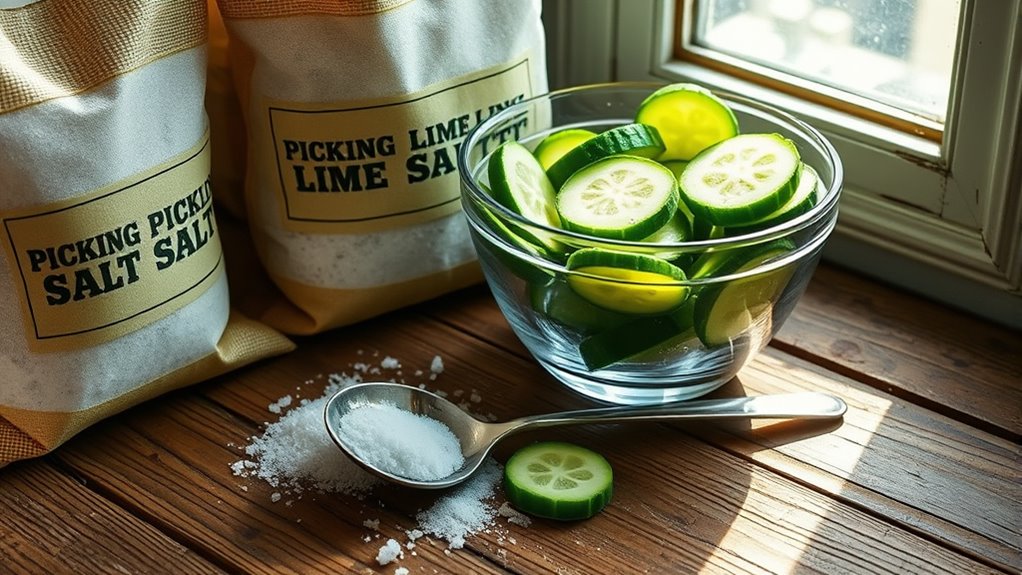
Although both pickling lime and pickling salt play important roles in preserving cucumbers, they serve very different purposes. Pickling lime, or calcium hydroxide, is used to soak cucumbers before pickling to increase their firmness and crunchiness. This step is vital for food preservation but requires thorough rinsing afterward to avoid health risks like botulism.
Pickling lime firms cucumbers pre-pickling but must be rinsed thoroughly to ensure food safety.
On the other hand, pickling salt is pure sodium chloride formulated specifically for canning and pickling. It dissolves quickly and doesn’t cloud the brine, making it ideal for the pickling solution.
Since pickling lime and pickling salt are chemically different, you can’t substitute one for the other.
Understanding their distinct roles helps you guarantee safe, effective canning and delicious crunchy pickles every time.
How Pickling Salt Differs From Table Salt
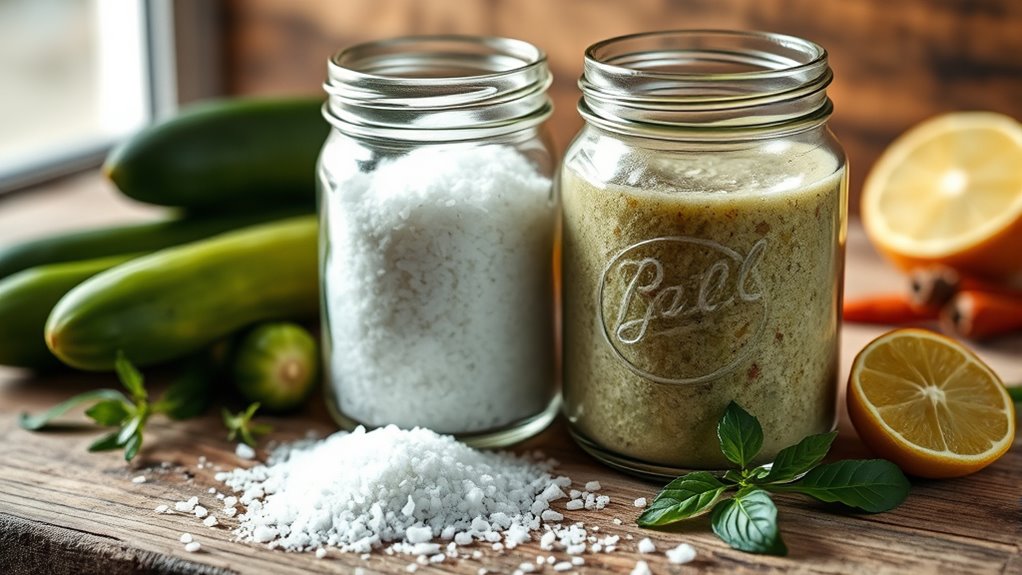
While pickling lime and pickling salt each play unique roles in preserving cucumbers, understanding what sets pickling salt apart from regular table salt can help you achieve the best results in your pickling recipes.
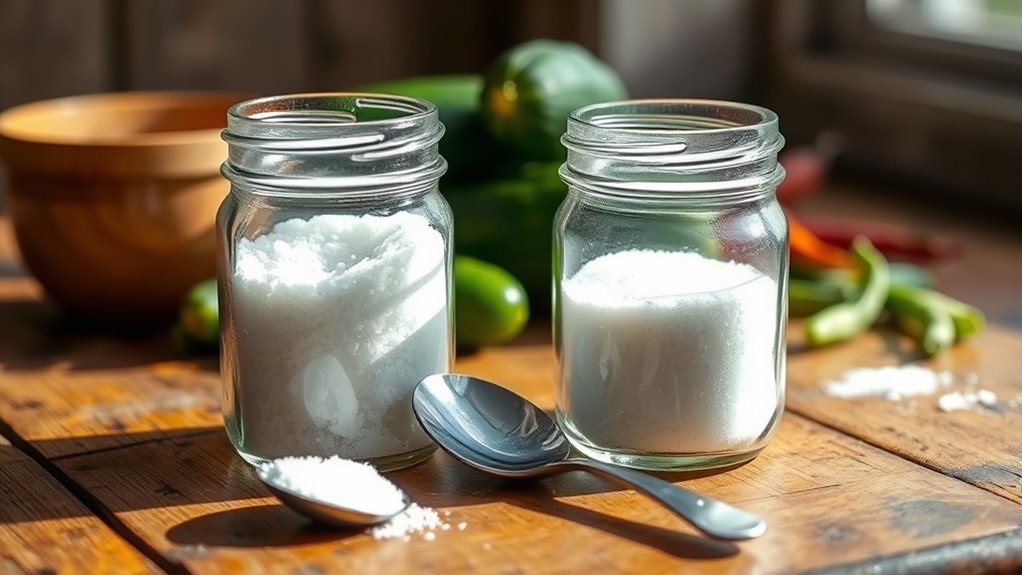
Pickling salt offers higher purity since it contains no additives like iodine or anti-caking agents. This purity ensures your brine stays clear and flavors stay true, unlike table salt that may cloud your pickles or alter taste.
| Feature | Pickling Salt |
|---|---|
| Purity | 100% sodium chloride |
| Additives | None |
| Grain Size | Fine, consistent |
| Dissolves | Quickly, clear solution |
Choosing pickling salt guarantees clean, crisp pickles every time.
Using Pickling Lime and Salt Safely
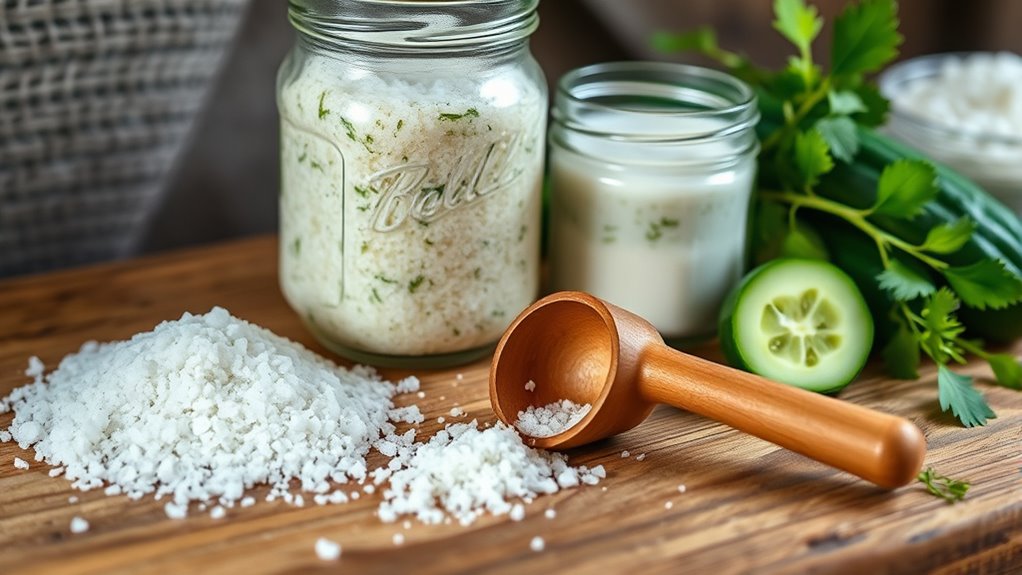
Since pickling lime and pickling salt serve different purposes, you need to handle each one carefully to guarantee safety and quality.
When using pickling lime, thoroughly rinse your cucumbers afterward to remove any residual alkaline substances. Failing to rinse properly can neutralize vinegar’s acidity, compromising food safety and increasing the risk of harmful bacterial growth, including botulism.
Always rinse cucumbers after using pickling lime to prevent neutralizing vinegar and ensure safe, bacteria-free pickles.
Pickling salt, on the other hand, is a safer option that doesn’t require rinsing because it contains no additives and helps preserve your pickles effectively.
Always follow tested recipes and guidelines for rinsing and processing, whether you use pickling lime or pickling salt.
Proper handling ensures your pickled foods stay safe, crunchy, and delicious without posing any health risks.
Why You Should Avoid Using Pickling Lime Today
You should avoid using pickling lime today because it can leave behind calcium residues that lower acidity and create an environment where harmful bacteria like botulism can thrive.
In home canning, maintaining the right acidity is vital for food safety, and residual lime compromises this balance. Improper rinsing often leaves traces of pickling lime, increasing the risk of bacterial growth and serious health issues.
The U.S. Food and Drug Administration no longer approves pickling lime for home food preservation due to these dangers. Instead, modern methods use pickling salt and vinegar to guarantee safe, effective preservation.
By steering clear of pickling lime, you protect yourself from potential toxicity and ensure your canned foods stay safe and delicious.
Prioritize food safety by avoiding pickling lime in your home canning processes.
Substitutes for Pickling Lime to Keep Pickles Crunchy
If you want crunchy pickles without using pickling lime, you can turn to alternatives like calcium chloride or grape seed extract. These options help firm up your cucumbers safely and effectively, often by adding them directly to your brine.
You’ll also want to focus on using fresh, firm cucumbers and proper salt concentrations to keep that perfect crunch.
Alternative Crunch-Enhancing Methods
Although pickling lime has long been a popular choice for keeping pickles crunchy, several effective alternatives can deliver similar results without its use.
You can soak cucumbers in ice water for a few hours before pickling to boost crispness naturally.
Using pickling salt instead of lime helps maintain firmness since it dissolves easily and doesn’t affect acidity, making it ideal for fermented pickles.
Another great option is calcium chloride, a food-grade additive that enhances crunch without altering pH levels.
To maximize texture, pick fresh, firm cucumbers and trim their blossom ends, which prevents softening.
Also, avoid over-processing and stick to proper salt-to-water ratios in your brine.
These methods let you achieve delightfully crisp pickles without relying on pickling lime.

Salt-Based Firming Techniques
When aiming to keep your pickles crunchy without pickling lime, salt-based firming techniques offer a reliable alternative. Using pickling salt in a brine draws out excess water and naturally stiffens the cucumbers’ tissues. Many traditional recipes skip pickling lime entirely, relying on salt-based firming for crisp, delicious results.
To master this method, keep these tips in mind:
- Use 2-5% pickling salt by water weight to ensure firmness and safety
- Soak cucumbers fully in the salt brine for even texture
- Choose clean, non-reactive containers to avoid spoilage
- Rinse thoroughly after brining to prevent over-salting
Lime-Free Pickling Solutions
Since many home cooks want to avoid pickling lime, you can achieve crunchy pickles by focusing on proper brining, selecting fresh cucumbers, and using alternatives like pickling salt or calcium chloride to maintain firmness without compromising texture.
Proper brining with pickling salt ensures a clear solution that enhances crispness naturally. You can also soak cucumbers in ice water before pickling to improve their crunch.
While calcium hydroxide (pickling lime) is effective, calcium chloride offers a safe substitute that firms cucumbers without the risks associated with lime.
Choosing and Using Pickling Salt for Clear, Crisp Brines
You’ll want to choose pickling salt because it dissolves quickly and keeps your brine crystal clear without any cloudiness.
Unlike table salt, it contains no additives that can affect flavor or texture, ensuring your pickles stay crisp.
If you don’t have pickling salt, I’ll share some alternatives and tips to get the best results.
Benefits Of Pickling Salt
Why does pickling salt make such a difference in your brines? It’s all about purity and performance. Pickling salt is pure sodium chloride without additives, which means no cloudiness or off-flavors in your preservation process.
When you use it, your brines stay crystal clear, enhancing the appearance and taste of your pickles.
Here’s why you’ll love using pickling salt:
- Ensures clear brines for beautiful presentation
- Dissolves quickly and evenly for consistent preservation
- Lacks iodine and anti-caking agents that can compromise clarity
- Maintains texture and color of your preserved foods
Salt Alternatives And Tips
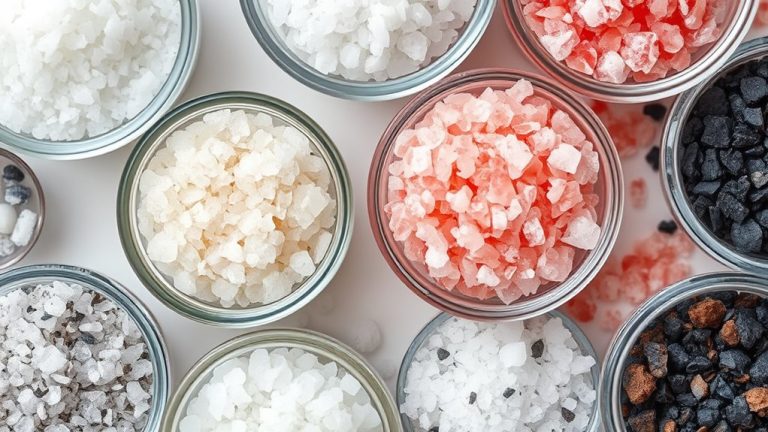
Although many salts are available, choosing the right one for pickling makes all the difference in achieving clear, crisp brines. Pickling salt is your best bet since it’s food-grade and free from anti-caking agents and additives that can cloud your brine.
While salt alternatives like kosher salt or sea salt might seem tempting, they often contain impurities or larger grains that affect dissolving and clarity. If you use a substitute, adjust measurements carefully—remember, 1 teaspoon of pickling salt equals about 1 1/4 teaspoons of kosher salt.
Always opt for pure, additive-free pickling salt designed for canning to guarantee consistent results. Avoid table salt with iodine or anti-caking agents, as they can interfere with the visual appeal and safety of your preserved foods.
Frequently Asked Questions
Can I Use Pickling Lime Instead of Pickling Salt?
You shouldn’t use pickling lime instead of pickling salt because they serve different purposes. Pickling lime firms vegetables, but it won’t add flavor or preserve like salt does.
How Do You Use Pickling Lime?
You soak cucumbers in pickling lime water for 12-24 hours to boost crunchiness, then rinse thoroughly and soak in ice water.
Make sure to remove all lime to keep your pickles safe and crisp.
What Is a Substitute for Pickling Lime?
When life gives you lemons, use food-grade calcium hydroxide as a substitute for pickling lime.
Just make sure it’s pure and meant for food, so your pickles turn out crisp and safe every time.
What Is Pickling Lime?
Pickling lime is a food-grade calcium hydroxide powder that you use to keep vegetables firm and crunchy during pickling.
You soak veggies in it, then rinse well to guarantee safety and preserve texture perfectly.
Conclusion
While pickling lime and pickling salt might sound like they belong to the same family, they play very different roles in your pickling adventure. Pickling lime firms up your veggies but carries risks, so you’ll want to handle it with care—or better yet, skip it altogether.
On the other hand, pickling salt keeps your brine clear and crisp without any fuss. It dissolves easily and doesn’t contain additives that could cloud your brine or affect the texture of your pickles.
Understanding these differences helps you create pickles that are both safe and delicious every time. Knowing how to use pickling lime and pickling salt correctly is key to achieving the perfect balance in your pickling recipes.