Are Pink Salt and Celtic Salt the Same?
Pink salt and Celtic salt aren’t the same. Pink salt, known for its distinctive color, comes from ancient Himalayan mines and contains over 80 trace minerals. It has a dry, crystalline texture that sets it apart from other salts.
Celtic salt is harvested from French seawater and contains about 34 minerals. Unlike pink salt, it retains natural moisture and has a coarse, greyish appearance.
Both salts offer unique flavors and health benefits, making your choice depend on taste preferences and intended use. If you want to explore their differences and best uses, there’s plenty more to discover.
Origins and Harvesting of Pink Salt vs. Celtic Salt

Although both pink salt and Celtic salt come from natural sources, their origins and harvesting methods differ markedly. Pink salt, often Himalayan salt, is mined from ancient salt deposits deep within Pakistan’s Khewra Salt Mine. You’ll find it extracted through drilling and crushing, as these deposits formed millions of years ago from dried sea beds.
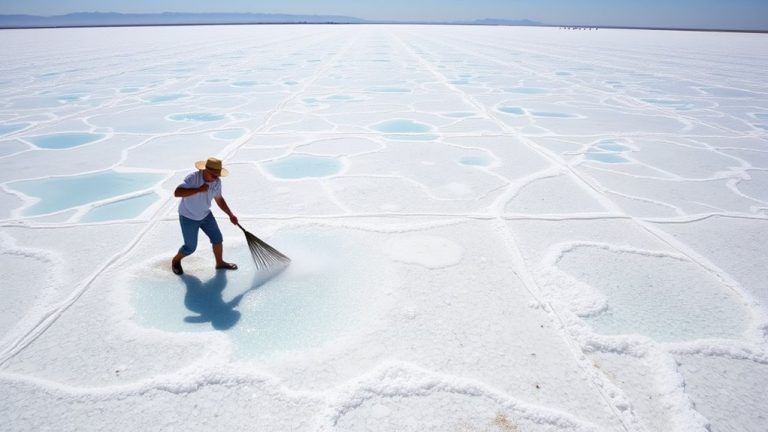
In contrast, Celtic salt is harvested from the seawater of Brittany, France, using traditional evaporation techniques. You’ll notice how salt farmers rake the salt manually from centuries-old salt pans after the water evaporates under the sun.
This evaporation process is key to Celtic salt’s production, distinguishing it from the mining approach used for pink salt.
Understanding these differences helps you appreciate how each salt’s unique origin influences its character and use.
Mineral and Trace Element Profiles Compared
The distinct origins and harvesting methods of pink salt and Celtic salt directly influence their mineral and trace element profiles. Himalayan pink salt contains over 80 trace minerals, including iron, calcium, magnesium, and potassium, giving it a richer and more diverse mineral profile. Its mineral content remains highly preserved during mining, resulting in higher concentrations of these trace elements compared to Celtic sea salt.
On the other hand, Celtic salt has about 34 trace minerals like magnesium, calcium, potassium, zinc, and iron, retained through natural seawater evaporation.
While both salts offer essential minerals beneficial for health, you’ll find Himalayan pink salt generally provides a broader spectrum and higher levels of trace minerals, making its mineral content especially more complex than that of Celtic salt.
Color and Texture Differences Between the Salts
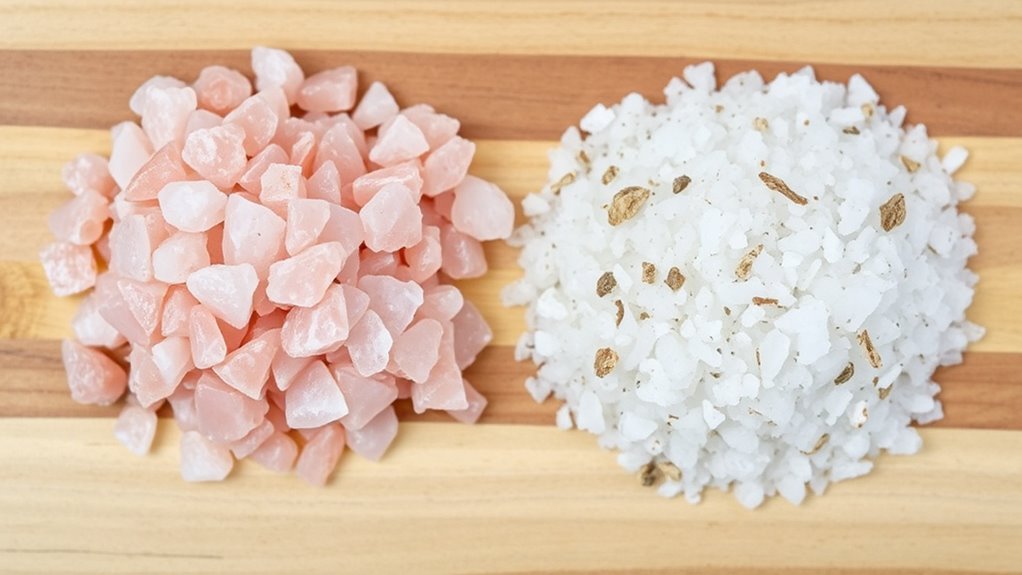
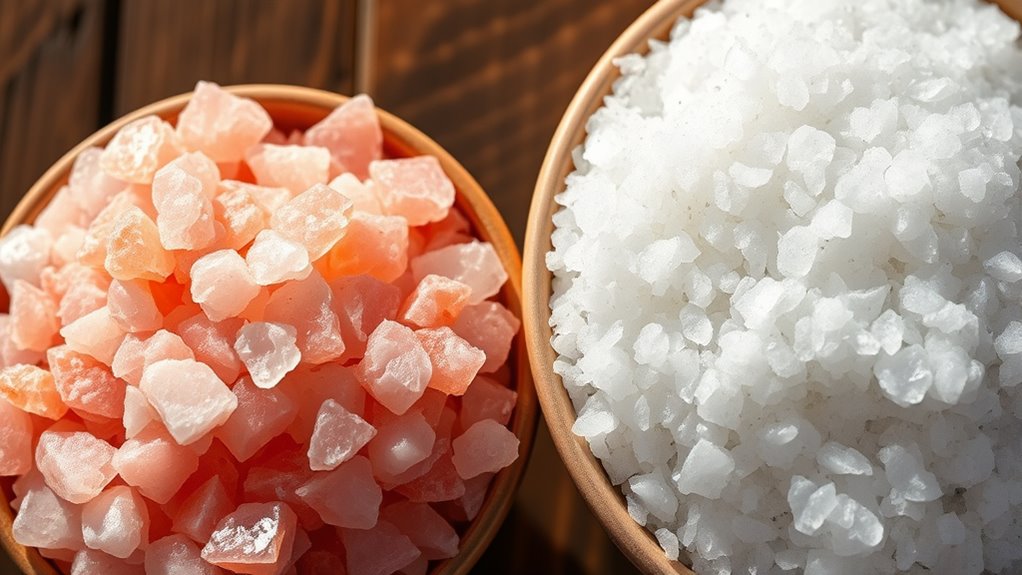
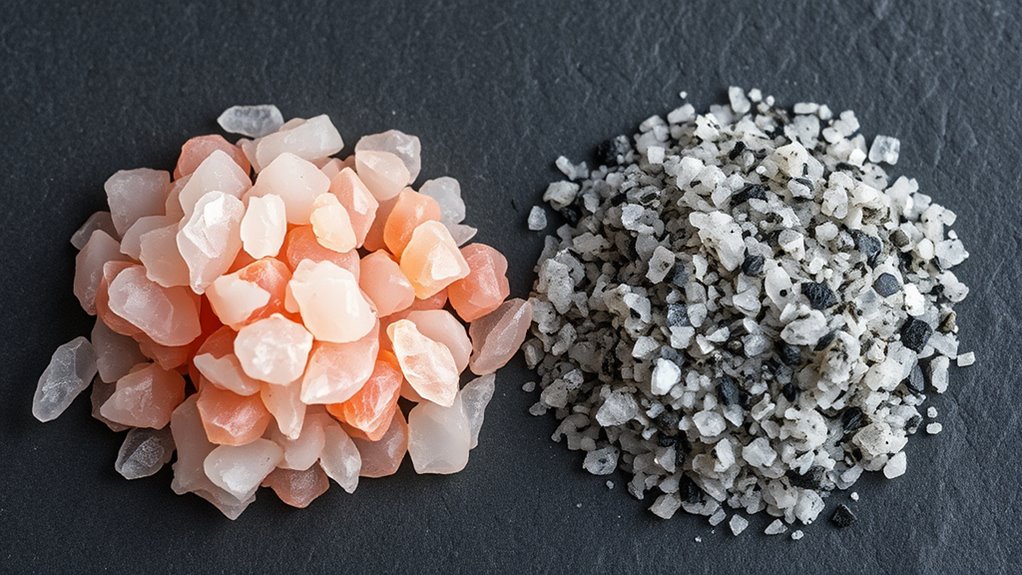
When you compare pink salt and Celtic salt, their color and texture differences immediately stand out. Pink salt, like Himalayan salt, ranges from light pink to deep red due to its iron content, and it usually has a smooth, fine to coarse texture.
In contrast, Celtic salt boasts a distinctive greyish hue with hints of purple and a moist appearance that’s quite unique. The texture of Celtic salt is coarse and irregular, as its grains retain water from seawater, making it feel damp to the touch.
Pink salt’s dry, crystalline structure makes it easy to handle and ideal for finishing dishes, while Celtic salt’s moisture and larger grains work well for grinding or adding texture. These differences affect how you use each salt in your cooking.
Flavor Profiles and Cooking Uses of Pink and Celtic Salt
If you want to elevate your dishes with subtle yet distinct flavors, pink salt and Celtic salt offer unique profiles that can transform your cooking. Pink salt has a mild, mineral-tinged flavor with a fine texture, perfect for everyday cooking and finishing seafood or vegetables.
Celtic salt presents a complex, briny taste with a moist, coarse texture, ideal for seasoning, garnishing salads, meats, and enhancing baked goods.
| Salt Type | Flavor Profiles | Culinary Uses |
|---|---|---|
| Pink Salt | Mild, mineral-tinged | Everyday cooking, finishing |
| Celtic Salt | Complex, briny | Seasoning, garnishing, baking |
| Texture | Fine | Coarse, moist |
| Best For | Seafood, vegetables, meats | Salads, meats, baked goods |
| Unique Trait | Subtle earthiness | Crunchy texture, depth |
Health Benefits of Pink Salt and Celtic Salt
You’ll find that both pink salt and Celtic salt offer unique mineral profiles that can support your hydration and electrolyte balance. Pink salt’s trace minerals may aid detoxification.
Celtic salt’s magnesium content helps maintain fluid balance.
Let’s explore how these differences might impact your health.
Mineral Content Comparison
Although both pink salt and Celtic salt offer essential minerals, pink salt stands out due to its richer and more diverse mineral content. Pink salt, like Himalayan salt, contains over 80 trace minerals such as calcium, magnesium, potassium, and iron, which contribute to its unique color and potential health benefits.
In contrast, Celtic salt has about 34 trace minerals and retains more moisture, influencing its mineral preservation.
Pink salt is roughly 98% sodium chloride with minimal moisture, while Celtic salt contains about 33% sodium with higher moisture content.
This difference means pink salt provides a more extensive mineral profile, often considered better for detoxification and mineral replenishment.
Hydration And Electrolyte Support
Beyond their mineral content, pink salt and Celtic salt also play a significant role in supporting hydration and electrolyte balance. Both salts contain essential trace minerals like magnesium and potassium, which help maintain your body’s fluid balance.
Celtic salt’s higher moisture content may enhance mineral absorption, potentially boosting hydration more effectively than dry salts.
After exercise or during dehydration, adding these salts to your diet can aid in replenishing lost electrolytes, supporting overall electrolyte balance. However, you should use them in moderation, keeping within daily sodium limits to avoid imbalances.
Incorporating pink or Celtic salt thoughtfully can contribute to better hydration and electrolyte support, making them valuable additions to a balanced diet.
Potential Detoxification Benefits
When you include pink salt or Celtic salt in your routine, you tap into their trace minerals, which may support your body’s natural detoxification processes. Both salts offer mineral content that plays a role in promoting detoxification. Himalayan pink salt contains magnesium and potassium, which help your body eliminate toxins through sweat and urine.
Celtic salt’s high magnesium content not only aids muscle relaxation but also encourages waste elimination. Its moist texture is thought to enhance skin detoxification when used in baths.
While these trace minerals contribute essential benefits, it’s important to know that scientific evidence on direct detoxification effects is limited.
Ultimately, pink and Celtic salts provide valuable minerals that support your body’s overall health rather than acting as primary detox agents.
Common Culinary and Therapeutic Applications
When you cook with pink salt, you’ll notice its unique mineral flavor enhances your dishes, especially as a finishing touch.
Celtic salt, on the other hand, shines in therapeutic uses like mineral baths and sore throat relief thanks to its moisture content.
Understanding how each salt works in cooking and wellness will help you choose the right one for your needs.
Cooking Uses Comparison
Although both pink salt and Celtic salt add unique flavors and minerals to your dishes, their distinct textures and moisture levels shape how you use them in the kitchen and for therapeutic purposes.
Pink salt, like Himalayan salt, offers a mild mineral flavor and vibrant color, making it perfect for seasoning, curing, and cooking on salt blocks.
Celtic salt’s coarse, moist grains excel as a finishing salt, enhancing dishes just before serving and adding a briny touch to salt-rimmed glasses. Its moisture also makes it ideal for brining, pickling, and enriching baked goods.
When considering cooking uses, pink salt suits gourmet presentations and delicate seasoning, while Celtic salt’s texture and mineral content provide depth and moisture in recipes, helping you tailor your culinary creations with precision.
Therapeutic Benefits Overview
Beyond their culinary roles, pink salt and Celtic salt offer a range of therapeutic benefits that might complement your wellness routine. Both contain trace minerals that contribute to their unique mineral content, supporting overall health when used in moderation.
Pink salt is popular in salt therapy, using lamps and inhalers to promote respiratory relief and relaxation.
Meanwhile, Celtic salt’s high mineral content and natural moisture make it ideal for detox baths and topical applications, helping soothe and nourish your skin.
Additionally, both salts may assist in hydration and electrolyte balance, though scientific support varies. Incorporating these salts thoughtfully can provide subtle health benefits while enhancing your daily self-care and cooking practices.
Application Methods Differences
Since pink salt and Celtic salt have distinct textures and mineral compositions, their culinary and therapeutic uses differ markedly.
When you cook, pink salt’s fine or coarse salt grains work well for grinding over dishes or using in salt blocks, which you can heat or chill to serve cheeses and meats.
Celtic salt’s larger, coarse grains suit direct seasoning, baking, and brining, but its higher moisture content makes it less ideal for salt blocks.
For therapeutic application methods, you can dissolve pink salt in water to make salt soles or add it to bath salts.
Celtic salt often goes into saline nasal sprays and soaking solutions for congestion relief.
Both salts support inhalers and mineral-infused water, but pink salt’s dry form lends itself better to salt lamps and inhalation products.
How to Choose Between Pink Salt and Celtic Salt
When deciding between pink salt and Celtic salt, you should weigh their unique qualities and how they fit your needs. Pink salt, with its striking pink hue, boasts over 80 trace minerals and a higher sodium content, making it great for cooking versatility and health uses.
Pink salt’s vibrant color and rich mineral profile make it a versatile choice for cooking and health.
Celtic salt, grey and moist, offers a milder flavor and valuable minerals like magnesium. It is ideal for finishing dishes and therapeutic purposes.
Consider your taste preferences, desired mineral content, and environmental impact—Himalayan pink salt is mined and shipped from Pakistan, while Celtic salt is naturally harvested from the French coast.
Your choice depends on whether you prioritize mineral richness, texture, flavor, or sustainability, helping you select the salt that best complements your lifestyle and culinary goals.
Tips for Using Salt Wisely in Your Diet
Although salt adds essential flavor to your meals, you should use it sparingly to keep your sodium intake within healthy limits—ideally no more than 1,500 mg per day, or about a teaspoon of salt. To enhance taste without overdoing sodium, try fresh herbs and spices.
When selecting salt, consider mineral-rich options like Celtic or Himalayan salt, which offer added minerals but differ in sodium content—Celtic salt has about 33% sodium, while Himalayan salt contains around 98%. Keep these differences in mind to avoid exceeding your sodium limit.
Always read labels carefully and tailor your salt use to your personal health needs. By balancing flavor and nutrition, you can enjoy salt’s benefits without compromising your health.
Frequently Asked Questions
Which Is Better, Pink, Himalayan or Celtic Salt?
You’ll find Himalayan salt better for mineral supplementation due to its purity, while Celtic salt’s natural, moist texture suits finishing dishes and baths.
It really depends on your taste and how you plan to use it.
Is Celtic Salt the Healthiest Salt?
Celtic salt might be healthier thanks to its minerals and lower sodium, but no salt is a magic cure.
You’ll still want to use it in moderation and focus on a balanced diet for overall health.
What Does Putting Celtic Salt Under Your Tongue Do?
Like catching lightning in a bottle, putting Celtic salt under your tongue may help you absorb minerals quickly, balance electrolytes, and boost hydration.
Though anecdotal, it might also stimulate saliva and support digestion.
Is Celtic Salt Good for Pregnancy?
Celtic salt can be good during pregnancy if you use it sparingly and choose high-quality sources. It offers minerals but watch your sodium intake and always check with your healthcare provider before adding it to your diet.
Conclusion
So, are pink salt and Celtic salt the same? Well, unless you enjoy confusing your taste buds and mineral charts, probably not. One’s from Himalayan mountains, the other from the Atlantic coast—like comparing a mountain hike to a beach stroll.
Both add flair to your food and bragging rights at dinner parties. So, pick your salt wisely, or just toss them both in and call it gourmet chaos.
When it comes down to choosing between pink salt and Celtic salt, understanding their origins and unique mineral content can enhance your culinary experience. Whether you prefer Himalayan pink salt or the mineral-rich Celtic salt, both bring distinct flavors and benefits to the table.