7 Key Differences Between Sea Salt and Epsom Salt
You’ll find sea salt is mainly sodium chloride with various trace minerals, perfect for cooking and skin exfoliation, while Epsom salt is pure magnesium sulfate, ideal for muscle relief and detox baths. Their crystal size and texture differ—sea salt crystals are coarse, Epsom salt dissolves quickly.
Sea salt hydrates skin; Epsom salt relaxes muscles deeply. Both need airtight, moisture-free storage to keep quality.
Keep exploring to discover which suits your needs best and how to use them properly.
What Are Sea Salt and Epsom Salt Made Of?
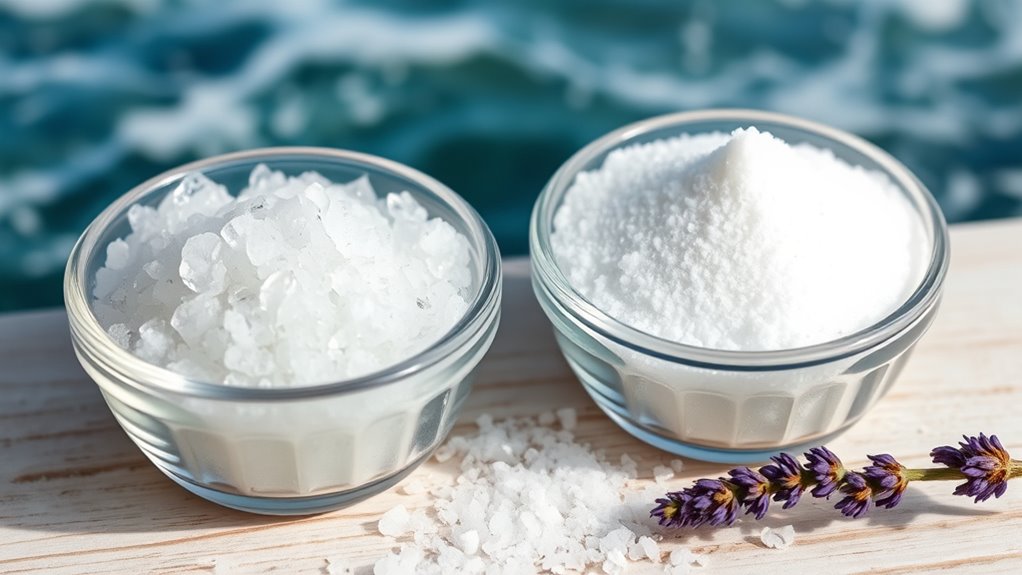
Although both are called salts, sea salt and Epsom salt have very different compositions. Sea salt mainly consists of sodium chloride, derived from evaporated seawater. It contains a varied mineral content, including trace minerals like magnesium, calcium, and potassium, which depend on the seawater’s source and environmental factors.
Sea salt is primarily sodium chloride with trace minerals varying by seawater source.
This diverse mineral profile gives sea salt unique properties.
On the other hand, Epsom salt is a pure chemical compound known as magnesium sulfate. It features a consistent crystalline structure composed of magnesium, sulfur, and oxygen.
Unlike sea salt, Epsom salt contains no sodium or chloride ions. So, while sea salt’s mineral content varies naturally, Epsom salt’s chemical formula (MgSO₄·7H₂O) remains stable regardless of its manufacturing origin.
How Do Their Structures and Textures Differ?
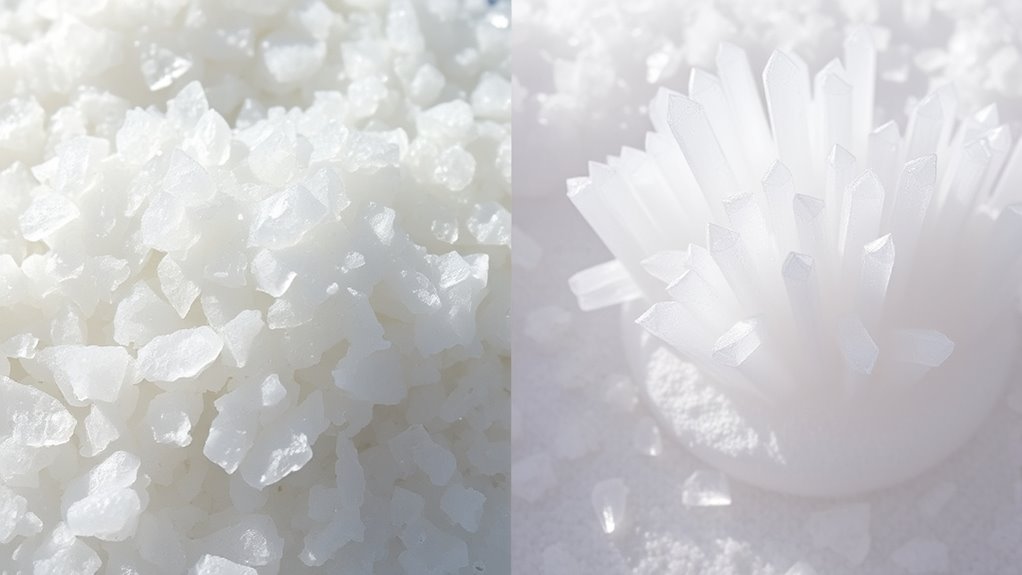
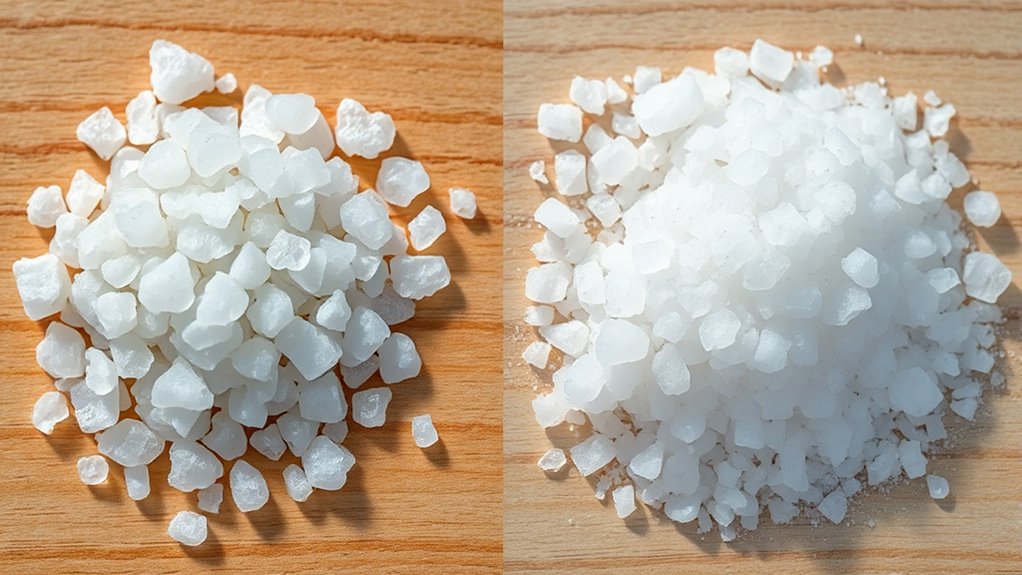
You’ll notice Epsom salt has fine, smooth crystals that dissolve quickly, while Dead Sea salt features coarser, moist grains that break down more slowly.
These textural differences affect how each salt behaves in water and how you might use them.
Understanding their structures helps you choose the right salt for your needs.
Crystal Structure Comparison
When you compare their crystal structures, Epsom salt and Dead Sea salt reveal distinct differences that affect their texture and use. Epsom salt features smooth, transparent magnesium sulfate crystals with a resilient crystalline form. These fine granules are less hygroscopic, enabling quick dissolution and easy spreading in baths.
In contrast, Dead Sea salt consists of larger, coarser mineral grains with a crumbly texture that absorb moisture due to their hygroscopic nature. This salt composition favors exfoliation and gradual mineral release during dissolution.
While Epsom salt’s structure supports swift mineral delivery, Dead Sea salt’s irregular crystals enhance tactile exfoliation and sustained benefits.
Understanding these crystal structure differences helps you choose the right salt for your specific bath or skincare needs, balancing texture with mineral absorption.
Texture and Solubility
Because their crystal structures differ, Epsom salt and Dead Sea salt vary considerably in texture and solubility.
Epsom salt features fine, crystalline granules with a uniform structure, giving it a smooth texture and high solubility. Its quick dissolution rate means it leaves no residue, making it perfect for rapid bath relief.
In contrast, Dead Sea salt has larger, coarser grains with irregular shapes, resulting in a slower dissolution rate. This slower solubility allows for enhanced exfoliation and mineral absorption, as it often leaves a mineral-rich residue behind.
Additionally, Dead Sea salt’s hygroscopic nature causes it to retain moisture, affecting its texture and storage.
What Unique Minerals Are in Sea Salt and Epsom Salt?
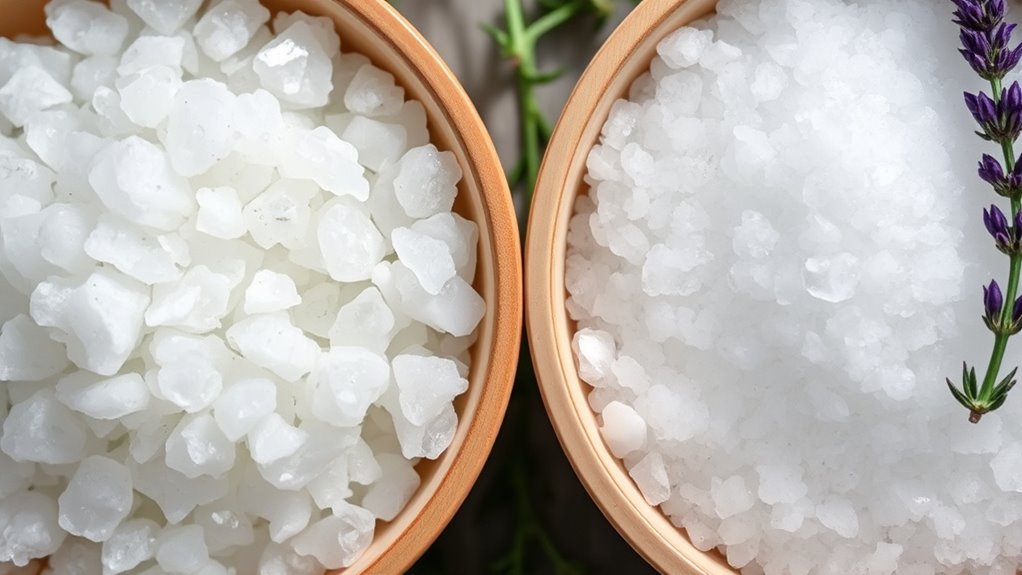
What sets sea salt and Epsom salt apart are the unique minerals each contains. Sea salt boasts a rich mineral profile, including magnesium, calcium, iodine, and trace minerals like zinc, iron, and potassium. These contribute not only to its flavor but also to various health benefits.
On the other hand, Epsom salt mainly consists of magnesium and sulfate, lacking the broader range of trace minerals found in sea salt. This purity focuses its therapeutic benefits on muscle relaxation and inflammation reduction.
While sea salt offers a complex mix of minerals beneficial for metabolic functions, Epsom salt’s concentrated magnesium sulfate content makes it distinct in purpose and composition.
Understanding these differences helps you choose the right salt for your specific needs.
How Do Sea Salt and Epsom Salt Affect Skin and Muscles?
When you use sea salt on your skin, its minerals and texture help hydrate and gently exfoliate, improving skin texture.
If you soak in Epsom salt, its magnesium sulfate works quickly to relax muscles and reduce soreness.
Understanding these differences lets you choose the best salt for your skin or muscle needs.
Skin Benefits Comparison
Although both sea salt and Epsom salt support skin health and muscle recovery, they work in different ways that might affect how you use them. Sea salt, rich in minerals like magnesium, calcium, and potassium, excels at exfoliation and hydration, improving your skin texture and promoting skin renewal. Its coarse grains physically remove dead skin cells, making it ideal for treating skin conditions such as eczema and psoriasis.
On the other hand, Epsom salt’s high magnesium sulfate content absorbs quickly into your skin, soothing skin irritation and reducing inflammation. While sea salt primarily hydrates and detoxifies, Epsom salt focuses more on calming irritated skin.
Knowing these differences helps you choose the right salt to enhance your skin health effectively.
Muscle Relief Effects
Because both sea salt and Epsom salt offer unique muscle relief benefits, understanding their differences can help you choose the right one for your needs. Epsom salt, rich in magnesium sulfate, excels at deep tissue muscle relaxation and easing sore muscles by penetrating the skin and reducing inflammation.
Sea salt’s mineral content, including calcium and potassium, soothes muscle tension and improves skin elasticity.
When used as bath salts, both provide muscle relief, but in distinct ways:
- Epsom salt’s magnesium regulates nerve function and targets muscle fatigue
- Sea salt’s coarse granules act as a gentle exfoliant to stimulate blood flow
- Epsom salt penetrates deeply for intense muscle relaxation
- Sea salt calms surface muscle tension while nourishing skin
Choosing between them depends on whether you want deep tissue relief or gentle muscle soothing.
What Can You Use Sea Salt and Epsom Salt For?
If you want to enhance your cooking or skincare routine, sea salt offers natural minerals and a coarse texture perfect for recipes, scrubs, and bath soaks. You can use sea salt for skin exfoliation to remove dead cells and boost skin care naturally. Its mineral-rich bath benefits also help revitalize your skin.
On the other hand, Epsom salt excels in muscle relaxation and pain relief due to its magnesium sulfate content. Adding Epsom salt to your detoxification baths or foot soaks provides therapeutic benefits by soothing soreness and reducing inflammation. While sea salt enhances culinary and exfoliating experiences, Epsom salt supports recovery and wellness routines. Both salts serve distinct purposes, letting you choose based on whether you seek skin care or therapeutic muscle relief.
Which Salt Should You Choose for Your Needs?
When deciding between sea salt and Epsom salt, you should consider your specific needs and desired benefits. Both natural salts offer unique therapeutic benefits, so choosing depends on your goals.
- Pick sea salt for skin exfoliation, hydration, and mineral content that nourishes your skin.
- Use Epsom salt for muscle relief, reducing inflammation, and detox baths due to its magnesium sulfate.
- Sea salt suits health and beauty routines focusing on mineral supplementation and skin rejuvenation.
- Epsom salt’s quick dissolution makes it ideal for targeted muscle recovery without residue.
How Should You Use and Store Sea Salt and Epsom Salt?
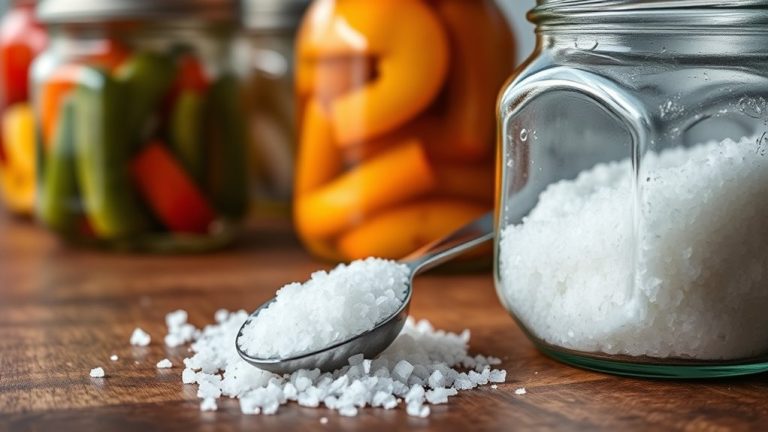
Now that you know which salt suits your needs, it’s important to understand how to use and store sea salt and Epsom salt properly. Store sea salt in a cool, dry place inside an airtight container to prevent moisture absorption and clumping. Avoid humidity and heat, which can cause the salt to become grainy or dissolve prematurely.
For Epsom salt, keep it sealed in a cool, dry environment to maintain its crystalline structure and maximize shelf life. Proper storage for both salts includes sealing containers tightly after each use to preserve quality and prevent contamination.
Also, keep them away from direct sunlight and strong odors to ensure preservation. Following these storage tips will help you get the most out of your sea salt and Epsom salt.
Frequently Asked Questions
What Is the Difference Between Epsom Salt and Sea Salt?
You’ll find Epsom salt offers magnesium for muscle relief, while sea salt provides sodium and trace minerals for skin care.
They differ in composition, uses, and how quickly they dissolve in water.
Why Did Jessica Biel Soak in 20 Lbs of Epsom Salt?
Jessica Biel soaked in 20 pounds of Epsom salt to deeply relax her muscles and ease stress. You’ll find this intense soak helps reduce inflammation, promote detox, and speed muscle recovery after physical activity or tension.
This method is especially beneficial for those who experience muscle soreness or chronic tension. The magnesium in Epsom salt can be absorbed through the skin, providing relief and relaxation. It’s a natural and effective way to rejuvenate the body and mind.
Are Epsom Salts Safe in Pregnancy?
You can use Epsom salts safely in pregnancy for baths, but about 80% of pregnant women consult their doctor first.
Don’t ingest them unless a healthcare provider approves to avoid risks like dehydration or electrolyte imbalance.
Is Epsom Salt or Sea Salt Better for Your Skin?
Epsom salt’s great if you want to soothe inflammation and relax muscles, while sea salt works better for exfoliating and detoxifying your skin.
Choose based on whether you need calming relief or a deep scrub.
Conclusion
Whether you’re soaking in a warm bath to soothe tired muscles or sprinkling salt on your favorite dish, sea salt and Epsom salt each offer unique benefits. You’ll appreciate sea salt’s natural minerals and coarse texture for culinary and skin care uses, while you’ll rely on Epsom salt’s magnesium-rich crystals to relax and rejuvenate your body.
Choose wisely, store properly, and enjoy the simple, soothing rituals that both salts bring to your daily routine. Understanding the key differences between sea salt and Epsom salt helps you maximize their benefits. Incorporate sea salt for flavor and skin nourishment, and use Epsom salt for muscle relief and relaxation.