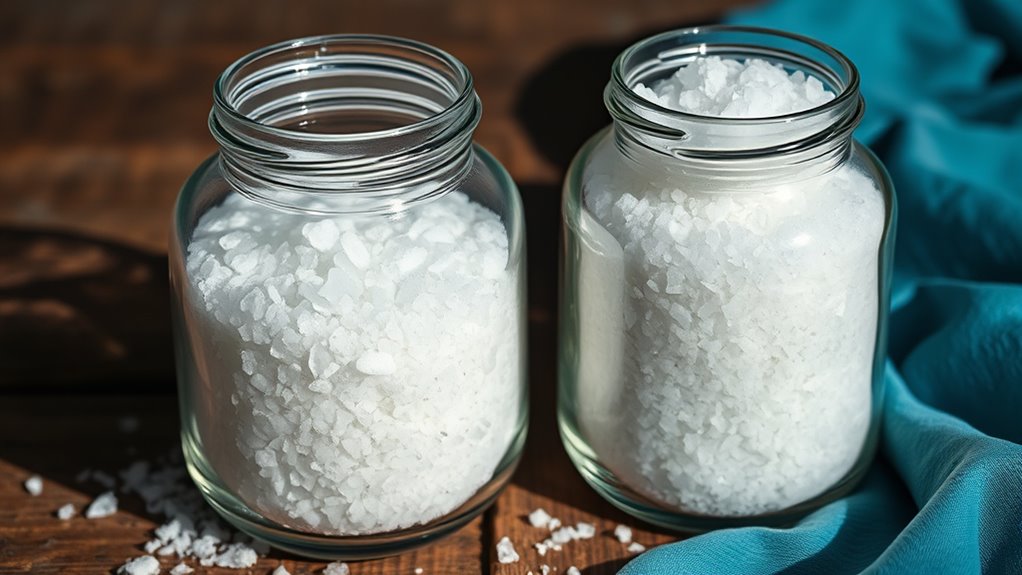
Are Sea Salt and Epsom Salt the Same? Key Differences Explained
You shouldn’t treat sea salt and Epsom salt as the same because they’re chemically different. Sea salt is mostly sodium chloride with trace minerals, great for skin exfoliation and mineral replenishment. Epsom salt, on the other hand, is magnesium sulfate, excellent for muscle relaxation and reducing inflammation.
They dissolve differently and serve unique health benefits, so swapping them changes results. If you want to understand how to choose and use each effectively, there’s more to explore.
Chemical Differences Between Sea Salt and Epsom Salt
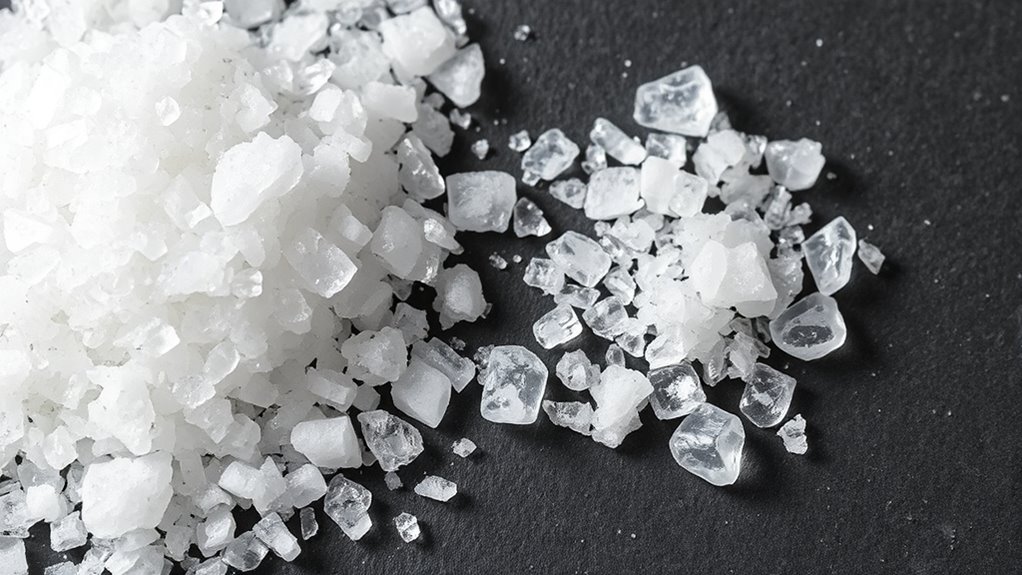
Although both are called “salt,” sea salt and Epsom salt differ markedly in their chemical makeup. Sea salt’s chemical composition is primarily sodium chloride (NaCl), accompanied by trace minerals like calcium, potassium, and magnesium, which vary based on its source.
In contrast, Epsom salt’s molecular formula is MgSO₄·7H₂O, revealing it as hydrated magnesium sulfate. This hydration gives Epsom salt a unique crystalline structure, distinct from the simpler lattice of sea salt.
You’ll notice Epsom salt dissolves quickly due to its magnesium sulfate content, providing specific mineral benefits, while sea salt dissolves more slowly and leaves behind mineral residues.
Understanding these differences in mineral content and chemical composition helps you appreciate why each “salt” serves different purposes despite their similar appearances.
What Is Sea Salt? How Is It Made?
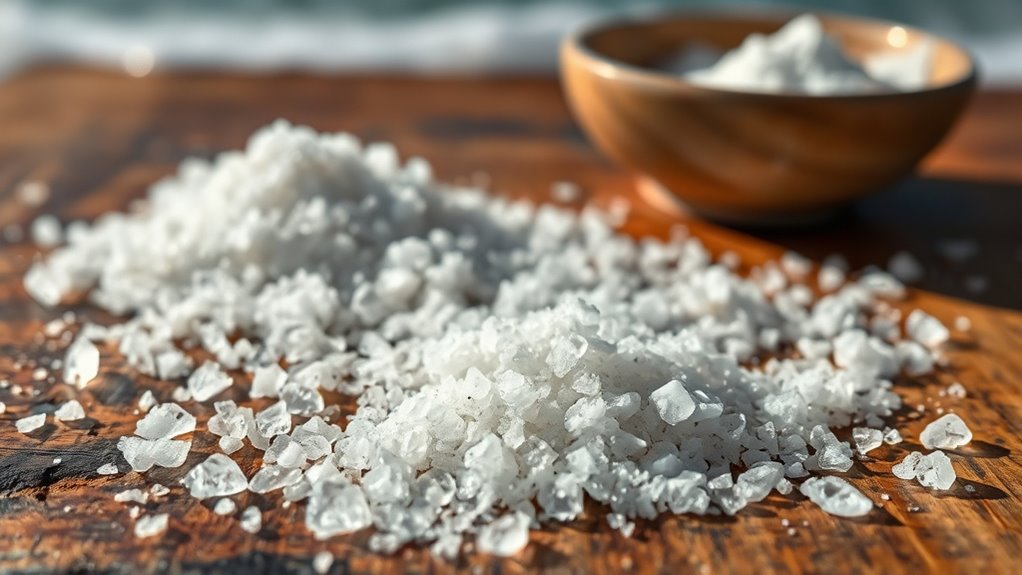
When you look at sea salt, you’re seeing the result of seawater slowly evaporating under the sun, leaving behind mineral-rich crystals.
This natural process usually happens in salt pans or lagoons where the water gently dries up.
Understanding this origin helps you appreciate why sea salt contains a variety of minerals that differ depending on where it’s harvested.
Sea Salt Origins
How does sea salt come to your table? Sea salt forms when seawater undergoes evaporation, leaving behind mineral-rich crystals. The harvesting process takes place in salt pans—shallow ponds where solar evaporation concentrates the salt.
The mineral content and texture of sea salt depend heavily on geographic location and water composition, giving each batch unique qualities.
| Factor | Description |
|---|---|
| Harvesting Process | Solar evaporation in salt pans or ponds |
| Mineral Content | Varies by water composition and location |
| Crystal Formation | Results in mineral-rich crystals |
This natural origin means sea salt contains trace minerals like magnesium, calcium, potassium, and iodine. You’ll find it used not only in cooking but also in skincare and mineral baths, thanks to its natural health benefits.
Evaporation Process
Understanding sea salt’s origins sets the stage for exploring its creation through evaporation. Sea salt forms when seawater undergoes an evaporation process that leaves behind mineral-rich crystals. You can witness natural evaporation, where sunlight and wind gradually remove water, or industrial methods speed it up.
This process concentrates the mineral content, giving sea salt its unique mineral profile. Here’s what you should know about this evaporation process:
- Seawater serves as the raw material, packed with diverse minerals.
- Evaporation removes water, intensifying mineral composition.
- Mineral content varies by location and environment.
- Natural evaporation relies on climate conditions.
- Harvested sea salt undergoes minimal processing before use.
What Is Epsom Salt? Where Does It Come From?
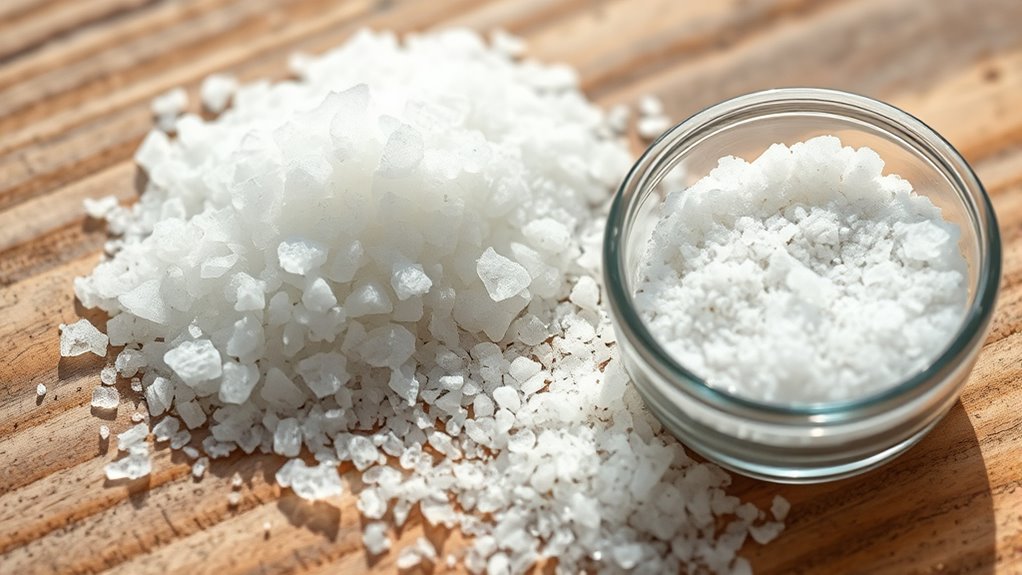
Although you might associate the name with common table salt, Epsom salt is quite different; it’s actually magnesium sulfate (MgSO₄·7H₂O), a compound first discovered in natural spring waters in Epsom, Surrey, England.
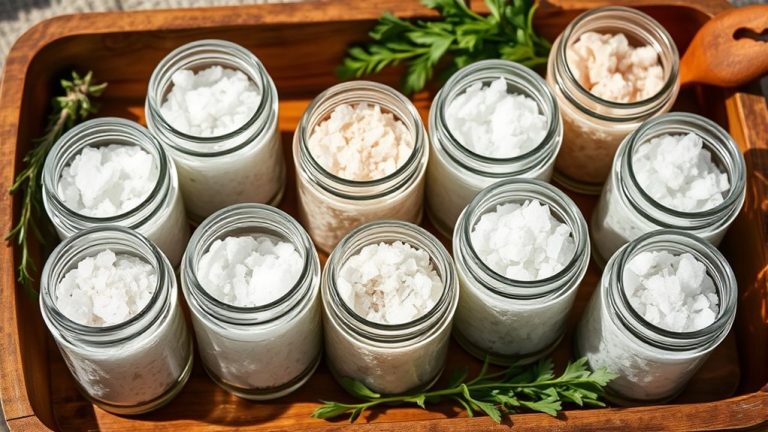
Epsom salt appears as smooth, crystalline, colorless or white crystals that dissolve quickly in water.
Its chemical formula reflects its composition, containing magnesium, sulfur, and oxygen, but no sodium chloride like table salt.
You’ve likely seen it used for therapeutic purposes, as it’s long been valued for its medicinal qualities.
Since the 17th century, people have relied on Epsom salt for muscle relaxation and detoxification.
Its unique properties make it distinct from regular salt, emphasizing its role in health and wellness rather than seasoning.
Mineral Content Differences and Health Benefits
You’ll notice Epsom salt mainly offers magnesium and sulfate, perfect for muscle relief and detox.
Sea salt, on the other hand, contains a mix of minerals like sodium, iodine, and zinc that support skin health and hydration.
Understanding these differences helps you choose the right salt for your therapeutic and skincare needs.
Mineral Composition Comparison
Since Epsom salt and sea salt contain different minerals, their health benefits vary considerably. Epsom salt’s chemical composition is mainly magnesium sulfate, providing consistent mineral content.
Sea salt, however, consists mostly of sodium chloride and includes various trace minerals like calcium and potassium. This mineral diversity depends on the salt’s water source, offering broader benefits.
Consider these differences:
- Epsom salt: primarily magnesium sulfate
- Sea salt: predominantly sodium chloride
- Sea salt contains calcium, potassium, and bromide
- Mineral diversity in sea salt supports skin hydration
- Epsom salt’s consistent chemical composition targets muscle relaxation
Understanding these distinctions helps you choose the salt that fits your needs, whether you want specific magnesium benefits or a wider range of trace minerals.
Therapeutic Health Benefits
Understanding the distinct mineral compositions of Epsom salt and sea salt reveals how each supports your health differently. Epsom salt, rich in magnesium sulfate, promotes muscle relaxation, reduces inflammation, and aids enzymatic functions essential for muscle recovery and stress relief.
On the other hand, sea salt’s diverse mineral content—including sodium chloride, zinc, iodine, and calcium—enhances skin hydration and supports detoxification. These minerals improve blood circulation and help alleviate skin conditions like psoriasis and eczema.
Through mineral absorption, both salts deliver therapeutic benefits, but Epsom salt mainly targets muscle and nerve function, while sea salt excels in skin detoxification and long-term skin health. Choosing between them depends on whether you seek muscle relief or *all-encompassing* skin support.
Skin Care Effects
Although both sea salt and Epsom salt benefit your skin, their mineral differences shape how they work. Sea salt contains a wide range of minerals like magnesium, calcium, and potassium, enhancing skin hydration, elasticity, and detoxification. Epsom salt, rich in magnesium and sulfate, focuses more on reducing inflammation and soothing irritated skin.
Here’s how their skin care effects differ:
- Sea salt promotes skin health by supporting hydration and elasticity
- Its diverse minerals aid in detoxification and treating conditions like eczema
- Epsom salt’s magnesium reduces inflammation and soothes muscle soreness
- It helps alleviate dryness and skin itchiness through transdermal absorption
- Both salts improve skin health, but sea salt offers broader mineral benefits
Choosing between them depends on your specific skin care needs.
Sea Salt vs. Epsom Salt: Uses in Baths and Skincare
How do sea salt and Epsom salt differ when it comes to baths and skincare?
Sea salt, rich in sodium chloride and trace minerals, offers excellent exfoliation and detoxification benefits. Its coarser texture helps remove dead skin cells, leaving your skin renewed. When you soak in a sea salt bath, you also get mineral replenishment that nourishes your skin over time.
On the other hand, Epsom salt, made of magnesium sulfate, dissolves quickly and excels at muscle relaxation. It’s ideal for soothing sore muscles and providing rapid magnesium absorption during baths.
For skincare, choose sea salt if you want exfoliation and mineral benefits, but opt for Epsom salt when you need therapeutic relief and muscle relaxation. Both salts enhance baths differently, so pick based on your personal needs.
Storage Needs and Handling Tips for Sea Salt vs Epsom Salt
Since sea salt tends to absorb moisture more readily than Epsom salt, you’ll want to store it carefully to keep it dry and free-flowing.
Epsom salt’s crystalline structure makes it less prone to moisture absorption, but both salts benefit from proper storage conditions.
To preserve quality and prevent clumping, keep these tips in mind:
- Store both salts in airtight containers to block humidity.
- Keep sea salt in a cool, dry place to avoid moisture retention.
- Avoid direct sunlight that can degrade salt quality.
- Check containers regularly for any signs of clumping.
- Use moisture absorbers if you live in a humid environment.
Following these guidelines ensures excellent quality preservation and prevents issues caused by moisture absorption during storage.
Can You Substitute Sea Salt and Epsom Salt in Recipes or Baths?
When choosing between sea salt and Epsom salt for your recipes or baths, you need to think about their different compositions and effects. Sea salt mainly contains sodium chloride, while Epsom salt is magnesium sulfate, making their mineral composition quite distinct. This difference means substitution isn’t always straightforward.
Sea salt’s coarser texture and slower solubility suit mineral-rich baths and skin detoxification.
Epsom salt dissolves quickly and excels in muscle relaxation and exfoliation. Using one instead of the other can change the bath salts’ benefits and the outcome of recipes.
Choosing Between Sea Salt and Epsom Salt for Your Health and Beauty
Understanding the distinct benefits of sea salt and Epsom salt helps you make better choices for your health and beauty routines. Sea salt, rich in trace minerals, excels in skin health and exfoliation, while Epsom salt, made of magnesium sulfate, focuses on muscle relaxation and detoxification.
When deciding which to use, consider these natural remedies:
- Use sea salt for gentle exfoliation and replenishing skin minerals
- Choose Epsom salt to relieve muscle tension and promote magnesium absorption
- Sea salt’s slower dissolution benefits scrubs and baths for skin nourishment
- Epsom salt dissolves quickly, ideal for detoxifying baths without residue
- Both offer unique mineral benefits tailored to your specific wellness needs
Frequently Asked Questions
Are Epsom Salts Just Sea Salt?
No, Epsom salts aren’t just sea salt. You’ll find Epsom salts made of magnesium sulfate, while sea salt contains sodium chloride plus other minerals.
They come from different sources and serve different purposes in baths.
Are Epsom Salts Safe in Pregnancy?
Epsom salts can be your pregnancy’s gentle friend, easing muscle cramps and swelling safely when you soak occasionally.
Just don’t ingest them or use on broken skin, and always check with your healthcare provider first.
Which Is Better, Epsom or Dead Sea Salt for Joint Pain?
You’ll find Dead Sea salt better for joint pain because its diverse minerals offer all-encompassing, long-lasting relief.
Epsom salt helps too, mainly by relaxing muscles with magnesium sulfate, but Dead Sea salt’s benefits go beyond that.
What Salt Is Best for Bath Healing?
For bath healing, you’ll want Epsom salt. It’s packed with magnesium sulfate, which soothes sore muscles and reduces inflammation quickly, making your bath more relaxing and effective for recovery than other salts.
Conclusion
You might think sea salt and Epsom salt are the same, but they’re not—yet both bring unique benefits to your bath and beauty routine. Sea salt cleanses and refreshes your skin, while Epsom salt soothes muscles and eases tension.
So, whether you’re soaking tired limbs or seasoning a dish, knowing their differences helps you choose right.
In the end, both salts share a common goal: to nourish you, inside and out. Understanding the distinct properties of sea salt and Epsom salt ensures you get the most from their benefits in your wellness and self-care rituals.