
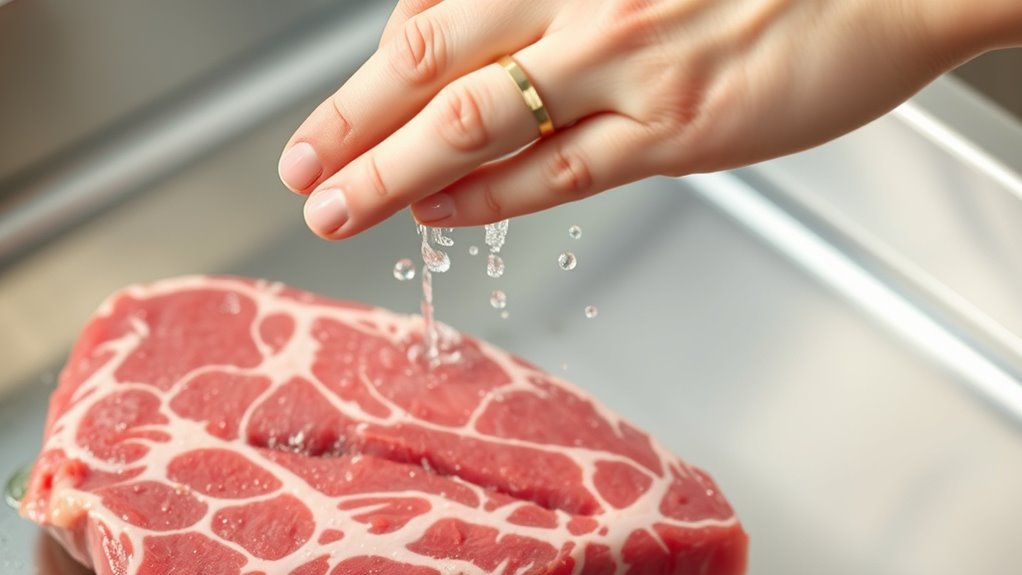
Should You Rinse Corned Beef Before Cooking?
Should You Rinse Corned Beef Before Cooking? This is a common question for many home cooks looking to prepare a delicious and well-balanced meal.
You should rinse corned beef before cooking to remove excess brine and reduce its saltiness, making the flavor more balanced and pleasant.
Rinsing cuts surface salt and curing agents, preventing an overpowering salty taste while improving hygiene. Whether it’s canned or fresh, rinsing helps create a cleaner, better-tasting dish.
If you want to learn the best methods and when rinsing is optional, exploring these details can really elevate your corned beef experience.
Why Rinse Canned Corned Beef Before Cooking?
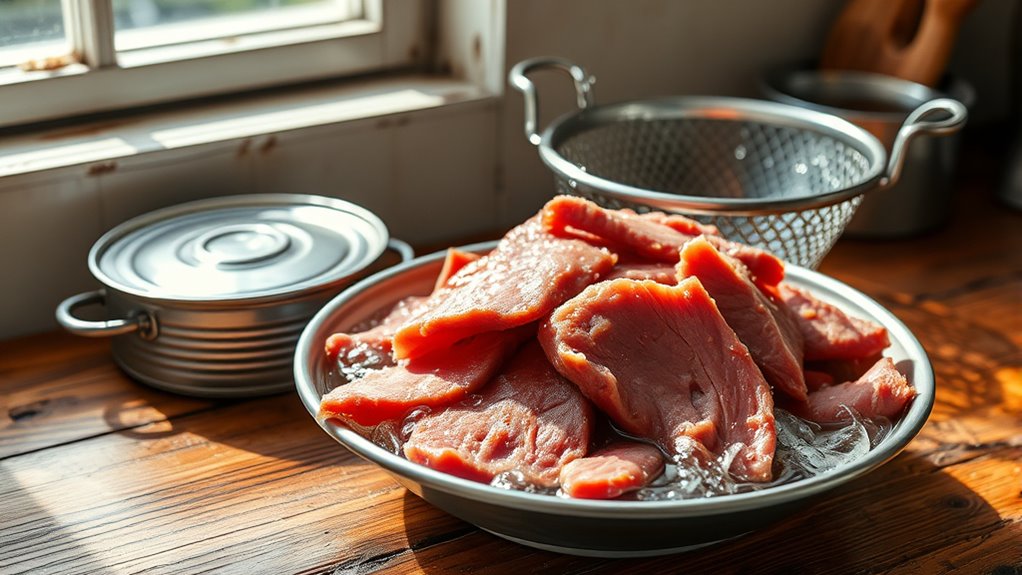
Although canned corned beef is convenient, you should always rinse it before cooking to reduce its high sodium content and remove excess salt and preservatives. Rinsing canned corned beef helps achieve sodium reduction, offering clear health benefits by lowering your salt intake. This simple preparation step washes away surface residues and any gel-like substances, promoting better food safety.
It also removes excess salt that can overpower your dish, giving you improved flavor control when seasoning. By rinsing, you ensure a balanced salt content, preventing an overly salty meal. Taking this extra step during preparation not only makes your corned beef healthier but also enhances the overall eating experience.
How Rinsing Affects Saltiness and Flavor
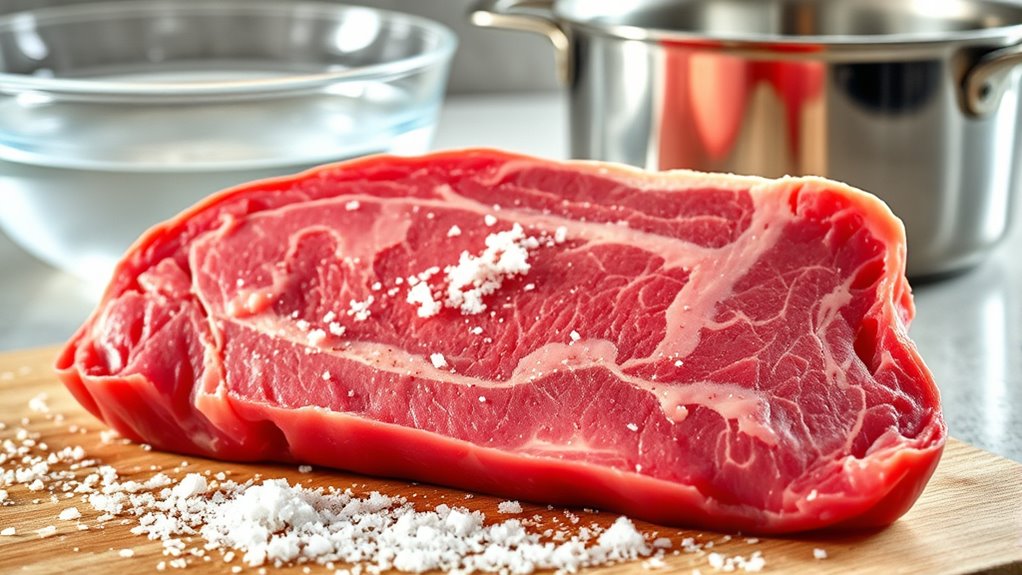
When you rinse corned beef, you remove the salty brine clinging to its surface, which directly reduces the overall saltiness of your dish. Rinsing cuts down the sodium content by up to 30%, offering significant salt reduction. If you skip rinsing, the brine and curing agents continue to infuse during cooking, intensifying saltiness and making the flavor more pronounced.
On the other hand, rinsing helps balance flavors, especially when the corned beef is heavily seasoned. It strips away excess surface salt, allowing the meat’s natural flavors and spices to shine without overpowering saltiness. By rinsing, you control saltiness and create a more balanced flavor profile, making your corned beef taste seasoned yet not overwhelmingly salty.
This simple step can dramatically affect your meal’s final flavor.
When to Rinse Canned Corned Beef (And When It’s Optional)

When you buy corned beef from the supermarket, rinsing is usually a good idea to cut down on extra salt and preservatives.
But if you get your corned beef fresh from a butcher, rinsing might be optional since it often has a more natural seasoning. Understanding where your corned beef comes from helps you decide when rinsing will improve your dish.
Supermarket Corned Beef
A simple rinse can make a big difference in the taste and healthiness of supermarket canned corned beef. When you rinse canned corned beef, you effectively reduce saltiness and lower its sodium content, creating a healthier preparation. Supermarket brands often leave surface residues and excess salt on the meat, which can overpower the flavor.
Here’s why rinsing is beneficial:
- It removes surface residues and preservatives, making the corned beef more palatable.
- It cuts down on excess salt, balancing the flavor without losing the meat’s essence.
- It helps those sensitive to sodium enjoy the dish without worrying about high salt intake.
Butcher Corned Beef
Although rinsing canned corned beef often helps reduce salt and remove preservatives, you usually don’t need to rinse butcher-sold corned beef since it’s pre-seasoned and less salty. When you buy butcher corned beef, its salt content is already balanced, so rinsing for salt reduction isn’t necessary.
However, if you prefer a cleaner surface or want to adjust flavor and texture slightly, you can rinse it. Keep in mind that rinsing might wash away some seasoning, affecting the cooking process. Your choice to rinse should consider freshness and dietary preferences, especially if you’re sensitive to salt or additives.
How to Rinse Canned Corned Beef Properly
Since canned corned beef often contains excess sodium and surface brine, you should rinse it under cool running water to improve its flavor and reduce saltiness. Proper rinsing corned beef removes surface residues and residual curing agents, enhancing food safety and taste.
Here’s how to do it right:
- Place the beef under cool running water and gently scrub the surface with your hands or a soft brush to remove excess sodium and brine.
- Drain thoroughly and repeat rinsing 2-3 times if the meat tastes too salty.
- After the final rinse, pat dry with paper towels to eliminate moisture before cooking.
This method effectively reduces salty flavor while maintaining the meat’s quality, ensuring a better culinary experience.
Rinsing vs. Soaking: Which Reduces Salt Better?
You can quickly rinse corned beef to wash away surface salt, but soaking it in cold water for 30 to 90 minutes removes more sodium overall.
Keep in mind, longer soaks might reduce salt further but could change the meat’s texture and flavor. Finding the right balance between rinsing and soaking helps you control salt without sacrificing taste.
Rinsing Effectiveness On Salt
When you rinse corned beef under cold water, you wash away surface salt and curing agents, cutting down on sodium. Rinsing targets surface salt and residual curing agents, but the salt absorbed deeper in the meat fibers remains largely untouched. To effectively reduce saltiness, consider these points:
- Rinsing with cold water removes surface salt and some residual curing agents, lowering initial sodium content.
- Soaking complements rinsing by diffusing salt from within the meat, enhancing overall sodium removal.
- Combining rinsing and soaking yields the best salt reduction, especially with longer soaking duration.
While rinsing alone provides quick salt reduction, soaking is necessary for a more thorough sodium removal, helping balance flavor without compromising texture.
Soaking Duration And Impact
Rinsing corned beef quickly removes surface salt, but soaking takes salt reduction a step further by drawing out salt from deeper inside the meat. When preparing corned beef, soaking duration in cold water plays a key role in leaching out salt and balancing saltiness.
Short soaking times (30 minutes to 2 hours) reduce salt effectively while preserving flavor and moisture. Longer soaking time may enhance salt reduction but risks flavor loss and moisture loss.
| Soaking Duration | Salt Reduction |
|---|---|
| 30 minutes | Moderate |
| 1-2 hours | Good |
| 4-6 hours | High |
| Overnight or more | Very high (risk of flavor and moisture loss) |
Balancing soaking duration helps you reduce salt while maintaining flavor from the brine solution.
Cooking Tips After Rinsing Canned Corned Beef
Although rinsing canned corned beef reduces its sodium content, you’ll want to drain it thoroughly to prevent excess moisture from diluting your dish. Proper rinsing under cool running water helps remove residual canning liquids and surface preservatives, making the beef healthier to eat without compromising flavor.
After rinsing and draining, follow these tips for the best final dish:
- Pat the beef dry with paper towels to eliminate any leftover moisture that could affect texture.
- Adjust seasoning carefully since rinsing reduces saltiness, allowing you to control flavor impact more precisely.
- Cook the beef over medium heat to retain moisture while enhancing taste without drying it out.
These steps ensure your corned beef benefits from sodium removal and delivers a balanced, satisfying meal.
Common Rinsing and Cooking Mistakes to Avoid
Mastering the art of preparing corned beef means knowing what to avoid as much as what to do. One common mistake is skipping rinsing corned beef, which helps with saltiness control by removing excess salt and surface residues. Another is overcooking or undercooking; both lead to tough meat.
Avoid short cooking time, as it prevents the meat from becoming tender. Pay attention to the water level in your pot—too little water dries out the beef, reducing tenderness. Also, be mindful when slicing: cutting with the grain makes the meat chewier, so always cut against the grain for a tender bite. Steering clear of these pitfalls ensures your corned beef is flavorful, juicy, and perfectly tender every time.
Rinsing in Popular Corned Beef Recipes
Why do many corned beef recipes call for rinsing the meat before cooking? Rinsing helps remove excess brine, residual curing agents, and surface residues that can make the beef overly salty or harsh in flavor.
Especially if you buy corned beef from a supermarket, the heavy brine may leave too much residual salt on the surface. Here’s why rinsing is a popular step in preparation:
- It reduces saltiness, balancing the seasoning and making the flavor more pleasant.
- It removes leftover curing agents, preventing an overpowering taste.
- It clears surface residues, ensuring a cleaner, fresher start to cooking.
Final Tips for Tender, Flavorful Canned Corned Beef
When you rinse canned corned beef thoroughly under cool water, you cut down its sodium and surface brine without stripping away its rich flavor. The rinsing process effectively diminishes salt while preserving the meat’s fully infused seasoning.
To get tender corned beef, use a proper cooking technique: slow cooking over low heat with the meat fully submerged. This method ensures flavorful slices and helps avoid tough meat.
Slow cook corned beef fully submerged over low heat for tender, flavorful slices every time.
Remember, rinsing corned beef is just the first step; slow cooking is essential for softness and taste. By combining salt reduction with gradual heat, you enhance the meat’s texture and flavor.
Follow these final tips to enjoy a healthier, tender, and delicious dish every time you cook corned beef.
Frequently Asked Questions
Do You Use the Liquid in the Corned Beef Package?
You can use the liquid to boost flavor, but if you want less salt, rinse the corned beef first.
It’s your call—keep it for taste or discard it to control saltiness in your dish.
Do You Rinse a Corned Beef Brisket Before Cooking It?
Yes, you should rinse a corned beef brisket before cooking it. Rinsing removes excess salt and surface brine, balancing flavor without losing the cured seasoning inside. This is especially important if the brisket is store-bought.
What Are the Common Mistakes in Cooking Corned Beef?
You often make mistakes by cooking corned beef at high heat, not using enough water, undercooking, slicing with the grain, or boiling vigorously.
These errors toughen the meat and ruin its flavor and tenderness.
Do Professional Chefs Wash Meat Before Cooking?
Yes, many professional chefs rinse meat before cooking to remove surface contaminants and excess salt. You’ll find it helps improve flavor and texture, though some skip rinsing to preserve natural juices and taste.
The choice often depends on the type of meat and the cooking method. Some chefs prefer to pat meat dry instead of rinsing to avoid water splatter and potential contamination. Ultimately, it’s a matter of personal preference and culinary tradition.
Conclusion
Rinsing canned corned beef before cooking is like hitting the refresh button—it helps wash away excess salt and lets the true flavors shine. You don’t always have to rinse, but when you do, it’s best done gently and briefly to keep that tender texture.
Remember, soaking reduces salt more but takes time. Follow simple rinsing steps, avoid common mistakes, and you’ll get juicy, flavorful corned beef every time. Rinsing corned beef before cooking is a useful tip to enhance taste and balance saltiness in your dish.