7 Best Types of Salt You Should Know
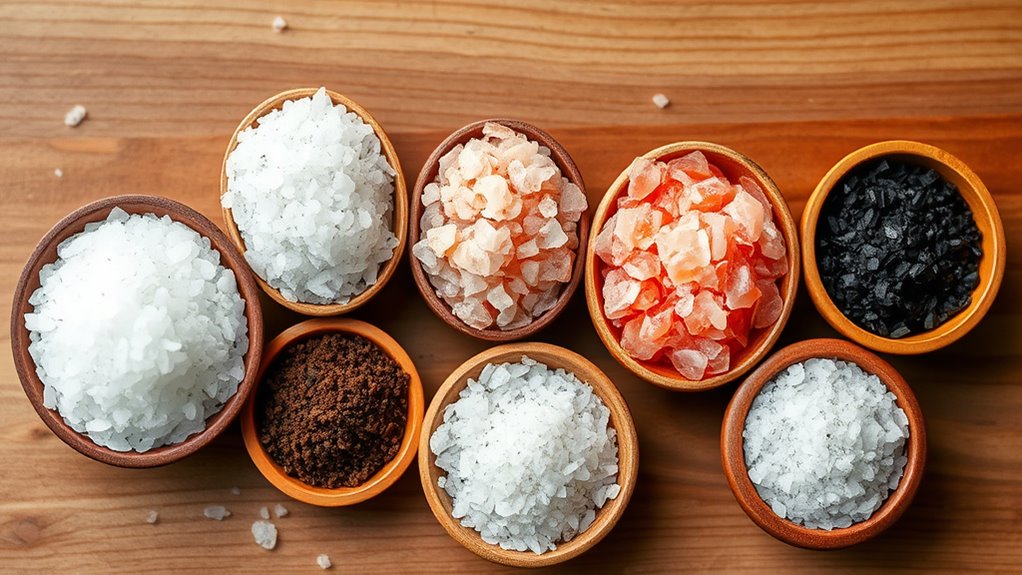
You’ll want to know these seven salts for cooking and finishing: table salt is your everyday, fine-grain staple with added iodine; kosher salt offers coarse crystals perfect for seasoning meats; sea salt brings oceanic minerals and subtle complexity. Himalayan pink salt adds color and trace minerals; grey salt delivers a briny punch; flake salt gives a crunchy, quick-dissolving finish.
Choosing the right salt can completely elevate your dishes, and there’s plenty more to discover about their unique qualities.
Table Salt: The Everyday Staple for Cooking and Baking
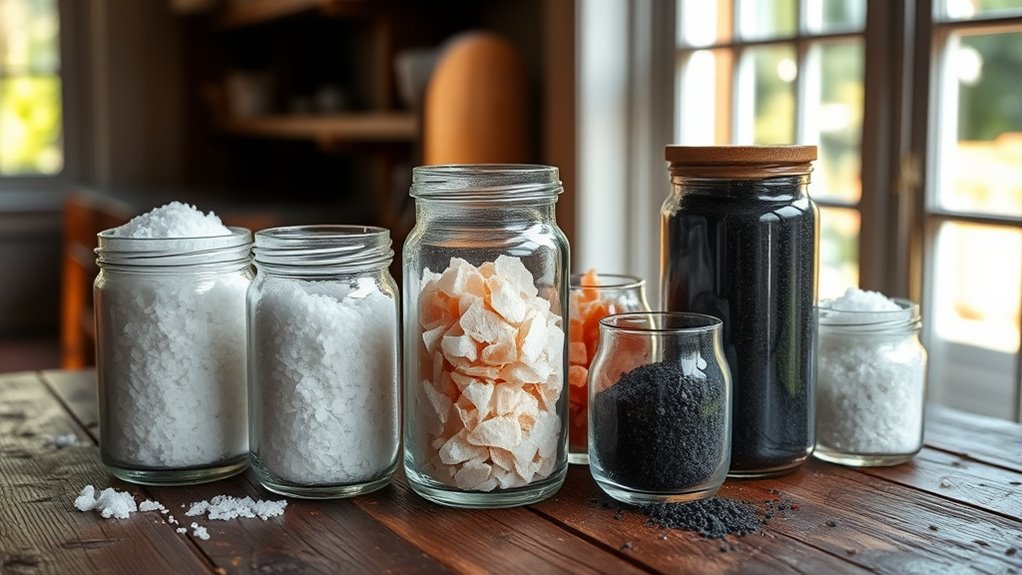
Why does table salt remain a kitchen essential? It’s because table salt is a refined form of sodium chloride, typically containing 97-99% purity, making it reliable for everyday household use. You’ll find it fortified with iodine, helping prevent thyroid deficiencies while adding essential nutrients.
Its fine, uniform texture dissolves quickly, which makes it perfect for culinary tasks like baking, cooking, and seasoning. You won’t struggle with clumps either, as most commercial table salts include anti-caking agents that keep it free-flowing and easy to sprinkle.
Plus, table salt’s neutral, straightforward salty flavor suits a wide range of dishes, making it a versatile staple you can always count on in your kitchen.
It’s affordable, accessible, and genuinely irreplaceable.
Kosher Salt: Why Chefs Love Its Texture and Flavor
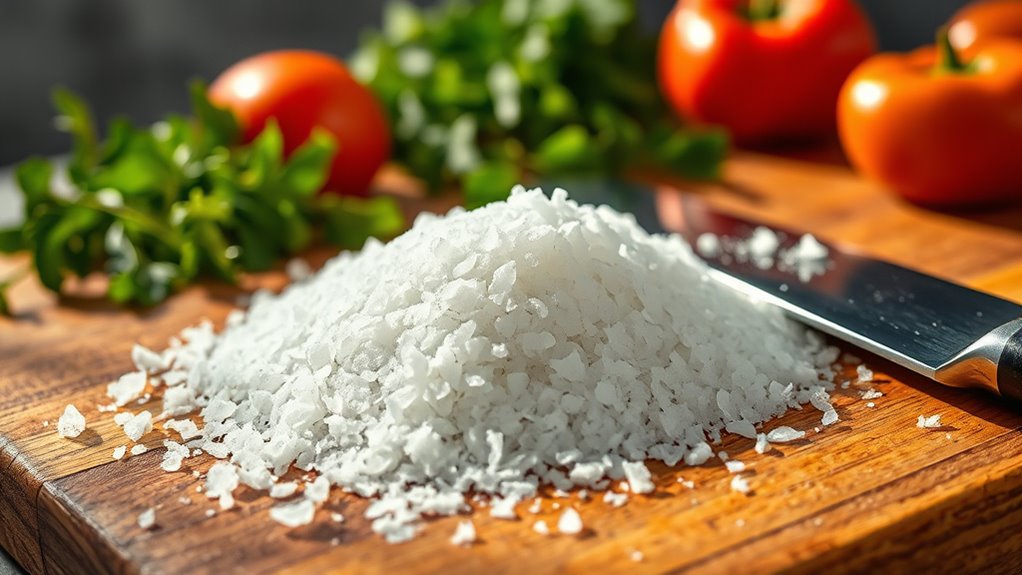
Although kosher salt might seem simple, chefs swear by its large, coarse crystals that make seasoning both easy and precise.
Chefs trust kosher salt’s large, coarse crystals for effortless and accurate seasoning every time.
When you use kosher salt, you benefit from:
- Coarse crystals that let you pinch and sprinkle evenly, enhancing salt management.
- A pure, clean flavor profile thanks to minimal refinement and no additives.
- Large grain size means less sodium per teaspoon, helping you control seasoning better.
- A unique texture that’s perfect for rubbing meats, seasoning vegetables, and finishing dishes with a satisfying crunch.
Its culinary use is favored because the texture adds depth without overpowering.
When you reach for kosher salt, you’re choosing a versatile salt that balances flavor and texture, making your cooking more intuitive and delicious.
Sea Salt: What Makes It Unique and Flavorful
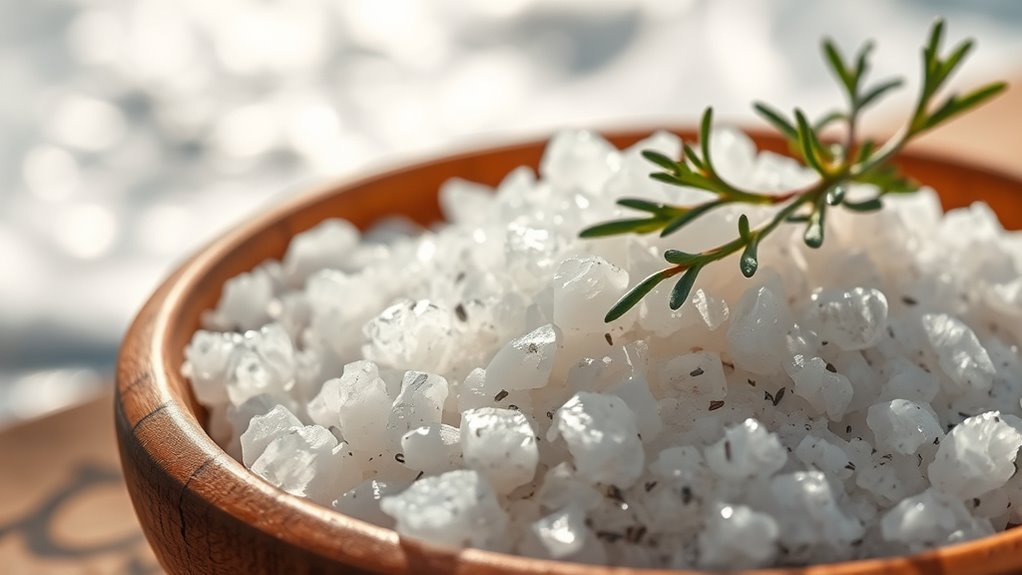
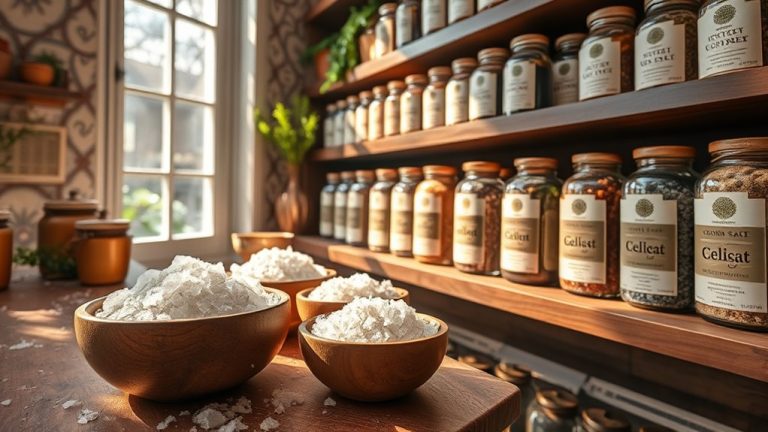
What sets sea salt apart is its natural harvest from evaporated seawater, which leaves behind a mineral-rich product full of unique flavors. When you use sea salt, you’re adding a finishing salt that offers more than just saltiness; its mineral content varies depending on the source, influencing its distinct flavor profile.
This natural salt often contains trace minerals like magnesium, calcium, and potassium, enhancing both taste and texture. Sea salt comes in different grain sizes, from fine to large flaky crystals, perfect for sprinkling over dishes just before serving.
Because it’s less refined than table salt, it retains natural iodine levels and a briny, mineral-rich flavor that elevates your cooking. Using sea salt means you’re tasting the ocean’s complexity in every bite.
Himalayan Pink Salt: Color and Mineral Content Explained
If you appreciate the natural complexity of sea salt, Himalayan Pink Salt offers another unique option with its striking color and mineral content. Its pink hue comes from iron oxide, or rust, embedded in its mineral composition.
Here’s what you should know about Himalayan pink salt:
- It contains over 80 trace minerals, including boron, chromium, copper, and zinc, contributing to its mineral diversity.
- Despite this, the mineral content in a typical ¼ teaspoon is minimal, providing little nutritional benefit.
- Himalayan pink salt is primarily sodium chloride, similar to regular salt.
- The presence of iron oxide gives it a bold flavor slightly more complex than table salt.
When you use Himalayan pink salt, you add both a visual appeal and subtle mineral complexity to your dishes.
Grey Salt: The Briny Choice for Hearty Dishes
How does a salt with a rich mineral profile and a unique texture elevate your cooking? Grey salt, harvested through traditional harvesting from mineral-rich salt ponds off France’s coast, offers just that. Its pale gray color reflects the natural minerals in the clay-lined flats where it’s collected.
Grey salt’s rich minerals and unique texture from France’s coast elevate every dish with natural flavor.
This salt’s briny flavor, enriched with calcium, magnesium, and potassium, adds complexity to hearty dishes like grilled meats and roasted vegetables. The coarse texture of grey salt ensures each bite delivers a satisfying crunch and bursts of mineral content.
Use it as a finishing salt to highlight flavors and add depth.
When you choose grey salt, you’re not just seasoning—you’re enhancing your dishes with a mineral-rich, flavorful touch rooted in time-honored methods.
Flake Salt: A Perfect Finishing Touch for Texture and Taste
You’ll love how flake salt’s unique, thin crystals add a satisfying crunch to your dishes. It dissolves quickly, so it enhances flavor without lingering too long.
Use it as a finishing touch on meats, salads, or even baked treats to boost texture and taste.
Unique Crystal Structure
Flake salt’s unique crystal structure sets it apart with thin, irregular flakes that dissolve quickly, delivering a bright and intense saltiness.
When you use flake salt as a finishing touch, you’ll notice:
- Irregularly shaped crystals with a delicate, layered structure that adds crunch.
- A texture that enhances the mouthfeel of any dish without overpowering it.
- Visual appeal from its large, flaky crystals that brighten salads, chocolates, and roasted veggies.
- A pure, clean saltiness due to its minimal mineral content, keeping flavors balanced.
This distinctive crystal structure is why flake salt not only improves taste but also elevates presentation, making it a top choice for chefs and home cooks alike.
Quick Dissolving Properties
Because of its thin, irregular crystals, this salt dissolves almost instantly, giving you a quick burst of bright, salty flavor. Flake salt’s quick dissolving nature comes from its large surface area, allowing rapid dissolution right on your tongue or in dishes.
As one of the best salts for finishing, flake salt delivers a delicate crunch that enhances salt texture without overwhelming your food. Its salt crystals, formed through evaporation or boiling, contain minimal minerals, emphasizing a clean, pure salt flavor.
When you sprinkle flake salt, you get both an immediate savory hit and a subtle crunch, making it perfect for adding that final touch. This rapid dissolution ensures your dishes get an even, bright seasoning without lingering grittiness.
Ideal Culinary Uses
The quick dissolving nature and delicate crunch of flake salt make it perfect for finishing dishes with a burst of flavor and texture. As a finishing salt, it offers exceptional flavor enhancement without overpowering your dish.
Here are ideal culinary uses to maximize its impact:
- Sprinkle on grilled meats to add crisp texture and boost savory notes.
- Use as a garnish on salads for visual appeal and a subtle salty crunch.
- Enhance desserts like chocolate chip cookies by balancing sweetness with a salty finish.
- Add just before serving hot dishes to preserve its quick dissolving and textural qualities.
Among salt types, flake salt stands out for its pure, clean flavor and versatility in garnishing, making it a must-have for your culinary uses.
How to Choose the Right Salt for Cooking and Finishing
When you’re cooking or finishing a dish, choosing the right type of salt can make all the difference in flavor and texture. For baking, use iodized salt or fine-grained salt for even distribution and precise seasoning.
Coarse salt, like kosher salt, works best for seasoning meats or roasting, adding texture and depth.
When it comes to salt for finishing, opt for specialty finishing salts such as flaky Maldon or mineral-rich salts like Himalayan pink to enhance flavor profiles and presentation.
Understanding salt types helps you pick the perfect option—fine salts for baking and cooking, coarse salts for seasoning, and finishing salts for that final crunchy touch.
This way, you’ll elevate your dishes with the ideal salt every time.
Frequently Asked Questions
What Kind of Salt Is the Healthiest?
You won’t find a healthiest salt since all mainly contain sodium chloride.
Choose iodized salt to prevent iodine deficiency, but focus more on reducing overall sodium intake for better health rather than picking a special salt type.
Is Himalayan or Celtic Salt Better?
You’ll find neither Himalayan nor Celtic salt is better health-wise since their mineral content is minimal.
Choose based on flavor and cooking style—you’ll enjoy Celtic’s moisture or Himalayan’s subtle pink hue depending on your preference.
What’s the Best Salt for Everyday Use?
You’ll find iodized table salt works best daily—it’s affordable, finely textured, and adds essential iodine.
But if you prefer flavor control, kosher salt’s great. Ultimately, pick what fits your taste and cooking style.
Which Is Healthier, Himalayan or Sea Salt?
Neither Himalayan nor sea salt is notably healthier since both have similar sodium levels. You should choose based on taste and use, not health claims, since mineral differences are minimal and pollution concerns vary with sea salt.
Conclusion
So, you’ve met the salty squad—from table salt, the boring MVP, to flake salt, the diva of texture. Whether you want to sprinkle like a pro or just stop your food from tasting like sadness, picking the right salt matters.
Don’t settle for bland—embrace the crunch, the color, and the briny drama. After all, life’s too short for tasteless meals and boring salt shakers, right?
Salt like you mean it! Knowing the best types of salt can transform your cooking and elevate every dish.