Celtic Salt Vs Sea Salt 3 Key Differences
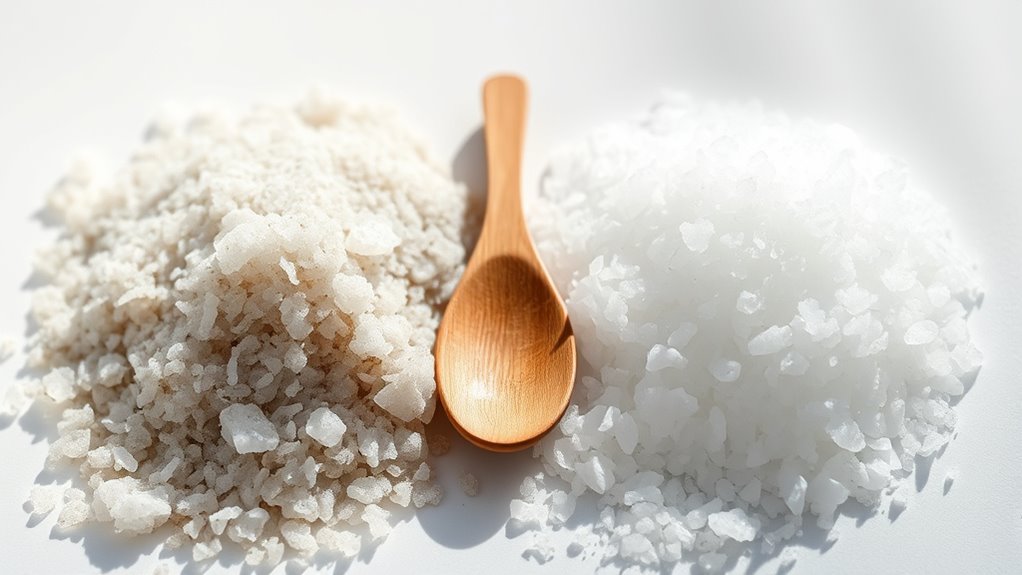
When choosing between Celtic salt and sea salt, it’s important to understand three key differences. Celtic salt is hand-harvested traditionally from clay-lined ponds in France, which helps preserve more minerals like magnesium and calcium. This process gives Celtic salt a moist texture and an earthy flavor.
In contrast, sea salt is often mechanically collected worldwide. It tends to be drier, contains fewer trace minerals, and has a simpler taste. Because of these characteristics, Celtic salt is great for finishing dishes and boosting mineral intake.
Sea salt, on the other hand, is well-suited for everyday cooking. Explore further to determine which salt best fits your cooking style and health needs.
How Celtic Salt Vs Sea Salt Are Harvested Differently

Although both Celtic salt and sea salt come from evaporated seawater, their harvesting methods differ considerably.
When you harvest Celtic salt, you work in clay-lined salt ponds in Brittany, France, using traditional harvesting techniques. This involves careful hand-harvesting with rakes, followed by natural drying under the sun and wind.
The evaporation process is slow and gentle, which helps preserve mineral retention and moisture.
In contrast, sea salt is collected from various coastal regions worldwide, often using mechanical methods for salt collection. Its evaporation process can be faster, sometimes involving additional refining.
Celtic salt emphasizes minimal processing to maintain its unique qualities, while sea salt’s production varies widely. You’ll find that Celtic salt’s artisanal approach contrasts sharply with the more commercial and mechanized methods used for sea salt.
Celtic Salt Vs Sea Salt: Mineral and Flavor Differences
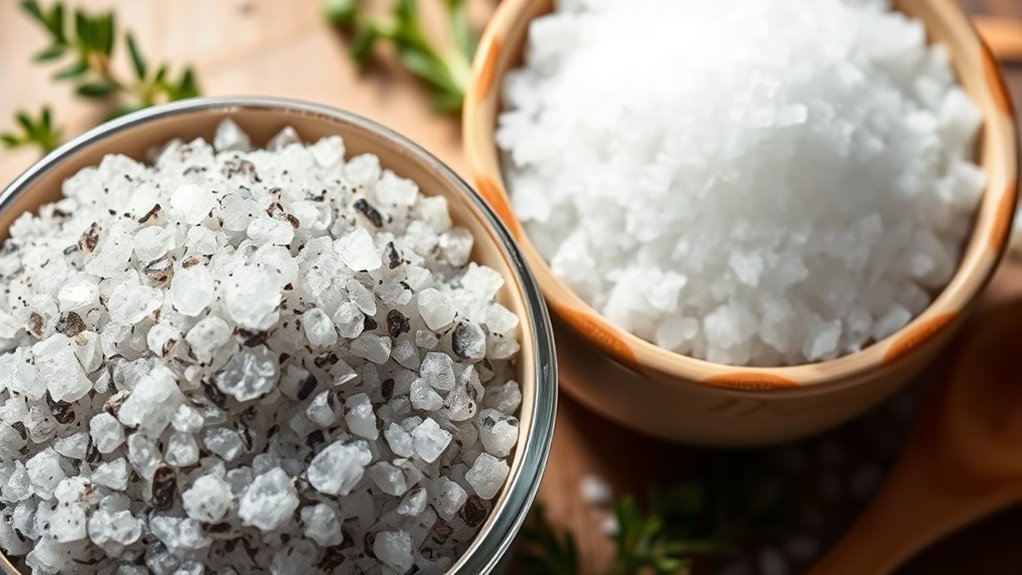
When you compare Celtic salt and sea salt, their mineral content and flavor stand out as key differences. Celtic salt, harvested traditionally with minimal salt processing, boasts greater mineral diversity, including magnesium, calcium, potassium, and zinc. This rich mineral content gives it an earthy flavor and moist texture.
In contrast, sea salt’s mineral content varies by source but generally contains fewer trace minerals and offers a cleaner, simpler flavor profile.
- Celtic salt’s moisture and coarse grains enhance its robust, complex taste.
- Sea salt ranges from fine to flaky, with a more neutral flavor.
- The traditional harvesting of Celtic salt preserves its unique mineral richness.
These distinctions in mineral content and flavor profile define their culinary and sensory appeal.
Which Salt Should You Use for Cooking and Health?
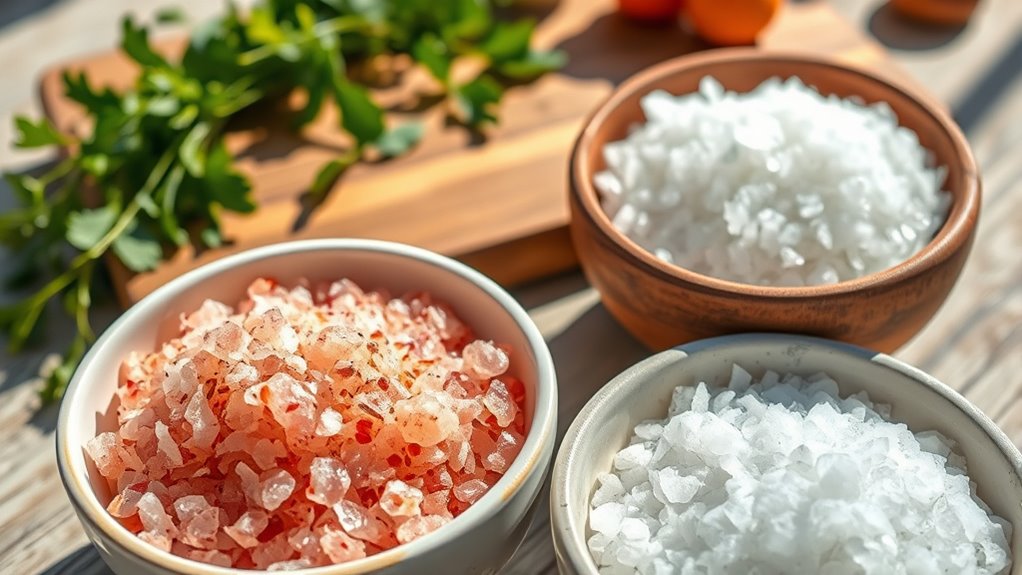
Deciding which salt to use depends on your cooking style and health goals. If you prefer a salt with a moist, coarse texture and richer mineral content, Celtic Salt, traditionally harvested in Brittany, offers more trace minerals like magnesium and calcium, supporting your mineral intake. Its lower sodium levels make it a healthier choice if you’re watching sodium.
Celtic Salt’s texture differences make it ideal as a finishing salt to enhance dishes.
On the other hand, sea salt usually has a drier, flaky texture and a neutral salty flavor, making it versatile for everyday cooking uses. Its mineral content varies by source, so health benefits depend on the type you choose.
Both salts boost flavor and minerals, but your choice should align with how you cook and what health benefits you want.
Frequently Asked Questions
What Is the Difference Between Sea Salt and Celtic Salt?
You’ll find Celtic salt is moister, mineral-rich, and hand-harvested traditionally, giving it a unique briny flavor and grey color.
Sea salt varies widely, usually drier, less mineral-dense, and harvested globally with cleaner taste profiles.
Is Celtic Sea Salt Better for You Than Normal Salt?
Imagine sprinkling coarse, moist crystals bursting with minerals onto your meal.
Yes, Celtic sea salt’s lower sodium and richer minerals can benefit you more than regular salt, but don’t overdo it—moderation is key for your health.
Which Is Better, Celtic Sea Salt or Real Salt?
You’ll find Celtic sea salt better if you want more minerals and a briny flavor, while real salt suits you if you prefer a neutral taste and drier texture.
It really depends on what you value most.
What Does Putting Celtic Salt Under Your Tongue Do?
You don’t just put Celtic salt under your tongue to impress your taste buds—it rapidly delivers minerals right into your bloodstream, boosts hydration, sparks saliva production, and might even give you a cheeky natural energy kick.
Conclusion
Choosing between Celtic salt and sea salt is like picking between two artists’ palettes—each brings unique colors to your dish. Remember when a chef told me that using Celtic salt felt like adding a brushstroke of the ocean’s essence?
With its higher mineral content and moist texture, Celtic salt offers a richer flavor, while sea salt provides a cleaner taste.
So, trust your palate and the recipe’s needs to decide which salt will best elevate your cooking and health. When comparing Celtic salt vs sea salt, consider their distinct mineral profiles and textures to make the best choice for your culinary creations.