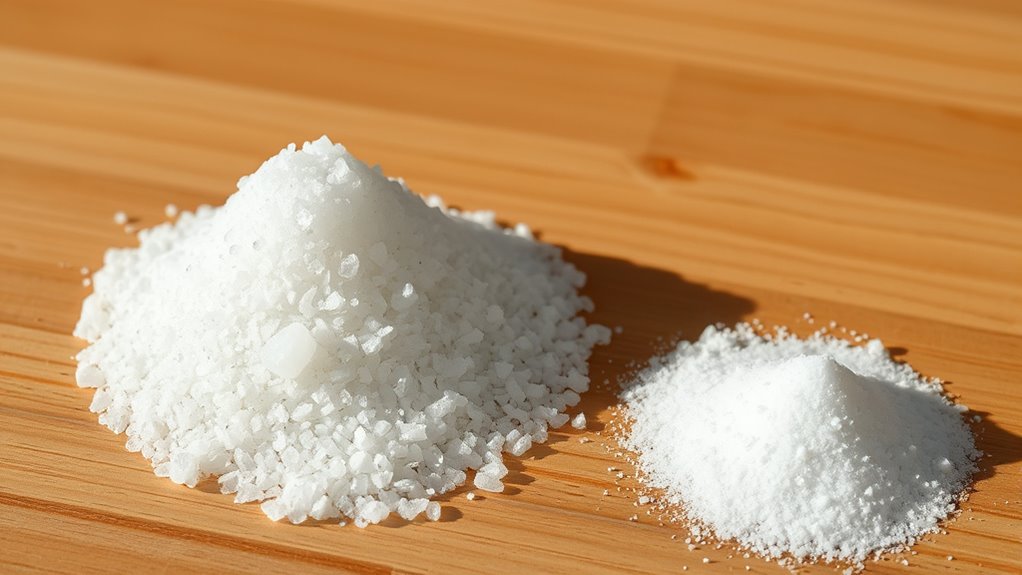
3 Best Salts for Water Softeners
You’ll want to choose evaporated, solar, or potassium chloride salt for your water softener to keep it running smoothly. These are the 3 best salts for water softeners, each offering unique benefits to enhance your system’s performance.
Evaporated salt offers high purity and reduces residue buildup, making maintenance easier. Solar salt is eco-friendly and dissolves well but can cause some sediment. Potassium chloride is a low-sodium, cleaner option but costs more.
Each type suits different budgets and water qualities, so understanding their pros and cons will help you pick the best fit for your system. Choose wisely to ensure optimal water softening and system longevity.
How to Choose the Right Water Softener Salt for Your Needs
When choosing the right water softener salt for your needs, start by considering your water hardness—evaporated or solar salt works best for high-hardness levels to boost efficiency. You’ll want to choose the right salt to support your water softening process and keep your system running smoothly.
Using evaporated salt pellets can help prevent buildup in your salt tank, reducing clogs and improving system efficiency.
Regular maintenance is key: check and refill the salt tank regularly, ideally keeping it half-full to avoid salt bridges and residue.
Consistently using one type of water softener salt ensures your system won’t face issues.
Why Evaporated Salt Works Best for Your Water Softener
Because evaporated salt boasts up to 99.9% purity, it substantially reduces residue buildup in your water softener tank. This high purity means you avoid common issues like salt mushing and bridging, which can disrupt the salt flow and hinder efficient regeneration.
Evaporated salt dissolves quickly and evenly, ensuring a reliable salt brine that enhances minerals exchange during the softening process.
Using this purest form of salt not only improves system performance but also minimizes maintenance by cutting down on impurities that cause clogs and buildup.
Ultimately, choosing evaporated salt helps your water softener operate smoothly and last longer, giving you consistent, softened water without the hassle of frequent cleanings or repairs.
Pros and Cons of Solar, Rock, and Potassium Chloride Salts
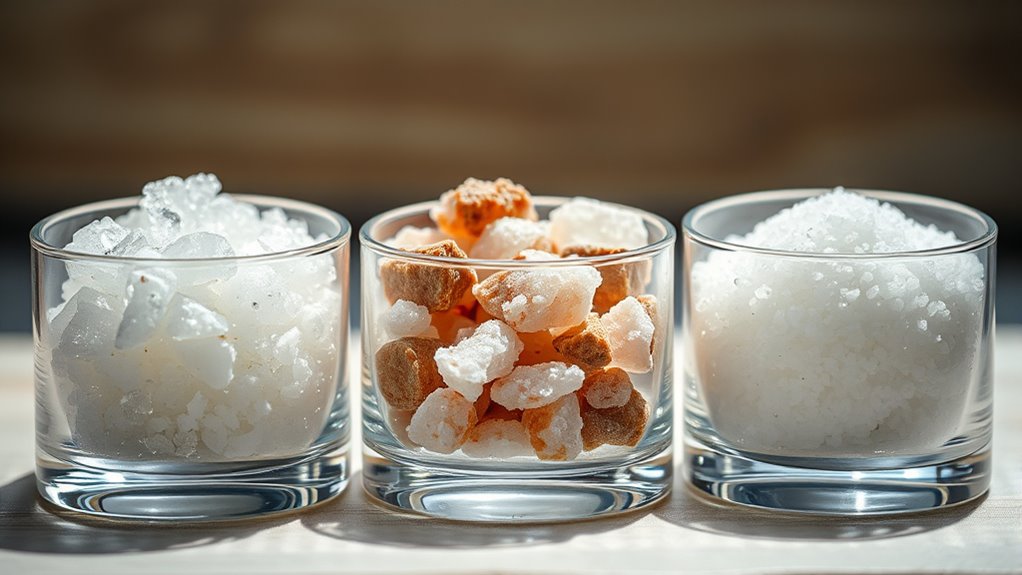
Although you have several salt options for your water softener, solar salt, rock salt, and potassium chloride each come with distinct advantages and drawbacks.
Solar salt is eco-friendly and dissolves easily, but impurities can cause sediment buildup, affecting water quality and increasing maintenance needs.
Rock salt is the most affordable but contains more impurities, leading to salt bridges and system clogs, so you’ll need frequent cleaning.
Potassium chloride offers a low-sodium, environmentally friendly alternative with higher salt purity, producing fewer residues and less sediment buildup.
However, it costs about 30% more than sodium-based salts.
Considering these factors—salt purity, environmental impact, water quality, and maintenance—you can choose the best salt type that fits your budget and water softener system requirements.
Frequently Asked Questions
What Is the Best Type of Salt to Use in a Water Softener?
You should use evaporated salt in your water softener because it’s highly pure, reducing residue and maintenance.
It keeps your system running smoothly and lasts longer, making it the best choice for peak performance.
Conclusion
Choosing the right water softener salt isn’t just about keeping your appliances running—it’s about protecting your home and your peace of mind. Evaporated salt shines for its purity, while solar and rock salts offer budget-friendly options. Potassium chloride provides an eco-friendly alternative that’s gentle on the environment.
Think of your water softener salt as the heart of your system—pick wisely, and you’ll feel the difference every time you turn on the tap. After all, isn’t comfort worth it? Using the best water softener salt ensures efficient softening, prolongs appliance life, and improves water quality throughout your home.