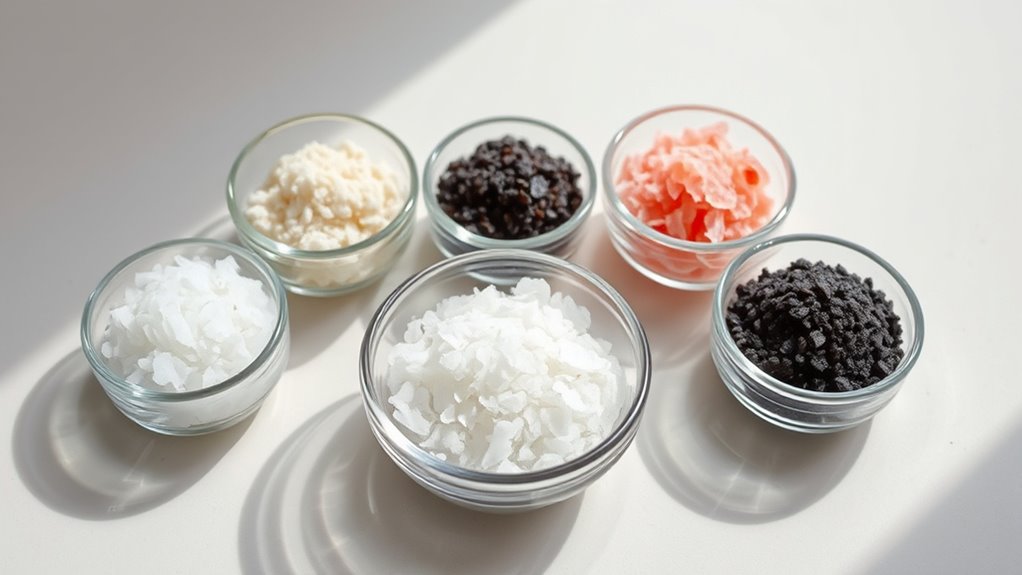
5 Best Salts for Baking You Should Try for Better Flavor
You should try kosher salt first—it’s perfect for baking because its larger crystals dissolve slowly, spreading flavor evenly without over-salting. Table salt works great for precise seasoning due to fine grains. Sea salt adds subtle mineral notes and texture, especially as a finishing touch with flaky varieties.
Diamond Crystal and Morton kosher salts differ, so adjust amounts carefully to avoid mistakes. If you want to master salt choices and substitutions, there’s more helpful info ahead.
Why Kosher Salt Is Best for Baking
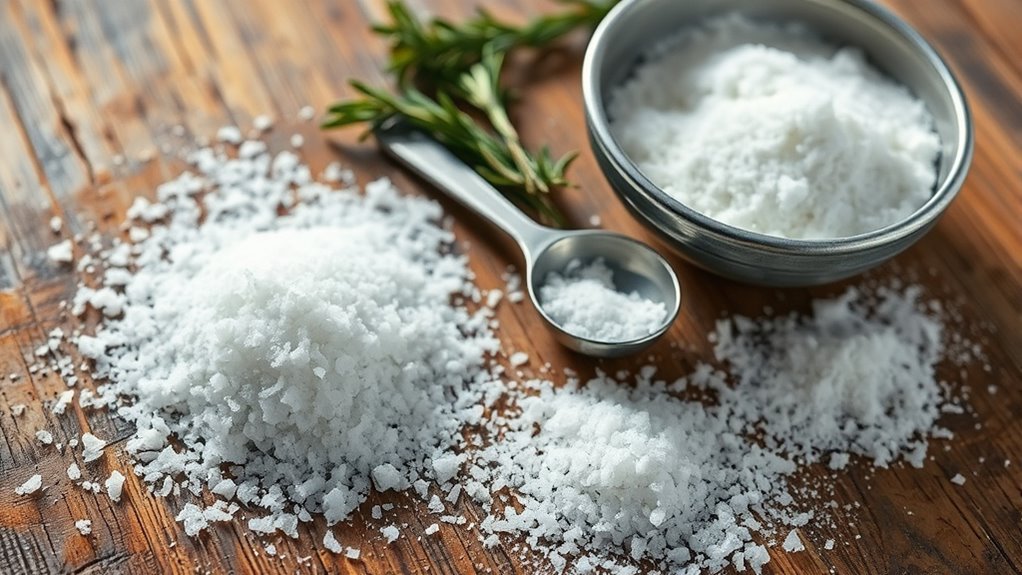
When you bake, using kosher salt can make a noticeable difference because its larger, coarser crystals dissolve slowly and spread evenly throughout your batter or dough.
Kosher salt’s non-iodized nature provides a clean, neutral flavor, perfect for baking recipes where salt enhances without overpowering.
The Diamond Crystal brand stands out with its lighter, crumblier salt crystals that are easier to pinch and sprinkle, giving you more control.
These crystals dissolve slowly, preventing over-salting and ensuring even distribution in your baked goods.
Unlike finer salts, kosher salt’s texture makes measurements more forgiving, reducing mistakes like confusing salt for sugar.
For consistent results and balanced flavor, choosing kosher salt as your salt for baking is a smart move that elevates your baking every time.
How Table Salt and Sea Salt Impact Baking
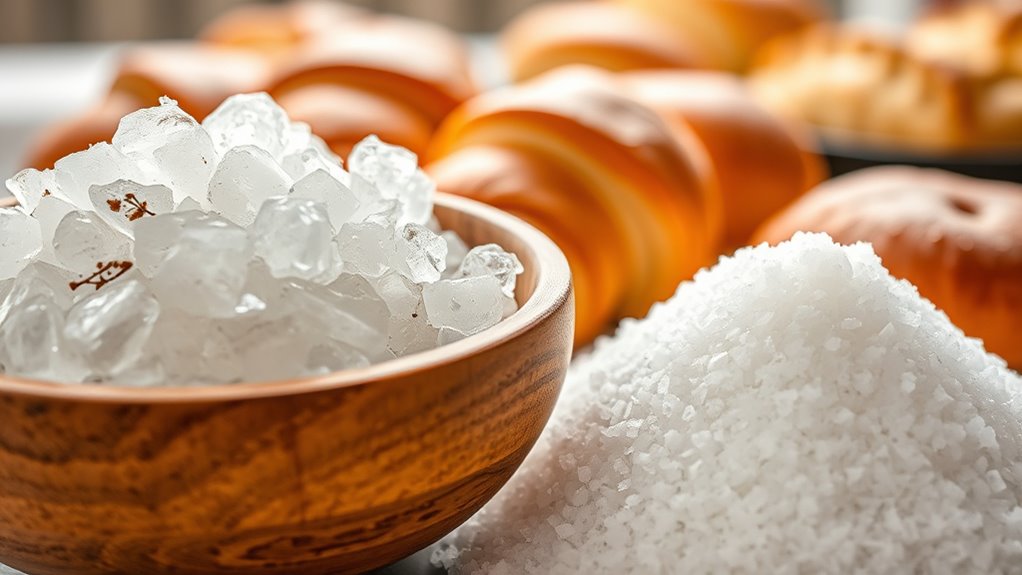
Although both table salt and sea salt add saltiness to baked goods, they affect flavor and texture in different ways. Table salt has fine salt crystals that dissolve quickly, ensuring even flavor and precise measurement in baking.
Table salt’s fine crystals dissolve quickly, providing even flavor and precise measurement in baking.
Sea salt’s coarser grains and varied mineral content introduce subtle flavor differences and texture variations.
Coarse salt may not fully dissolve, so it’s best used for finishing rather than mixing into doughs. Choosing between these salts can impact the saltiness level and overall flavor profile of your baked treats.
- Table salt dissolves faster for consistent flavor
- Sea salt adds mineral-rich nuances
- Coarse salt crystals affect texture if undissolved
- Precise measurement is easier with table salt
- Sea salt’s grain size varies, influencing baking results
Comparing Diamond Crystal and Morton Kosher Salt
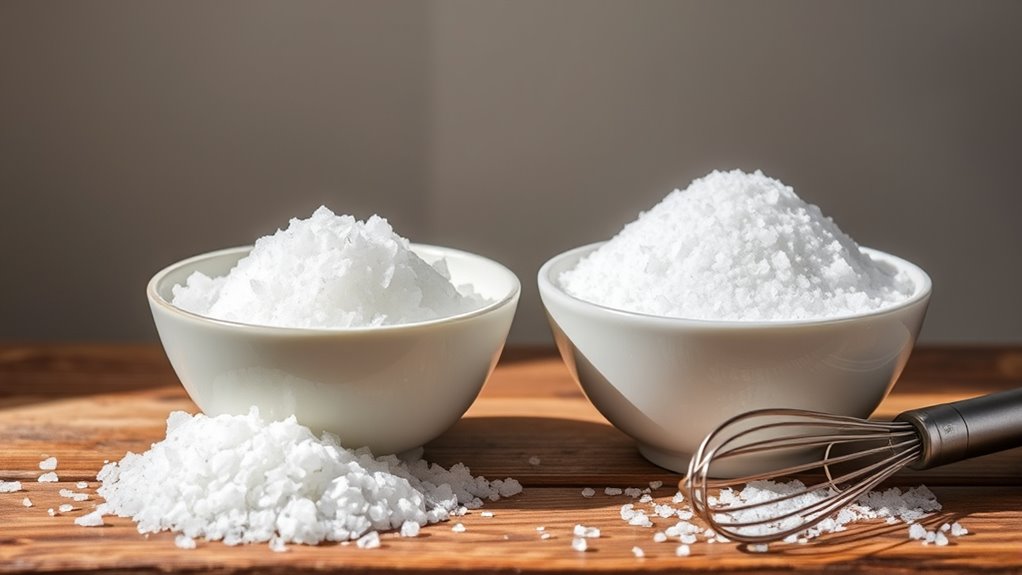
Choosing the right kosher salt can substantially influence the outcome of your baked goods, especially when recipes call for specific brands like Diamond Crystal or Morton.
Diamond Crystal kosher salt features lighter, hollow salt crystals with a delicate salt texture that dissolves quickly, making it ideal for even distribution in salt for baking recipes.
Morton kosher salt, on the other hand, has larger, denser crystals, so its salt for baking taste is more concentrated. When you substitute Morton for Diamond Crystal, use about half the amount to match the saltiness.
Understanding these kosher salt differences helps you adjust salt measurement accurately and avoid over-salting.
For baking salt, Diamond Crystal’s ease of measuring by volume often makes it the preferred choice among bakers focused on precision.
Using Flaky Sea Salt to Finish Baked Goods
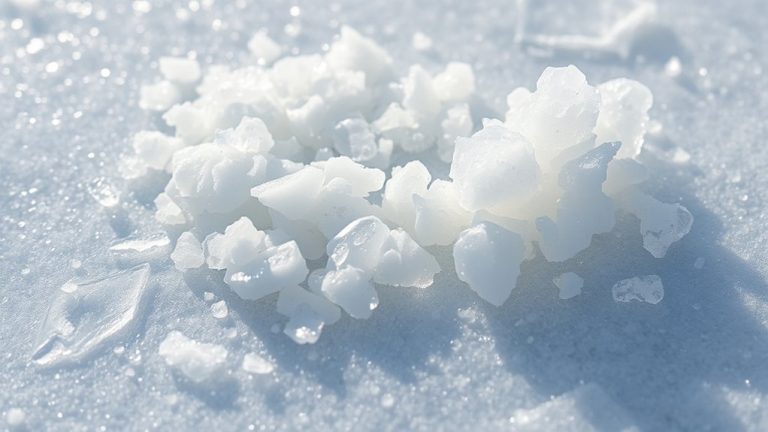
How can a simple sprinkle transform your baked goods? Using flaky sea salt, like Maldon salt, as a finishing touch adds more than just flavor—it brings a crunchy texture and an artisanal look that elevates your treats. Its large flakes slowly dissolve, offering a satisfying contrast to soft or chewy baked goods.
A sprinkle of flaky sea salt adds crunch, flavor, and a beautiful artisanal finish to your baked treats.
When you sprinkle on baked goods right after baking or just before serving, you preserve that delightful crunch and highlight the mineral-rich flavor without overpowering your recipe.
- Enhances flavor with subtle mineral-rich notes
- Adds a crunchy texture to soft or chewy items
- Large flakes slowly dissolve for lasting impact
- Creates a professional, artisanal look
- Best applied as salt as a finishing touch after baking
Flaky sea salt truly makes your baked goods stand out.
How to Substitute Salts Without Messing Up Your Recipe
If you swap one type of salt for another without adjusting the amount, your recipe can quickly become too salty or bland.
When you substitute kosher salt for table salt, remember kosher salt’s larger crystals mean you need half the volume to get the same saltiness. Also, if you’re switching between Diamond Crystal and Morton kosher salts, halve the measurement since Morton’s crystals are denser and saltier.
For best accuracy, weigh your salts instead of relying on volume measurements to account for crystal size differences.
Keep in mind that different salts dissolve at varying rates, so you may need to tweak mixing times.
Always make recipe adjustments based on careful salt comparison to maintain balanced flavor and avoid messing up your baked goods.
Frequently Asked Questions
What Is the Best Salt to Bake With?
You should use kosher salt, especially Diamond Crystal, for baking because its large, flaky crystals dissolve evenly.
Avoid table salt unless you adjust the amount, and skip iodized salts to prevent off flavors in your baked goods.
Is Celtic or Himalayan Salt Better?
Between Celtic’s moist, ocean-kissed grains and Himalayan’s delicate pink crystals, you’ll find Himalayan salt better for baking. Its fine texture melts evenly, letting your dough rise and flavors shine without extra moisture altering your recipe.
What Is the Healthiest Salt to Use in Cooking?
You should choose unrefined sea salt or Himalayan pink salt for cooking since they contain beneficial trace minerals.
Just remember to use any salt in moderation to avoid health risks like high blood pressure.
What Salt Do Professional Chefs Use?
Professional chefs usually use kosher salt like Diamond Crystal for its texture and control. You’ll also find them choosing fine sea salts or non-iodized salts for purity.
They often measure by weight to make certain of perfect results in baking. This precision helps achieve consistent flavor and texture.
Conclusion
You might think all salts are the same, but using kosher salt versus flaky sea salt can completely change your baking game. While table salt dissolves quickly, diamond crystal’s texture offers control, and flaky sea salt adds that perfect finishing touch.
Learning how to substitute without ruining your recipe lets you experiment confidently. Don’t just sprinkle—choose the right salt to balance flavor and texture, turning simple treats into unforgettable bites. Incorporating the best salts for baking ensures your creations have the ideal taste and texture every time.