7 Best Salts to Use for Cooking and Health
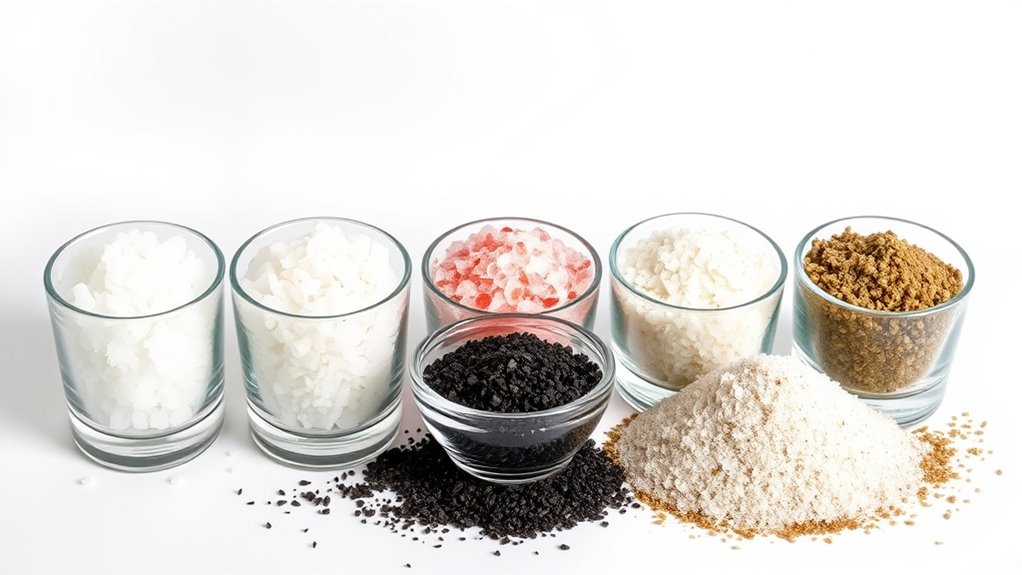
You’ll want to start with iodized table salt for everyday use due to its reliability and thyroid-health benefits. Sea salt brings subtle minerals like magnesium and zinc, enhancing flavor and texture. Himalayan pink salt offers over 80 trace minerals, adding both taste and visual appeal.
Kosher salt is great for cooking because of its texture, while Hawaiian grey, black, and red salts provide unique flavors. Mixing salts lets you balance health and taste perfectly. Keep exploring to discover even more ways to elevate your seasoning game.
How to Choose Healthy Salts for Cooking
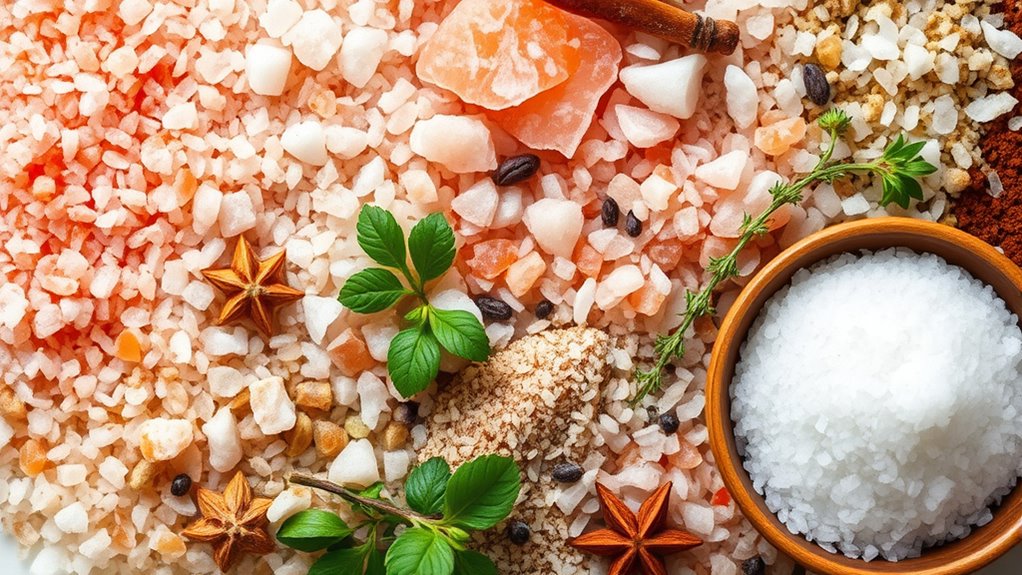
When choosing healthy salts for cooking, focus on minimally processed options like sea salt or Himalayan pink salt to retain natural minerals. These salts boast a richer mineral content than heavily processed salts, offering trace minerals that contribute subtle health benefits without overwhelming your diet.
While sea salt vs table salt often sparks debate, iodized salt provides essential iodine, important for thyroid health. Keep in mind, all salts have similar sodium levels by weight, so controlling your sodium intake depends on moderation, not salt type.
Larger salt crystals, like those in Himalayan pink salt, contain more air pockets, delivering less sodium per teaspoon. If you need lower sodium options, consider potassium chloride-based salts.
Avoid relying heavily on specialty salts high in trace minerals, as their impact is minimal compared to balanced salt use.
Benefits of Table Salt for Everyday Cooking
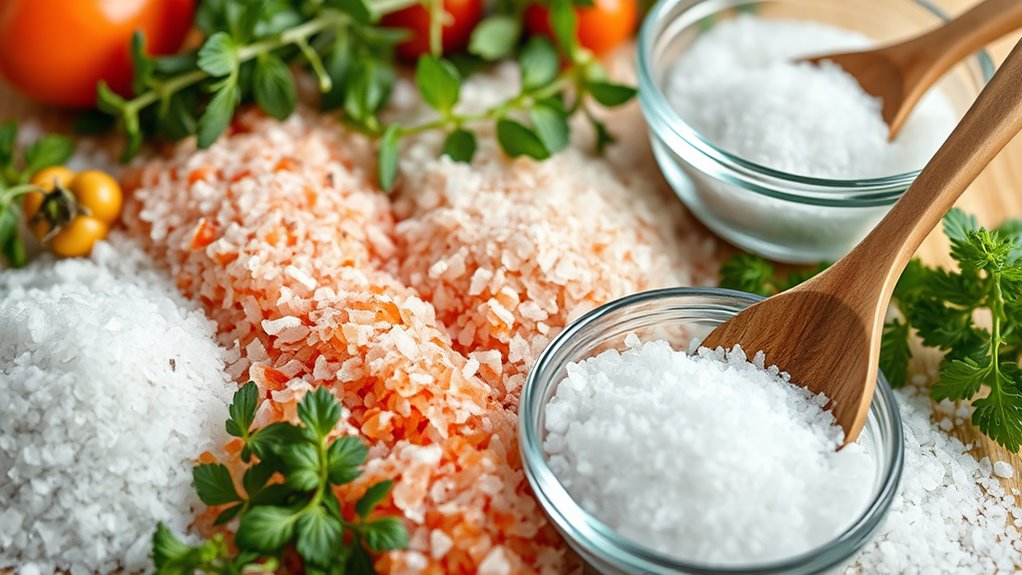
Table salt offers reliable seasoning for everyday cooking thanks to its fine grains that dissolve quickly and distribute flavor evenly. Since table salt contains about 97-99% sodium chloride, you get consistent and precise seasoning in every dish.
Many table salts are iodized salt, supplying essential iodine that supports thyroid function and prevents iodine deficiency disorders.
Iodized table salt provides vital iodine, supporting thyroid health and preventing deficiency-related disorders.
Its affordability and availability make it a convenient choice for your kitchen staples. Using table salt in moderation helps you manage sodium intake, which is key for maintaining heart health and reducing hypertension risk.
When you cook daily, relying on table salt ensures both flavor and health benefits, making it a practical, effective seasoning option that complements your meals without complicating your diet.
Flavor and Mineral Benefits of Sea Salt
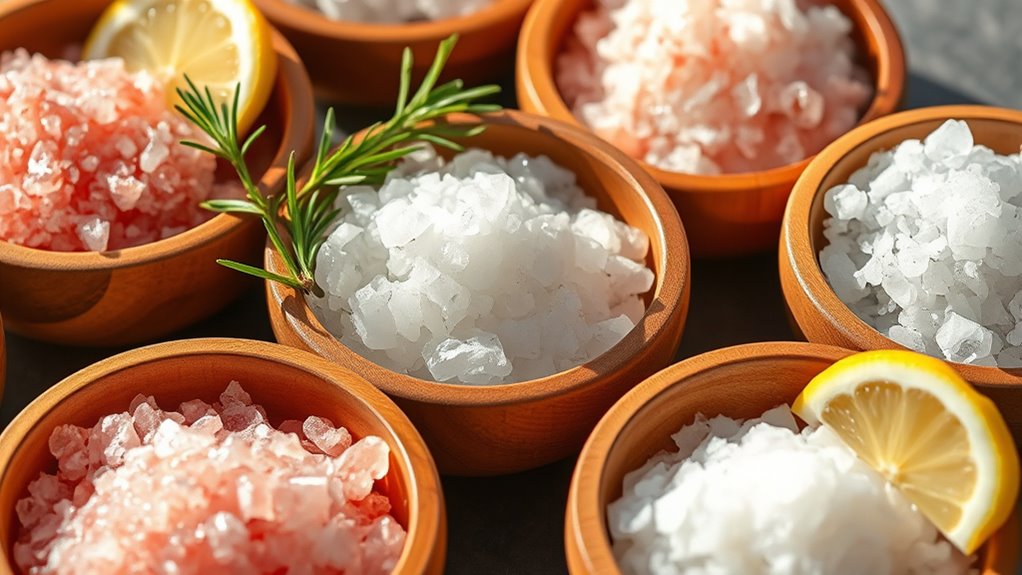
How does sea salt differ from regular salt in both flavor and nutrition? Sea salt comes from evaporated seawater, preserving natural minerals and trace minerals like magnesium, potassium, and zinc. These add a subtle briny flavor and offer mild mineral benefits.
Its mineral content varies by source, giving unique flavor enhancement that refined table salt lacks. You’ll often see sea salt used as a finishing salt to highlight textures and tastes in culinary use.
- Contains natural minerals that subtly influence flavor
- Offers a complex, briny flavor profile
- Popular for finishing dishes due to mineral benefits
While the trace minerals in sea salt don’t provide significant health boosts in typical amounts, they elevate your dishes with a distinct taste and a slight nutritional edge.
Unique Minerals and Taste of Himalayan Pink Salt
You’ll notice Himalayan pink salt stands out with over 80 trace minerals like calcium and iron that give it a unique color and flavor.
Its taste is often bolder and more complex than regular salt, making it perfect for finishing dishes.
Let’s explore how these minerals and flavors enhance your cooking and presentation.
Mineral Composition Overview
Although Himalayan Pink Salt contains over 80 trace minerals like calcium, magnesium, potassium, and iron, these elements make up less than 1% of its total composition. This means the mineral content, while unique, offers limited nutritional minerals or mineral benefits compared to other salts.
The mineral profile of Himalayan Pink Salt influences its color and subtle taste but doesn’t substantially impact your overall mineral intake. A detailed mineral analysis shows that these minerals in salt are present in tiny amounts, so relying on it for minerals like calcium, magnesium, and potassium won’t replace other dietary sources.
Key points to note about Himalayan Pink Salt’s mineral composition:
- Contains a variety of trace minerals contributing to its pink hue
- Minerals make up under 1% of total composition
- Minimal nutritional benefit despite rich mineral profile
Flavor Profile Characteristics
Because Himalayan pink salt contains over 80 trace minerals like calcium, magnesium, and iron, it offers a subtle, complex flavor that sets it apart from regular table salt. Its mineral-rich profile gives earthy notes and a slightly metallic taste, enhancing culinary dishes with a nuanced flavor profile.
Though the mineral content is minimal nutritionally, it elevates your dishes through taste enhancement and an enriched sensory experience. You’ll notice a bolder, more layered flavor that complements both simple and sophisticated recipes.
| Mineral | Flavor Contribution | Effect on Taste |
|---|---|---|
| Calcium | Mildly sweet | Adds subtle flavor depth |
| Magnesium | Slightly bitter | Balances earthiness |
| Iron | Metallic notes | Enhances complexity |
| Trace Minerals | Overall blend | Creates rich, complex flavor |
Culinary Uses and Benefits
When you want to elevate your dishes visually and flavor-wise, Himalayan pink salt stands out with its coarse texture and rich mineral content. This unrefined salt contains over 80 trace minerals, giving it a unique earthy taste that enhances meats, vegetables, and gourmet dishes.
Its coarse texture makes it perfect as a finishing salt, adding both flavor enhancement and appealing food presentation.
- Adds subtle mineral notes and complexity to your dishes
- Acts as a beautiful, natural garnish for plating
- Offers trace minerals without significant health benefits but boosts taste
While the health benefits of Himalayan Pink Salt are minimal, its culinary uses make it a favorite for chefs seeking natural flavor and texture improvements.
Why Kosher Salt Is a Favorite in the Kitchen
Three features make kosher salt a favorite in kitchens: its large, coarse grains give you precise control when seasoning, its pure composition offers a clean taste without additives, and its texture helps draw out blood from meat, enhancing flavor and making it ideal for koshering.
Thanks to its coarse grains and larger grain size, kosher salt lets you easily pinch and sprinkle the right amount, improving salt control in your dishes. Its lack of anti-caking agents supports better mineral retention, preserving a natural flavor that enhances food seasoning.
Whether you’re preparing meat koshering or adding a finishing touch, kosher salt’s texture and culinary use ensure consistent flavor enhancement, making it a versatile and reliable choice for both professional chefs and home cooks.
Cooking Uses for Grey, Black, and Red Hawaiian Salts
Although less common than kosher salt, grey, black, and red Hawaiian salts each bring unique flavors and textures that can elevate your cooking. Grey salt, with its moist, chunky grains and briny flavor, works well as a finishing salt for grilled meats and roasted vegetables, adding mineral-rich notes.
Grey Hawaiian salt’s moist, chunky grains add briny, mineral-rich flavor to grilled meats and roasted vegetables.
Black Hawaiian salt, infused with volcanic clay, offers an earthy, sulfurous aroma perfect for seasoning grilled seafood or tofu.
Red Hawaiian salt’s nutty flavor and vibrant color make it ideal for salads and grilled dishes.
- Grey salt enhances dishes with a subtle mineral taste and texture
- Black Hawaiian salt adds depth through its volcanic clay infusion
- Red Hawaiian salt brightens presentation and flavor as a gourmet finishing salt
These mineral-rich salts provide unique culinary uses and exceptional flavor enhancement.
Mixing Salts for the Best Flavor and Health
By mixing different types of salts, you can create more complex flavors and textures that elevate your dishes. Combining fine salt with coarse sea salt or Himalayan salt introduces varied salt textures and mineral profiles, enhancing flavor enhancement while improving culinary presentation.
Salt blends allow you to balance mineral-rich salts with fine salts, subtly boosting minerals without adding excess sodium. Using larger-crystal salts like Himalayan salt helps with sodium control since their air pockets mean less salt per teaspoon.
You can also mix flavored or smoked salts with regular salts to add depth without overpowering natural tastes. This approach not only diversifies your seasoning but also lets you tailor each dish’s saltiness and health benefits effectively.
Frequently Asked Questions
Which Is Better for You, Himalayan Salt or Celtic Salt?
Celtic salt is slightly better for you since it contains less sodium per teaspoon. But honestly, neither offers significant health benefits, so you should choose based on flavor, texture, and how you plan to use it.
What Is the Best Salt for Health Without Heavy Metals?
Think of salt as nature’s treasure chest—choose unrefined salts like Himalayan or Celtic grey. They hold more minerals and fewer heavy metals, especially when you pick brands committed to rigorous testing and quality control.
Which Salt Should Be Used for Daily Cooking?
You should use iodized table salt or kosher salt for daily cooking. They dissolve easily, help control sodium intake, and provide essential iodine.
Just remember to keep your overall salt use moderate for better health.
What Is the Best Salt According to Chefs?
Chefs recommend kosher salt for its easy control and texture, but you’ll also find sea salt praised for flavor.
You’ll want to choose salt based on your dish’s needs, not just one “best” option.
Conclusion
Choosing the right salt is like painting a masterpiece—each grain adds its own color and texture to your dish. Table salt lays the perfect base, while sea salt and Himalayan pink salt sprinkle in vibrant strokes of flavor and minerals. Kosher salt shapes your culinary canvas with ease, and Hawaiian salts bring bold accents.
By mixing these salts thoughtfully, you create a symphony of taste and health, turning every meal into a work of art you’ll savor. Using the best salts for cooking and health enhances both flavor and nutritional benefits, making your dishes truly exceptional.