What Is the Difference Between Beef Brisket and Corned Beef?
If you’re wondering about the difference between beef brisket and corned beef, here’s the scoop: brisket is a raw, tough cut from the cow’s lower chest that you slow cook to tenderize.
Corned beef starts as brisket but gets cured in a salty, spiced brine, giving it a softer texture and pink color.
Both taste great but differ in flavor, texture, and cooking. Keep exploring to uncover how these differences impact your meals.
Beef Brisket: Definition and Preparation
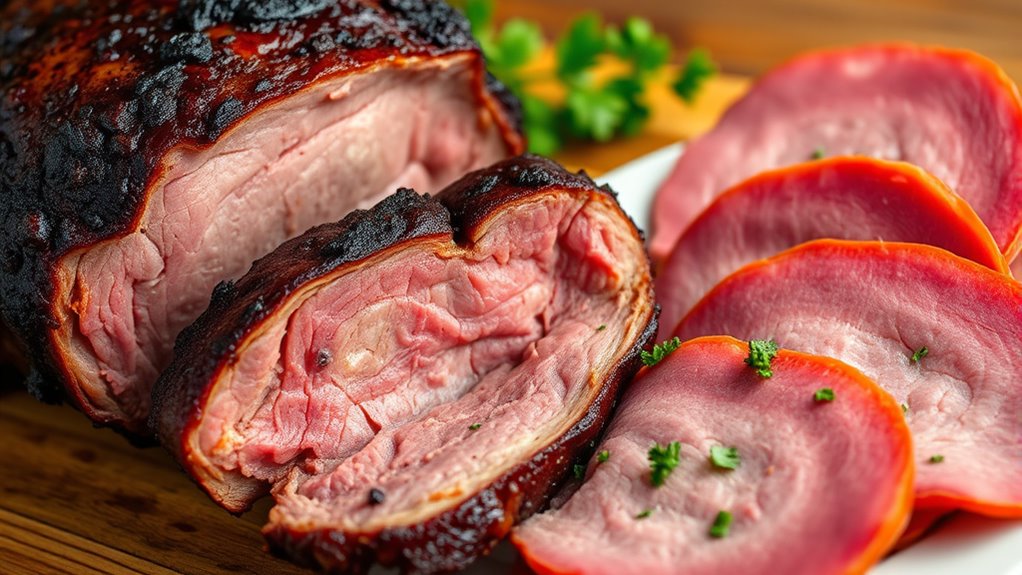
Although beef brisket comes from the cow’s lower chest, it’s a tough cut that needs careful preparation. You’ll find brisket consists of two main parts: the leaner flat cut and the fattier point cut. Before cooking, you should trim the significant fat cap on fresh brisket to improve the final texture.
Because this cut is dense and fibrous, it requires long, slow cooking methods like braising, smoking, or roasting to break down the connective tissues and become tender. This careful preparation not only softens the meat but also develops rich flavors, making brisket a favorite in barbecue, especially in Texas.
Understanding these basics helps you handle brisket properly for the best results.
Making Corned Beef From Brisket
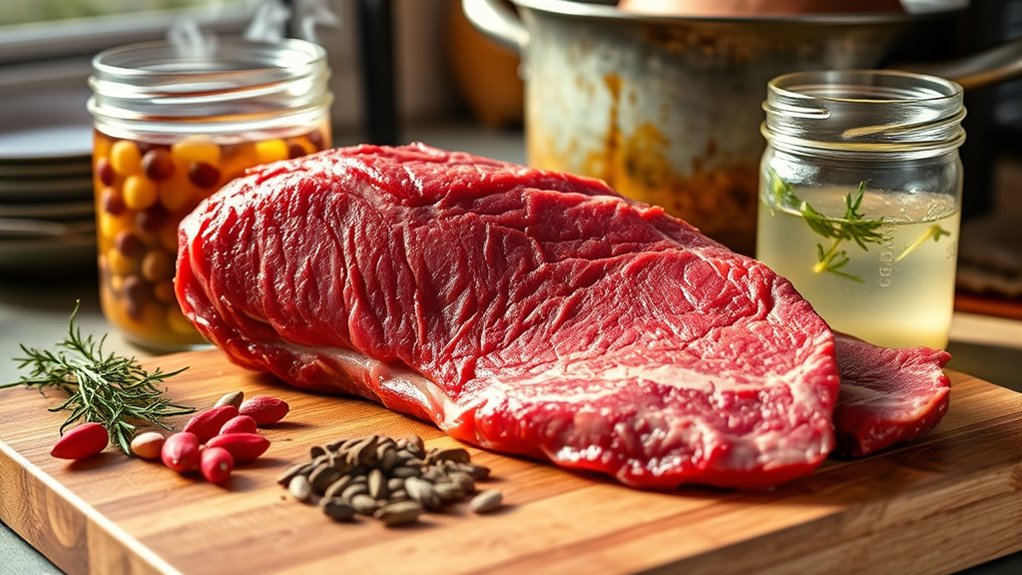
To make corned beef from brisket, you’ll start by curing the meat in a saltwater brine packed with spices and curing agents for several days.
After curing, it’s important to soak and rinse the brisket multiple times to remove excess salt and balance the flavors.
This soaking step guarantees your corned beef turns out tender, flavorful, and ready for cooking.
Curing Process Explained
When you cure a beef brisket to make corned beef, you soak it in a saltwater brine seasoned with spices like coriander, cloves, and garlic for several days. This curing process allows the meat to absorb salt, spices, and curing salts such as sodium nitrite, which give corned beef its characteristic pink color and flavor. The brining process typically lasts 5 to 8 days, depending on how intense you want the flavor.
During this time, the brisket’s salt content increases, enhancing preservation and taste. The careful balance of spices and salt is essential to developing the distinctive profile of corned beef. After curing, the brisket is ready for cooking, but first, the excess salt is managed through soaking and rinsing before you proceed.
Soaking And Desalination
After curing, the brisket holds a high salt content that needs to be balanced before cooking. Soaking the corned beef in fresh water for several hours or overnight initiates the desalination process, which reduces excessive saltiness. You should change the soaking water multiple times to prevent the meat from retaining too much salt and to improve its flavor.
Before cooking, thoroughly rinsing the cured brisket helps remove surface salt and spices, ensuring a more balanced taste. This soaking and rinsing routine is especially important if you plan to smoke or further season the corned beef, as it avoids an overpowering salty flavor.
Depending on how much salt you want to reduce, soaking and desalination can take anywhere from 1 to 24 hours.
Key Differences in Flavor, Texture, and Appearance
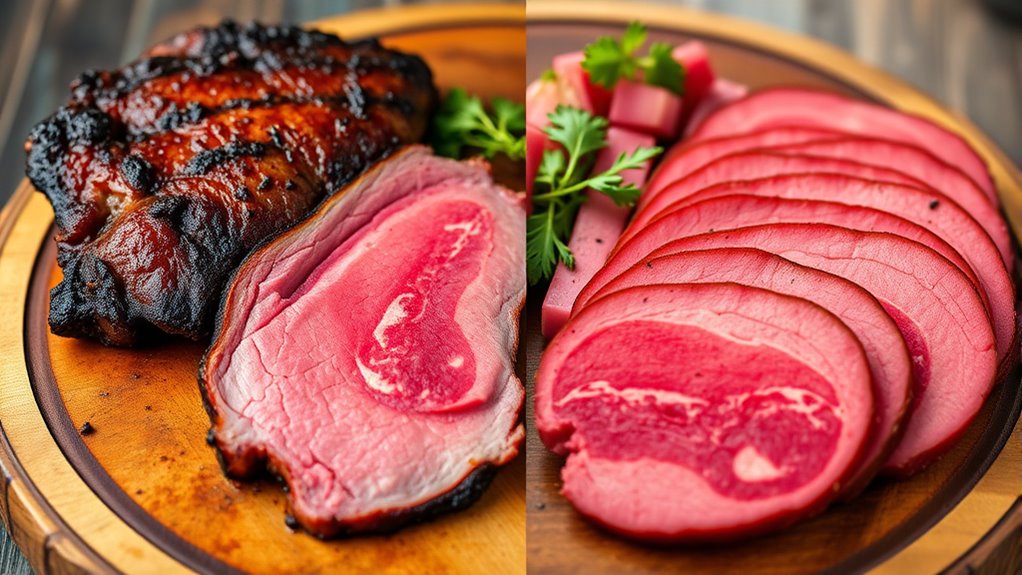
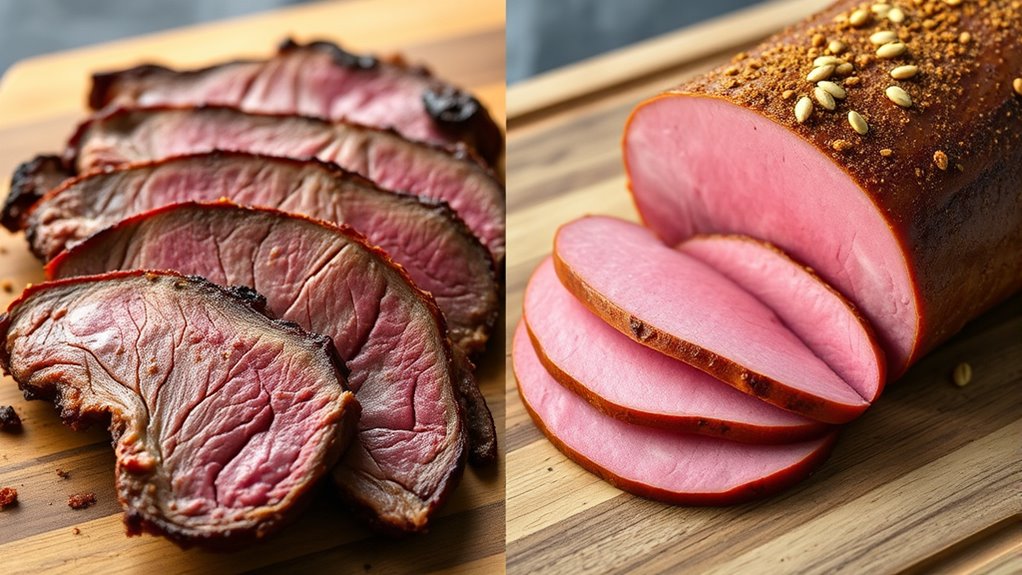
Although both come from the same cut of meat, beef brisket and corned beef offer distinctly different experiences in flavor, texture, and appearance. Brisket is a fresh cut with a firm, chewy texture that becomes tender and smoky when slow-cooked, featuring a deep red or purple-gray color topped with a thick fat cap.
Corned beef, on the other hand, is brisket transformed through the corning beef process—cured in a salty spice brine—giving it a bright pink hue and a tender, moist texture. Flavor-wise, brisket delivers a robust, savory taste, while corned beef brings a salty, tangy, and slightly sweet profile due to its seasoning.
Understanding these key differences helps you appreciate each meat’s unique qualities before cooking or serving.
Cooking Methods for Brisket vs. Corned Beef
Because brisket contains tough connective tissues, you’ll want to cook it low and slow—usually by smoking, braising, or roasting at temperatures around 300-325°F—to break them down and develop tender, flavorful meat. These cooking methods enhance the brisket’s texture and deepen its rich flavor.
In contrast, corned beef is prepared differently due to its curing process. Before cooking, you’ll soak it in water, changing it regularly to reduce saltiness. Then, you’ll typically boil, simmer, or steam the corned beef until tender.
While brisket benefits from slow cooking to soften fibers, corned beef relies on boiling or steaming to heat through after curing. Both cuts need resting after cooking, but brisket often requires wrapping and slow cooling, whereas corned beef is sliced immediately following boiling or steaming.
Cultural Traditions and Uses of Brisket and Corned Beef
You’ll find corned beef takes center stage during Irish St. Patrick’s Day celebrations and shines in Jewish deli sandwiches across New York.
Meanwhile, brisket is a staple of Texas barbecue culture, smoked low and slow for rich flavor.
Understanding these traditions helps you appreciate how each meat plays a unique role in different communities.
Irish St. Patrick’s Day
When you celebrate St. Patrick’s Day, corned beef takes center stage, especially in Irish-American households. Though brisket isn’t traditionally Irish, it’s often used in making corned beef dishes for the occasion. This meal connects you to Irish heritage and immigrant history.
On this day, you’ll likely enjoy:
- Corned beef with cabbage, potatoes, and carrots
- A symbol of hope and prosperity for the Irish new year
- The adaptation of Irish recipes using brisket in America
- A reflection of Irish culture and immigrant experience
Jewish Deli Traditions
Although corned beef and pastrami both come from brisket, Jewish delis have made these cured and smoked meats iconic staples, especially in New York’s immigrant communities. When you visit a Jewish deli, you’ll often find thinly sliced corned beef piled high on rye bread, topped with mustard or pickles.
This cured meat became popular among Jewish immigrants in the early 20th century because it was affordable and flavorful. Meanwhile, brisket itself plays a different role in Jewish cuisine—you’ll usually see it slow-braised or roasted for special holiday meals like Passover and Rosh Hashanah.
Jewish deli traditions clearly separate the cured meat preparation from the tender, slow-cooked brisket dishes, each offering a distinct taste experience rooted deeply in cultural heritage.
Texas Barbecue Culture
While corned beef has its place in various culinary traditions, Texas barbecue culture centers almost exclusively on smoked beef brisket as its signature dish. You’ll find that Texas barbecue emphasizes cooking brisket low and slow over wood smoke, creating tender, flavorful meat.
Austin, in particular, stands out for its exceptional brisket, often outshining Kansas City and Nashville.
Key points about Texas barbecue culture include:
- Brisket is the dominant meat, symbolizing regional identity
- Simple dry rubs highlight the meat’s natural flavor
- Hours of smoking create the iconic tender texture
- Pit-smoking reflects Texas’s rugged, meat-centric heritage
When you savor Texas barbecue, you’re tasting a long-standing tradition that honors smoked brisket above all else.
Choosing Brisket or Corned Beef for Your Recipes
How do you decide between brisket and corned beef for your next meal? It depends on the flavor and cooking method you want. Brisket is a fresh cut of meat from the cow’s chest, perfect for slow roasting, smoking, or braising.
It offers a robust, meaty flavor but usually needs extra seasoning. Corned beef, on the other hand, is a cured version of brisket, infused with saltwater and spices. It’s typically boiled or braised, resulting in a tender, salty taste that’s ready to eat and great for sandwiches or traditional Irish dishes.
When choosing, pick brisket if your recipe calls for long cooking times and bold flavor. Opt for corned beef if you want convenience and a pre-seasoned, slightly salty cut of meat.
Frequently Asked Questions
Is Corned Beef Brisket the Same as Beef Brisket?
No, corned beef brisket isn’t the same as beef brisket. You’re dealing with cured, seasoned meat in corned beef, while brisket is raw or cooked without curing.
The curing process sets them apart.
What Is Poor Man’s Brisket?
Poor Man’s Brisket is a budget-friendly alternative using cheaper beef cuts like chuck or round. You’ll cook it low and slow to tenderize, achieving a flavor and texture similar to traditional brisket without breaking the bank.
Does Corned Beef Taste Like Brisket?
No, corned beef doesn’t taste like brisket. You’ll notice its salty, tangy flavor from curing, which contrasts with brisket’s rich, smoky taste.
The brine and spices create a unique, distinct flavor you won’t find in plain brisket.
What Is so Special About Corned Beef?
What’s special about corned beef is its unique curing process with salt and spices, giving you a tender, flavorful, and slightly tangy meat.
This distinctive method makes it perfect for hearty dishes and sandwiches you’ll love.
Conclusion
You might think beef brisket and corned beef are worlds apart, but they actually share the same starting point—the brisket cut itself.
While one invites you to savor its natural, smoky richness, the other surprises you with its tangy, cured boldness.
So, whether you’re craving comfort or a punch of flavor, knowing this coincidence can help you choose exactly what fits your recipe—and mood—best every time.
Understanding the difference between beef brisket and corned beef is key to mastering your cooking. Both offer unique tastes and textures, making them versatile ingredients in various dishes.