How to Tell the Difference Between Corned Beef and Brisket
You can tell corned beef from brisket by their color and texture: corned beef is cured, giving it a pink hue and a firm, spiced surface, while brisket is raw, darker red, and softer with a natural beefy look.
Understanding the difference between corned beef and brisket is essential for cooking and flavor purposes.
Corned beef is usually pre-cooked and salty, so it’s ready to boil, whereas brisket needs slow cooking or smoking to develop flavor.
The curing process in corned beef not only changes its color but also imparts a distinctive taste.
If you want to master their differences and cooking uses, there’s more to explore. Knowing these details will help you choose the right meat for your recipe and cooking method.
What Are Corned Beef and Brisket?
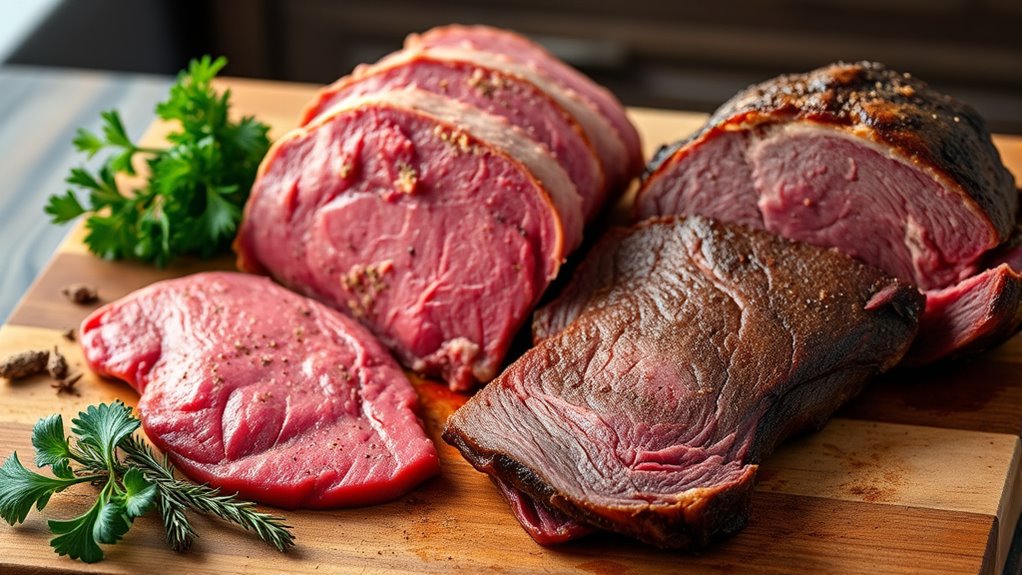
Although both come from the cow’s chest, corned beef and brisket differ markedly: corned beef is cured in a salty, spiced brine that gives it a pinkish hue and seasoned flavor, while brisket is a raw, deep red cut with a pure beef taste that develops through slow cooking or smoking.
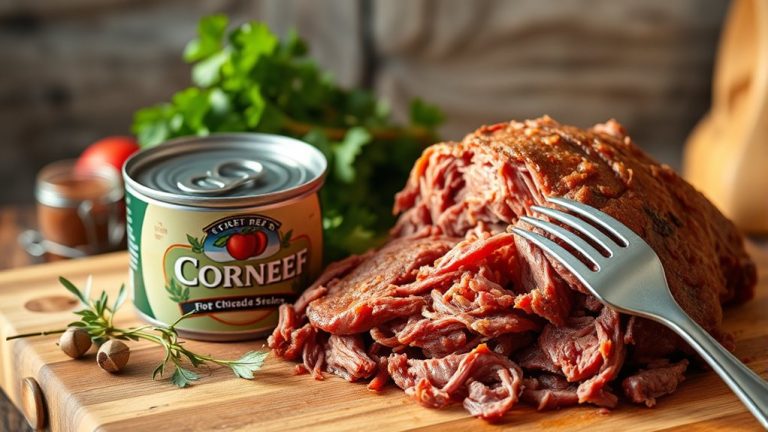
When you look at these cuts of meat, you’ll notice corned beef has undergone a curing process involving pickling spices and salt, soaking the meat for several days. This curing process sets corned beef apart, giving it a distinctive salty, spiced flavor.
Brisket, on the other hand, remains fresh and uncured, so its natural beef flavor shines through once you cook it low and slow or smoke it.
Key Differences Between Corned Beef and Brisket
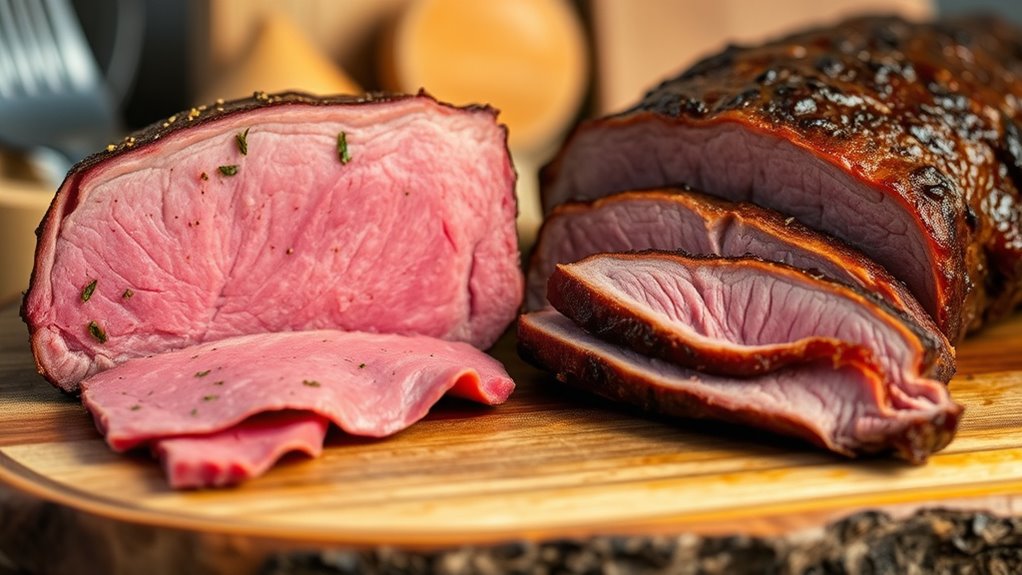
When you compare corned beef and brisket, you’ll notice several key differences in appearance, preparation, and flavor. Corned beef is a cured meat, soaked in a salt brine with spices, giving it a distinct pink color and seasoned taste. In contrast, brisket is an uncured, natural beef cut with a darker red hue and a visible fat cap.
Corned beef often comes pre-cooked or ready for boiling, while brisket is sold fresh and requires slow cooking or smoking to tenderize. Flavor-wise, corned beef offers a salty, spiced profile, whereas brisket retains a more natural, beefy taste. Understanding these differences helps you choose the right meat for your recipe or occasion.
How to Identify Corned Beef vs. Brisket by Look and Feel
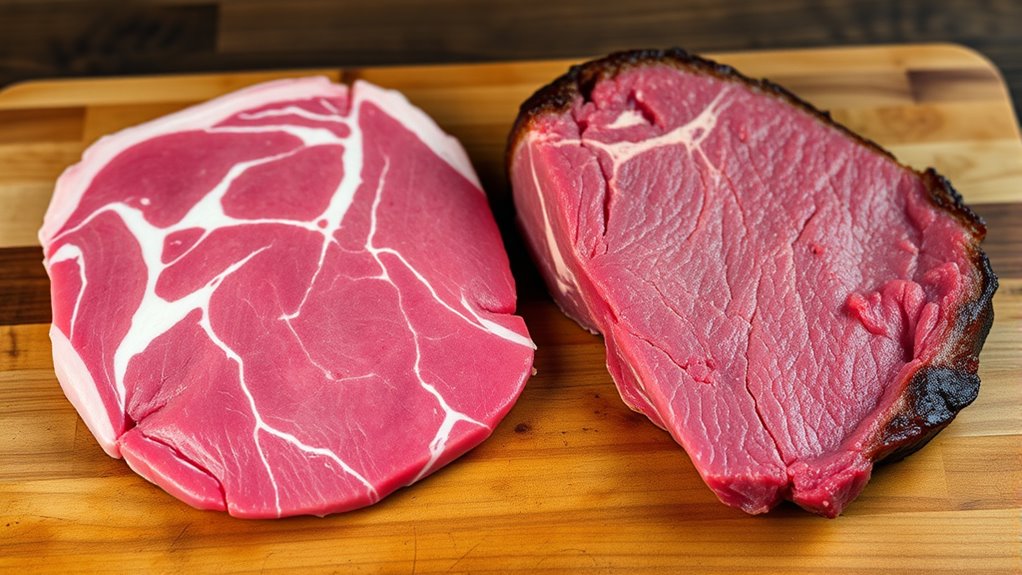
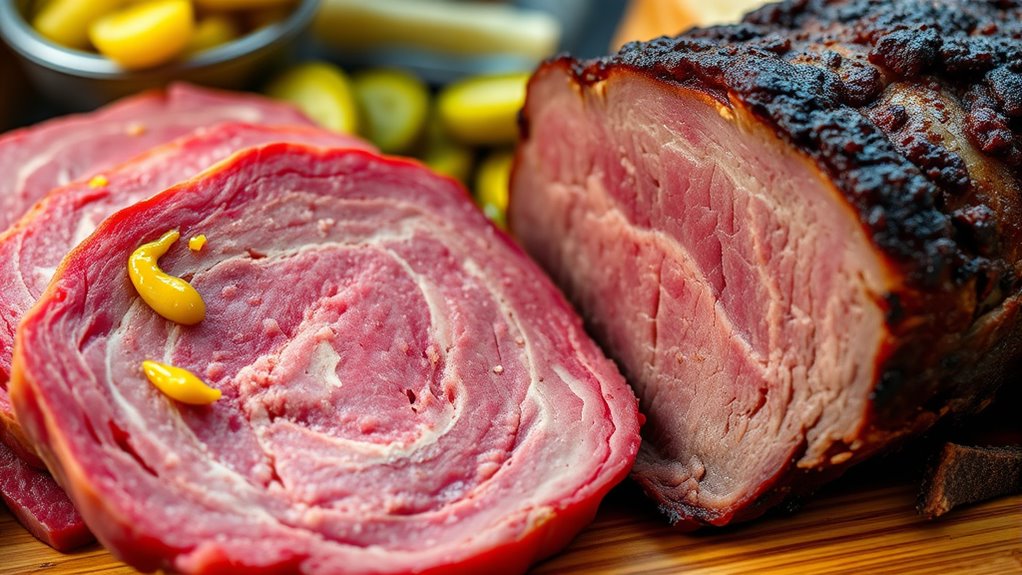
If you want to tell corned beef apart from brisket just by looking and feeling, focus on color, texture, and shape. Corned beef has a distinct pink hue caused by curing, while brisket shows a deeper, irregular red. You’ll notice spice particles on corned beef’s surface, evidence of its seasoning, unlike the natural, unseasoned texture of brisket.
When you press corned beef, it feels firm and compact, with a uniform texture. Brisket, on the other hand, tends to feel softer and more fibrous, often featuring a noticeable fat cap along one side. Additionally, corned beef usually has a rectangular, consistent shape, whereas brisket varies in thickness and comes in a more irregular form.
These visual and tactile clues help you easily distinguish the two.
Flavor Profiles and Cooking Methods for Corned Beef and Brisket
Because corned beef undergoes a curing process, it delivers a salty, tangy flavor accented by spices like coriander and cloves, while brisket offers a rich, straightforward beefiness. You’ll notice corned beef’s unique aromatic profile comes from its curing, which also gives it a pinkish hue.
When it comes to cooking methods, corned beef is best boiled or simmered to keep its tender texture intact. On the other hand, brisket shines when smoked, roasted, or slow-cooked, allowing its deep, smoky, and caramelized flavors to develop.
Understanding these distinct flavor profiles and cooking methods helps you appreciate how corned beef’s curing transforms it differently than brisket’s natural, robust beef taste.
Can You Substitute Corned Beef and Brisket in Recipes?
Understanding the distinct flavors and cooking techniques of corned beef and brisket helps you see why swapping one for the other in recipes can be challenging. Corned beef brisket is cured and salty, while fresh brisket offers a pure beef flavor and requires slow cooking.
If you substitute corned for brisket, you’ll need to soak it to reduce saltiness and adjust cooking time or liquids to avoid dryness.
| Aspect | Corned Beef | Brisket (Fresh) |
|---|---|---|
| Flavor | Salty, spiced | Mild, pure beef |
| Preparation | Cured, pre-cooked | Raw, slow-cooked |
| Cooking Time | Short, reheating | Long, low and slow |
| Moisture Content | Higher | Lower |
| Seasoning Adjust | Needed (less salt) | Standard |
Frequently Asked Questions
Is There a Difference Between Corned Beef and Corned Beef Brisket?
Yes, there is a difference. Corned beef brisket specifically comes from the brisket cut, cured with spices, while corned beef can come from various cuts.
What Is Poor Man’s Brisket?
Picture a medieval feast: Poor Man’s Brisket is a budget-friendly beef cut, tougher but flavorful.
You’ll slow-cook it to tender perfection, making it a smart choice when you want hearty, delicious comfort food without splurging.
How to Identify Beef Brisket?
You can identify beef brisket by its large size, thick fat layer on top, deep red color, and dense muscle structure. Look for raw cuts labeled “beef brisket,” often with a noticeable fat cap and two distinct sections.
The two sections are known as the flat and the point, each with different textures and fat content. The flat is leaner and more uniform, while the point is thicker and contains more marbling. These characteristics help distinguish brisket from other beef cuts.
Does Corned Beef Taste Like Brisket?
Picture a knight tasting corned beef and brisket side by side—you’ll notice they don’t taste the same.
Corned beef’s tangy, salty cure sets it apart from brisket’s natural, smoky, beefy flavor you’ll recognize instantly.
Conclusion
Now that you can spot the differences between corned beef and brisket, you’re like a chef holding two distinct brushes, ready to paint your culinary canvas. Corned beef shines with its salty sparkle and tender texture, while brisket offers a hearty, smoky embrace.
Whether you’re slow-cooking or boiling, knowing these nuances lets you craft dishes that sing. So, trust your senses and let your kitchen adventures unfold like a flavorful story. Understanding how to tell the difference between corned beef and brisket will elevate your cooking and enhance every meal.