10 Key Differences Between Ice Melt and Rock Salt
When choosing between ice melt and rock salt, you’ll find key differences in composition and performance that are important to understand. Rock salt is mostly sodium chloride, while ice melt blends in calcium or magnesium chlorides for better cold-weather effectiveness. These differences impact how each product works on icy surfaces.
Ice melt works faster and remains effective at much lower temperatures compared to rock salt. However, rock salt provides better traction on slippery surfaces, making it useful in certain conditions.
Ice melt is typically safer for pets and the environment, though it generally costs more. Knowing when and how to use each product can help keep your surfaces safe and damage-free. Explore these details to make the best choice for your needs.
Composition of Rock Salt and Ice Melt
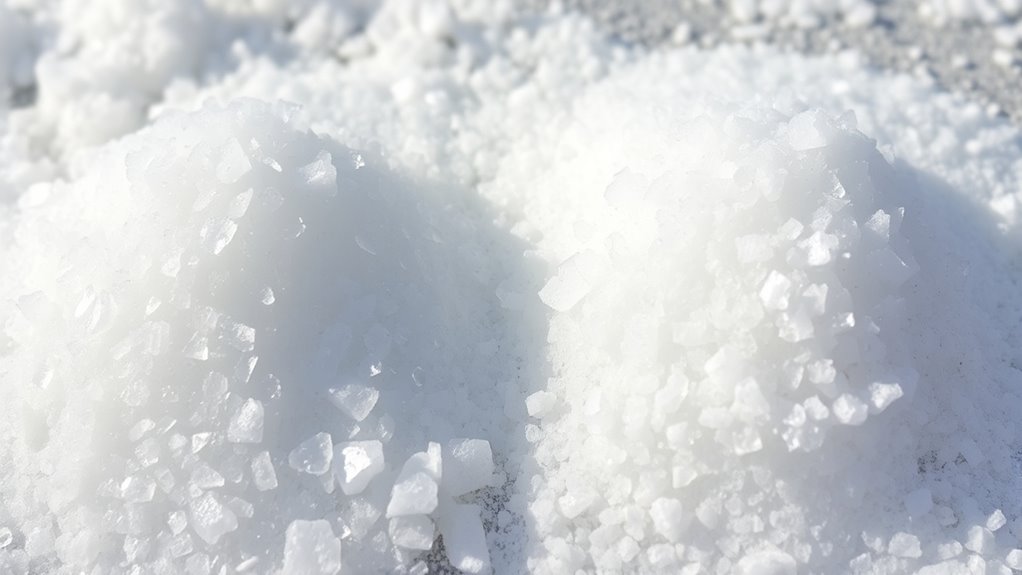
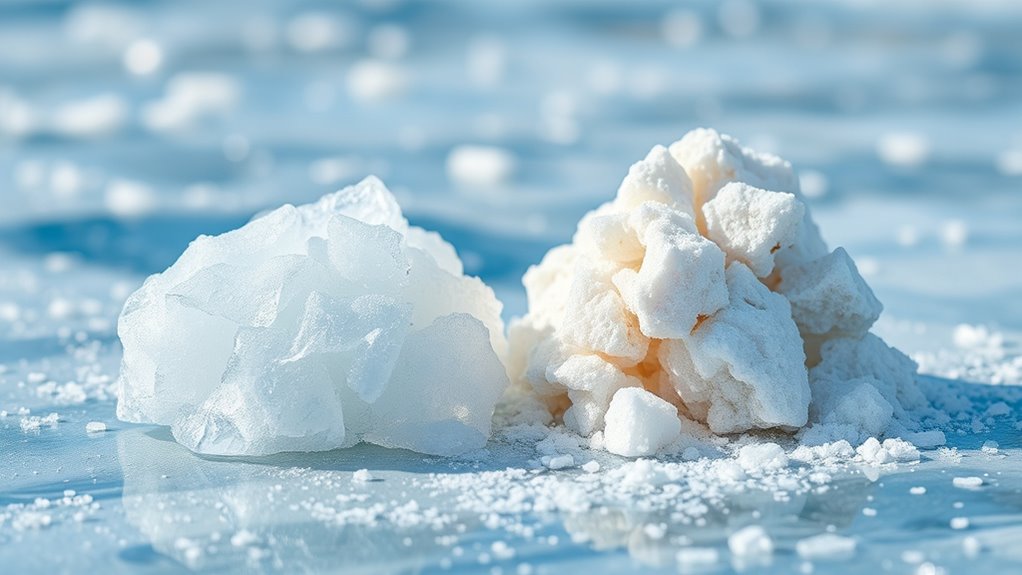
Although rock salt is a natural mineral consisting mainly of sodium chloride, ice melt products mix sodium chloride with chemicals like calcium chloride and magnesium chloride to boost melting power.
You’ll notice rock salt features larger crystalline particles, making it effective for basic de-icing. However, its chemical composition is relatively simple and less efficient at melting ice under extreme cold.
Ice melt formulations include chemical agents such as calcium chloride and magnesium chloride that lower the freezing point faster and work at much lower temperatures. This blend enhances melting performance, allowing ice to break down more quickly and reliably.
When you choose between rock salt and ice melt, understanding these differences in chemical composition helps you pick the right product for efficient and effective winter surface treatment.
How Temperature Influences Rock Salt and Ice Melt
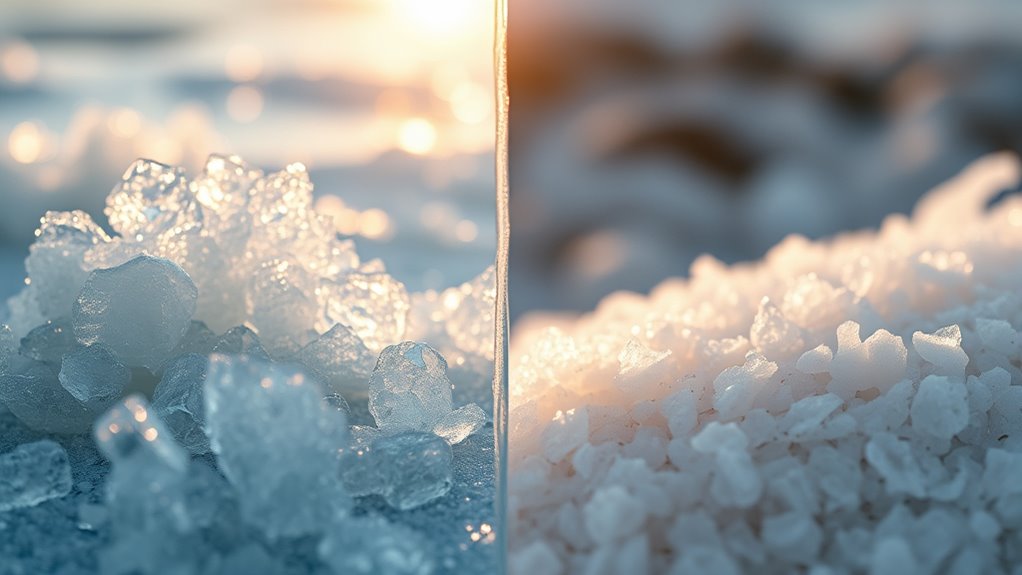
You’ll notice rock salt works well down to about 5°F but loses effectiveness in colder weather.
Ice melt, especially ones with calcium chloride, keeps melting ice even at temperatures as low as -25°F.
Understanding these temperature limits helps you choose the best product for faster melting and better cold-weather performance.
Effective Temperature Range
When temperatures drop below 5°F, rock salt loses much of its effectiveness, so you’ll need an alternative ice melt product to keep surfaces clear. Rock salt primarily lowers water’s freezing point but only works well within a limited temperature range.
Calcium chloride ice melts remain effective at much lower temperatures due to an exothermic reaction that releases heat while melting ice.
Here’s what you should know:
- Rock salt’s melting point limits its use above the 5°F temperature threshold.
- Calcium chloride extends the effective temperatures down to -25°F.
- The exothermic reaction helps melt ice faster at low temperatures.
- Choose your product based on the temperature range to ensure maximum efficiency.
Understanding this helps you pick the right solution for winter conditions.
Melting Speed Variations
How fast ice melts depends heavily on the temperature and the type of product you use. When comparing ice melt vs rock salt, you’ll notice significant melting speed differences at lower temperatures. Rock salt starts losing effectiveness below 5°F, slowing the melting process.
Ice melt, especially calcium chloride-based, triggers chemical reactions that release heat, maintaining efficiency at cold and melting ice faster even down to -25°F.
| Temperature Range | Rock Salt Melting Speed | Ice Melt Melting Speed |
|---|---|---|
| Above 5°F | Fast | Fast |
| 0°F to 5°F | Moderate | Fast |
| -15°F to 0°F | Slow | Moderate to Fast |
| Below -15°F | Ineffective | Fast |
This table highlights how temperature effectiveness impacts your choice and melting speed.
Cold Weather Performance
Although rock salt works well down to about 5°F, it loses its effectiveness as temperatures drop further, leaving you with slower melting or none at all.
When dealing with cold weather and ice melting, understanding each option’s freezing point is essential. Here’s what you should know:
- Calcium chloride melts ice effectively at temperatures as low as -25°F, making it ideal for extreme cold.
- Magnesium chloride performs well between 0°F and -15°F, offering reliable ice melting in moderate low temperatures.
- Rock salt relies on brine formation, which slows below 5°F, reducing its ice melting efficiency.
- Specialized ice melt products chemically break down ice quickly, even in extreme cold, unlike rock salt.
Choosing the right product guarantees effective melting regardless of how low temperatures fall.
Which Melts Ice Faster: Rock Salt or Ice Melt?
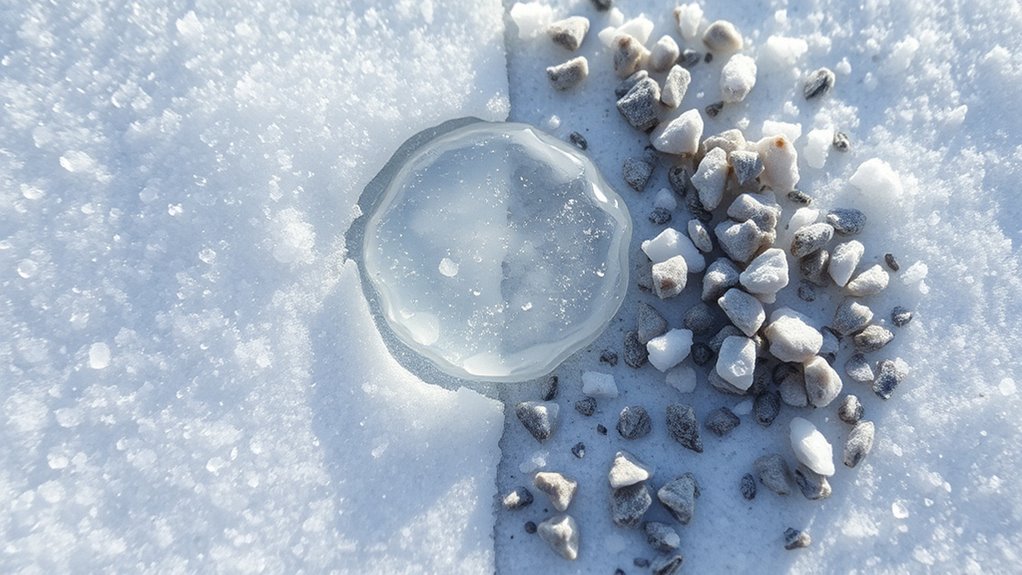
Wondering which product will clear your icy driveway faster? Ice melt generally outperforms rock salt in melting speed due to its chemical properties.
Unlike rock salt, which works effectively only above 5°F, ice melt contains compounds like calcium chloride that generate heat, allowing it to de-ice snow and ice down to -25°F.
Ice melt works down to -25°F thanks to heat-generating compounds like calcium chloride, unlike rock salt effective only above 5°F.
This means ice melt activates and spreads quickly, often melting ice within 15-30 minutes. Rock salt, on the other hand, relies more on physical abrasion and takes longer to show results.
If you’re tackling stubborn ice in colder temperatures, ice melt offers greater effectiveness by penetrating and weakening ice bonds rapidly.
Traction Benefits of Rock Salt and Ice Melt
When you’re dealing with icy surfaces, rock salt gives you immediate traction thanks to its coarse particles that grip the ice.
Ice melt, on the other hand, focuses on melting ice chemically and usually doesn’t improve surface grip by itself.
To boost safety, you’ll often need to combine ice melt with sand or gravel for better traction.
Traction Efficiency Comparison
How does traction differ between rock salt and ice melt? When you’re tackling icy surfaces, understanding their traction efficiency is key. Rock salt offers immediate slip resistance thanks to its coarse texture, providing both de-icing and surface grip through its abrasive roughness.
Ice melt, however, focuses on chemical melting and lacks inherent traction benefits.
Here’s a quick comparison:
- Rock salt improves traction by adding grit and roughness to icy surfaces.
- Ice melt speeds up de-icing but doesn’t enhance surface grip.
- Combining ice melt with abrasives like sand boosts slip resistance.
- Rock salt’s traction benefits make it ideal for milder winter conditions needing both melting and grip.
Knowing this helps you pick the right product for safe, effective ice management.
Surface Grip and Safety
Why does surface grip matter so much during icy conditions? It’s all about safety and slip prevention. Rock salt offers excellent traction benefits because its coarse, granular texture improves footing on icy surfaces immediately.
This surface grip helps you avoid slips and falls by providing a rough layer to walk on. On the other hand, ice melt chemically breaks down ice but doesn’t add any traction, leaving surfaces smooth and potentially slippery.
To boost safety when using ice melt, you should apply abrasives like sand or ash alongside it. These abrasives enhance traction by creating a gritty surface that improves footing.
For the best slip prevention, combining ice melt with physical abrasives ensures maximum traction and safer icy walkways overall.
How Rock Salt and Ice Melt Affect Surfaces and Vehicles
Although both rock salt and ice melt help keep surfaces clear of ice, they affect your property and vehicles differently. Rock salt’s abrasive effects and chemical properties can lead to concrete damage, metal corrosion, and vehicle rust over time.
Rock salt and ice melt both clear ice but impact your property and vehicles in distinct ways.
Ice melt, especially calcium or magnesium chloride-based, is generally gentler but may still cause some wear if overused.
Here’s what you should know:
- Rock salt accelerates corrosion on metal surfaces and vehicle undercarriages.
- Ice melt tends to cause less surface damage and metal corrosion.
- Prolonged exposure to either can increase concrete damage and vehicle rust.
- Choosing environmentally friendly ice melts minimizes these risks while controlling ice effectively. Proper application and timely cleanup help protect your surfaces and vehicles from damage.
Environmental and Pet Safety Differences Between Rock Salt and Ice Melt
When choosing between rock salt and ice melt, you should consider their impact on the environment and your pets’ health.
Pet-safe ice melts reduce risks of irritation and toxicity, while traditional rock salt can harm paws and nearby vegetation.
Using these products carefully and cleaning your pets afterward helps minimize chemical exposure and environmental damage.
Environmental Impact Comparison
Because you care about both the environment and your pets, choosing between rock salt and ice melt requires understanding their impacts. Rock salt often causes significant environmental harm through chloride leaching, leading to soil damage and water pollution.
In contrast, eco-friendly ice melt options reduce these risks, promoting better ecological safety. Consider these key points:
- Rock salt’s high solubility leads to persistent chloride leaching in soil and water.
- Ice melt products with calcium or magnesium chlorides lower environmental impact.
- Eco-friendly ice melt formulations use safer ingredients like beet juice or potassium chloride.
- Pet-safe formulations minimize risks to animals while protecting the environment.
Pet-Safe Ice Melt Options
If you want to protect your pets while keeping walkways safe, choosing pet-safe ice melt makes a big difference. Pet-safe ice melt options often contain calcium magnesium acetate or potassium chloride, which are less likely to cause skin irritation or burns on your pets’ paws compared to traditional rock salt.
These non-toxic formulas minimize harm if accidentally ingested and typically include soothing additives like aloe to promote paws safety.
Additionally, environmentally friendly ice melts release fewer harmful chemicals, reducing damage to your yard and local waterways.
By selecting these safer products, you’re ensuring your pets can enjoy the outdoors without painful reactions or toxicity risks.
Always remember to shovel snow first and apply ice melt carefully to maximize the benefits of any ice melt option you choose.
Minimizing Chemical Exposure Risks
Although both rock salt and ice melt products effectively clear ice, you should be aware of their different chemical impacts on the environment and your pets. Minimizing chemical exposure is key to safe use. Here’s how you can reduce toxicity risks:
- Choose pet-safe and environmentally friendly ice melts with additives that lower harm to animals and plants.
- Follow application instructions carefully to avoid overuse, which can cause runoff contamination affecting soil and water.
- Limit the amount of rock salt you apply, as its high sodium chloride content increases environmental and skin irritation risks.
- Store de-icers properly to prevent accidental exposure and contamination.
Cost Comparison: Rock Salt vs Ice Melt
When you’re choosing between rock salt and ice melt, cost often plays a big role in your decision. A 50-pound bag of rock salt typically costs between $10 and $20, making it the more affordable and economic option. If you’re on a tight budget or managing large-scale expenses, rock salt can help you save money.
Ice melt, on the other hand, ranges from $15 to $35 for the same quantity. While it’s pricier, the faster melting action and effectiveness at lower temperatures might justify the higher price for your needs.
Ultimately, rock salt offers a cost-efficient solution for regular use, but if you need quick results, investing in ice melt may be worth the extra expense.
Best Application Practices for Rock Salt and Ice Melt
To get the best results from rock salt or ice melt, you should always clear away loose snow and ice before application. Proper preparation boosts melting efficiency and reduces chemical use.
For ideal application, follow these steps:
- Use calibrated spreaders or gloves for even distribution, avoiding overuse with a thin layer.
- Adhere strictly to manufacturer-recommended application rates to ensure safety and effectiveness.
- Reapply as needed after fresh snowfall or rain to maintain traction and prevent refreezing.
- Once melting occurs, shovel away remaining slush and ice to minimize surface contact and hazards.
Whether you choose manual application or spreaders, these practices enhance safety and maximize product performance. Following these guidelines ensures you use rock salt or ice melt efficiently and responsibly.
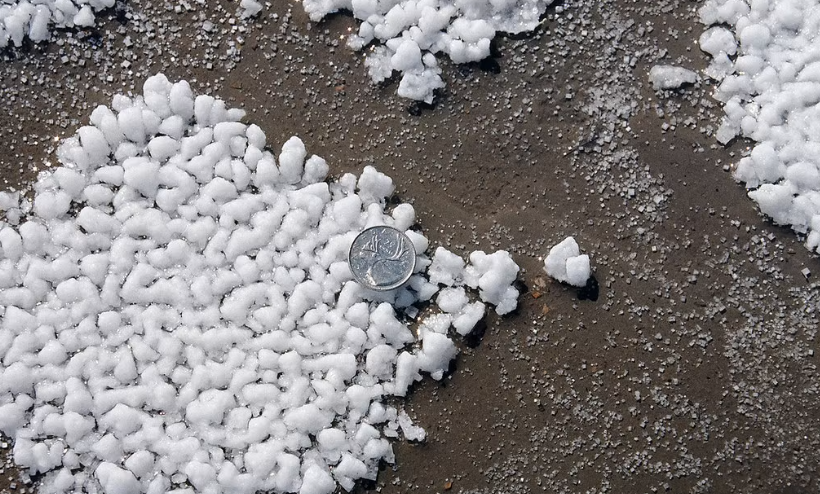
How to Store Rock Salt and Ice Melt
Since rock salt and ice melt can lose effectiveness if exposed to moisture and heat, you should store them in a cool, dry place inside sealed containers. Proper storage prevents clumping and moisture absorption, preserving their de-icing power.
Keep containers labeled to distinguish products and avoid misuse. Store them away from direct sunlight, heat, and humidity, and off the ground to prevent water damage. Also, avoid areas accessible to pets and children due to toxicity concerns.
| Storage Tip | Reason |
|---|---|
| Use sealed containers | Prevent moisture absorption |
| Store in dry place | Avoid clumping |
| Label containers | Prevent accidental misuse |
| Keep off ground | Prevent water damage |
| Avoid heat sources | Maintain temperature stability |
When to Choose Rock Salt or Ice Melt for Your Needs
Although both rock salt and ice melt serve to clear icy surfaces, you’ll want to pick the right one based on temperature and your specific needs. Here’s when to choose each for the best application:
- Use rock salt in milder temperatures above 5°F for cost-effective melting and added traction on walkways.
- Opt for ice melt below 5°F to ensure faster melting and effective ice prevention, even down to -25°F.
- Consider rock salt if environmental impact isn’t a concern and you need physical traction immediately.
- Choose ice melt to minimize concrete damage and reduce environmental harm, especially before storms.
Frequently Asked Questions
What Is the Difference Between Rock Salt and Ice Melt?
You’ll find rock salt melts ice above 5°F and offers traction, while ice melt works faster at colder temps, down to -25°F. Ice melt’s gentler on surfaces but costs more, whereas rock salt’s cheaper yet harsher.
What Is the Difference Between Rock Salt and Deicing Salt?
You’ll find rock salt’s rough and ready, working well when warmth wanes, but deicing salt’s a chemical champion, melting more mightily at much colder moments.
Will Rock Salt Keep Ice From Melting?
No, rock salt won’t keep ice from melting; it actually helps melt existing ice by lowering water’s freezing point.
But it won’t prevent ice buildup or keep ice from forming on surfaces before freezing happens.
What Are the Pros and Cons of Using Rock Salt?
You’ll find rock salt costs about $10–$20 per 50 pounds and works well above 15°F, but it damages concrete, harms pets, and pollutes the environment.
Conclusion
When you sprinkle just one pound of rock salt, it can melt up to 46 pounds of ice—that’s like turning a small snowball into a puddle!
Knowing the key differences between rock salt and ice melt helps you select the right product for your driveway or sidewalk.
Whether you want faster melting, better traction, or surface safety, choosing wisely ensures you stay safe and save money all winter long.
Understanding these differences between ice melt and rock salt is essential for effective winter maintenance and protecting your property.