How to Spot the Difference Between Prime and Choice Beef
You can spot the difference between prime and choice beef by looking at marbling and packaging.
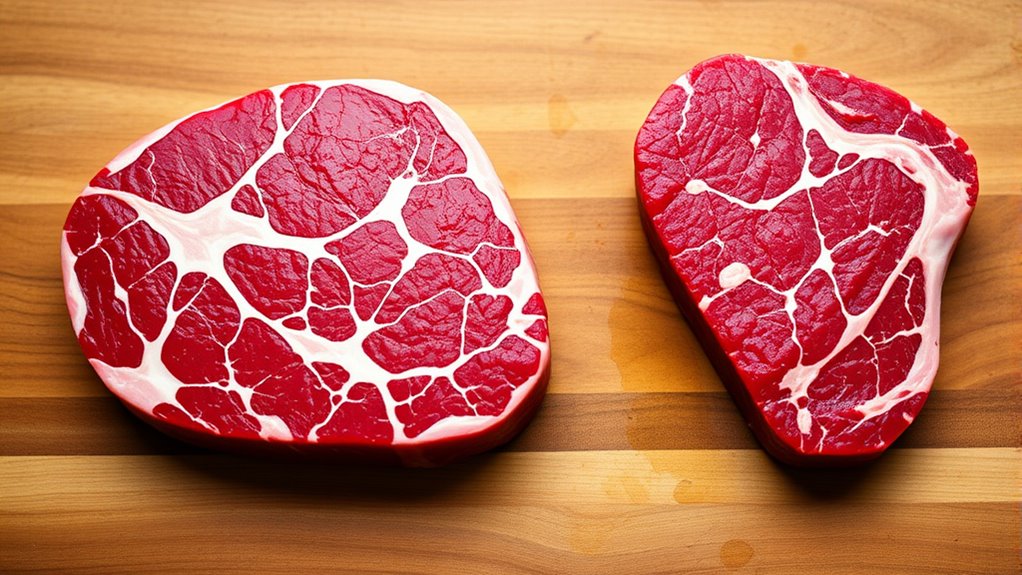
Prime beef has abundant, fine marbling—those white flecks evenly spread throughout the meat—that gives it a tender, juicy texture. It often carries a USDA prime shield on its package and is usually found in high-end stores or restaurants.
Choice beef has less marbling, appears leaner, and is common in most grocery stores. Keep exploring to learn how these grades affect flavor, cost, and cooking methods.
Understanding USDA Prime and Choice Beef Grades
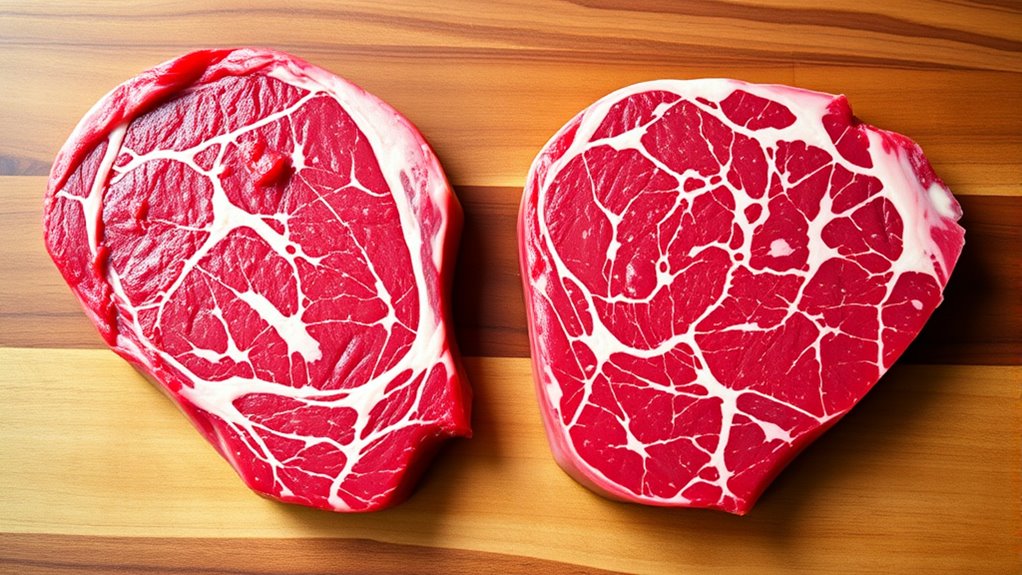
Although both Prime and Choice beef come from young cattle, USDA Prime stands out because it contains substantially more marbling, which gives you superior tenderness and flavor. The USDA meat grading system evaluates beef quality grades based on factors like marbling and maturity.
USDA Prime beef, representing only 2-3% of all beef, meets the highest USDA grade standards for marbling and texture. Choice beef, while still tender and juicy, has less marbling and is more widely available.
When comparing USDA Prime vs Choice, you’ll notice that Prime often carries USDA grade shields on packaging to highlight its premium status. Understanding this grading process helps you choose the best beef for your needs, ensuring you get the quality you expect every time.
How to Identify Prime vs Choice Beef by Marbling and Appearance
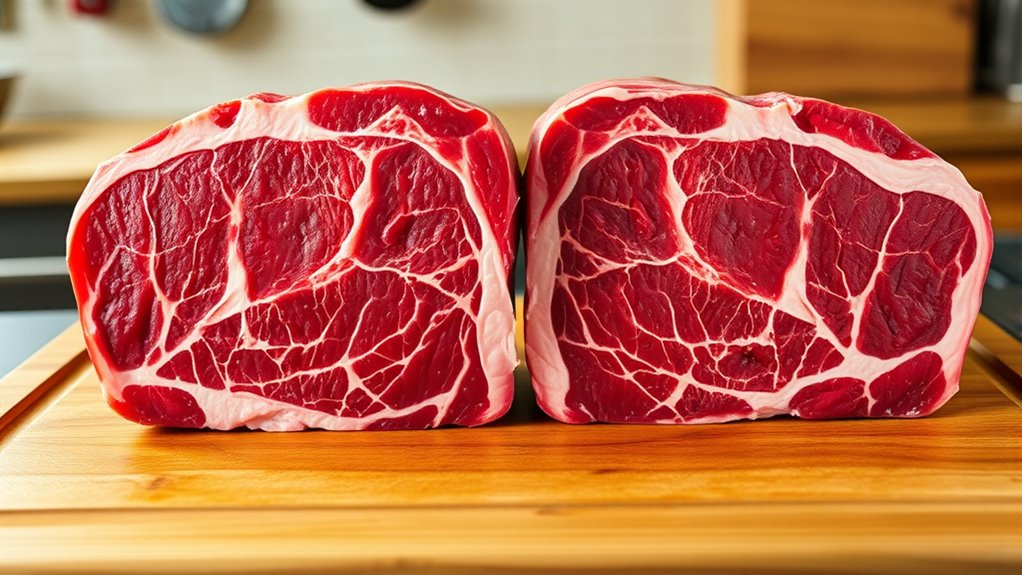
Recognizing the difference between Prime and Choice beef becomes easier once you know what to look for in marbling and appearance. Prime beef features abundant, fine marbling throughout the muscle, creating a speckled marbling pattern with small, delicate streaks evenly dispersed. This gives Prime beef a moist, tender appearance due to its higher fat content.
In contrast, Choice beef shows less marbling, with larger, more isolated patches near the surface, producing a leaner, firmer look. When inspecting meat, focus on the concentration of white flecks within the lean sections—Prime has more, while Choice’s marbling is sparser.
USDA grading marks also help; Prime cuts often display the USDA Prime shield, whereas Choice lacks this designation, making marbling and overall appearance your best clues to identifying the grade.
Where to Find USDA Prime and Choice Beef in Stores and Restaurants
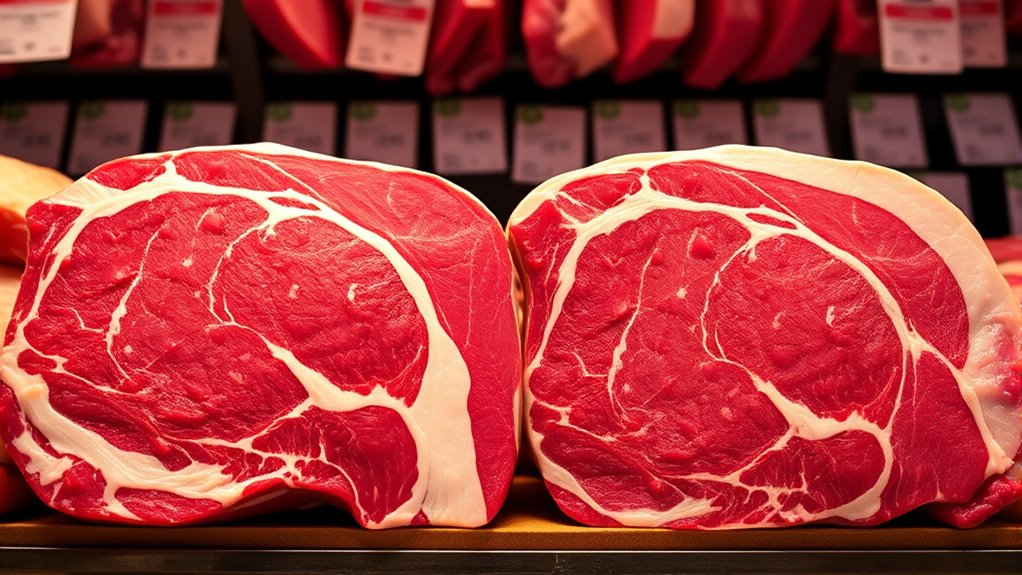
When shopping for USDA Prime or Choice beef, you’ll find Prime cuts mainly in high-end restaurants, specialty butcher shops, and select gourmet grocery stores, as they’re less common in regular supermarkets. USDA Prime is prized for superior marbling and meets the highest grade standards, often marked by the USDA grade shield on packaging.
Choice beef, on the other hand, is widely available in most grocery stores, offering excellent restaurant quality for everyday meals. Specialty butchers can guide you to the best beef cuts matching your needs.
When dining out, upscale steakhouses typically serve USDA Prime, while casual restaurants usually offer Choice or Select grades. To verify you’re getting authentic USDA Prime or Choice, always look for the meat grading label or ask your butcher directly.
How to Choose Prime vs Choice Beef Based on Taste and Budget
Deciding between Prime and Choice beef comes down to balancing taste preferences and budget. Prime beef, with superior marbling and tenderness, is perfect if you want the best flavor and don’t mind spending more. Choice beef, a lower USDA beef grade, offers good marbling and tenderness at a budget-friendly price.
Meat graders assess quality grades based on marbling and meat on the carcass, helping you pick the right cut. Consider these points:
- Choose Prime beef for premium taste and exceptional tenderness.
- Opt for Choice beef when you want quality without breaking the bank.
- Look for well-marbled Choice cuts to get near-Prime flavor.
- Match your pick to your cooking plans and budget constraints. This way, you enjoy great beef within your means.
Cooking Tips to Maximize Flavor and Tenderness of Prime and Choice Beef
Although both Prime and Choice beef offer great flavor, you can boost their tenderness and taste by choosing the right cooking methods. For steaks with abundant marbling from higher USDA grades like Prime, dry-heat methods such as grilling, broiling, or roasting work best to highlight quality beef’s natural juices. Use a meat thermometer to reach about 130-135°F for medium-rare, ensuring you don’t overcook and lose tenderness.
After cooking, let the beef cuts rest for 5-10 minutes to redistribute juices and maximize flavor. For less tender Choice cuts, marinate or opt for slow cooking techniques like braising to improve tenderness. By matching cooking methods to each cut’s qualities, you’ll get the most from both Prime and Choice beef.
Frequently Asked Questions
How Can You Tell Prime Beef From Choice?
You can tell prime beef from choice by checking for the USDA Prime label and noticing the marbling.
Prime has finer, more evenly spread fat inside the muscle, while choice has less, often just on the surface.
What’s Better, 80/20 or 93/7 Ground Beef?
If you want juicier, flavorful burgers, go for 80/20. But if you’re watching fat intake or want leaner meat, 93/7 is better.
It all depends on your taste and health goals.
Does Texas Roadhouse Use Choice or Prime Steak?
You’ll find Texas Roadhouse mostly uses USDA Choice steaks, like when you order their classic ribeye—tender and well-marbled but not Prime.
If you want Prime, ask; availability varies by location and supplier.
What Is Healthier, Prime or Choice?
Choice beef is healthier because it has less marbling and fat than Prime. You’ll consume fewer calories and saturated fats, especially if you cook it healthily and control your portion sizes.
Conclusion
So, now that you know Prime beef has more marbling and usually costs more, you might think it’s the obvious choice every time. But hey, if you enjoy chewing your steak a little longer or saving some cash for dessert, Choice might just be your best friend.
Either way, whether you splurge or play it smart, you’ll still end up with a tasty steak—because, let’s be honest, it’s beef, not rocket science. When deciding between Prime and Choice beef, consider your budget and taste preferences.
In the end, understanding how to spot the difference between Prime and Choice beef helps you make the best choice for your meal.