What Is the Most Expensive Beef Cut and Why
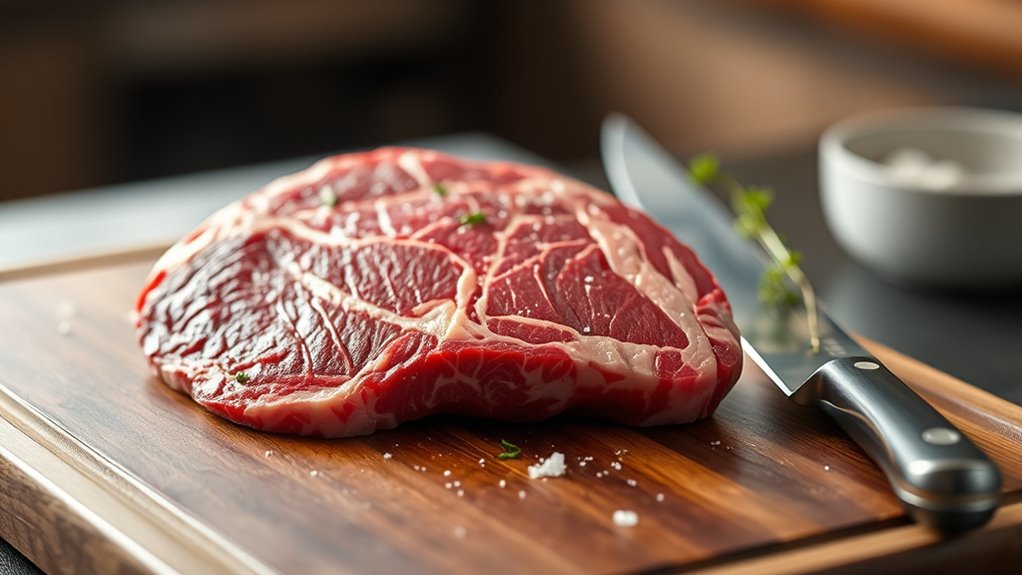
If you want the most expensive beef cut, look for Kobe or Matsusaka Wagyu. These premium beef cuts are renowned for their extreme marbling, which enhances tenderness and flavor. Their strict rearing standards and official certification ensure top quality you can truly savor.
Cuts like the Tomahawk ribeye also stand out, offering impressive size and presentation that justify a premium price. These factors combine to make these steaks top-tier luxury.
Keep exploring to discover the qualities that set these exceptional cuts apart.
Key Factors Making Beef Cuts Expensive
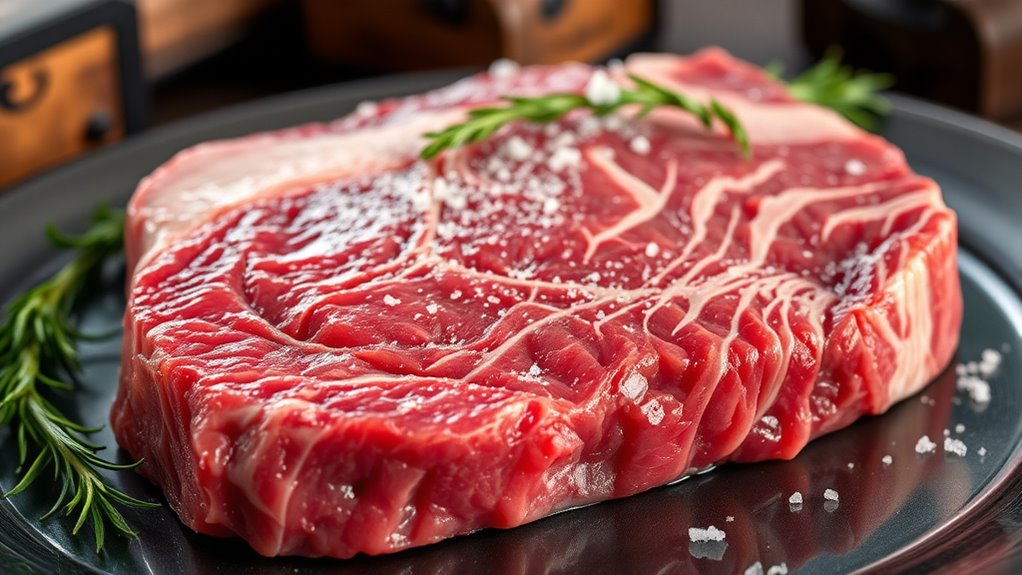
When you consider why some beef cuts cost more, marbling quality stands out as a key factor. Marbling—the intramuscular fat—enhances tenderness and flavor, making cuts far more desirable. Take Wagyu, for example; its superior marbling sets high quality standards that few other breeds meet.
Exclusive breeds like Kobe or Matsusaka also drive prices up due to their rarity and strict breeding protocols. Beyond genetics, the aging process plays a vital role. Extended dry-aging, sometimes lasting up to 120 days, intensifies flavor and tenderizes meat, adding to production costs.
Finally, the size and presentation of premium cuts, such as tomahawk or porterhouse steaks, increase demand and justify their higher market price. Understanding these factors helps you appreciate why some beef cuts command a premium.
Why Wagyu Beef Is the Gold Standard for Luxury Steaks
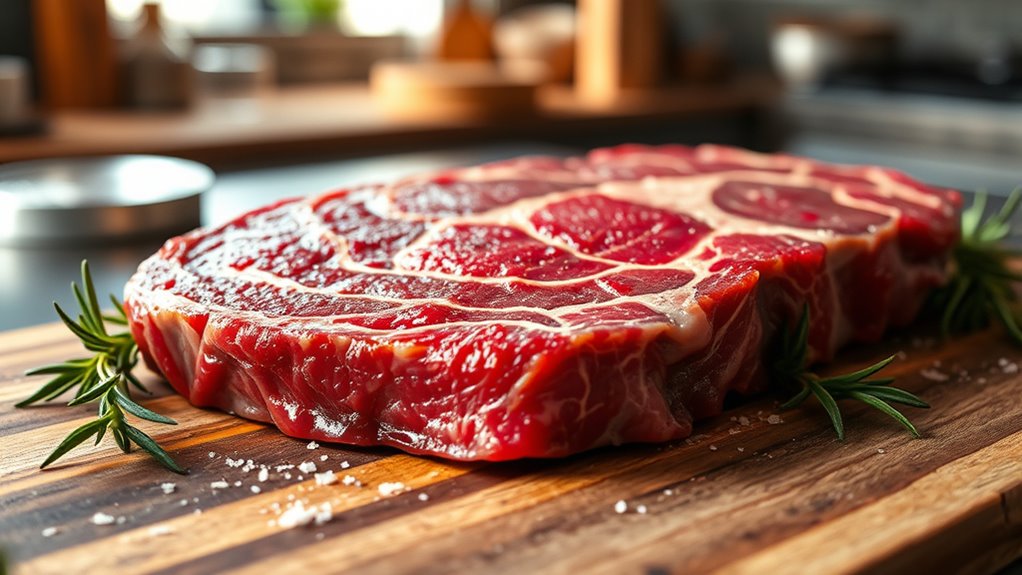
Because Wagyu beef offers unmatched marbling and a buttery texture, it sets the benchmark for luxury steaks worldwide. When you savor Japanese A5 Wagyu, you experience a rich flavor and melt-in-your-mouth softness that few other cuts can match.
This exceptional marbling results from meticulous breeding, stress-free raising, and a specialized diet, all contributing to its high price. You’ll notice the fat in Wagyu is mostly monounsaturated, adding a healthier, creamy quality to each bite.
Its limited supply and strict grading standards make Wagyu highly sought-after in premium markets. If you want a steak that defines luxury, Wagyu’s distinct taste, texture, and exclusivity make it the ultimate choice in high-end dining.
Why Kobe and Matsusaka Beef Are the Most Expensive Wagyu
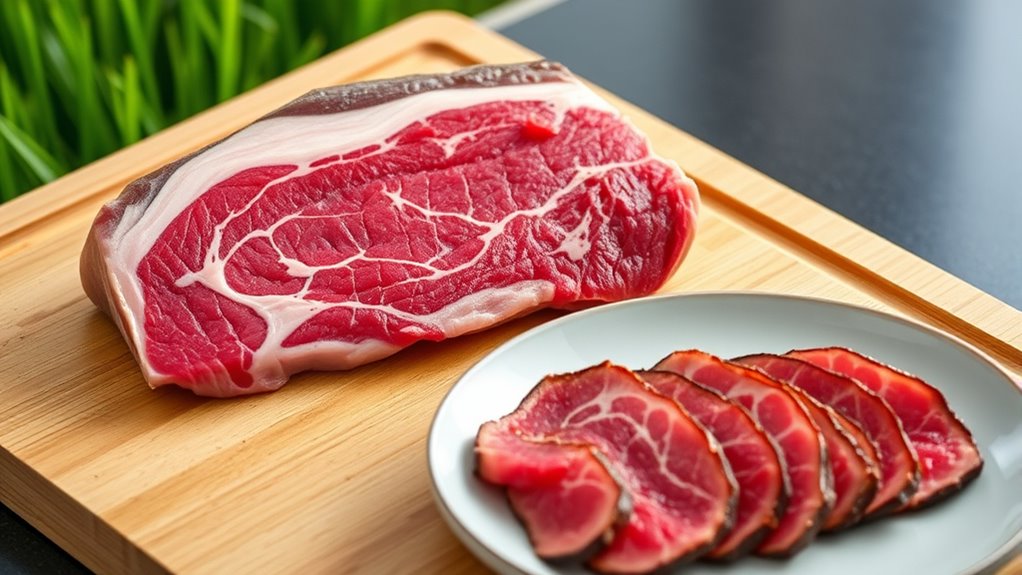
What makes Kobe and Matsusaka beef the most expensive Wagyu varieties? You’ll find it’s their unmatched quality and exclusivity. Here’s why:
- Strict Standards: Kobe beef comes from Tajima cattle in Hyōgo Prefecture with a marbling score of 6+, ensuring premium quality.
- Exclusive Breeding: Matsusaka beef is from virgin female Tajima cattle raised near Lake Biwa, focusing on superior marbling and flavor.
- Meticulous Care: Both receive specialized diets including sake and grains, raising production costs and quality.
- Authenticity and Scarcity: Japanese authorities strictly certify origins, limiting supply and maintaining exclusivity.
When you choose Kobe beef or Matsusaka beef, you’re paying for the highest marbling, authenticity, and the rarest Wagyu, making them the epitome of luxury in the beef world.
How Marbling and Tenderness Drive Beef Prices
You’ll notice that marbling plays a huge role in boosting beef’s flavor and tenderness, making each bite richer. The muscle’s use affects tenderness too, with less-used muscles offering a softer texture.
Plus, aging the beef further enhances its texture, adding to its value and appeal.
Marbling’s Impact On Flavor
How does marbling transform a simple cut of beef into a luxurious dining experience? It’s all about how rich marbling enhances flavor and tenderness, elevating beef quality and justifying high prices.
When you choose beef with exceptional marbling, you enjoy:
- Juicier cuts as intramuscular fat melts at low temperatures, delivering a buttery taste.
- Intensified flavor, making each bite more savory and memorable.
- Improved tenderness, which makes the meat effortless to chew and savor.
- Premium beef quality resulting from careful breeding and feeding practices.
This combination of marbling’s sensory benefits directly drives the desirability and cost of top-tier beef cuts, like Japanese A5 Wagyu, turning them into prized culinary treasures you’ll gladly pay extra for.
Tenderness From Muscle Use
Because muscles that see less activity develop finer textures, cuts like tenderloin and ribeye offer unmatched tenderness and marbling that you can taste. These less exercised muscles contain minimal connective tissue, allowing fat to disperse evenly within the fibers, which enhances both tenderness and flavor.
When you choose beef cuts with high marbling, you’re selecting superior cut quality that stands out in the high-end market. The tenderness you experience is directly tied to how little the muscle was used during the animal’s life, making these cuts rarer and more valuable.
This is why premium beef, like Wagyu or Kobe, commands such high prices—the exceptional marbling and tenderness from less worked muscles create an eating experience that’s truly worth the cost.
Aging Enhances Texture
While marbling plays an essential role in beef’s tenderness and flavor, aging takes these qualities to the next level by breaking down muscle fibers and concentrating taste. When you choose dry-aging, you’re tapping into a process that enhances marbling’s effect, producing richer flavor and superior tenderness.
This aging process is especially prized in high-quality grades like Japanese A5 Wagyu, where extended aging amplifies value. Here’s how aging drives beef prices:
- Natural enzymes break down muscle fibers, improving tenderness.
- Flavor becomes concentrated during longer aging periods, typically 28 to 120 days.
- Dry-aging intensifies marbling’s impact on texture and taste.
- The combination of marbling and aging elevates cuts to premium market status.
Understanding this helps you appreciate why aged, marbled beef commands top dollar.
How Aging Enhances Flavor and Value in Premium Cuts
When you dry-age beef, natural enzymes break down muscle fibers while moisture evaporates, concentrating the flavor. This process takes time and precise conditions, which adds to the cost but creates a richer, more tender cut.
You’ll notice the difference in both taste and value when you choose properly aged premium beef.
Dry Aging Process
Although dry aging requires patience and careful control, it transforms ordinary beef into a premium cut bursting with rich, complex flavors. During dry aging, natural enzymes break down muscle fibers, enhancing tenderness. Moisture loss occurs, concentrating the beef flavor and enriching its taste.
You’ll notice that marbling plays a key role, as fat melts and intensifies flavor throughout the process.
Here’s what you should know about dry aging:
- Beef hangs in a controlled environment for 28 to 120 days.
- Enzymes break down proteins, improving tenderness.
- Moisture evaporation concentrates flavor but reduces weight.
- Longer aging increases costs due to energy and space needs.
This meticulous process elevates beef’s value, making it a prized choice among connoisseurs.
Flavor Concentration Effects
The dry aging process not only tenderizes beef but also intensifies its flavor by concentrating natural taste compounds. As you experience aging beef, moisture evaporates, boosting flavor concentration and enhancing marbling visibility. This evaporation deepens the beef’s rich, complex taste, making each bite more satisfying.
With time, enzymes break down muscle fibers, revealing layers of umami flavors that define premium cuts. You’ll notice how these savory notes become more pronounced, elevating the eating experience. Flavor concentration from aging beef transforms ordinary cuts into luxurious delights by maximizing their natural essence.
When you savor these premium cuts, you’re tasting the culmination of careful aging that amplifies marbling and produces a bold, complex taste that commands their high value and appeal.
Cost Implications
Because aging beef requires controlled environments and careful monitoring, it drives up production costs that you’ll see reflected in the price. When you invest in expensive cuts of beef, aging costs play a big role in why the beef price is higher. Here’s how aging enhances value:
- Controlled temperature and humidity require specialized facilities, raising overhead.
- Dry-aging causes moisture loss, reducing weight and increasing price per pound.
- Natural enzymatic breakdown tenderizes meat, improving texture without extra processing.
- Enhanced marbling and flavor concentration justify paying more for quality beef.
This careful cutting process and patience ensure you get premium taste and tenderness, making aged beef worth the premium you pay.
Most Expensive Beef Cuts and What Makes Them Special
When you savor a Kobe or high-grade Wagyu ribeye, you’re tasting more than just beef—you’re experiencing exceptional marbling, tenderness, and rich flavor that justify their premium price. Kobe beef’s strict certification and unique feeding elevate its quality. Dry-aged cuts like ribeye and porterhouse intensify flavor and tenderness.
High-grade Wagyu’s marbling and careful rearing make the tenderloin and ribeye stand out. Here’s a quick look at what makes these cuts special:
| Cut | Special Feature |
|---|---|
| Kobe Beef | Strict certification, regional rarity |
| Wagyu Ribeye | Exceptional marbling, rich flavor |
| Tenderloin | Supreme tenderness, lean texture |
| Dry-aged Ribeye | Intensified flavor, enhanced tenderness |
| Porterhouse | Combination of strip and tenderloin |
These factors combine to create the most prized beef cuts you can enjoy.
Why the Tomahawk Ribeye Commands a Premium Price
If you’ve enjoyed the rich flavors and marbling of premium ribeye cuts like Wagyu, the Tomahawk Ribeye will impress you even more. This cut commands a premium price because of several key factors:
- Its large size and long exposed bone create a striking visual presentation that captivates at high-end dining events.
- The extensive marbling ensures exceptional tenderness and flavor, elevating your eating experience.
- A meticulous aging process intensifies the beef’s taste, justifying the higher cost.
- Its exclusivity and role as a showstopper make it a coveted centerpiece. When you order a Tomahawk Ribeye, you’re not just paying for meat—you’re investing in artistry and flavor perfected through tradition.
How Rearing Practices and Certification Affect Beef Cost
Although you might focus on the cut itself, the way cattle are raised and certified plays a huge role in the beef’s final price. Rearing practices like specialized diets, stress-free environments, and extended aging periods demand significant investment, boosting the cost of high-end beef.
Certification adds another layer—labels such as Japan’s A5 Wagyu or regional origin marks for Kobe and Matsusaka guarantee authenticity and strict adherence to grading standards. These certifications involve rigorous traceability and verification processes that ensure meat quality but also increase expenses.
Breeding high-quality cattle requires genetic management and careful handling, all contributing to higher production costs. When you choose certified beef with recognized regional origin, you’re paying not just for the cut, but for the meticulous rearing and certification behind it.
Frequently Asked Questions
Which Cut of Beef Is Most Expensive?
The most expensive cut you’ll find is Wagyu or Kobe beef, especially ribeye and tenderloin. You’ll pay more because of their incredible marbling, tenderness, strict standards, limited supply, and unique flavor profiles that justify the high price.
What Steak Is the Poor Man’s Ribeye?
Wondering which steak gives ribeye vibes without the price? It’s the sirloin.
You’ll love its beefy flavor and affordability, making it a smart choice when you want great taste but don’t want to splurge.
What Part of the Cow Is the Most Expensive Cut?
You’ll find the most expensive cuts in the tenderloin and rib sections of the cow. These areas give you incredibly tender, well-marbled steaks like filet mignon and ribeye, making them pricey and highly sought after.
How Much Is 10 Lb of Wagyu?
Imagine buying 10 pounds of Wagyu like purchasing a Tudor-era treasure—you’ll pay between $1,000 and $3,000.
Depending on grade, you’ll get exquisite marbling and flavor worth every penny you spend.
Conclusion
You might think the most expensive beef cuts are just pricey for show, but it’s no coincidence that Wagyu, Kobe, and Matsusaka command top dollar—they combine meticulous rearing, unmatched marbling, and expert aging to deliver flavors you can’t find anywhere else.
So, when you savor a Tomahawk ribeye or a slice of luxurious Wagyu, you’re not just paying for meat; you’re investing in an experience perfected by nature and human craft. The premium quality, rich texture, and exceptional taste explain why these beef cuts top the list of the most expensive beef cuts.