Understanding the Significance of Pan De Muerto
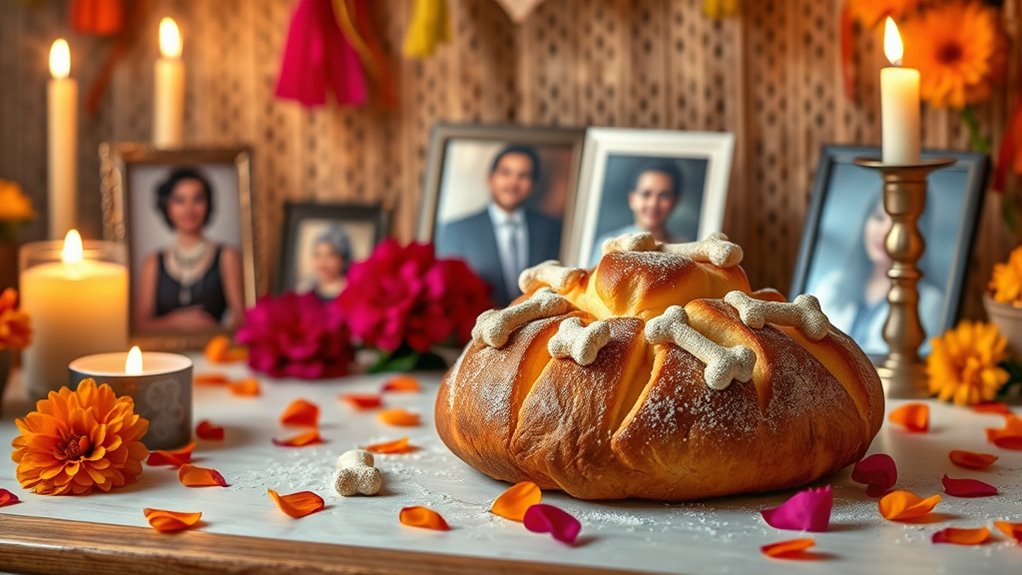
You connect with your ancestors through pan de muerto, a sweet bread rich in meaning and tradition, enjoyed during Día de Muertos. This iconic Mexican bread carries deep cultural significance, symbolizing life, death, and remembrance. Its round shape and dough bones represent the cycle of life and mortality.
Flavors like orange blossom and sugar celebrate life and honor the dead, blending indigenous and Spanish customs. Pan de muerto evolves regionally across Mexico, reflecting diverse traditions and histories. If you want to uncover how these customs shape its unique role in culture and celebration, keep exploring further.
What Is Pan De Muerto?
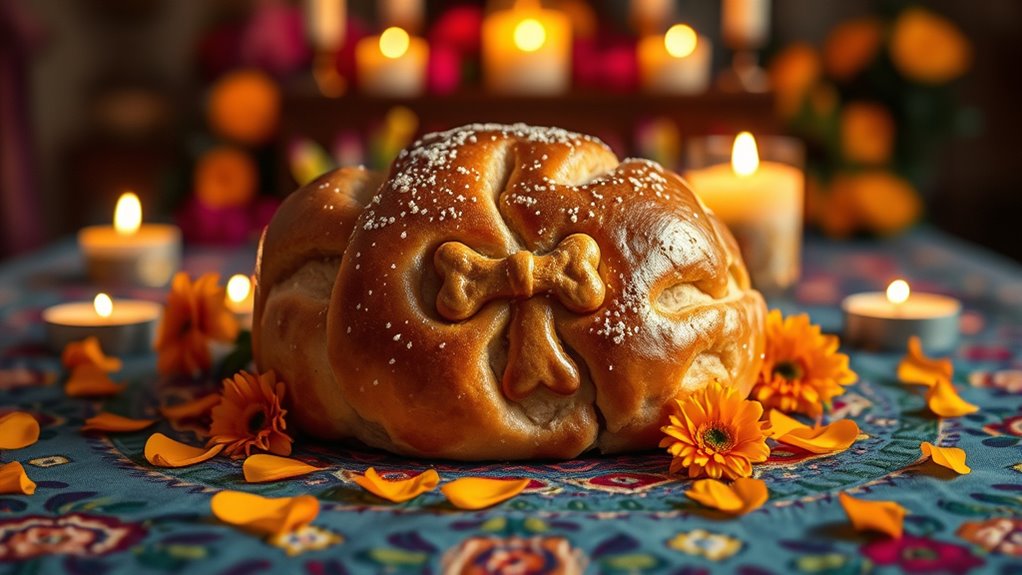
Pan de muerto is a traditional Mexican sweet bread made especially for the Day of the Dead celebrations. You’ll recognize it by its round shape and decorative dough bones on top, symbolizing the deceased’s bones.
This sweet bread carries a distinct aroma and flavor, often infused with orange blossom water, anise, and sugar. Its sugary coating represents the sweetness of life and death, a beautiful touch in this Mexican tradition.
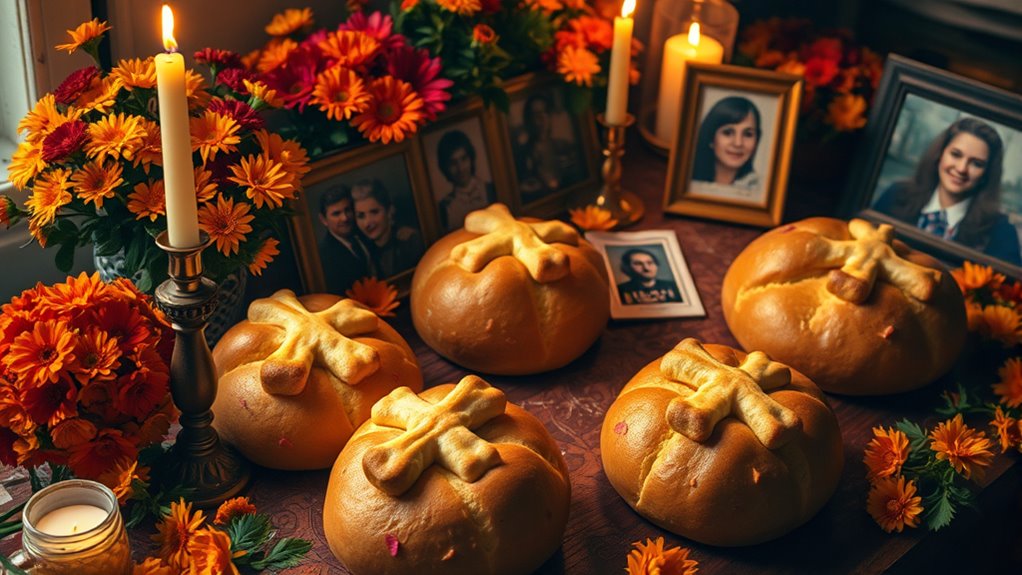
During the Day of the Dead, pan de muerto is placed on altars, or ofrendas, as an offering to honor loved ones who have passed away. When you see it, you’re witnessing a meaningful symbol that connects families to their ancestors through taste, scent, and shared remembrance.
Why Is Pan De Muerto Important?
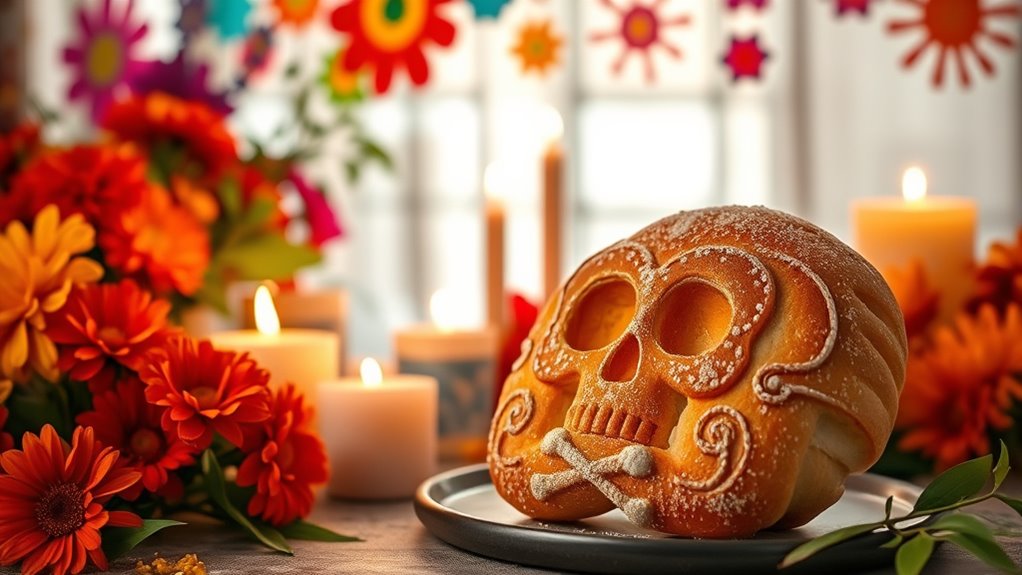
Why does this sweet bread hold such a special place during Día de los Muertos? Pan de Muerto, or the bread of the dead, is more than just food—it’s a powerful symbol of remembrance. Its circular shape represents the cycle of life, reminding you that death is part of a continuous journey.
The bone-shaped dough decorations vividly symbolize the skeletal remains of those who’ve passed, connecting you visually to your ancestors. Eating this traditional Mexican bread during the holiday strengthens your bond with family and community, honoring loved ones who came before.
The rich symbolism embedded in Pan de Muerto reflects Mexico’s unique cultural blend, making it essential to Día de Muertos celebrations and your personal acts of remembrance.
How Did Pan De Muerto Originate and Evolve?
You’ll find that Pan de Muerto started with pre-Hispanic rituals honoring the dead, using offerings deeply tied to indigenous beliefs.
When the Spanish arrived, they brought wheat and baking methods that blended with these traditions, shaping the bread’s current form. This fusion of cultures created a symbol that carries meaning from both ancient and colonial influences.
Pre-Hispanic Ritual Roots
Although the modern Pan de Muerto looks quite different, its roots trace back to pre-Hispanic Mexico, where people honored the dead with symbolic offerings like butterfly-shaped bread dedicated to the goddess Cihuapipiltin. You’ll find that Aztec rituals involved ceremonial foods such as amaranth and toasted corn, which served as indigenous offerings during festivals honoring ancestors.
Early Aztec legends describe human sacrifice rituals, symbolically linked to later bread and amaranth offerings that represented life and death. These pre-Hispanic customs laid the foundation for honoring the dead through food, embedding deep spiritual meaning in the practice.
Spanish Influence Integration
Since the arrival of Spanish colonizers, Pan de Muerto has evolved by blending indigenous customs with European baking traditions. The Spanish influence during the colonial period introduced wheat and sugar, transforming native bread-making methods. You’ll see how Spanish baking traditions merged with indigenous symbolism, creating a unique culinary style.
The bread’s sugar coating and decorative shapes reflect this fusion. Spanish Catholic rituals of blessing and offering bread shaped Pan de Muerto’s role in ceremonies.
| Aspect | Indigenous Influence | Spanish Influence |
|---|---|---|
| Ingredients | Corn, native grains | Wheat, sugar, eggs |
| Baking Techniques | Traditional methods | European baking methods |
| Symbolism | Ritual significance | Decorative elements |
| Rituals | Pre-Hispanic ceremonies | Catholic blessings |
This blend defines Pan de Muerto’s rich cultural heritage.
What Do Pan De Muerto’s Shapes and Flavors Mean?
When you examine Pan de Muerto closely, its shapes and flavors reveal a rich symbolism tied to life, death, and remembrance. The round shape represents the earth covering the deceased’s coffin, symbolizing the cycle of life and death. The dough strips placed on top resemble bones, reminding you of those who have passed and stressing the importance of remembrance.
At the center, a ball often stands for a skull, emphasizing mortality and ancestral connections. Flavors like orange blossom water bring a delicate sweetness, symbolizing the journey to the underworld, while the sugar coating celebrates the sweetness of life and death. Every element in Pan de Muerto’s design holds meaning, inviting you to reflect on the balance between life’s joys and the inevitability of death.
Regional Variations of Pan De Muerto Across Mexico
As you explore Mexico’s diverse regions, you’ll find that Pan de Muerto takes on unique shapes, colors, and flavors that reflect local traditions and histories. These regional variations showcase the creativity behind Pan de Muerto’s decorations—from animal shapes in Oaxaca to human figures in Morelos.
In Puebla, bright pink sugar and sesame seeds highlight local tastes, while Yucatán’s versions often surprise you with cream cheese fillings. Guerrero’s red-colored Pan de Muerto carries strong regional symbolism, honoring those who died from violence.
Meanwhile, towns like Tepoztlán craft breads representing women lost in childbirth, emphasizing unique customs. Each variation invites you to appreciate how Pan de Muerto embodies the spirit and cultural identity of its region through thoughtful design and flavor.
How Pan De Muerto Features in Día De Muertos Traditions
You’ll notice Pan de Muerto takes center stage on Día de Muertos altars, symbolizing the cycle of life and death with its unique shape and decorations. When you place the bread on an ofrenda, you’re inviting the spirits of loved ones to join the celebration. Sharing and eating the bread together strengthens family bonds and keeps memories alive through meaningful rituals.
Symbolic Role in Altars
Although many elements decorate Día de Muertos altars, Pan de Muerto holds a unique place as a symbolic offering that honors deceased loved ones. When you place Pan de Muerto on altars, you’re presenting more than just bread—you’re offering a spiritual symbol that connects life and death.
Its circular shape represents the circle of life and death, while the decorated bones on top remind you of mortality and remembrance. This bread invites spirits to join the celebration, sustaining their memory among candles, marigolds, and cherished mementos.
Rituals Involving Bread
When you place Pan de Muerto on altars during Día de Muertos, you’re inviting the spirits of loved ones to join the celebration. This bread, adorned with bone-shaped decorations, serves as an offering and a symbol of remembrance.
The rituals surrounding Pan de Muerto include sharing pieces among family or eating them at gravesites, strengthening your connection to the spirits. These acts highlight life’s cycle and honor those departed.
| Ritual Aspect | Purpose | Connection to Spirits |
|---|---|---|
| Placement on altar | Invitation to spirits | Welcomes loved ones |
| Offering sharing | Family unity and memory | Sustains spiritual bond |
| Consumption at graves | Nourishment and remembrance | Physical and spiritual link |
Where to Find Authentic Pan De Muerto Today and Its Presence in Popular Culture
If you want to taste authentic Pan de Muerto, you can find it at bakeries like Bonbon French Pastry in Cancún and Bon Panne in Puerto Morelos, where traditional recipes meet high-quality ingredients. These spots honor Mexican culture by offering Pan de Muerto made with flavors like orange zest and anise, perfect for the Día de Muertos celebration.
Beyond these bakeries, local markets across Mexico sell fresh, decorated loaves during this season. Pan de Muerto has also gained a place in popular culture, featured in movies like Pixar’s *Coco* and showcased on social media, spreading its cultural significance worldwide.
Whether in Mexico or abroad, you’ll find this authentic bread remains a cherished symbol of tradition and celebration.
Frequently Asked Questions
What Is the Significance of the Pan De Muerto?
Pan de muerto symbolizes life’s cycle and honors your deceased loved ones. When you eat or offer it, you connect with their memory, celebrate their journey, and embrace cultural traditions surrounding death and rebirth.
This bread serves as a tangible link between the living and the dead, reflecting the belief in an ongoing spiritual connection. It is a key element in Day of the Dead celebrations, embodying respect and remembrance.
What Is the Significance of Day of the Dead?
You recognize Day of the Dead as a celebration honoring deceased loved ones, with over 70 million participants worldwide. It blends ancient rituals and Catholic traditions to remember, celebrate, and connect with family and ancestors joyfully.
What Does the Rosca Symbolize?
The Rosca symbolizes the king’s crown, eternal life, and the cyclical nature of seasons.
When you find the hidden figurine inside, it represents faith, protection, and the presence of loved ones during celebrations.
What Do Shapes in Pan De Muertos Represent?
The shapes in pan de muerto symbolize life’s cycle, with roundness representing earth covering the coffin, dough strips as bones, the central ball as a skull, and decorations reflecting death, cardinal directions, and mourning rituals.
Conclusion
As you savor pan de muerto, you’re not just tasting bread—you’re embracing a symbol of memory, love, and connection. Each sweet bite weaves stories of ancestors and traditions, reminding you that life and death are intertwined like the dough’s delicate shapes.
By sharing this bread, you keep those bonds alive, honoring the past while celebrating the present. So, enjoy pan de muerto as more than food—it’s a heartfelt bridge across time, a meaningful tradition, and a powerful symbol of remembrance.