How to Choose the Right Kind of Salt for Your Culligan Water Softener
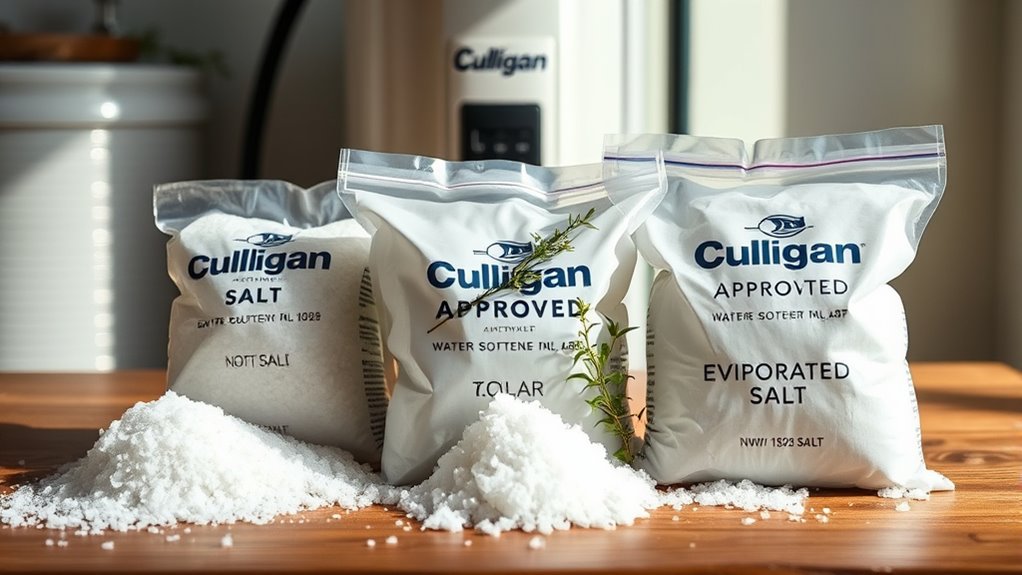
To choose the right salt for your Culligan water softener, focus on selecting high-purity evaporated salt pellets. These provide the best performance and help reduce clogs in your system. Using the correct salt type is essential for optimal water softening and system longevity.
Consider sodium chloride if you want a cost-effective solution. Alternatively, potassium chloride is a good sodium-free option, though it tends to be pricier and may require system adjustments. Matching the salt type to your water hardness and iron levels is key to avoiding maintenance issues and ensuring smooth operation.
Remember to keep your brine tank clean and maintain balanced salt levels. Proper care will help your Culligan water softener run efficiently. You’ll find even more tips to optimize your system ahead.
Types of Salt for Culligan Water Softeners
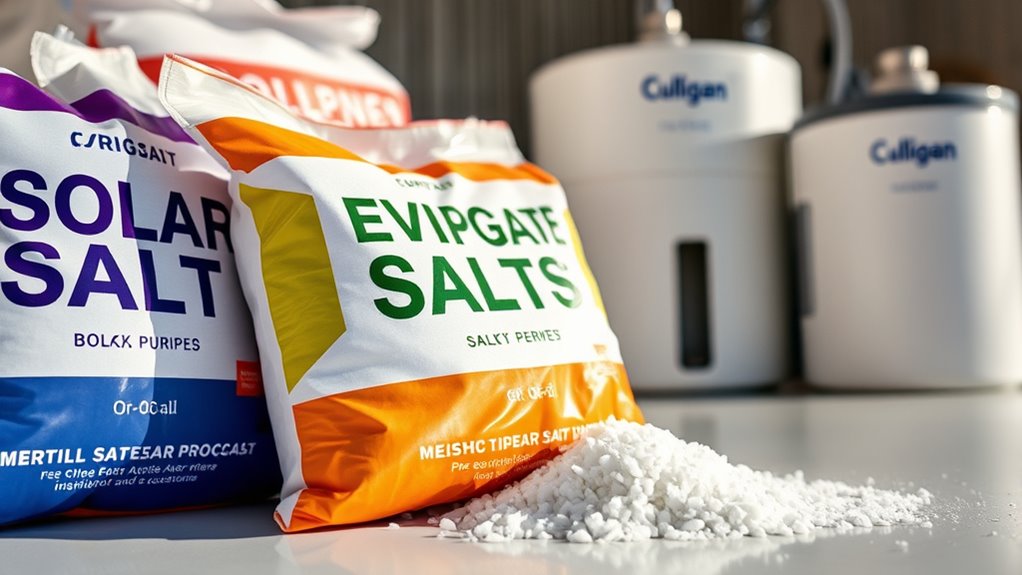
When choosing salt for your Culligan water softener, you’ll find several types, each with distinct qualities that affect performance and maintenance. Water softener salt comes mainly as evaporated salt pellets, solar salt, rock salt, and potassium chloride.
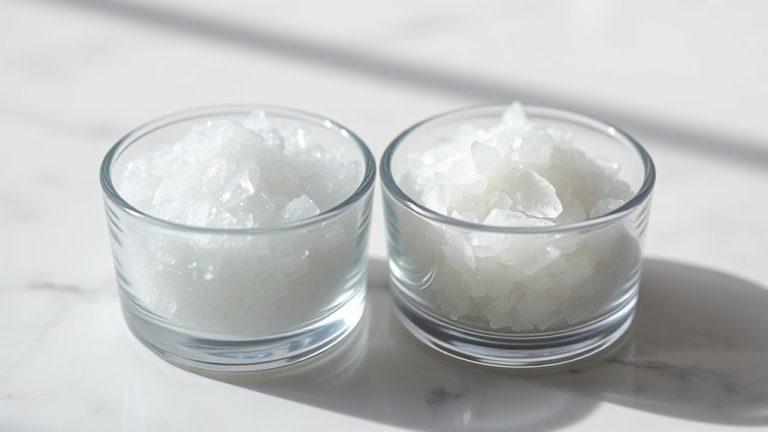
Evaporated salt pellets boast a high salt purity level (around 99.9%), dissolving quickly and leaving fewer salt crystals, which helps your water softening process run smoothly.
Evaporated salt pellets offer superior purity and quick dissolving for optimal water softener performance.
Solar salt, made from seawater, is more affordable but dissolves slower with slightly less purity.
Rock salt has impurities and can cause clogging, so it’s generally not recommended.
Potassium chloride offers a sodium-free alternative but costs more and isn’t as efficient.
Many opt for a salt delivery service to keep a steady supply of their preferred type of salt on hand.
Why Salt Purity and Form Matter
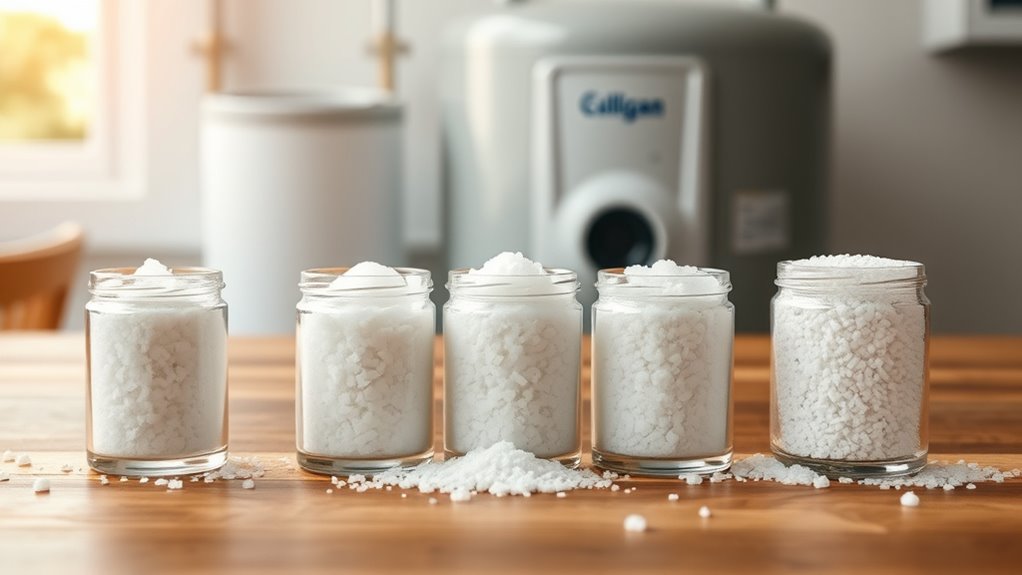
You’ll want to pick salt with high purity because it reduces buildup and keeps your softener running smoothly.
The form of the salt—whether pellets, crystals, or blocks—also affects how well and quickly it dissolves.
Choosing the right purity and form helps prevent clogs and costly maintenance down the line.
Salt Purity Importance
Selecting high-purity salt for your water softener guarantees better performance and less maintenance. When you choose evaporation salt or other high-quality salt with 99.9% salt purity, you reduce impurities like calcium sulfate that cause residue buildup and clog your system.
Low-purity salts often lead to salt bridges and mushing, which disrupt system efficiency and impair softening performance. Pure salts dissolve quickly and consistently, ensuring ideal regeneration cycles and extending your softener’s lifespan.
Salt Form Differences
Although salt purity plays a crucial role, the form of salt you use also considerably affects your water softener’s performance. Salt form—whether pellet, crystal, or block—directly impacts the dissolution rate and melt rate, influencing how efficiently your system regenerates.
Pellets, especially high-purity evaporated ones, dissolve quickly and leave minimal residue, promoting ideal system performance.
In contrast, blocks or crystals may dissolve slower or unevenly, risking buildup or bridging. Consider these points when choosing salt form:
- Pellets offer consistent dissolution and high salt purity, reducing residue.
- Crystals dissolve slower, which may affect melt rate and efficiency.
- Blocks can cause mushing or bridging, impairing system function.
- Lower-purity salts increase insoluble residue, harming system performance.
How to Choose Between Sodium and Potassium Chloride Water Softener Salt
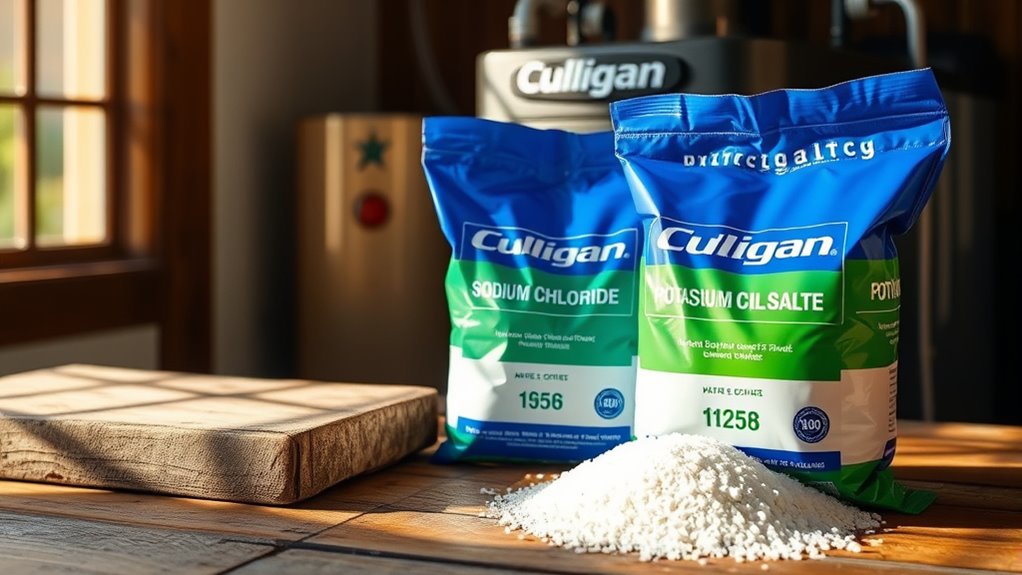
When deciding between sodium chloride and potassium chloride for your water softener, consider both your health needs and budget. Sodium chloride is the most common, cost-effective water softener salt, offering strong salt efficiency and reliable system performance.
Potassium chloride, though about 30% more expensive, provides a healthier alternative if you have health concerns, especially sodium restrictions. However, potassium chloride may require a 10% increase in regeneration settings to maintain ideal system performance.
Potassium chloride costs more but suits sodium-sensitive health needs, needing a 10% regeneration boost for best results.
Your salt choice also depends on your water hardness, but keep in mind potassium chloride can cause tank hardening in fluctuating temperatures, so proper placement is essential.
Weigh the higher salt cost and slightly reduced efficiency of potassium chloride against your health priorities to make the best decision for your water softener system.
Matching Salt Type to Your Water Hardness and Iron Levels
You need to match your salt type to your water’s hardness and iron content for the best results.
If your water has high iron levels, choose salts with iron removers, like green bag pellets.
For different hardness levels, pick salts accordingly—standard pellets for moderate hardness and evaporated or specialty salts for very hard water.
Assessing Water Hardness
Since water hardness and iron levels vary widely, testing your water is crucial before choosing salt for your softener. A proper water test reveals the calcium, magnesium, and iron content that affect your water quality and determine the best salt levels for effective softening.
Understanding your mineral levels helps you match salt types to your specific needs. For water hardness above 10 grains per gallon, evaporated salt pellets provide stronger softening.
Low to moderate hardness (3-7 grains per gallon) works well with standard solar or pellet salt. If you detect high iron, opt for salts with iron-removing additives like sodium bisulfate.
Regularly monitor water quality to adjust salt choices as mineral levels change.
Assessing water hardness ensures your Culligan water softener performs efficiently.
Iron Impact On Salt
Although water hardness plays a major role in choosing salt for your softener, iron levels can have an equally significant impact on performance.
If your water has high iron levels, regular salt may cause insoluble iron precipitates that clog the resin bed, leading to reduced efficiency and iron fouling.
To prevent iron buildup, you should opt for iron removal salt that contains iron-fighting additives like sodium bisulfate. These iron-removal salts help manage iron-related fouling and keep your system running smoothly.
In cases of excessive iron content, installing iron filters before the softener or using specialty iron-removal salts becomes essential.
Regardless of your salt choice, regular maintenance is vital to combat iron fouling and prolong your softener’s life.
Consequences of Using the Wrong Salt in Your Water Softener
When you use the wrong type of salt in your water softener, impurities can build up and clog the resin bed, reducing the system’s efficiency. This leads to salt bridges and residue buildup that cause inefficient regeneration, forcing you to perform frequent maintenance.
Over time, these issues can damage the softener components and shorten the system lifespan. Using incompatible salts also drives up operational costs due to increased salt consumption.
- Salt bridges and mushing disrupt salt dissolution
- Impurities cause clogging in the resin bed
- Inefficient regeneration wastes salt and water
- Frequent maintenance and damage increase repair costs
Choosing the right salt helps prevent these problems, ensuring smooth operation and long-term savings.
Brine Tank Maintenance Tips to Avoid Salt Problems
Using the right salt is only part of keeping your water softener running smoothly; proper brine tank maintenance plays a big role in preventing salt-related issues. Keep the salt level between one-quarter and one-half full to avoid salt bridges and salt formation that block salt dissolution.
Regular cleaning and maintenance help remove salt buildup, dust, and insoluble debris, especially if you use less refined salt types like solar salt.
Check your brine tank periodically for salt bridges or mushing and break them up to ensure efficient salt removal and regeneration. Using high-quality salt reduces residue, minimizing cleaning frequency and improving system performance.
Frequently Asked Questions
What Kind of Salt Should I Use in My Culligan Water Softener?
You should use high-purity evaporated salt pellets or solar salt in your Culligan water softener. Avoid rock salt to protect your system, and stick to the recommended type for consistent performance and longevity.
How Do I Know Which Salt to Use in My Water Softener?
You’ll know which salt to use by checking your water softener’s manual and testing your water hardness.
Stick to high-purity salts like evaporated or solar salt, and avoid rock or sidewalk salt to protect your system.
What Kind of Salt Do You Use in a Kinetico Water Softener?
You’ll want to use high-purity pelleted salt in your Kinetico softener, as it gracefully keeps things running smoothly.
Avoid rock salt—it’s like inviting unwanted guests that cause buildup and harm your system’s harmony.
How Many Bags of Salt Should I Use to Fill My Culligan Water Softener?
You’ll typically need 1 to 2 bags of salt, around 40 to 80 pounds total, to fill your Culligan water softener.
Always check your model’s manual and refill when salt drops below half for best results.
Conclusion
Choosing the right salt for your Culligan water softener is like planting the perfect seed in your garden. Just as the right soil and nutrients help flowers bloom, the right salt—whether sodium or potassium chloride—ensures your softener thrives, tackling hardness and iron with ease.
Neglecting this care is like leaving weeds to take over. So, pick wisely and maintain your brine tank.
By selecting the appropriate salt and regularly caring for your system, your Culligan water softener will provide water that flows as pure and invigorating as a springtime breeze.