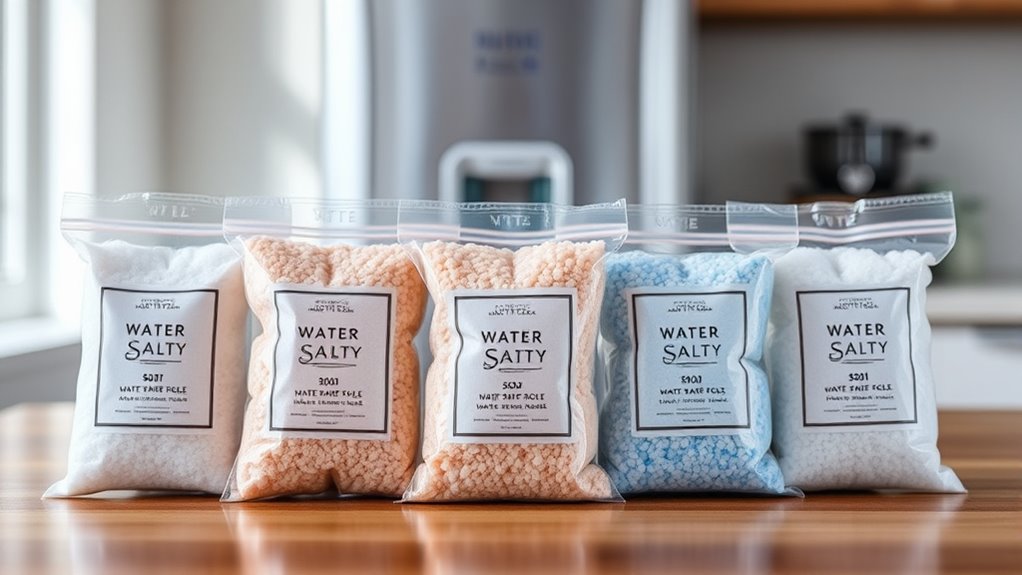
Top 5 Best Salts for Water Softeners: Improve Water Quality
You want the best salt for water softeners to keep your system running smoothly and efficiently. Choosing the right salt is essential for maintaining soft water and extending your softener’s lifespan.
Evaporated salt is premium, known for its high purity and fast-dissolving pellets. This type prevents buildup inside your system, helping it last longer and work better.
Solar salt offers a budget-friendly option ideal for moderate hardness levels. However, it may require more frequent maintenance to avoid residue and clogs.
Potassium chloride is a healthier and environmentally friendly alternative. It costs more and often needs more frequent regeneration but benefits those with dietary restrictions.
Picking the right salt matters, and there’s more to explore to find your perfect choice. Understanding each type will help you keep your water softener in top condition.
Why Choosing the Right Water Softener Salt Matters
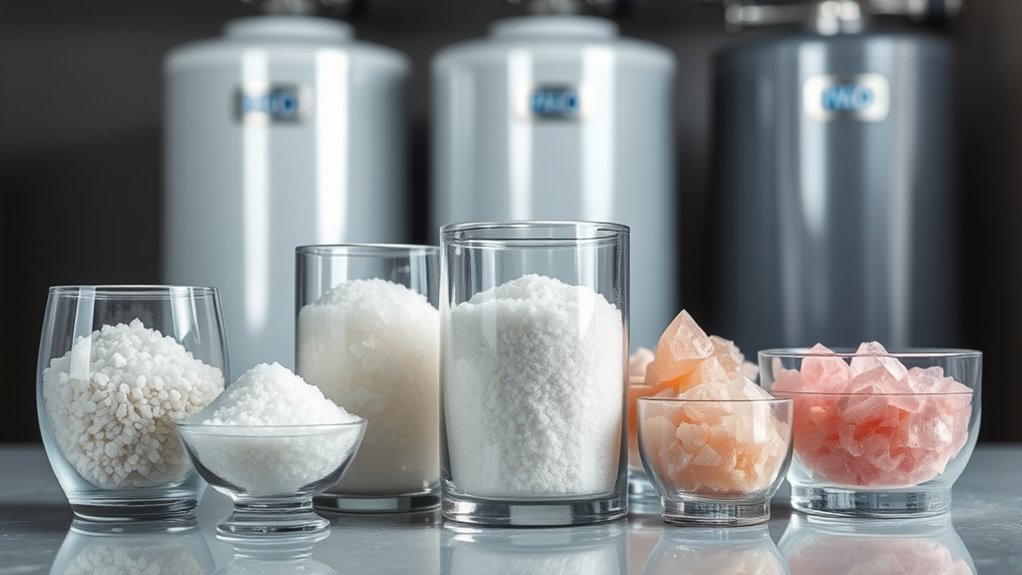
Although it might seem like any salt will do, choosing the right water softener salt directly affects how well your system removes hard minerals like calcium and magnesium.
The water softening process relies on efficient mineral removal, which depends heavily on salt quality. Using the best salt for your water prevents issues like salt bridging and resin fouling, keeping salt levels in the salt tank consistent.
This ensures ideal system efficiency, improves water quality, and reduces excessive water usage during regeneration cycles.
Selecting incompatible or low-grade salt can damage your softener, leading to costly repairs and poor performance.
Benefits of Evaporated Salt for Water Softeners
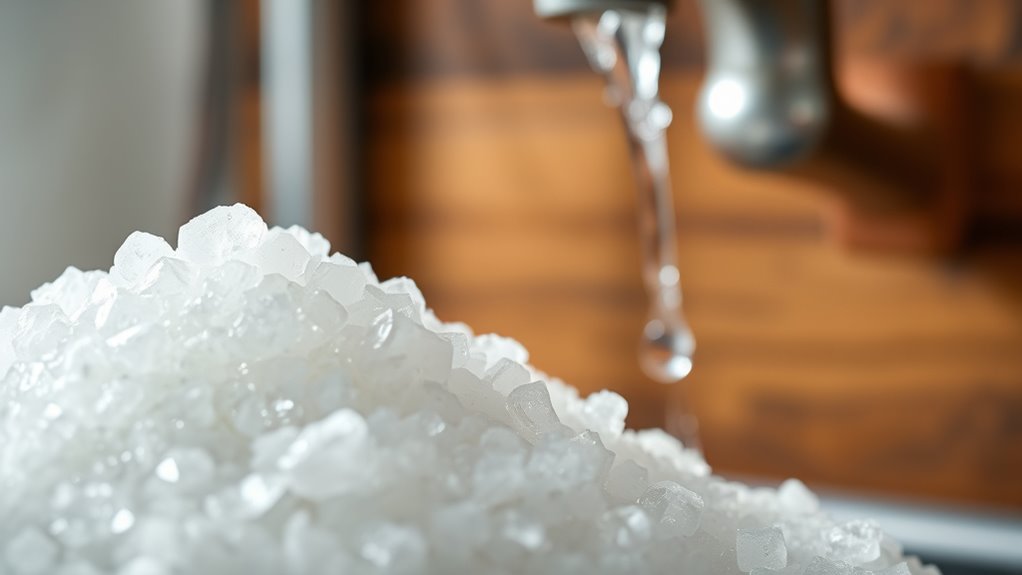
Choosing the right salt goes beyond just preventing common issues like salt bridging—it can also boost your water softener’s overall performance. Evaporated salt, known for its high purity (99.9% sodium chloride), minimizes mineral buildup in the brine tank and reduces salt mushing. Its pellet form dissolves quickly, ensuring consistent regeneration cycles that protect resin beads from impurities.
This keeps your water softening system running efficiently and extends its lifespan. Plus, using evaporated salt cuts down on maintenance by preventing salt bridging and mushing, so you spend less time troubleshooting.
| Benefit | Description |
|---|---|
| High Purity | Minimizes mineral buildup in brine tank |
| Fast Dissolving | Ensures consistent regeneration cycles |
| Protects Resin Beads | Reduces clogging and damage |
| Reduces Salt Bridging | Lowers maintenance and downtime |
| Boosts Efficiency | Prolongs water softening system lifespan |
Cost and Performance of Solar Salt
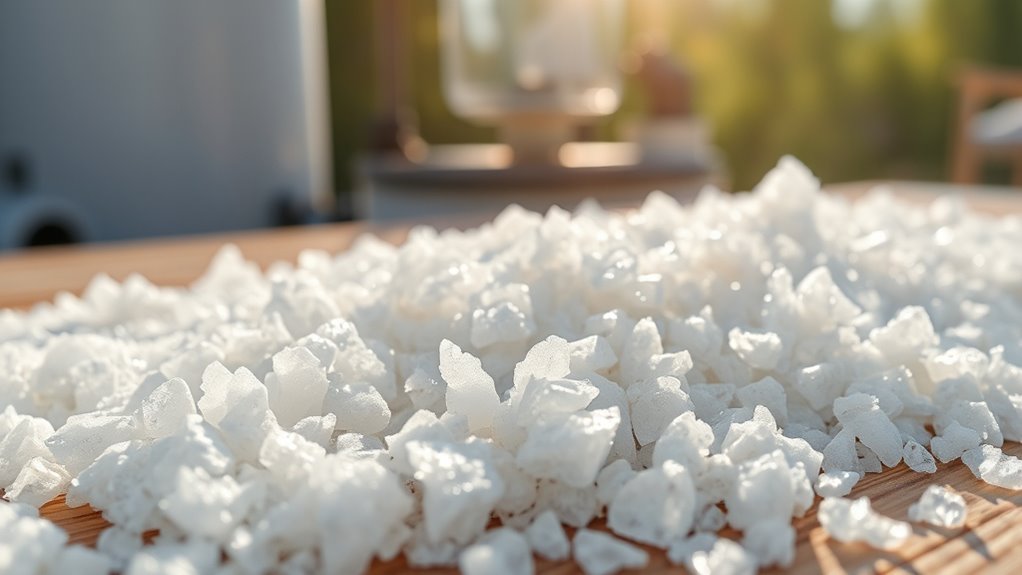
While solar salt may dissolve more slowly than evaporated salt, it remains one of the most affordable options for water softeners, typically costing between $6 and $10 for a 50-pound bag.
If your water contains moderate to low hard water minerals, solar salt offers solid performance at a low cost.
However, because it dissolves more slowly, you might find yourself refilling your system more often than with evaporated salt.
Keep in mind, solar salt often has a lower purity level and may contain impurities that can contribute to system buildup over time.
Despite this, it still provides a good balance between cost and effectiveness, especially if you’re mindful of regular maintenance to manage potential buildup in your water softener.
Potassium Chloride Water Softener Salt: Healthier but Costlier
If you’re looking to reduce sodium intake, potassium chloride water softener salt offers a healthier alternative to traditional sodium chloride. This low-sodium option supports low-sodium diets and provides health benefits while being environmentally friendly. However, potassium chloride comes at a higher salt cost and requires more frequent regeneration cycles.
It may also affect resin beads, potentially causing them to harden if the tank isn’t properly insulated. Here’s a quick comparison:
| Feature | Potassium Chloride |
|---|---|
| Sodium Content | Low-sodium |
| Salt Cost | About 30% higher |
| Regeneration Cycle | More frequent |
| Resin Beads Impact | Risk of hardening in cold temps |
| Environmental Impact | Environmentally friendly |
Choosing potassium chloride means prioritizing health benefits and environmental care over cost and maintenance frequency.
How to Choose Salt for Your Water Softener
Because your water softener’s performance depends on the salt you use, you should always stick to the manufacturer’s recommendations to achieve the best results.
Start by identifying your water hardness through a water test, which helps determine the right salt type—either sodium chloride or potassium chloride.
If your water’s very hard, opt for high-purity salts made through the evaporation process to reduce mineral buildup and improve efficiency.
Consistently using the same salt type prevents salt bridging and residue in the brine tank, ensuring smooth operation.
Avoid rock salt or non-softener salts, as their impurities can damage your system.
Regularly check salt levels and refill accordingly to maintain ideal softening.
Choosing the right salt with proper purity ensures your water softener runs efficiently and lasts longer.
Frequently Asked Questions
What Is the Best Water Softener Salt to Use?
You should use evaporated salt pellets because they dissolve evenly and have high purity, ensuring your water softener works efficiently.
Just avoid rock salt, and consider potassium chloride if you want a sodium-free alternative.
Does It Matter What Type of Salt I Put in My Water Softener?
Think of your water softener as a car—using the wrong salt is like putting diesel in a gasoline engine.
Yes, it matters; the right salt keeps it running smoothly, prevents damage, and extends its lifespan.
What Water Softeners Do Plumbers Recommend?
Plumbers recommend water softeners like Fleck, Whirlpool, and Culligan for reliability and performance. You’ll want models with efficient regeneration cycles and easy maintenance.
Plus, always follow manufacturer guidelines to keep your system running smoothly.
Which Is Better Softener, Salt Pellets or Crystals?
Wondering which salt type keeps your softener running smoothly? You’ll want salt pellets—they dissolve evenly, reduce buildup, and regenerate resin better.
Crystals might save money upfront, but pellets save hassle and maintenance in the long run.
Conclusion
Choosing the right salt for your water softener means boosting efficiency, saving money, and protecting your plumbing. Whether you prefer the purity of evaporated salt, the cost-effectiveness of solar salt, or the health benefits of potassium chloride, each option offers something unique.
You want to soften your water, extend your system’s life, and enjoy cleaner, healthier water. So pick wisely, use properly, and maintain regularly to get the best results every time.
By selecting the best salts for water softeners, you ensure optimal performance and long-lasting benefits for your home’s water quality.