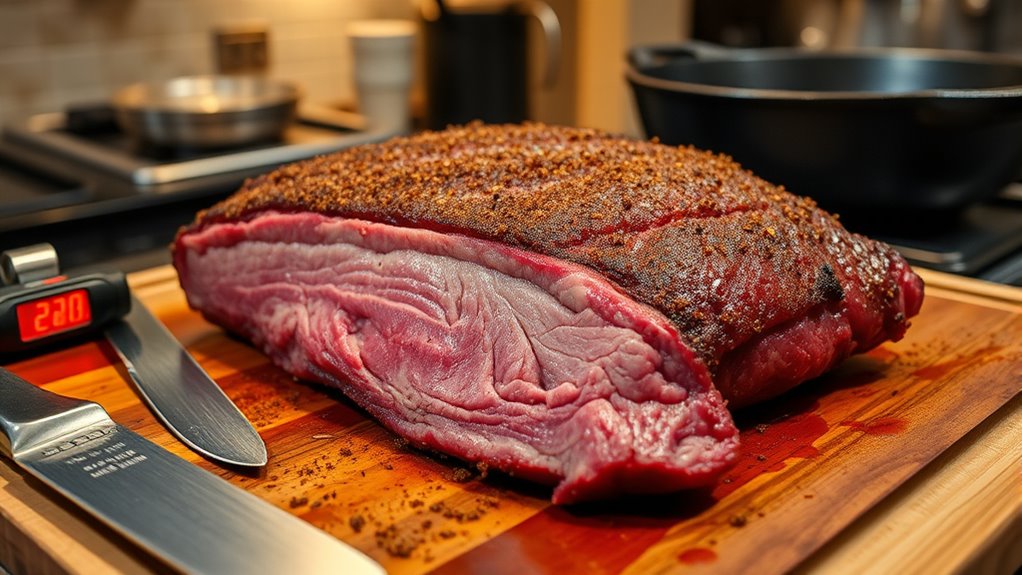
How to Cook Beef Brisket and What the Internal Temp Should Be
To cook beef brisket, start by trimming excess fat but leave about ¼ inch to keep it moist. Apply a mustard binder and generous dry rub for flavor.
Smoking brisket low and slow around 225°F using hardwood is key to developing rich taste and tenderness.
Monitor the internal temperature carefully until it reaches 195-205°F, which ensures perfect tenderness.
Wrapping the brisket in butcher paper helps push through the stall and retain juices. This technique locks in moisture and enhances the final texture.
Once cooked, let the brisket rest before slicing against the grain for the best results. Resting allows juices to redistribute, making each bite juicy and flavorful.
Keep going to uncover more expert tips on cooking beef brisket perfectly every time.
Selecting and Trimming Your Brisket
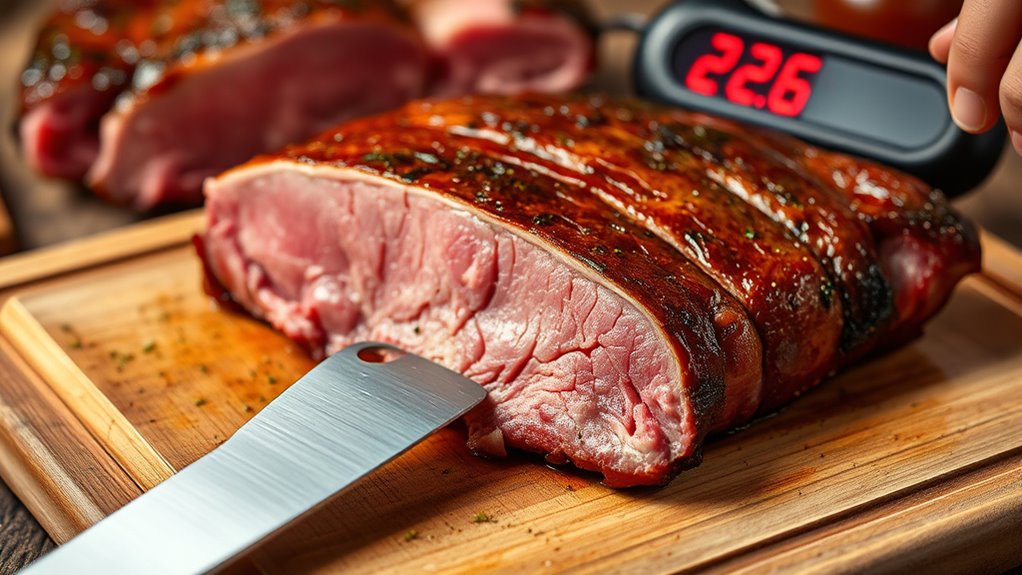
When choosing your brisket, pick a whole packer weighing 10 to 12 pounds, ideally prime grade for better marbling and juiciness. The prime grade guarantees your brisket has plenty of intramuscular fat, which keeps the meat moist and flavorful throughout the long cooking process.
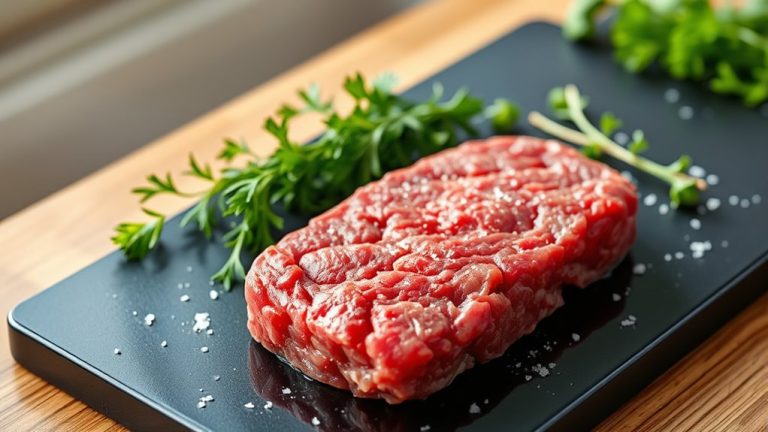
Before cooking, spend 20 to 30 minutes trimming the brisket carefully. Remove excess top fat but leave about a ¼ inch fat cap to help retain moisture as the cooking temperature rises. Also, trim off any hard fat and silverskin to allow your rub to stick better and create a delicious bark.
Proper trimming balances protection from drying out with enough fat to keep the brisket tender and juicy at the ideal cooking temperature.
Seasoning Your Brisket for Maximum Flavor
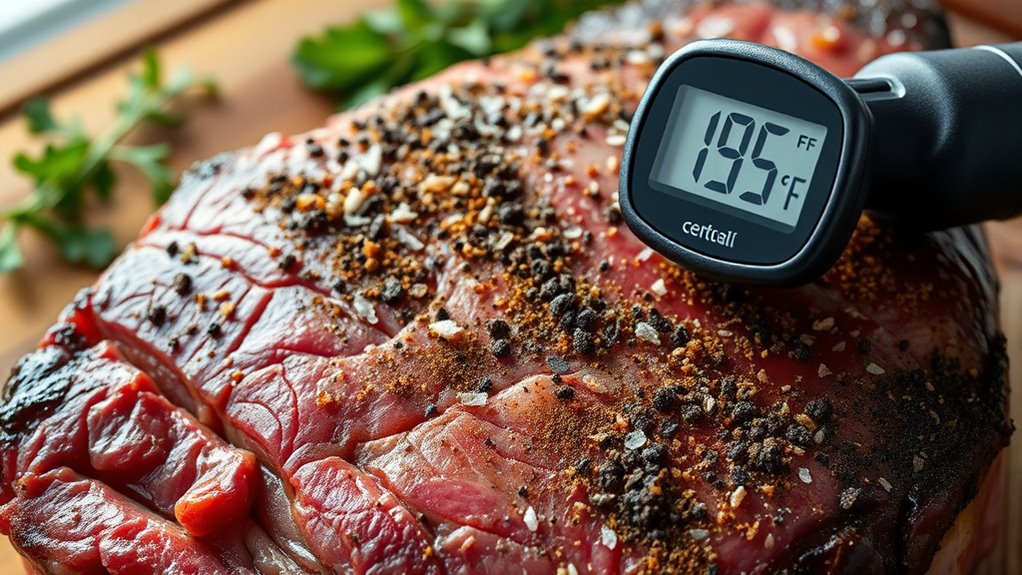
You’ll want to start by choosing a rub that highlights the brisket’s natural flavor, like a simple mix of coarse salt and black pepper or a blend with garlic and paprika.
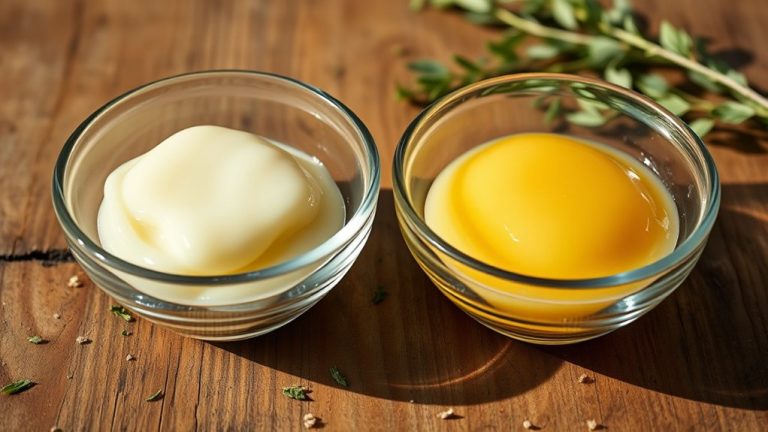
Before applying the rub, spread a thin layer of yellow mustard or BBQ sauce to help it stick and create a delicious bark. Letting your seasoned brisket rest in the fridge will give those flavors time to soak in deeply.
Choosing The Right Rub
Because seasoning plays a crucial role in developing a flavorful brisket, choosing the right rub is essential to your success. A good rub combines coarse salt, black pepper, garlic powder, and optional spices like paprika or chili powder to boost flavor and create a tasty crust.
The salt draws out moisture, helping the seasoning penetrate deeply while promoting a rich bark. Apply the rub generously and evenly, covering every surface to ensure maximum absorption during smoking.
After seasoning, let your brisket rest for several hours or overnight to marinate and allow the flavors to sink in. By selecting and applying the right rub, you set the foundation for a perfectly seasoned brisket that’s bursting with flavor and boasts a delicious crust.
Applying Binder For Bark
Although the dry rub provides the essential flavors, applying a binder like yellow mustard or Zesty Gold BBQ Sauce helps the seasoning stick better to your brisket, guaranteeing an even and lasting bark. The binder creates a thin, tacky layer that holds the dry rub firmly, preventing it from falling off during the long smoke.
This layer boosts the absorption of spices, maximizing the flavor in every bite. To get the best bark and seasoning, apply the binder evenly on all sides before sprinkling your dry rub. While the binder itself doesn’t add much flavor, it greatly improves the bark’s texture and appearance.
Using a binder ensures your brisket develops a consistent, flavorful crust that enhances your smoking results.
Setting Up Your Smoker for Smoking Brisket
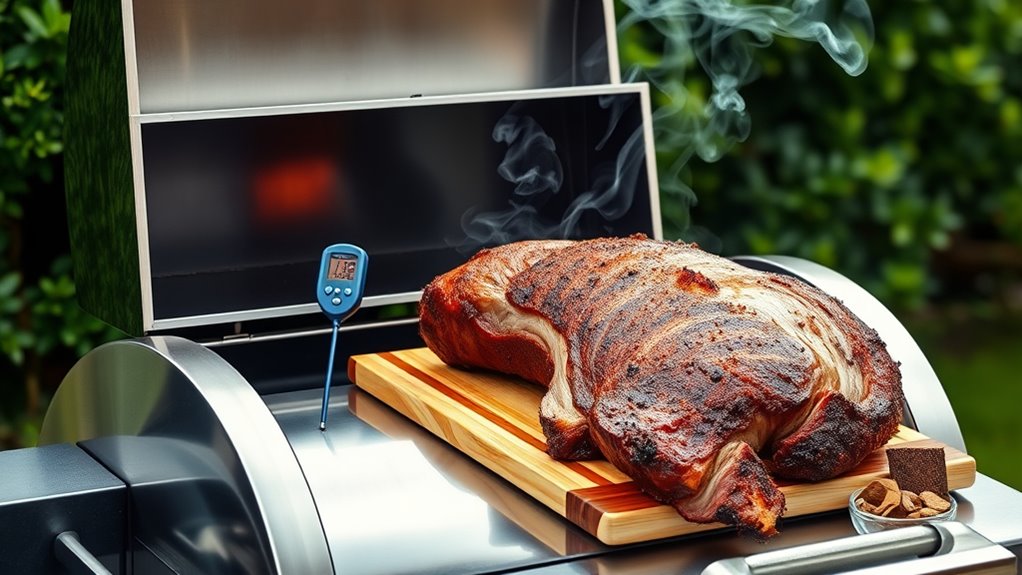
When setting up your smoker for brisket, start by preheating it to a steady 225°F (107°C) and arranging indirect heat with charcoal, wood, or pellets. A proper smoker setup guarantees even cooking and the perfect bark.
- Use hardwoods like oak or cherry for consistent smoke flavor; soak wood chips in water for 30 minutes if you want slower smoke release.
- Place a water drip pan beneath the brisket to regulate temperature and keep moisture in the cooking chamber.
- Position the brisket fat side up or down based on your heat source to expose all sides evenly to smoke.
- Avoid opening the lid frequently and use a reliable digital thermometer to monitor the internal temperature precisely.
This setup lays the foundation for a perfectly smoked brisket.
Smoking Your Brisket: Timing, Temperature, and Managing the Stall
With your smoker set up and running steady at 225°F, it’s time to focus on the smoking process itself. Smoke your brisket until its internal temperature hits about 165°F, which usually takes 6-8 hours. Around 150°F, expect the stall—a plateau caused by surface evaporation that slows temperature rise.
Use a reliable probe thermometer to monitor this closely without opening the smoker too often, keeping heat and smoke consistent. To manage the stall, you can wrap the brisket in butcher paper or foil (the Texas crutch), which helps push through the plateau faster.
Total smoking time varies, often between 12 to 18 hours, but focus on internal temperature rather than time, aiming for 195-205°F for perfect tenderness.
Wrapping and Resting Your Brisket for Perfect Tenderness
You’ll want to choose the right wrapping material, like butcher paper or foil, to lock in moisture and speed up cooking.
Giving your brisket plenty of time to rest after smoking helps the juices settle, so every bite stays juicy.
When it’s time to slice, cutting against the grain makes the meat easier to chew and enhances tenderness.
Wrapping Materials Comparison
Although choosing the right wrapping material can be tricky, it plays a crucial role in how your brisket turns out. You want to balance moisture retention with bark development to get juicy, flavorful meat.
Here’s a quick comparison:
- Butcher paper lets smoke in while holding moisture, giving you a tender bark and juicy brisket.
- Foil traps moisture well, making the brisket very moist but can soften the bark if wrapped too soon.
- Many pitmasters prefer butcher paper for its balance—good moisture retention without losing bark texture.
Regardless of wrapping material, resting your brisket after cooking helps juices redistribute, ensuring tenderness.
Choosing your wrapping material thoughtfully will improve your brisket’s texture and flavor every time.
Resting Time Importance
A proper resting time is essential to lock in your brisket’s juices and maximize tenderness. After cooking, let your brisket rest for at least one hour. This resting period allows the juices to redistribute evenly throughout the meat, preserving moisture and enhancing tenderness.
Wrapping your brisket in butcher paper or foil during resting helps maintain an ideal temperature of around 140°F, which keeps the meat warm without overcooling. This step prevents the juices from running out when you slice, ensuring each bite stays juicy and flavorful.
Skipping resting can cause moisture loss, leading to a drier brisket. So, don’t rush—resting is vital for perfect texture and taste in your brisket.
Slicing Against Grain
Slicing against the grain is key to unfastening your brisket’s tenderness by breaking up muscle fibers. To ensure every slice stays moist and tender, follow these steps:
- Rest your brisket wrapped in butcher paper or foil for at least 1 hour to let juices redistribute.
- Identify the grain direction in each muscle section before slicing.
- Slice perpendicular to the grain to maximize tenderness by cutting through muscle fibers.
- For large briskets, separate the flat and point, then slice each against their respective grain for ideal texture.
Slicing and Serving Brisket to Keep It Tender
When you cut brisket against the grain, you’ll guarantee each slice stays tender and avoids that tough, chewy texture.
Before slicing, let your brisket rest for at least 30 minutes to allow the juices to redistribute, ensuring every bite remains moist and flavorful. Identify the grain directions in both the flat and point muscles so you can make even, precise cuts.
Use a sharp, long-blade knife to slice cleanly without tearing the meat. Aim for uniform slices about 1/4 to 1/2 inch thick, depending on your preference.
Proper slicing and serving techniques preserve tenderness and highlight the brisket’s rich flavor, making your efforts in cooking truly worthwhile.
Frequently Asked Questions
What Temperature Should Brisket Be Cooked At?
You should cook brisket until it reaches around 195°F to 205°F, aiming for about 203°F. Don’t just rely on temperature—check tenderness, and always let it rest to keep it juicy and flavorful.
Is Brisket Supposed to Be at 195 or 200?
Think of brisket as a treasure chest—hit 195°F for juicy gold or 200°F for a silky gem.
You’ll open tender, flavorful meat either way, but watch closely so it doesn’t dry out on you.
Is Brisket Overcooked at 210 Degrees?
No, brisket isn’t necessarily overcooked at 210°F. You’ll hit maximum tenderness there if you rest it well and wrap it properly.
Going beyond can dry it out, so watch the temp closely.
Does Brisket Get More Tender the Longer You Cook It?
Yes, you’ll find brisket gets more tender the longer you cook it, as collagen breaks down.
But don’t overdo it—cooking past 205°F can dry it out, so aim for that sweet spot instead.
Conclusion
Now that you know how to cook a perfect beef brisket, remember patience is key—most briskets take 10 to 14 hours to reach that ideal internal temp of 195–205°F for tenderness.
Did you know that smoking at low temperatures for long periods actually breaks down tough connective tissues, making brisket so juicy and flavorful?
Stick with the process, and you’ll impress everyone with a melt-in-your-mouth brisket every time.
Happy smoking, and enjoy mastering the art of cooking beef brisket to the perfect internal temperature!