What Size Frying Pan Do I Need?
You need a frying pan size that matches your meal portions and cooking method for the best results. Choosing the right frying pan size is essential for even cooking and proper browning.
For single or two servings, an 8- or 10-inch pan works well, while 12 inches suits 3-4 people comfortably.
Larger pans, like 14-inch, handle family meals or bigger cuts. Using the right size avoids overcrowding and ensures your food cooks evenly.
Materials also affect heat distribution and performance.
Keep exploring to find the perfect pan for your kitchen needs. Selecting the ideal frying pan size will make your cooking experience more enjoyable and efficient.
Picking the Right Frying Pan Size for Your Meals
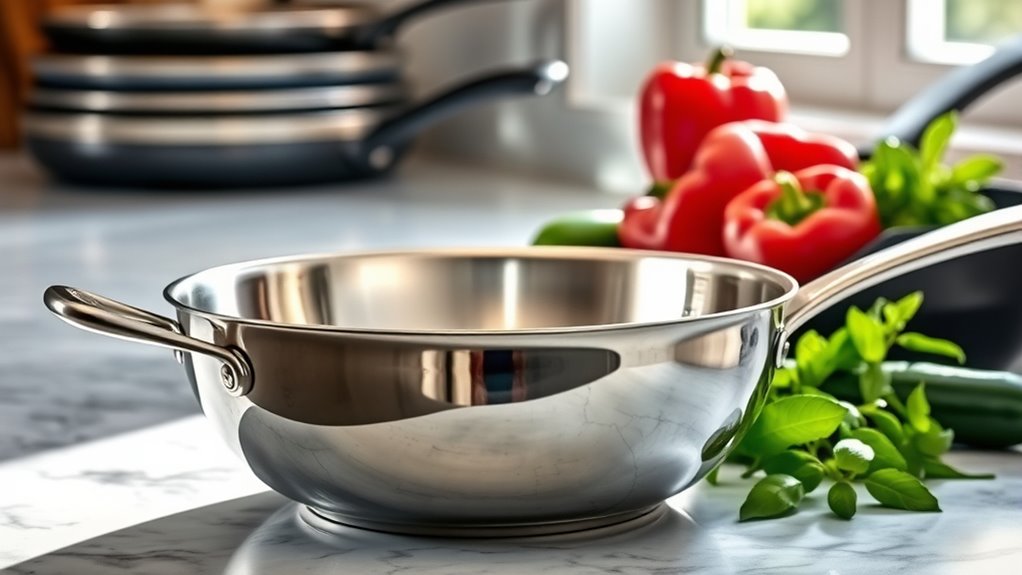
When you’re cooking for one or two, an 8- or 10-inch frying pan fits perfectly, letting you prepare meals like eggs or small veggies without overcrowding. Size matters when selecting frying pan sizes because pan capacity affects how evenly your food cooks. Use a small frying pan for single servings, and consult a pan size chart to match your cookware to typical meal portions.
If you often cook for 3-4 people, a 12-inch pan works well, while large pans like 14-inch models suit family-sized meals or bigger cuts of meat. Always consider the size and material of your pan, along with your stove and storage space, to find the right balance between pan capacity and your servings of food.
How Frying Pan Sizes Are Measured
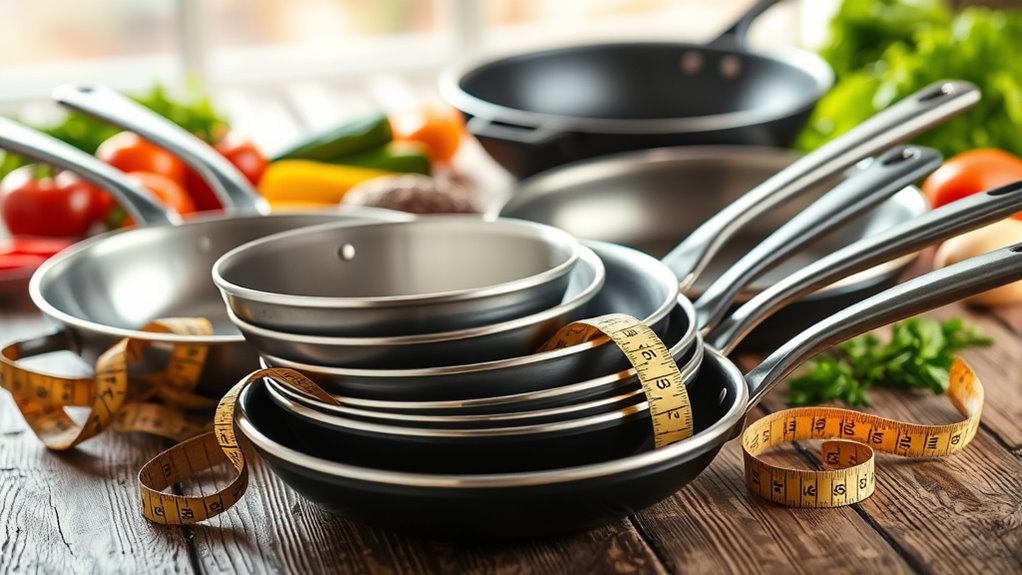
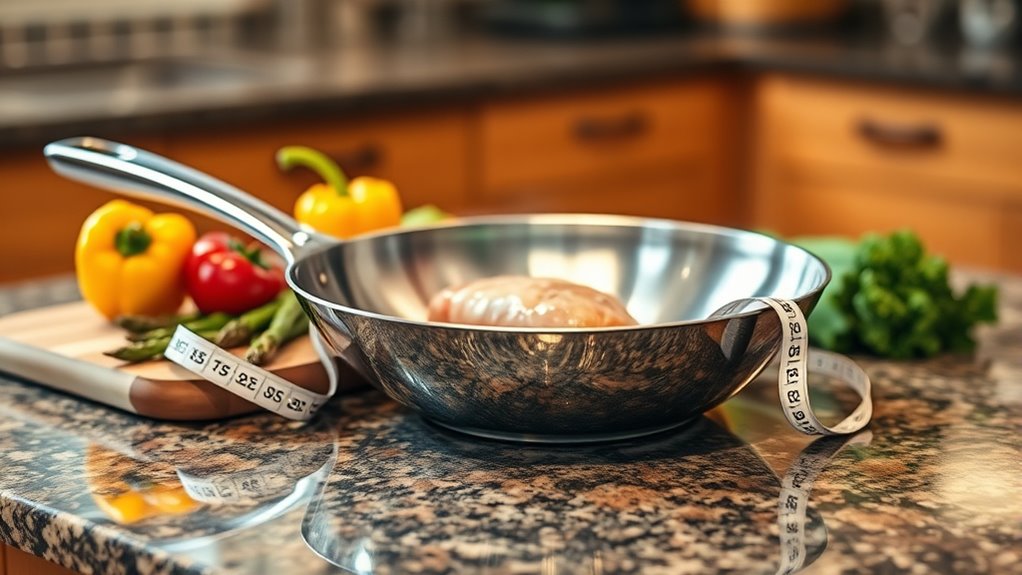
Although frying pan sizes might seem straightforward, they’re actually measured by the internal diameter across the top rim, not including the handle. This pan size measurement uses the rim measurement from edge to edge at the widest part. The overall diameter, including the rim, is larger than the cooking surface, which varies by material.
You can often find size markings or pan markings on the bottom for quick pan identification. Diameter rounding usually rounds down to the nearest inch, so a 12-inch pan might measure between 12 and 13 inches overall.
| Measurement Aspect | Description |
|---|---|
| Internal Diameter | Edge-to-edge across top rim |
| Rim Measurement | Excludes handle, includes rim |
| Cooking Surface | Actual usable area varies |
| Pan Markings | Size markings aid identification |
How Frying Pan Size Affects Cooking Performance
Knowing how frying pan sizes are measured helps you pick the right one for your cooking needs. The frying pan size directly impacts cooking performance by affecting heat distribution and surface area. Using a pan that’s too small causes overcrowding, leading to uneven cooking and steaming instead of proper browning and searing.
This overcrowding creates hot spots and prevents even cooking, lowering food quality. On the other hand, a larger pan distributes heat more evenly, reducing hot spots and improving searing efficiency. A properly sized pan also allows better air circulation, helping moisture escape for crispier results.
Choosing the right frying pan size optimizes heat transfer, enhances browning, and ensures your meals cook evenly and taste their best.
Best Frying Pan Sizes for Different Cooking Methods
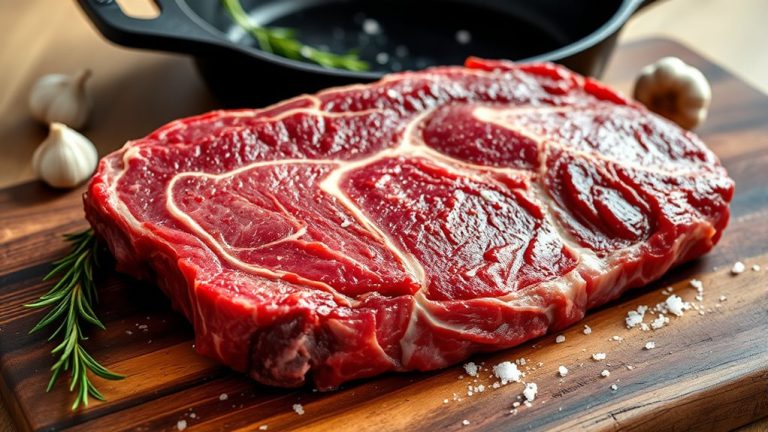
When searing steaks, you’ll want a 12-inch or larger pan to give your meat plenty of room and guarantee even cooking.
For sautéing, a 10-inch pan strikes the perfect balance, letting you cook vegetables or small meals without overcrowding.
Choosing the right size makes a big difference in how your food cooks and tastes.
Sizing for Searing
If you want to get the perfect sear on your meats, choosing a frying pan that’s 12 inches or larger is key. This size offers enough surface area to maintain high heat, ensuring even browning without overcrowding.
A larger pan also improves heat retention and allows full contact between the meat and pan surface, which is essential for proper searing. Using smaller pans like 8 or 10 inches often results in steaming due to overcrowding, preventing the crust you want.
| Pan Size | Surface Area | Best For |
|---|---|---|
| 8-inch | Small | Light tasks, small cuts |
| 10-inch | Moderate | Everyday cooking |
| 12-inch+ | Large, ideal for heat | Searing steaks, chops |
Choose a 12-inch or larger pan for the best searing results.
Pan Size for Sautéing
While larger pans excel at searing by providing ample space to brown meats evenly, sautéing calls for a different approach to pan size. For sautéing, a 10-inch frying pan offers the perfect balance of pan surface area and heat distribution, allowing you to toss ingredients without overcrowding.
This medium-sized pan provides enough pan capacity for most meals, ensuring even cooking and proper browning. If you’re cooking smaller batches or single servings, an 8-inch pan with a smaller pan diameter works well.
On the other hand, large saute pans of 12 to 14 inches give you extra cooking surface for multiple ingredients or larger quantities. Choosing the right frying pan size prevents overcrowding, which can cause steaming instead of sautéing, making your dishes more flavorful and evenly cooked.
How Frying Pan Material and Size Work Together
Because the material of your frying pan directly affects how it heats, choosing the right size becomes essential for achieving consistent cooking results. Different frying pan materials interact uniquely with pan size, impacting heat retention, distribution, and responsiveness.
Frying pan material and size together determine heat retention, distribution, and cooking consistency.
For example, stainless steel pans perform best with larger pan diameters and sufficient thickness to ensure even heat spread, especially on induction cooktops. Meanwhile, nonstick coatings offer quick heat responsiveness but work best in moderate pan sizes to maintain cooking performance.
Keep these points in mind:
- Thicker pans improve heat retention but may heat slower
- Larger pans need materials with excellent heat distribution
- Induction compatibility depends on pan thickness and diameter
- Nonstick pans excel in smaller to mid-sized pans for delicate foods
- Material and size together affect cooking precision and cookware longevity
When to Buy a Frying Pan Set
You’ll want to buy a frying pan set if you’re looking for multiple sizes that tackle different cooking tasks with ease. Sets give you versatility for everything from quick meals to big family dinners, all while saving you money compared to buying pans individually.
Plus, having the right pan ready makes cooking smoother and keeps your kitchen organized.
Advantages Of Multiple Sizes
When you cook a variety of meals, having multiple frying pan sizes can make a big difference in both convenience and results. A set with versatile pans covers your cooking needs, matching pan capacity perfectly to each recipe. Using a size chart helps you choose the right pan, avoiding overcrowding and ensuring even heat distribution.
Multiple sizes simplify food preparation and enhance recipe variety, letting you handle anything from single servings to large family meals with ease. Plus, nonstick coatings and included lids boost functionality.
Benefits of multiple sizes in a frying pan set:
- Matches pan capacity to different cooking needs
- Improves heat distribution and food quality
- Enhances storage organization and kitchen efficiency
- Supports diverse food preparation tasks
- Offers cost savings compared to buying pans individually
Versatility For Various Dishes
Although a single frying pan might handle basic tasks, investing in a set gives you the flexibility to cook a wider variety of dishes with ease. Pan sets offer versatile fry pan sizes—typically 8″, 10″, and 12″—covering everything from delicate eggs to large multi-ingredient dishes.
This multi-use cookware lets you seamlessly switch between cooking tasks like sautéing, searing, and stir-frying without extra pots. With size options tailored for recipe adaptability and meal preparation, you’ll enjoy enhanced cookware versatility.
Plus, having multiple pans simplifies kitchen organization by matching each pan to specific recipes, reducing clutter and the need for additional purchases. Choosing a set means you’re always ready for any dish, making your cooking more efficient and your kitchen more streamlined.
Cost Efficiency Benefits
Expanding your cookware collection with a frying pan set not only boosts versatility but also saves you money. Choosing a cookware set offers significant cost savings—up to 30% less than buying pans individually. You get multiple sizes, like 8″, 10″, and 12″, covering all your cooking needs without extra purchases.
Sets provide uniform quality and often include useful accessories, enhancing value and convenience. Whether you’re doing a kitchen upgrade or starting fresh, a set is a budget-friendly option.
Consider these benefits of purchasing a frying pan set:
- Cost savings compared to individual pans
- Multiple sizes for versatile cooking
- Uniform quality across all pans
- Included accessories like lids
- Convenient purchasing options for kitchen upgrades
This approach guarantees you get the best value while upgrading your cookware efficiently.
Frequently Asked Questions
What Is the Best Size Frying Pan for Everyday Use?
You’ll want a 10-inch frying pan for everyday use since it balances versatility and capacity well. It handles most meals efficiently without overcrowding, making it perfect whether you’re cooking for yourself or a small family.
This size offers enough space to cook multiple ingredients at once, which saves time and effort. Plus, it’s easier to store compared to larger pans, fitting comfortably in most kitchen cabinets.
How Do I Choose the Right Pan Size?
Choosing the right pan size means balancing too small and too large. You’ll want one that fits your meal portions and stove burner, so your food cooks evenly without overcrowding, making your cooking smoother and more enjoyable.
What Do You Use an 8-Inch Frying Pan For?
You use an 8-inch frying pan for single servings like eggs, omelets, or small sautéed veggies. It’s great for searing small meats, toasting spices, and fits perfectly in small kitchens for quick meals.
Is a 12-Inch Frying Pan Big?
Think of a 12-inch frying pan as a wide, welcoming table. Yes, it’s big enough to handle multiple servings comfortably, letting you cook family-sized meals without crowding your ingredients or rushing through the process.
Conclusion
Choosing the right frying pan size isn’t just about numbers—it’s about matching your cooking style and meal needs. Think of your pan as the stage where your culinary performance unfolds; too small, and the act’s cramped, too big, and it wastes energy.
By picking the perfect size, you’ll cook more efficiently and enjoy better results every time. So, trust your kitchen instincts and let your pan be the star of your next meal.
Remember, the ideal frying pan size depends on what you plan to cook and how many people you’re serving. Selecting the right size frying pan is key to creating delicious dishes and making your cooking experience more enjoyable.