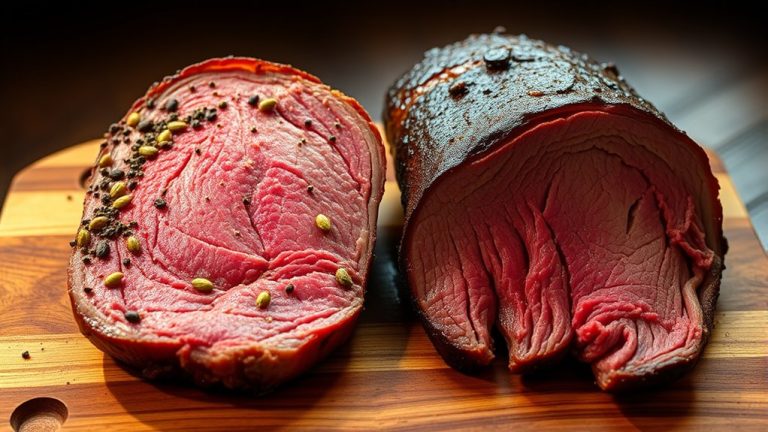
How to Cook Beef Short Ribs in the Oven at the Best Temp
To cook beef short ribs perfectly in the oven, set your temperature between 275°F and 300°F for slow, even roasting that keeps the meat tender and juicy. This best temp range ensures the ribs cook thoroughly without drying out.
Season them well and wrap tightly with foil to lock in moisture.
Cook until the internal temperature hits about 205°F, which is ideal for melt-in-your-mouth tenderness.
Then finish under the broiler with sauce for a caramelized crust.
Follow these steps, and you’ll uncover tips for timing, seasoning, and serving to elevate your ribs even further.
How to Prepare Beef Short Ribs for Oven Cooking
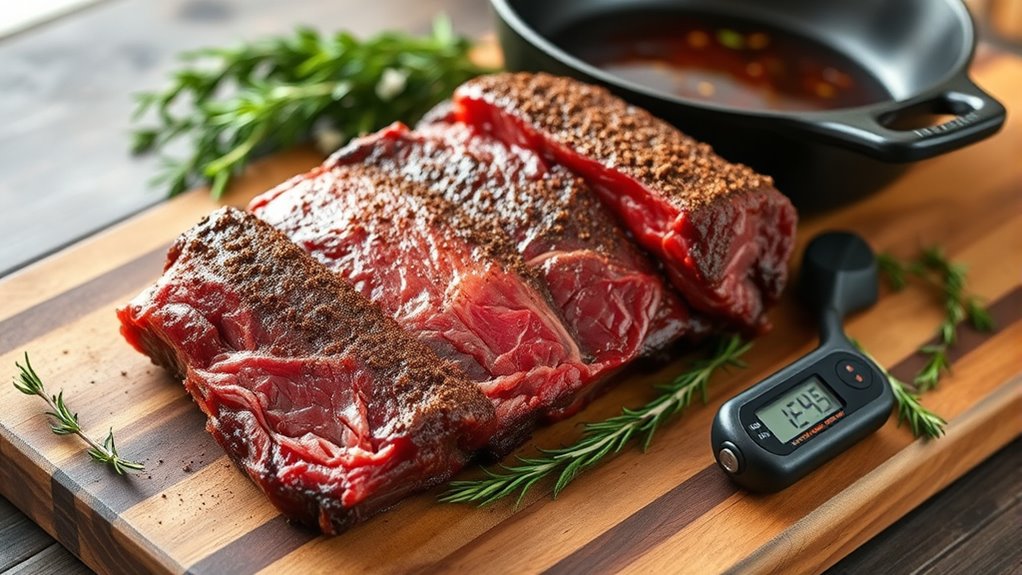
Before you start cooking, remove the silver skin from the back of the beef short ribs to help the seasoning stick better and guarantee tenderness.
Next, pat the short ribs completely dry with paper towels; this step is essential for promoting browning and preventing steaming during oven cooking. Depending on your preference, you can cut the ribs into individual portions or leave them in larger slabs, which often retain more flavor and are easier to handle.
Rub the ribs evenly with oil to help the dry rub or seasoning absorb deeply and create a flavorful crust. Make sure to season generously, covering all sides of the ribs. Proper preparation directly influences how well the short ribs respond to your chosen oven temperature and overall cooking success.
How to Season and Marinate Beef Short Ribs
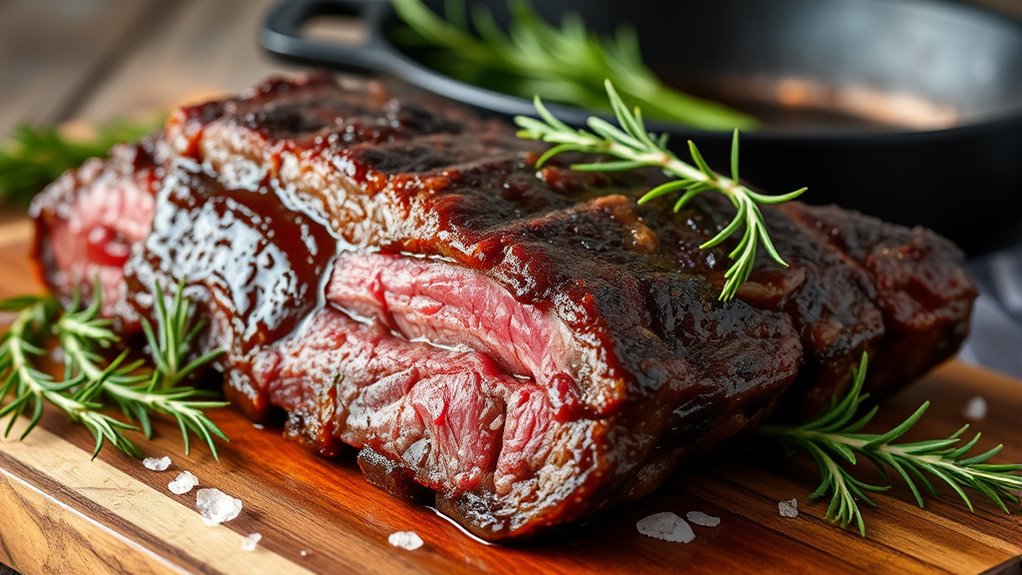
You’ll want to start by choosing a rub with bold flavors like garlic, paprika, and brown sugar to bring out the best in your short ribs. Marinating the meat with acidic ingredients such as soy sauce or vinegar helps tenderize and deepen the taste.
Make sure to coat every side evenly and let the ribs rest in the fridge for at least a couple of hours before cooking.
Choosing The Right Rub
When seasoning beef short ribs, choosing the right rub can transform their flavor and tenderness. Start with a dry rub combining garlic powder, onion powder, paprika, and chili powder to boost the beef’s natural taste. Include salt and sugar for balanced seasoning, and add dried herbs like oregano or thyme for an aromatic touch.
Apply the rub generously, massaging it into the meat to ensure even flavor infusion. While this dry rub works wonders, you can also marinate your ribs to deepen the taste and tenderize. However, focus on the dry rub’s blend and application first to build a solid flavor foundation before moving on to any marinating techniques.
This approach guarantees your short ribs come out perfectly seasoned and delicious.
Marinating Techniques And Tips
While a dry rub lays a strong flavor foundation for your beef short ribs, adding a marinade can take their taste and tenderness to the next level. To marinate effectively, use acidic ingredients like vinegar or citrus to help break down connective tissue, enhancing tenderness. Combine these with seasonings such as garlic, onion, soy sauce, or fresh herbs to deepen the flavor profile.
Make sure your ribs are fully coated and stored in an airtight container or sealed plastic bag. Marinate for at least 1-2 hours, or overnight for best results. Don’t forget to turn or flip the ribs periodically to ensure even absorption of the marinade.
This technique guarantees your beef short ribs will be flavorful and tender, ready for perfect oven cooking.
How to Wrap Beef Short Ribs to Retain Moisture
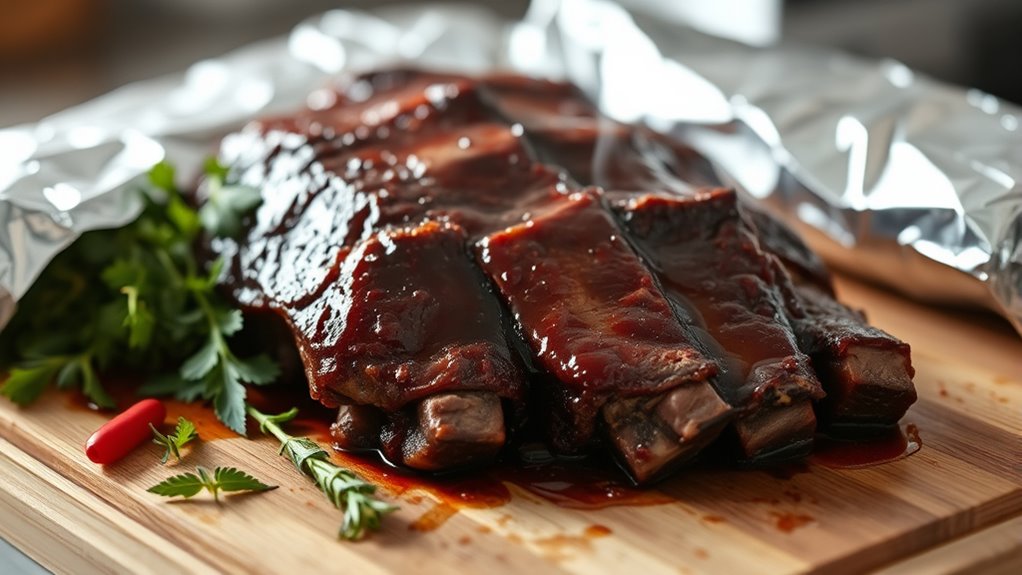
You’ll want to choose the right wrapping materials, like aluminum foil or butcher paper, to lock in moisture effectively. Make sure you seal the edges tightly to prevent steam from escaping during cooking.
Finally, know when to remove the wrap so your ribs stay juicy without losing their tender texture.
Choosing Proper Wrapping Materials
Although selecting the right wrapping material might seem straightforward, using heavy-duty aluminum foil is vital to keep your beef short ribs moist during baking. Heavy-duty foil provides durability and prevents tears, which helps with moisture retention. You’ll want to double-wrap the ribs for extra protection, ensuring no gaps allow steam to escape.
Adding a bit of broth, wine, or marinade inside the foil enhances moisture further. When sealing, fold the edges carefully to create an airtight barrier that locks in juices and steam. Avoid puncturing or loosening the foil during cooking, as maintaining this sealed environment is essential for tender, juicy ribs.
Choosing proper wrapping materials means you’re setting yourself up for perfectly moist short ribs every time.
Sealing Techniques For Moisture
After selecting the right wrapping materials, the next step is sealing your beef short ribs properly to lock in moisture. Wrap the ribs tightly in foil or butcher paper, creating a sealed pouch that traps steam during baking. Use a double layer of foil for extra protection to prevent leaks and maintain consistent moisture.
Fold and crimp the edges securely, sealing the packet so steam can’t escape. This sealing is vital to keep the ribs juicy and tender. You can add a small amount of broth or marinade inside the wrapping to baste the meat as it cooks.
Make sure the wrapping is snug but not overly tight, allowing slight expansion without drying out the ribs. Proper sealing preserves moisture and enhances flavor throughout cooking.
Timing For Wrapping Removal
When cooking beef short ribs, timing the removal of the wrapping is essential to achieve both tenderness and a flavorful crust. During the initial cook time at your chosen oven temperature, wrap the ribs tightly in foil or butcher paper to lock in moisture and prevent drying out.
Once the internal temperature reaches about 205°F, indicating ideal tenderness, it’s time for wrapping removal. Unwrap the ribs for the last 15-30 minutes of cooking to allow caramelization to take place, developing a crispy, flavorful crust.
This final step balances moisture retention with surface crispiness. After unwrapping, let the ribs rest uncovered so residual juices redistribute, ensuring every bite stays juicy and delicious. Proper timing here makes all the difference in your beef short ribs.
How to Choose the Best Oven Temperature for Beef Short Ribs
Since beef short ribs require a balance between tenderness and moisture, choosing the right oven temperature is key to achieving the perfect texture. You want an oven temperature that encourages collagen breakdown without drying out the meat. Cooking beef short ribs low and slow between 275°F and 300°F is your best bet for tender meat with a rich crust.
For tender, juicy short ribs, cook low and slow between 275°F and 300°F to break down collagen perfectly.
Keep these points in mind when selecting your temperature:
- Lower temps (275°F) promote slow, even cooking and juicy ribs.
- Higher temps (325°F+) cook faster but risk tougher meat and less collagen melting.
- Adjust based on rib thickness; thinner cuts may need slightly lower temps or shorter times.
This approach guarantees your beef short ribs turn out tender, flavorful, and moist every time.
How Long to Cook Beef Short Ribs at Different Temperatures
Although oven temperatures for beef short ribs can vary, knowing how long to cook them at each heat level guarantees you get tender, juicy results every time. If you set the oven temperature to 250°F, expect a cooking time of 3.5 to 4 hours to reach ideal tenderness.
At 275°F, beef short ribs usually take about 2.5 to 3 hours, while increasing the temperature to 300°F reduces cooking time to roughly 2 hours without sacrificing tenderness. Cooking above 325°F shortens the time further but risks drying out the meat if you’re not careful. Regardless of oven temperature, aim for an internal temperature of 205°F to ensure perfect tenderness. Adjust your cooking time accordingly to balance tenderness and juiciness in every bite.
How to Check Beef Short Rib Doneness With a Meat Thermometer
How do you know when your beef short ribs have reached perfect tenderness? Use a meat thermometer to check doneness accurately. Insert an instant-read meat thermometer into the thickest part of the beef short ribs, avoiding the bone for a true internal temperature reading.
Aim for 205°F to ensure the collagen breaks down fully, making the meat tender and fall-apart.
Here’s what you should do:
- Check the internal temperature periodically after the minimum cooking time.
- Use a probe thermometer with a digital display for continuous monitoring without opening the oven.
- Look for visual cues like meat shrinking from the bone and fork-tender texture as supportive signs.
This approach guarantees precise doneness without drying out your ribs.
How to Finish Beef Short Ribs by Broiling and Adding Sauce
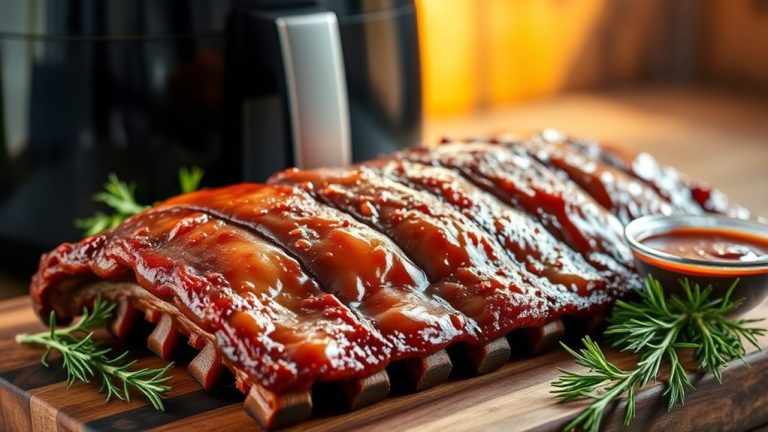
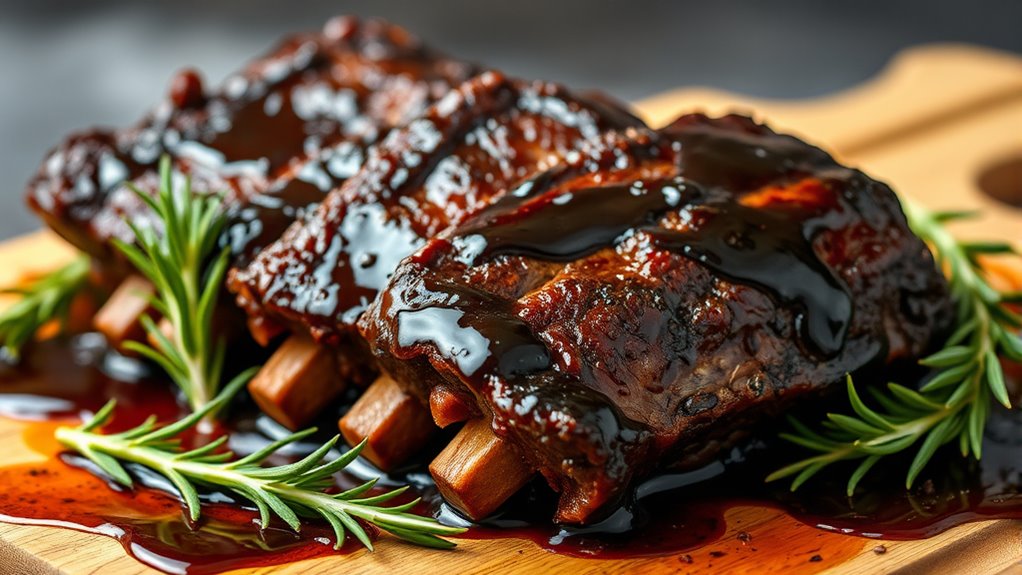
Once your beef short ribs have reached the perfect tenderness, you can enhance their flavor and texture by finishing them under the broiler. Start by brushing the ribs generously with your favorite BBQ sauce or glaze to add sweetness and stickiness.
Place the ribs on a broiler-safe pan and set your oven to low or medium broiling heat. Keep a close eye as you broil for 2 to 5 minutes, allowing the sauce to bubble and the surface to become caramelized and crispy without burning. This broiling step creates a flavorful crust that elevates your ribs.
After broiling, let the ribs rest for a few minutes so the juices and sauce settle, ensuring every bite is rich and delicious.
Serving Ideas for Beef Short Ribs and Using Leftovers
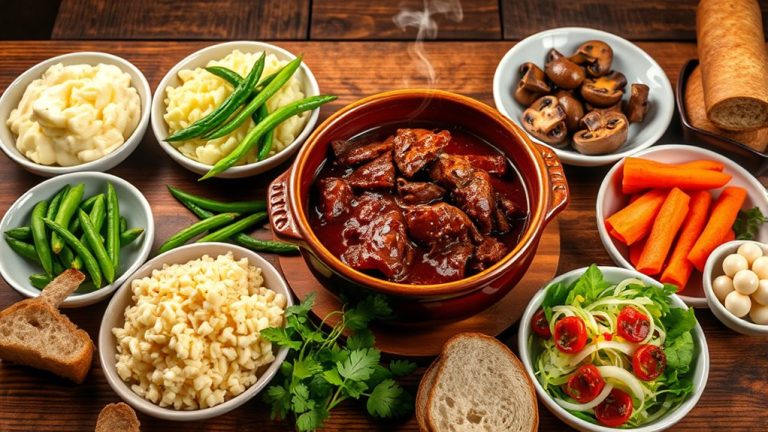
When you serve beef short ribs, pairing them with classic sides like mashed potatoes, roasted vegetables, or cornbread brings out their rich, hearty flavor and creates a satisfying meal.
For versatile serving ideas using leftovers, try these options:
- Shred the meat to make flavorful sandwiches with barbecue sauce or gravy.
- Incorporate shredded meat into stews, tacos, or Korean bibimbap for variety.
- Reheat leftovers gently in the oven or sous vide to keep ribs tender and juicy.
Store leftovers in airtight containers in the fridge for 3–4 days or freeze for longer.
These approaches make certain you enjoy your beef short ribs beyond the first meal without losing their delicious texture and taste.
Tips to Perfect Your Oven-Cooked Beef Short Ribs
Although oven-cooking beef short ribs takes time, you can achieve tender, flavorful results by controlling temperature and moisture carefully. Keep oven temperature between 275°F and 300°F for slow, even cooking that breaks down connective tissue. Trap moisture by covering ribs tightly with foil or a lid.
Use a digital thermometer to check for tenderness at about 205°F internal temperature. For a caramelized crust, brush ribs with barbecue sauce and broil briefly. Let ribs rest 10 minutes to redistribute juices.
| Step | Action | Purpose |
|---|---|---|
| 1 | Set oven temp 275-300°F | Slow, even cooking |
| 2 | Cover ribs tightly | Retain moisture |
| 3 | Use digital thermometer | Monitor tenderness |
| 4 | Broil with sauce last 10-15m | Caramelized crust |
| 5 | Rest ribs 10 minutes | Enhance flavor and moisture |
Frequently Asked Questions
What Is the Best Temperature to Cook Beef Short Ribs in the Oven?
You should cook beef short ribs at 275°F for tender, juicy meat or 300°F for a crispy exterior with a tender inside.
Keep the temperature steady and aim for an internal temp around 200°F.
Is It Better to Cook Ribs at 225 or 250 in the Oven?
You’ll want to choose 225°F for tender, melt-in-your-mouth ribs if time allows.
But if you’re short on time, 250°F still delivers great tenderness faster without sacrificing flavor or moisture.
How Long Do You Cook Short Ribs at 350 Degrees?
Savor succulent short ribs by cooking them at 350°F for about 2 to 2.5 hours. Sear first, then bake uncovered, checking for an internal temperature of 190°F to guarantee tender, tasty results.
How to Perfectly Cook Beef Short Ribs?
You’ll cook beef short ribs low and slow at 275°F to 300°F for 2.5 to 3 hours, wrapped tightly, until tender.
Use a thermometer to hit 160°F, then rest before serving for juicy, perfect ribs.
Conclusion
Now you know how to prep, season, and wrap your beef short ribs for maximum flavor and moisture. You’ve learned to pick the perfect oven temperature, cook them to tender perfection, and finish with a delicious broil and sauce.
Whether you’re serving fresh or using leftovers, you’re set to impress. Keep experimenting, keep tasting, and keep perfecting—because great beef short ribs are all about patience, passion, and practice.
By mastering the best temp and technique to cook beef short ribs in the oven, you ensure every bite is tender, juicy, and full of rich flavor.