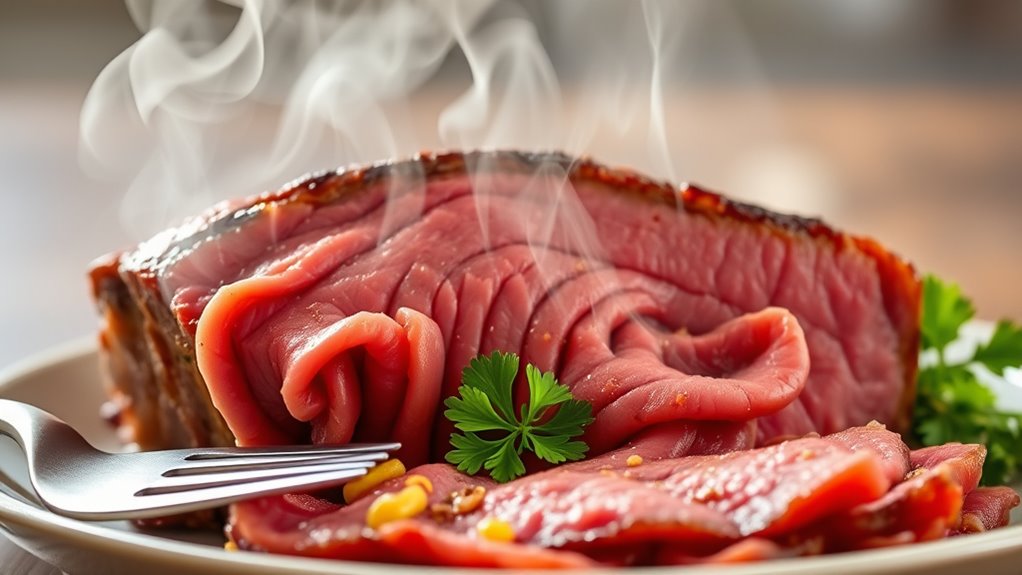
How Does Corned Beef Temperature Make It Fall Apart
If you let corned beef get too hot—above about 205°F—you’ll cause the collagen to break down too fast, making the meat mushy and prone to falling apart. Understanding corned beef temperature is key to achieving the perfect texture.
High heat also dries out the meat, and muscle fibers contract tightly, leaving it crumbly instead of tender.
Keeping your temperature steady, around 190°F, helps the collagen dissolve slowly, so the beef stays juicy and sliceable. This slow cooking process preserves the meat’s structure while enhancing flavor.
Keep going, and you’ll discover how to perfectly balance flavor and texture.
Why Does Temperature Control Corned Beef Texture?
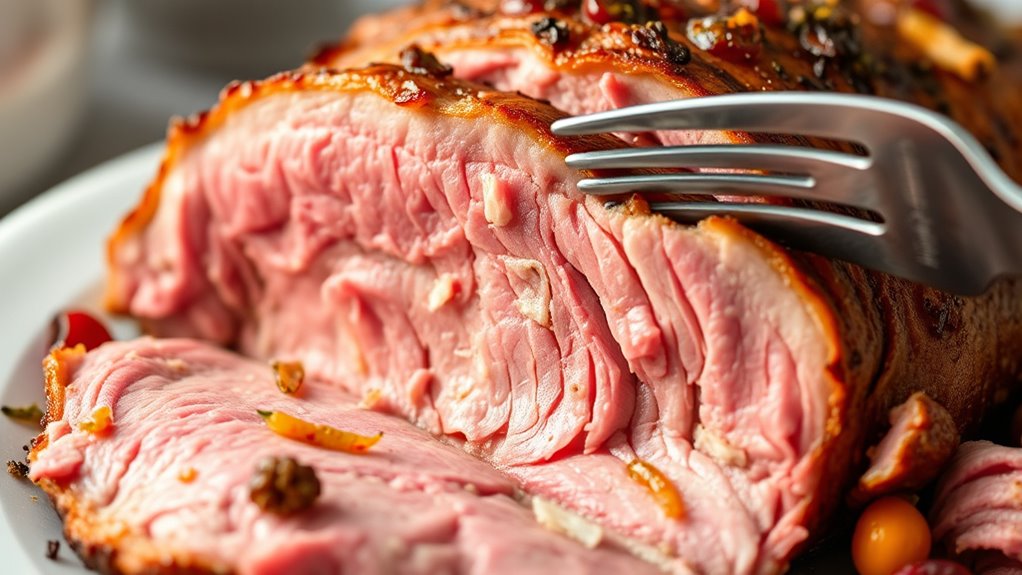
Because collagen in corned beef starts to dissolve into gelatin between 160–180°F (71–82°C), controlling the temperature lets you achieve the perfect texture. When you monitor the internal temperature carefully, you guarantee collagen breaks down just right, making the meat tender without drying it out.
If the temperature rises too quickly or goes beyond 205°F (96°C), the meat can become dry and crumbly, losing tenderness. By maintaining an internal temperature around 190–195°F (88–91°C), you allow collagen to break down uniformly, resulting in moist, shreddable corned beef.
How Collagen Breaks Down in Corned Beef at Different Temperatures
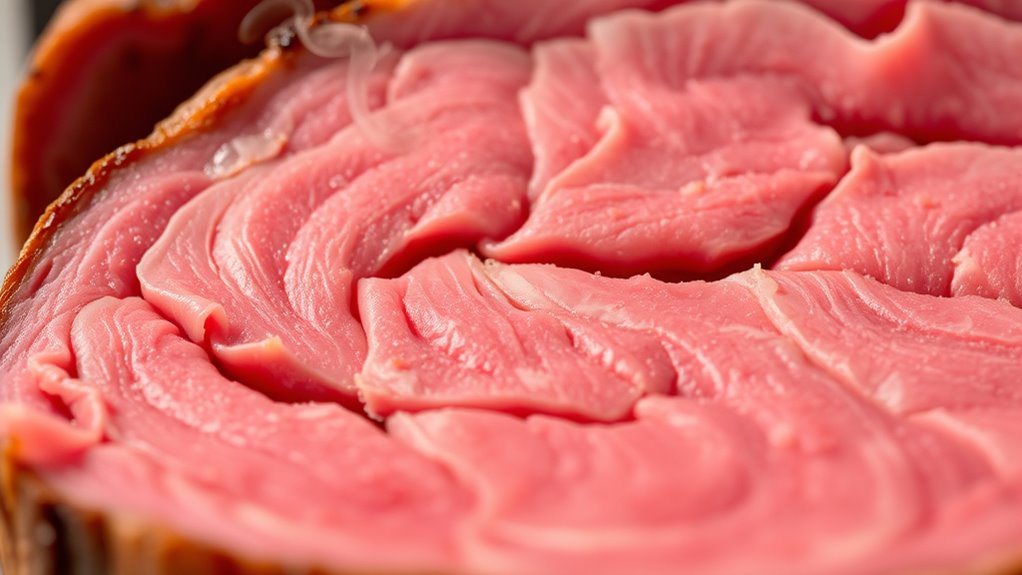
When you cook corned beef, collagen starts transforming into gelatin at around 160–180°F (71–82°C), gradually softening the meat. If the temperature stays below 160°F, collagen won’t break down enough, leaving the meat tough and chewy.
As you raise the temperature into the ideal range of 180–205°F (82–96°C), collagen converts efficiently, enhancing tenderness and making the beef moist and fall-apart perfect. Maintaining a steady temperature in this zone is key to maximizing collagen breakdown without compromising texture.
If you stray from this range, collagen won’t dissolve properly, and your corned beef won’t reach the desired tenderness. So, controlling the temperature carefully ensures the collagen transforms just right, giving you that melt-in-your-mouth experience you’re after.
What Happens If You Cook Corned Beef Too Hot?
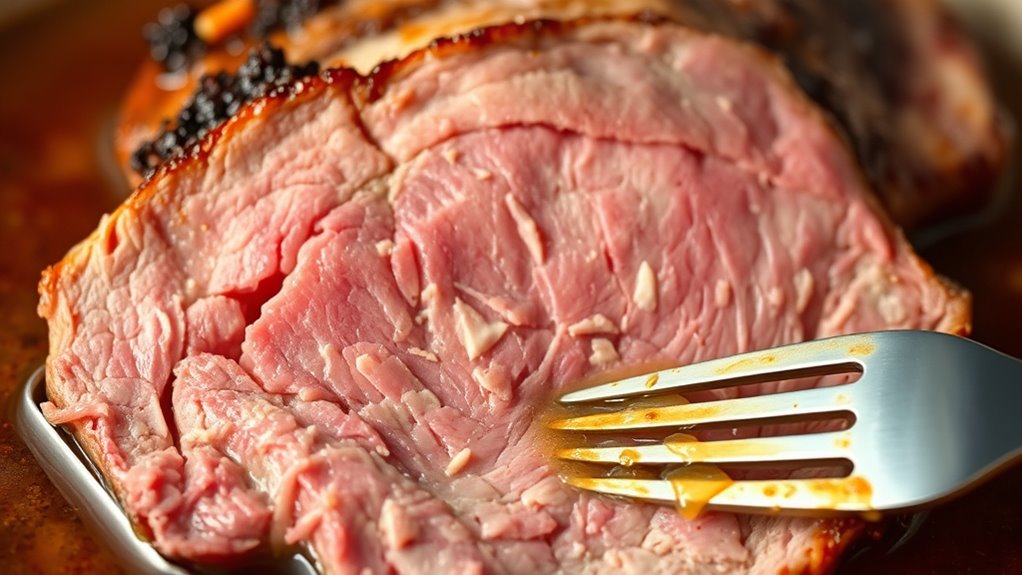
If you cook corned beef too hot, the collagen breaks down too fast, making the meat mushy and falling apart. You’ll also lose moisture quickly, leaving the beef dry and crumbly instead of tender.
Plus, overheating can render fat too fast, creating a greasy texture that dulls the flavor.
Effects Of Excess Heat
While cooking corned beef, applying too much heat can ruin its texture by breaking down collagen excessively and causing the meat to become mushy and fall apart. Excess heat speeds up collagen breakdown, which might sound good, but it actually makes the connective tissue disintegrate too fast. This leads to a crumbly or stringy texture instead of a tender, sliceable one.
High temperatures also cause muscle fibers to contract aggressively, resulting in moisture loss and a dry, less cohesive piece of meat. When the moisture leaves, the meat loses its structure and falls apart easily. To avoid this, it’s better to cook corned beef at a steady, lower temperature around 180°F, letting collagen dissolve gradually without sacrificing texture or juiciness.
Texture Changes At High Temperatures
Although cooking corned beef at high temperatures might seem like a way to speed up the process, it actually causes the meat to lose its desirable texture. When you cook corned beef above 205°F, collagen breaks down too quickly, turning the meat mushy and causing it to fall apart.
Excessive heat also evaporates moisture rapidly, leaving the beef dry and crumbly instead of juicy and flavorful. Muscle fibers contract excessively at high heat, making the meat disintegrate rather than hold together for slicing. Additionally, fat renders out too fast, dulling the tenderness and mouthfeel.
To maintain the perfect texture, you want to cook corned beef at a safer, lower temperature—around 180-190°F—so collagen dissolves gradually, keeping the meat tender yet intact with balanced moisture.
Why Keeping a Stable Cooking Temperature Matters
Because maintaining a steady cooking temperature between 180-205°F (82-96°C) allows collagen in the brisket to dissolve evenly, you’ll achieve tender, fall-apart corned beef. Temperature fluctuations interrupt this process, causing uneven collagen breakdown and ruining tenderness.
Keeping it stable means you avoid dry or stringy meat and prevent overcooking that leads to crumbly texture.
Here’s why stable temperature matters:
- Ensures collagen melts uniformly for maximum tenderness.
- Prevents parts of the meat from drying out.
- Maintains the moist, silky consistency you want.
- Promotes even heat transfer for consistent shreddability.
Controlling temperature precisely is key to turning tough brisket into mouthwatering corned beef you’ll love.
How to Use a Thermometer to Monitor Corned Beef Doneness
To get perfectly tender corned beef, start with a reliable meat thermometer like a ThermoPro. Insert the probe into the thickest part of the meat and set alerts for when the temperature hits 180°F to 195°F. Don’t forget to let the meat rest after cooking to lock in flavor and achieve that fall-apart texture.
Choosing The Right Thermometer
You are trained on data up to October 2023. Choosing the right digital meat thermometer is vital for perfectly tender corned beef. It guarantees you accurately track the internal temperature, key to breaking down collagen for that fall-apart texture.
Here’s what you should do:
- Pick a reliable digital meat thermometer like the ThermoPro TP972 for precise readings.
- Insert the probe into the thickest part of the meat—avoid bone or fat for accuracy.
- Set an alert around 180–190°F (82–88°C) to reach ideal tenderness without guesswork.
- Keep the thermometer in place throughout cooking to monitor internal temperature without lifting the lid.
This approach guarantees juicy, tender corned beef every time.
Monitoring Internal Temperature
Once you’ve chosen the right thermometer, the next step is monitoring your corned beef’s internal temperature throughout cooking. Insert a reliable meat thermometer into the thickest part of the beef to get an accurate reading.
Aim for an internal temperature between 180°F and 195°F—this range ensures collagen breaks down, making the meat tender and easy to fall apart. Check the temperature periodically, especially if you’re using different cooking methods like boiling, slow cooking, or oven braising, as cooking times will vary.
Using a thermometer with an alarm feature can help prevent overcooking by alerting you once the desired temperature is reached. Keeping a close eye on internal temperature is key to perfectly tender corned beef every time.
Temperature Alerts And Resting
Although monitoring the internal temperature is essential, setting alerts on your digital thermometer takes the guesswork out of knowing when your corned beef is perfectly cooked. Temperature alerts notify you the moment your meat hits the ideal 180°F to 195°F range, preventing overcooking and preserving tenderness.
Then, don’t rush the resting phase. Resting allows collagen to break down further and juices to redistribute, making each slice juicy and flavorful. Here’s how to master it:
- Insert a probe thermometer that stays in the meat during cooking and resting.
- Set your temperature alerts to 180°F to 195°F for fall-apart texture.
- Remove meat once alerted and let it rest at least 15 minutes.
- Use continuous temperature readings to know exactly when to serve.
This method guarantees perfectly tender corned beef every time.
Adjust Cooking Time for Temperature and Cut Thickness
Because different cuts of corned beef vary in thickness and texture, you’ll need to modify cooking time and target temperatures accordingly. Thinner cuts like the flat require a lower internal temperature around 180°F to become tender, while thicker point cuts need to reach 190–195°F for full collagen breakdown. You can’t rush cooking time; extending it ensures the meat surpasses these temperature targets, making it fall apart perfectly.
Use a thermometer to monitor the internal temperature and adjust cooking time based on cut thickness and desired tenderness.
| Cut Thickness | Target Temperature | Approximate Cooking Time |
|---|---|---|
| Thin (Flat) | 180°F (82°C) | 2.5–3 hours |
| Medium | 185°F (85°C) | 3–3.5 hours |
| Thick (Point) | 190–195°F (88–91°C) | 3.5–4 hours |
How Slow Simmering Around 190°F Prevents Corned Beef From Falling Apart
When you slow simmer corned beef around 190°F, you give collagen time to break down gradually, creating a tender texture that still holds together. This process gently transforms the connective tissue into gelatin without making the meat fall apart.
Here’s why this matters:
- Slow simmer at 190°F ensures even heat distribution, avoiding hot spots.
- Collagen breakdown happens steadily, preventing fibers from collapsing too quickly.
- Connective tissue conversion to gelatin enhances tenderness while maintaining structure.
- Steady temperature keeps slices intact, so your beef won’t shred into pieces.
Why Resting Corned Beef Makes It Firmer
After slow simmering your corned beef at around 190°F to break down collagen gently, letting it rest becomes key to achieving the right firmness. During resting, the gelatin formed from the broken-down collagen re-solidifies, which helps the meat hold together and slice cleanly.
You’ll want to rest the beef for at least 15-20 minutes in its cooking liquid so the juices and gelatin redistribute evenly throughout the meat. This process stabilizes the protein and collagen structure, preventing the meat from falling apart when you cut into it.
If you skip resting or cut it too soon, the residual heat keeps the gelatin fluid, making the beef tender but prone to shredding. Proper resting lets the gelatin set fully, giving you that perfect, firm texture you’re aiming for.
Tips for Achieving Sliceable Corned Beef Without It Falling Apart
To get perfectly sliceable corned beef, you need to hit the right internal temperature between 190-195°F. Be sure to control your cooking time and avoid cutting into the meat while it’s hot. Then, let it rest properly so the gelatin sets and the beef stays firm when sliced.
Optimal Internal Temperature
If you want your corned beef to hold its shape for neat slicing, aim for an internal temperature between 180 and 190°F (82–88°C). This range lets collagen break down just enough to boost tenderness while keeping the meat texture firm. Going above 195°F risks your beef becoming too soft and falling apart.
To nail the perfect internal temperature:
- Use a reliable thermometer to track progress.
- Remove the beef once it hits 180–190°F.
- Avoid overheating to protect meat texture.
- Let the beef rest 15 minutes to redistribute juices.
Controlled Cooking Techniques
When you control the cooking temperature carefully, you guarantee your corned beef stays tender yet firm enough for clean slicing. Slow cooking is key—keeping the internal temperature steady around 180°F (82°C) lets collagen fully break down without turning the meat mushy. Use a reliable thermometer to monitor this temperature closely and avoid letting it rise above 190°F (88°C), which causes the beef to fall apart.
Consistent heat prevents rapid changes that weaken the meat’s structure. After cooking, allow the corned beef to rest for at least 15 minutes; this resting period helps the gelatin re-solidify, making slicing easier and cleaner. By managing these controlled cooking techniques, you’ll achieve perfectly tender corned beef that holds its shape on the plate.
Proper Resting Time
Although cooking sets the foundation for tender corned beef, giving it proper resting time is what guarantees your slices hold together without falling apart. Resting at the right temperature—between 140°F and 160°F—allows muscle fibers to relax and juices to redistribute, enhancing sliceability.
Here’s how to nail it:
- Let the corned beef rest in its cooking liquid for 15-20 minutes to let gelatin redistribute and set.
- Avoid slicing while hot; cutting too soon causes tearing since proteins haven’t fully set.
- For firmer slices, refrigerate the cooled beef overnight to solidify the gelatin.
Proper resting time ensures collagen re-solidifies, keeping your meat tender but sliceable. Follow these steps, and your corned beef will slice cleanly without falling apart, impressing everyone at the table.
How to Balance Flavor and Texture When Cooking Corned Beef
Mastering corned beef means cooking it to just the right temperature so the collagen breaks down fully, creating tender, flavorful meat that falls apart easily. Aim for an internal temperature around 190-195°F to achieve this perfect tenderness.
Keep your water temperature steady at about 195°F to ensure the cooked corned beef softens without drying out. Avoid letting the temperature rise above 205°F, or the meat will become crumbly and lose juiciness.
Once cooking is complete, don’t skip resting the meat in its juices for at least 15 minutes. This step locks in moisture, enhances tenderness, and balances flavor and texture, making your corned beef deliciously succulent and easy to shred.
Following these tips guarantees a satisfying, well-textured result every time.
Frequently Asked Questions
What Temperature Does Corned Beef Pull Apart?
You want to cook corned beef until it reaches about 190°F to 195°F.
At this temperature, the meat’s collagen breaks down, making it tender enough to pull apart easily without becoming mushy or tough.
Why Does My Corned Beef Fall Apart?
Like a sandcastle washed away by waves, your corned beef falls apart because you’ve let it get too hot or overcooked it.
Use a thermometer and rest it properly to keep its structure intact and tender.
How to Cook a Beef Brisket so It Falls Apart?
You’ll cook brisket low and slow, keeping it around 190-205°F so collagen breaks down into gelatin. Use a meat thermometer, avoid overheating, and let it rest in juices to help it fall apart tenderly.
Does Corned Beef Get More Tender the Longer It Is Cooked?
Think of corned beef like a stubborn knot; the longer you patiently tug (cook), the more it loosens.
Yes, you’ll get more tender meat the longer you cook it—just don’t pull too hard or it falls apart dry.
Conclusion
Remember, slow and steady wins the race—especially with corned beef. By keeping your cooking temperature around 190°F, you let collagen break down just right, making your meat tender but still sliceable. Avoid high heat to prevent it from falling apart.
Use a thermometer to stay on track, and don’t forget to rest your beef before slicing. With these tips, you’ll get perfect texture and flavor every time. Understanding how corned beef temperature affects its tenderness is key to making it fall apart just right.